
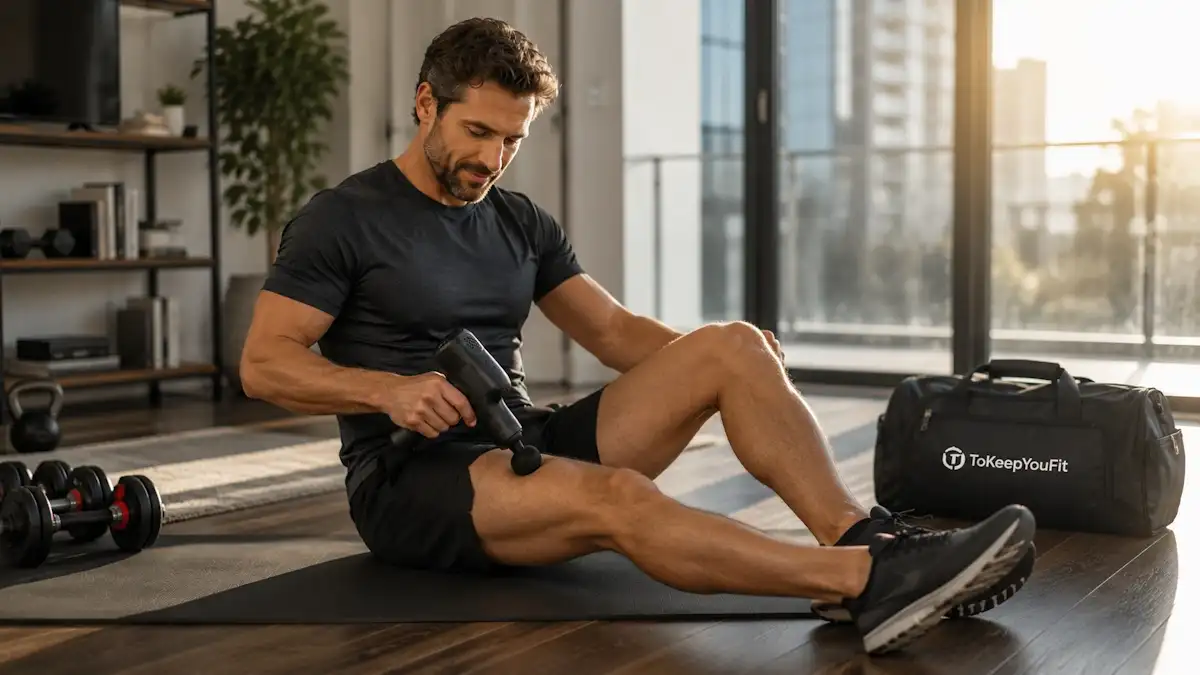
Choosing the best massage gun for recovery is not about chasing the loudest motor or the longest spec sheet. After hard training, long workdays, or both, your body wants support for blood flow, tissue relaxation, and a calmer post-stress state.
Tight hips, stiff shoulders, and slow warmups call for a tool that fits your body, not a sales pitch. This guide breaks down the features that matter, cuts through gimmicks, and helps you match the right gun to your training style, body size, and budget.
What makes the best massage gun for recovery worth buying?
A good percussion device earns its place when it feels easy to use and strong enough for your actual routine. After lifting, running, cycling, or desk-heavy days, you want a device that helps muscles settle without turning recovery into a hassle.
Look for these basics first:
- Percussion depth that matches your muscle size and tolerance.
- Stall force that keeps the motor moving when you press in.
- Speed settings that let you start gentle and increase pressure.
- Noise level that you can live with at home or in a gym.
- Battery life that covers more than one short session.
- Attachments that fit the areas you want to target.
A device that checks those boxes is more likely to get used often, and that matters more than flashy packaging.
Percussion depth, speed, and stall force explained simply
Amplitude sounds technical, but it only means how far the head moves into the muscle. Lower amplitude feels lighter. Deeper amplitude can reach larger areas like quads, glutes, and lats.
Speed usually shows up as multiple settings. Lower speeds work well for warmups or sensitive spots. Higher speeds feel firmer after harder training.
Stall force is the amount of pressure the gun can take before slowing down. Higher stall force matters if you press hard or work dense tissue. For a plain-language look at how these devices support circulation and muscle comfort, the Mayo Clinic Store massage gun guide is worth a look.
Noise, battery life, and weight can change how often you use it
A quiet massage gun gets used more often. If you train at night, share space with family, or want a short session before bed, a loud device gets old fast.
Weight matters too. A lighter model is easier to hold on calves, shoulders, and upper back. A bulky handle can make your hand tired before your muscles feel better.
Battery life matters for the same reason. You want enough charge for several sessions, not a search for the charger after every workout. A comfortable grip also helps, because awkward shapes make short sessions feel longer than they should.
Attachments matter when you want targeted muscle recovery
Attachments are not decoration. A round head works well on larger areas like quads and glutes. A flat head spreads pressure across broader muscles. A bullet tip can reach smaller spots with care, and a fork head works around the neck or along the sides of the spine.
The best massage gun for recovery includes heads that match the body you actually want to work. A long accessory list means little if the heads do not fit your routine.
Which massage gun features matter most for your type of recovery?
Different training styles need different features. A lifter, a runner, and a desk worker do not want the same tool. The best choice is the one that matches your daily load, your muscle groups, and how much time you have after training.
For lifters: look for power and deeper muscle coverage
Strength athletes usually need more force because glutes, hamstrings, and lats can handle it. Look for higher stall force, deeper amplitude, and a handle that stays stable when you press in.
Adjustable intensity matters on heavy days. A strong setting on the quads can feel too sharp on the upper back. A stable grip also helps when you reach awkward spots after squats or pulls.
For runners and cyclists: choose smooth control and easy portability
Endurance work creates a different kind of fatigue. Calves, quads, hip flexors, and feet often want smooth, repeated passes instead of blunt pressure.
A lighter massage gun is easier to pack for travel, and a quieter one is better in shared spaces or hotel rooms. If you race or ride often, portability matters almost as much as power.
For everyday soreness: comfort and simple controls may matter more than raw power
Desk stiffness and general tightness usually call for comfort and simple controls. A huge motor can be too much if your neck and upper back are the main problem.
Look for gradual speed changes and a shape that feels easy in one hand. Short daily sessions often work better than rare, intense ones, so ease of use matters a lot here.
A simple comparison table of top massage gun features
The table below compares broad feature tiers, so you can match specs to your routine instead of chasing labels.
| Model type | Amplitude | Stall force | Battery life | Best use case |
|---|---|---|---|---|
| Compact travel model | 10-12 mm | Moderate | 2-4 hours | Desk relief, light recovery, travel |
| Balanced mid-range model | 12-14 mm | Moderate to high | 3-5 hours | Mixed training, everyday soreness |
| High-power model | 14-16 mm | High | 2-4 hours | Lifters, large muscle groups |
| Premium pro model | 14-16 mm+ | High to very high | 3-5 hours | Frequent use, coaches, heavy sessions |
For a testing-focused look at real products, TechGearLab’s 2026 massage gun rankings are helpful because they compare performance, not just branding.
How to compare value without falling for hype
Price only matters after fit. A more expensive model makes sense when it gives you stronger stall force, better noise control, or a battery that lasts through real use.
If you recover at home after lifting, you may not need the priciest unit. If you travel, coach others, or train daily, paying for quiet operation and stable power can make sense. Value is tied to use, not to the biggest number on the box.
What separates premium models from budget picks
Budget models can work well for short sessions and lighter pressure. The tradeoff usually shows up in the handle, the battery, and the way the motor holds up when you press harder.
Premium devices often feel steadier, quieter, and better balanced. They also tend to include more useful heads, not just more heads. If you use a massage gun several times a week, that extra comfort can matter more than a lower price.
Conclusion
The right choice comes down to your body, your sport, and how often you’ll use it. Lifters usually need more depth and stall force, runners and cyclists care more about portability, and everyday soreness often calls for simple controls and a comfortable grip.
Compare amplitude, noise, battery life, and the attachments that fit your target muscles. That is the clearest path to the best massage gun for recovery without getting pulled in by the biggest number on the box.
🛡️ Safety Notes & Dietary Interactions
- Percussion Intensity and Tissue Tolerance
More pressure is not always better. Recovery tools tend to work best when intensity matches tissue sensitivity and training load rather than pushing discomfort levels unnecessarily high. - Nervous System Response and Recovery Quality
Massage guns may influence muscle tone and sensory feedback. Gentle, controlled use often supports better relaxation than aggressive sessions that cause excessive guarding or tension. - Recovery Consistency and Device Selection
A quieter, more comfortable device is often used more consistently. Long-term recovery habits usually depend more on usability than on maximum power specifications. - Targeted Muscle Support and Attachment Choice
Different attachments distribute pressure differently. Matching the attachment to the muscle group may improve comfort and make recovery sessions feel more efficient and easier to repeat.
FAQ
What features matter most when choosing a massage gun?
The most important factors are amplitude, stall force, noise level, battery life, weight, and ease of handling. While marketing often focuses on power, many people benefit more from a device that feels comfortable and practical to use regularly. Consistency usually provides more value than buying the most powerful model available.
What is stall force and why does it matter?
Stall force refers to how much pressure a massage gun can handle before the motor slows down or stops. Higher stall force may be useful for larger muscle groups and users who prefer deeper pressure. For lighter recovery sessions or general soreness, moderate stall force is often more than sufficient.
Are expensive massage guns always better?
Not necessarily. Premium models often provide quieter operation, improved ergonomics, stronger motors, and better battery performance. However, many users achieve excellent results with mid-range devices. The best choice depends on how frequently the massage gun will be used and which features are most important for your recovery routine.
Which massage gun is best for beginners?
Most beginners do well with a balanced mid-range model that offers adjustable speed settings, moderate amplitude, and comfortable handling. Extremely powerful devices can feel overwhelming when first starting. A model that allows gradual intensity adjustments often creates a better learning experience and encourages more consistent use.
How often should a massage gun be used for recovery?
For most people, short sessions lasting a few minutes per muscle group are enough. Massage guns are commonly used before training to prepare movement or after activity to support recovery comfort. The ideal frequency depends on training volume, soreness levels, and individual tolerance, but moderate and consistent use usually works best.

Disclaimer: This content is provided for educational and informational purposes only and should not be considered medical advice, diagnosis, or treatment. Individual responses to nutrition, exercise, sleep, recovery, and wellness practices may vary. Always consult a qualified healthcare professional before making significant health, dietary, fitness, or lifestyle changes. ToKeepYouFit does not diagnose, treat, cure, or prevent any disease. Please review our Disclaimer & Terms of Use for additional information.