
Balance shows up in ordinary moments, like stepping onto uneven ground, turning fast, or standing up from a chair. It depends on coordination, core control, ankle strength, and body awareness working together.
The good news is that easy exercises to improve balance do not need much space or equipment. A few minutes at home can give your body the repeated practice it needs to stay steadier over time.
What balance training actually does for your body
Balance is a team effort. Your brain reads signals from your eyes, inner ear, feet, and joints, then sends fast corrections to your muscles. That control loop gets sharper when you practice steady movement again and again.
Research on balance training in older adults, like this PMC article on balance practice, points to daily stability and confidence as practical goals. The same basic idea works at any age. Repeated, controlled movement teaches the body to react with less waste and more precision.
The body systems that help you stay steady
Proprioception is your position sense. It tells you where your feet and joints are without needing to look. When you stand on one foot, that system works harder.
Your core and hips also matter. They keep your trunk from wobbling too much, which gives your legs a better base to work from. Posture helps too, because a stacked torso keeps your head and eyes level.
Why easy balance exercises work better than people expect
Small challenges give the nervous system cleaner feedback. A slower step, a narrower stance, or a brief hold teaches better movement patterns than rushing through hard drills.
Gentle repetition gives the nervous system more useful feedback than sloppy intensity.
That is why simple work often beats flashy work. Balance gets better through control, not chaos.
The best easy exercises to improve balance at home
You can use a chair, wall, or countertop for support if needed. Start with one or two moves, then build from there. A Frontiers review on balance and coordination exercises discusses improvements in static and dynamic stability in older adults, which matches the goal of these basic drills.
| Move | Main system challenged | What it trains | Easier version | Harder version |
|---|---|---|---|---|
| Single-leg stand | Ankle control, proprioception | Weight shift and foot awareness | Keep fingertips on a chair | Close your eyes later |
| Heel-to-toe walk | Coordination, focus | Steady steps in a narrow line | Walk beside a wall | Slow each step and pause |
| Sit-to-stand | Legs, hips, trunk control | Rising with control | Use a higher chair | Lower the seat later |
| Toe and heel raises | Lower legs, foot control | Balance through the ankles | Hold a countertop | Pause at the top |
| Tandem stance | Posture, core support | Narrow-base stability | Stand near a counter | Add gentle head turns |
The pattern is simple. Narrower support, slower speed, and less hand help make the body work harder without turning the drill into a mess.
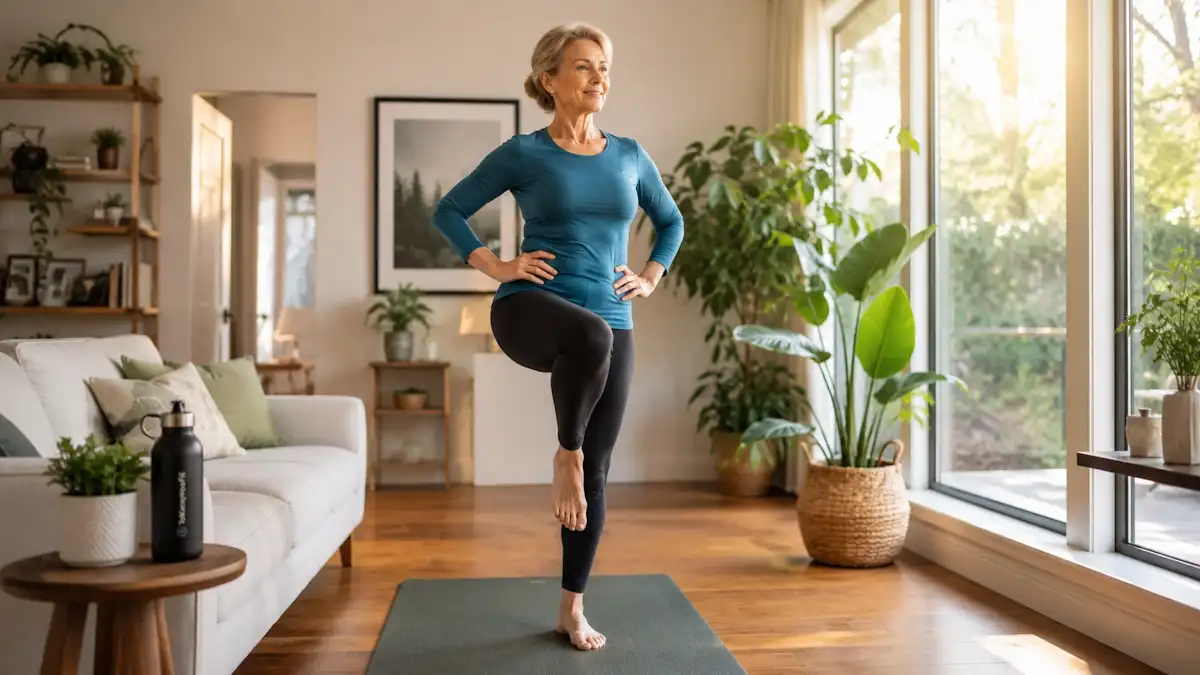
Stand on one foot to build ankle control and body awareness
Start near a chair. Lift one foot and stand tall for 10 to 20 seconds. Keep the standing knee soft and your toes spread on the floor.
If that feels shaky, touch the chair with one hand. Once the basic hold feels stable, reduce support before you think about closing your eyes.
Heel-to-toe walking to train steady steps
Walk in a straight line, placing the heel of one foot right in front of the toes of the other. Keep your gaze forward and your steps smooth.
This drill helps with coordination and walking stability. A wall nearby makes it safer. As you improve, slow the pace and pause for a second after each step.
Sit-to-stand squats to strengthen the legs that support balance
Use a sturdy chair. Sit with your feet under your knees, lean forward slightly, and stand up with control. Then lower yourself back down slowly.
That slow return matters. It builds leg strength and hip control, which help the body stay stable during daily movement. Later, try a lower chair or add a short pause halfway down.
Toe raises and heel raises for stronger lower legs
Hold a counter and lift your toes, then lower them. Next, raise your heels and come back down slowly. Both moves are simple, but they wake up the lower legs.
Those muscles help steer weight across the foot. Start with a few controlled reps. Add more before you add speed.
Tandem stance and gentle weight shifts for a safer challenge
Stand with one foot slightly in front of the other, as if you are on a narrow path. Keep your ribs stacked over your hips.
Then shift weight side to side or front to back, only a few inches at a time. Stay close to support and keep the motion calm. This builds control without forcing strain.
How to build a balance routine that fits real life
Short sessions work best when they fit your day. A good target is 5 to 10 minutes, three to five days each week.
- On three days, do 30 to 60 seconds each of single-leg stands, heel-to-toe walks, and tandem stance.
- Add 8 to 12 sit-to-stands and 10 to 15 toe and heel raises.
- Rest between moves, then repeat once if the first round feels solid.
To make exercises harder, remove one hand from support, hold the stance longer, slow the tempo, or add gentle head turns. Change one thing at a time. Control comes first.
Keep the surface stable. Wear supportive shoes if you want more grip. Stop any move that makes you feel off.
Conclusion
Balance gets better through repeat practice, not through random effort. Simple drills teach the brain, feet, ankles, and hips to work in sync.
The best routine is the one you can repeat often. A few minutes of easy exercises to improve balance can support steadier steps, cleaner weight shifts, and more confidence on ordinary days.
Pick one move today, use a chair if you need it, and build from there.

Disclaimer: This content is provided for educational and informational purposes only and should not be considered medical advice, diagnosis, or treatment. Individual responses to nutrition, exercise, sleep, recovery, and wellness practices may vary. Always consult a qualified healthcare professional before making significant health, dietary, fitness, or lifestyle changes. ToKeepYouFit does not diagnose, treat, cure, or prevent any disease. Please review our Disclaimer & Terms of Use for additional information.