
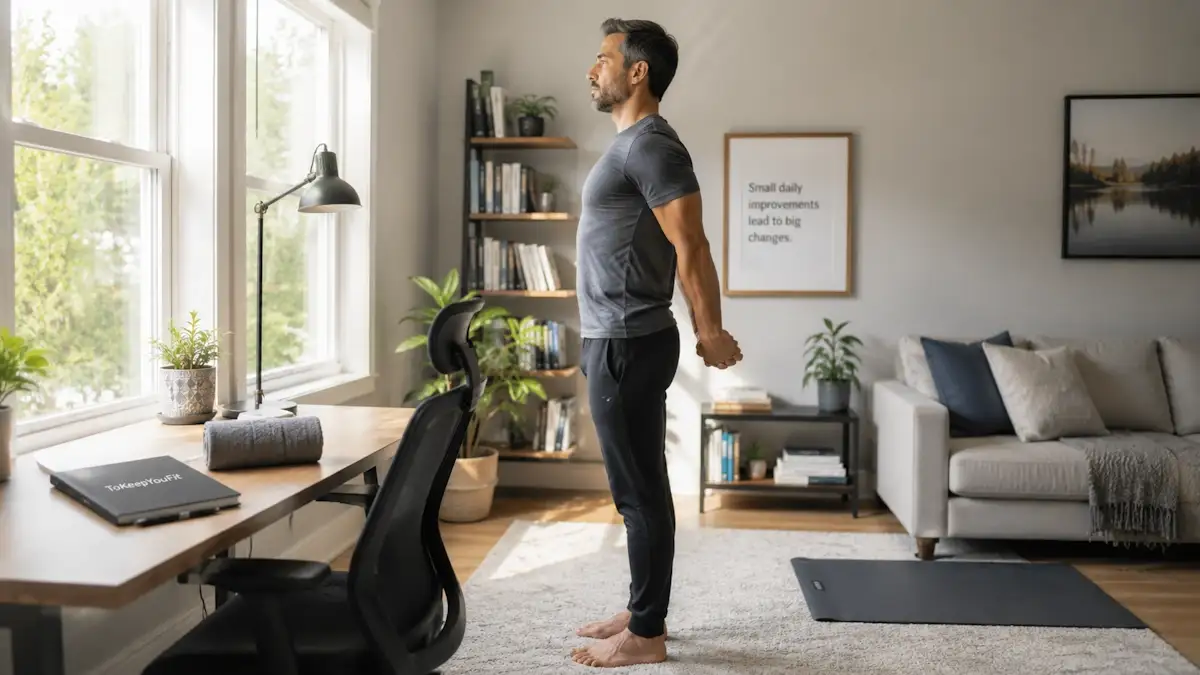
Posture slips at home because your setup makes it easy. Soft couches, low laptops, and long phone sessions pull your head forward and your shoulders in.
Better posture comes from small daily changes, not perfect sitting. The goal is to give your spine, hips, and shoulders enough support so they do less work. If you’re looking for how to improve posture at home, start with the places you use most.
Why posture gets worse at home, and what your body is really doing
Home setups often reward collapse. A deep sofa, a screen that sits too low, or a bed used as a desk all push your body out of a stacked position. After a while, the head drifts forward, the shoulders round, and the core stops helping as much.
That happens because your body follows load. If the furniture carries you, the small stabilizers around the neck, ribs, and hips have to correct constantly. That extra work adds up.
Better posture is a support problem as much as a strength problem.
The most common home habits that strain alignment
Slouching on the sofa puts your pelvis behind you and your upper back into a curve. Looking down at your phone does the same thing to your neck, only faster.
Crossing your legs for long periods twists the pelvis and shifts the hips unevenly. Working from bed or a low table often adds more neck bend and more shoulder tension. The result is a pattern that feels normal, then starts to feel tight.
Why posture improves when muscles share the load
Good posture is a team effort. Your feet ground you, your hips place you, your core supports you, your upper back holds shape, and your neck stays free.
When one part does too much, another part tightens to compensate. When the load is shared, the body uses less effort to stay aligned. That is why support matters more than forcing yourself upright all day.
How to improve posture at home with simple setup changes
The fastest wins usually come from your chair, screen, and keyboard. Small adjustments can change neck angle, shoulder tension, and low-back comfort within minutes. For a clear reference, Mayo Clinic’s office ergonomics guide covers chair height, foot placement, and screen position in plain language.
Set up your chair, screen, and keyboard so your body does less work
Keep your feet flat on the floor, or use a footrest if needed. Your thighs should feel supported, not squeezed, and your elbows should rest close to your sides.
Raise your screen so the top sits near eye level. That keeps your chin from drifting down and your shoulders from creeping up. If you type a lot, keep the keyboard close enough that you don’t reach forward.
Make your couch, bed, and kitchen counter work better for you
A couch can work if you give it structure. Use a pillow behind your low back, keep both feet on the floor, and avoid sinking so far back that your head has to lead the way.
Working from bed tends to pull the body into a flexed shape, so save it for rest. If you need a quick change of position, stand at a kitchen counter for a short task or call.
Use mirrors and phone reminders to check your alignment
A quick mirror check can reset your position. Look for a tall spine, soft ribs, level shoulders, and a chin that sits gently back instead of jutting forward.
Phone reminders help too. A prompt every 60 to 90 minutes can stop one bad position from turning into an all-day habit.
The goal is a neutral position you can return to often, not a rigid pose you hold forever.
At-home posture exercises that help your body hold better position
Setup changes matter most, but movement gives your body more range and control. Tight tissue loses flexibility when it stays in one shape, and weak or sleepy muscles don’t share load well. A short routine can help both.
Stretch the tight areas that pull you out of alignment
Chest openers help when your shoulders live in front of your body. A doorway stretch works well if you keep it gentle and breathe normally.
Hip flexor stretches can help after long sitting, since the front of the hips often shortens. Add slow neck turns and easy side bends, then stop before you push into strain.
Strengthen the muscles that support an upright posture
Glute bridges wake up the hips. Wall angels help the upper back move with more control. Dead bugs and planks train the trunk to stay steady without bracing hard.
Rows with a band or light weights also help the upper back do its share. Move slowly, keep the ribs down, and focus on clean form instead of intensity.
If your chair feels too soft or too low, ergonomic chair fit basics can help you compare seat height and foot placement.
Practice posture resets throughout the day
A short reset beats a long workout you never repeat. Roll your shoulders, stand tall for three breaths, or walk for one to two minutes each hour.
That kind of consistency keeps stiffness from piling up. It also gives your nervous system fresh input, which helps your body return to a better shape with less effort.
A quick daily posture routine you can actually stick with
Use the same three checkpoints each day: morning, midday, and evening. The table below shows common habits and the home-friendly swaps that work better.
| Common habit | What it does to your body | Better swap | Best place at home | Time needed |
|---|---|---|---|---|
| Phone in your lap | Pulls the head forward and rounds the upper back | Raise the phone to chest height | Sofa or chair | 10 seconds |
| Laptop in bed | Sinks the hips and cranes the neck | Move to a table or counter | Desk or kitchen | 1 minute |
| Crossing your legs | Twists the pelvis and loads one side more | Keep both feet flat | Chair | 5 seconds |
| Long still sitting | Stiffens the hips and back | Stand or walk briefly | Any room | 1 to 2 minutes |
| Screen too low | Makes the neck work harder | Lift the screen to eye level | Desk | 1 minute |
The pattern is simple. The less your furniture supports you, the more your neck and hips have to compensate.
Morning reset: wake up your spine before the day starts
Take a few deep breaths, reach your arms overhead, and notice how your body feels after sleep. A gentle start helps your spine stack before the day pulls you forward.
Midday reset: break up long sitting before it builds up
Stand between tasks, walk to another room, or do one mobility move. The point is to interrupt the same shape before it becomes stiff.
Evening reset: unwind the positions you held all day
Open the chest, release the hips, and move the lower back with care. That helps your body recover from the day and makes the next morning easier.
Conclusion
Better posture at home comes from setup, movement, and awareness working together. When your feet are grounded, your screen is lifted, and your muscles share the load, standing and sitting both feel easier.
Start with one change today. Small daily actions can make your posture feel steadier, cleaner, and less tiring over time.
🛡️ Safety Notes & Dietary Interactions
- Postural Endurance and Load Distribution
Posture depends on how well muscles share workload throughout the day. Frequent position changes often support better comfort than trying to hold a perfectly upright posture for long periods. - Thoracic Mobility and Shoulder Positioning
Limited upper-back mobility may contribute to rounded shoulders and forward head posture. Gentle mobility work can help restore movement options and reduce unnecessary tension. - Hip Position and Spinal Alignment
Long periods of sitting may influence hip mobility and pelvic positioning. Small movement breaks throughout the day can help maintain more balanced loading patterns across the spine and hips. - Movement Variability and Tissue Comfort
The body generally tolerates varied movement better than prolonged stillness. Alternating positions and incorporating short posture resets may help reduce stiffness and improve overall movement quality.
FAQ
Can I improve my posture without buying ergonomic equipment?
Yes. While ergonomic tools can help, many posture improvements come from simple adjustments to screen height, chair position, movement habits, and daily awareness. Small changes repeated consistently often provide more benefit than expensive equipment that does not get used properly.
How long does it take to notice posture improvements?
Many people notice small changes in comfort and body awareness within a few weeks of consistent practice. Meaningful posture improvements typically develop gradually as movement habits, muscular endurance, and positioning patterns become more automatic through regular repetition.
Why does my posture get worse when I work from home?
Home environments often encourage prolonged sitting in less supportive positions. Sofas, beds, low screens, and extended phone use can place additional demands on the neck, shoulders, and lower back. Without regular movement breaks, these positions may gradually become the body’s default pattern.
What exercises help support better posture?
Exercises that strengthen the upper back, glutes, and core often complement posture improvements. Wall angels, glute bridges, rows, planks, and controlled mobility exercises can help support the muscular coordination needed to maintain comfortable alignment throughout the day.
Is standing all day better than sitting?
Not necessarily. Both prolonged sitting and prolonged standing can create discomfort when maintained without variation. The body generally responds best to regular movement and position changes. Alternating between sitting, standing, walking, and stretching often provides greater comfort than remaining in any single posture for extended periods.

Disclaimer: This content is provided for educational and informational purposes only and should not be considered medical advice, diagnosis, or treatment. Individual responses to nutrition, exercise, sleep, recovery, and wellness practices may vary. Always consult a qualified healthcare professional before making significant health, dietary, fitness, or lifestyle changes. ToKeepYouFit does not diagnose, treat, cure, or prevent any disease. Please review our Disclaimer & Terms of Use for additional information.