
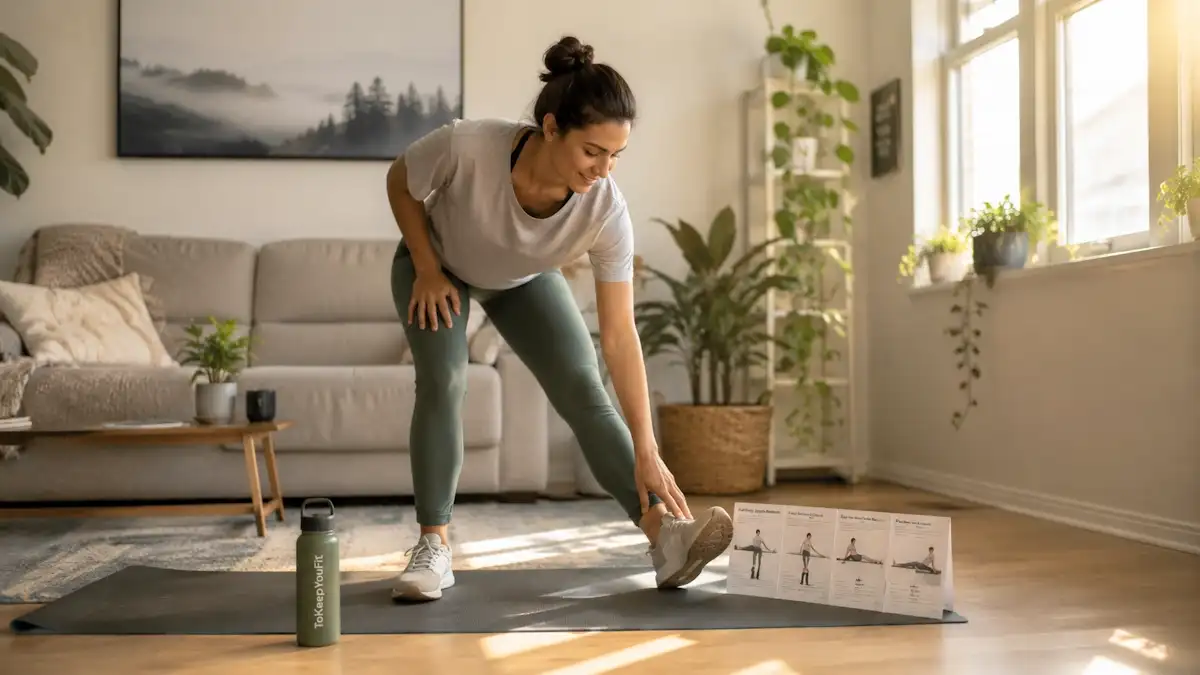
Stiff shoulders, tight hips, and a hard lower back can make stretching feel like a chore. A best stretching routine for beginners should feel simple enough to do on day one and easy enough to repeat tomorrow.
The goal is not to force deep range. The goal is to support mobility, posture, and recovery by giving your body a calm, low-stress signal. When the routine is short and predictable, your muscles and nervous system are more likely to cooperate.
What makes the best stretching routine for beginners actually work?
The strongest routine is the one you can repeat without dreading it. That means warm muscles, gentle tension, and movements your whole body understands.
Beginner stretching works best when you stop chasing intensity. Your tissues adapt over time, so the early win is comfort, not depth. Think of stretching as practice for range, not a test of how far you can bend.
Start with small goals, not deep flexibility
Your first target should be consistency. If you can move a little every day, your body gets repeated input and learns that the positions are safe.
That matters because tightness often comes from protection, not just short muscles. When the body feels less guarded, range tends to open more naturally.
Use a mix of dynamic and static stretching
Dynamic movement comes first. Static holds fit better after your body is warm, or at the end of the session.
Here’s a quick comparison.
| Stretch type | Best time | Main effect | Example | Beginner target |
|---|---|---|---|---|
| Dynamic stretching | At the start | Raises temperature and wakes up joints | Marching, arm circles, leg swings | 30 to 60 seconds |
| Static stretching | After movement | Lets muscles relax into a position | Hamstring hold, chest opener | 15 to 30 seconds |
Dynamic work prepares the system, while static work helps you settle into a stretch. Together, they make the routine smoother and easier to stick with.
Keep the routine short enough to repeat
A 5 to 10 minute routine beats a long one you skip. Short sessions fit into real life, and repetition matters more than one perfect stretch day.
If the routine feels easy, you can add a second round later. For now, simple and repeatable wins.
A simple beginner stretching routine you can follow today
You do not need equipment for this. You only need a little space, steady breathing, and a relaxed pace. A clear overview of flexibility and mobility from Penn State also supports the idea that gradual work is the better starting point.
Begin with a gentle warm-up to wake up your body
Start with 30 to 60 seconds of marching in place. Then add 10 shoulder rolls, a few arm circles, and slow side-to-side steps.
This raises tissue temperature and gives your joints a softer feel before you hold any stretch.
Move through the main stretches in a full-body flow
Use this order and keep each hold to 15 to 20 seconds, or 3 to 5 slow breaths.
- Neck side bends: Tilt one ear toward your shoulder, keep both shoulders low, then switch sides.
- Chest opener: Clasp your hands behind your back, or stand in a doorway, and gently lift your chest.
- Hamstring stretch: Sit on the floor or stand with one heel forward, hinge at the hips, and keep your back long.
- Quad stretch: Stand near a wall, pull one ankle back, and keep your knees close.
- Calf stretch: Step one foot back, press the heel down, and lean forward a little.
- Hip flexor stretch: Step into a short lunge, tuck your pelvis slightly, and keep the front foot flat.
- Gentle spinal twist: Sit tall, rotate slowly, and stop before your ribs or lower back feel cramped.
If the floor feels awkward, do the hamstring stretch seated and the twist in a chair. The best version is the one you can hold with good form.
Finish with breathing and a short reset
End with slow nasal breathing or relaxed belly breathing for 30 to 60 seconds. Let each exhale feel longer than the inhale.
That small reset helps your body leave the session calm instead of braced. A short note from the Florida Department of Health on stretching and range of motion reflects the same basic idea.
How to stretch safely when you are just starting out
Safety matters because beginners often mistake effort for progress. Stretching should create mild tension, not strain.
A good stretch feels steady and controlled. A bad one feels sharp, pinchy, numb, or unstable. If you feel joint pain, stop and change position.
Know the difference between a good stretch and a bad one
Look for a gentle pull in the muscle belly. Avoid pain near the joint, and do not force your range with bouncing.
Your body gives clear feedback when you listen. Mild tension is normal. Sharp pain is not.
Breathe slowly instead of forcing deeper range
Hold your breath, and your body tightens. Slow exhale breathing lowers that reflex and helps muscles release a little at a time.
Try one smooth inhale and a longer exhale for each stretch. That keeps the work calm and controlled.
Use props or a wall if balance is hard
A wall, chair, or towel can save you from wobbling into bad form. Support is smart, not weak.
If balance feels shaky, use help until the movement feels clean. Good alignment matters more than reaching farther.
How often should beginners stretch to see results?
A little stretching often works better than one big session a week. Most beginners do well with 5 to 10 minutes most days, especially after a walk, after a workout, or before bed.
Once that habit feels easy, add more time to the tight spots. You can hold each stretch a few breaths longer or run through the routine twice.
A realistic weekly schedule for new stretchers
Try three to five days a week at first. Keep it short, and stay consistent.
If one area feels tighter, add an extra round for that area only. That keeps the routine focused.
When to make the routine a little longer
Increase time when the routine starts to feel too easy. Add 5 to 10 seconds per stretch, or repeat the whole flow once more.
That slow progression gives your body time to adapt without pushing too hard.
Common beginner stretching mistakes that slow progress
Most frustration comes from starting too aggressively. Beginners often skip the warm-up, copy advanced poses, or expect fast changes.
Trying to stretch too hard too soon
Pushing past your current range can make the body guard more tightly. That usually slows progress.
Stay in the zone where you feel work, but not strain. That’s the sweet spot.
Copying advanced routines from social media
Flexible people can use deeper positions that a beginner should skip. What looks impressive online can be too much for a new routine.
Build the base first. Deep range comes later.
Conclusion
The best stretching routine for beginners is simple, consistent, and gentle. A short warm-up, a few full-body stretches, and calm breathing are enough to start supporting better movement.
If you keep the pressure low and repeat the routine often, your body has room to adapt. Try it today, then stick with it for a week and notice how your movement feels.
🛡️ Safety Notes & Dietary Interactions
- Progressive Mobility and Tissue Adaptation
Flexibility tends to improve through consistent exposure rather than aggressive stretching. Small daily sessions often support better long-term mobility than infrequent high-intensity efforts. - Breathing Regulation and Muscle Relaxation
Slow breathing may help reduce unnecessary muscle tension during stretching. Longer exhales often encourage a calmer response and support smoother movement quality. - Movement Quality and Joint Comfort
Stretching should create gentle muscular tension, not sharp joint discomfort. Controlled positioning generally provides more useful mobility input than forcing deeper range. - Consistency and Recovery Support
Short routines performed regularly often integrate better into recovery habits. Sustainable practice usually contributes more to mobility progress than occasional marathon stretching sessions.
FAQ
How long should a beginner stretching routine take?
Most beginners can benefit from a routine lasting five to ten minutes. This is usually enough time to move through key muscle groups without creating fatigue or frustration. Consistency matters more than duration, so a short routine performed regularly often produces better results than longer sessions that are difficult to maintain.
Should I stretch every day as a beginner?
Daily stretching can work well when the intensity remains gentle. Many people find that regular movement helps maintain mobility and body awareness. However, stretching does not need to be aggressive to be effective. Even three to five sessions per week may support noticeable improvements when performed consistently over time.
Is it normal to feel tight when starting a stretching routine?
Yes. Many beginners notice stiffness because certain positions are unfamiliar or because they spend long periods sitting throughout the day. Mild tension is expected, but stretching should not feel painful. As the body becomes more comfortable with movement, positions often feel smoother and less restricted.
What’s the difference between dynamic and static stretching?
Dynamic stretching involves controlled movement through a range of motion and is often used before activity. Static stretching involves holding a position for a short period and is commonly performed after movement or during dedicated flexibility sessions. Both approaches can complement each other when used appropriately.
How quickly will I notice improvements in flexibility?
The timeline varies between individuals, but many people notice small improvements in comfort and movement quality within a few weeks of consistent practice. Flexibility changes gradually because the nervous system, muscles, and connective tissues all adapt over time. Patience and regular practice usually produce the most sustainable results.

Disclaimer: This content is provided for educational and informational purposes only and should not be considered medical advice, diagnosis, or treatment. Individual responses to nutrition, exercise, sleep, recovery, and wellness practices may vary. Always consult a qualified healthcare professional before making significant health, dietary, fitness, or lifestyle changes. ToKeepYouFit does not diagnose, treat, cure, or prevent any disease. Please review our Disclaimer & Terms of Use for additional information.