
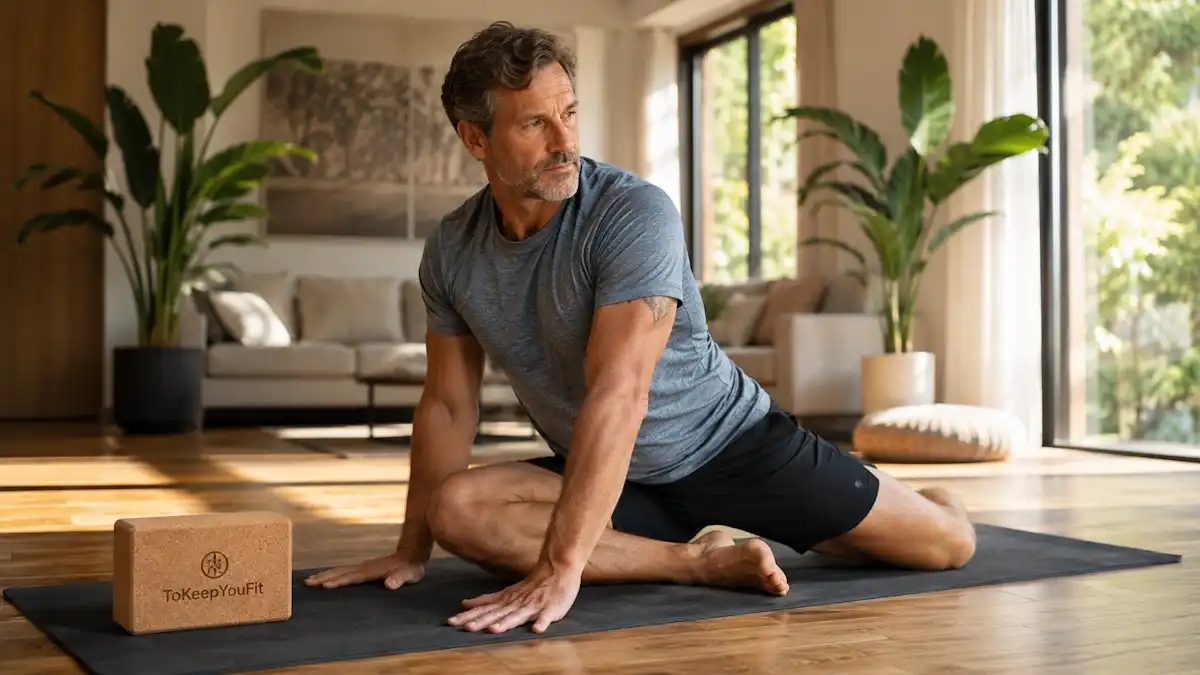
Stiff hips show up fast when you sit for hours, train hard, or move too little. The first sign is often a squat that feels blocked, a walk that feels short, or standing up from a chair that takes more effort than it should.
The goal here is simple. You want better hip motion, more comfort, and cleaner movement, not a promise that a few stretches will fix everything overnight. Good mobility work can support joint mechanics, muscle length, blood flow, and nervous system control.
This guide is for desk workers, lifters, runners, and beginners who feel tightness in daily life. If your hips complain during squats, walking, or getting up from the couch, the next section will help.
What makes hips feel stiff in the first place
Most stiff hips are a mix of several things. The joint may be moving less than it should, but the feeling can also come from tight muscles, poor pelvic control, or a body that keeps repeating the same pattern. The hip is built for both mobility and stability, so a problem in one area often shows up somewhere else.
Long sitting keeps the hip flexors in a shortened position. Less walking and fewer position changes also lower joint input, so the hips start to feel dull and guarded. Stress adds another layer, because the nervous system can raise muscle tone and make movement feel harder.
The point is simple: hips often feel stiff because they are underused, not broken.
Sitting, stress, and low daily movement can change how hips feel
Long sitting keeps the front of the hip compressed and reduces natural extension. That does not mean you need to quit sitting, but you do need more breaks. Stand up every so often, take a short walk, or change positions before the hips feel locked.
Stress matters too. When the nervous system stays on alert, muscles often hold more tone than they need. Small movement breaks can lower that background tension and keep the hips from feeling like they are stuck in place.
Weak support muscles can make the hips feel tighter than they are
When the glutes, core, and deep hip rotators do less work, other muscles step in and brace. The result can feel like tightness, even when the issue is poor support. In other words, the hips may need better control before they need more stretching.
Research on hip strengthening and pain and disability shows that support work matters, which is why the article on hip muscle strengthening exercises fits here. If a movement feels shaky, weak, or messy, the answer may be to organize it better.
The best mobility exercises for stiff hips and how to use them
A broader list of drill ideas is covered in 14 hip exercises and stretches, but a few simple patterns do most of the heavy lifting. The best routine usually blends dynamic movement, gentle stretching, and controlled end-range work.
The table below compares five useful drills and what each one does best.
| Drill | Main hip action | Best use | Setup cue | Why it helps |
|---|---|---|---|---|
| Hip circles | Rotation | Warm-up | Small, slow circles | Raises tissue temp and wakes up the joint |
| Half-kneeling hip flexor stretch | Extension | Front-of-hip tightness | Ribs down, glute lightly on | Opens the front side without dumping into the low back |
| 90/90 switches | Internal and external rotation | Squats and walking | Move slowly side to side | Trains rotation used in daily motion |
| Glute bridge | Extension support | Weak posterior chain | Feet flat, exhale, lift hips | Turns on glutes and reduces guarding |
| Cossack shift | Lateral motion | Side-to-side stiffness | Shift gently, keep control | Builds usable end-range strength |
Range that you cannot control is not very useful in real movement.
Start with gentle warm-up moves to wake up the hip joint
Begin with hip circles, marching in place, leg swings, and a few bodyweight squats. Keep the reps light and the range easy. The goal is to raise tissue temperature and remind the hip joint how to move.
Two to five minutes is enough before deeper drills or a workout. If you rush this part, the rest often feels stiff and clunky.
Use hip flexor and glute drills to balance front and back tension
Half-kneeling hip flexor stretches, glute bridges, and short lunge holds work well together. Stay tall, breathe out, and lightly squeeze the back-side glute. That helps open the front of the hip while giving the pelvis a better position.
If one side feels tighter, give it a little more time. Keep the pressure gentle. You want space and control, not a hard pull.
Add rotation work for hips that feel locked up during squats or walking
Use 90/90 switches and seated hip rotations when squats or walking feel stuck. These drills train internal and external rotation, which the hips need for stairs, turning, cutting, and lower-body lifting.
Move slowly enough that you can stay smooth. If the pelvis jerks or the low back takes over, shorten the range and clean up the motion.
Finish with controlled end range holds to build usable mobility
Use Cossack shifts, split squat holds, or a deep squat pry if they feel safe. Hold the position, breathe, and stay in a range you can control. This is where mobility becomes useful in real life.
The body learns that the new range is not a threat, so it starts to keep it. That is the difference between a temporary stretch and lasting movement quality.
How to build a simple hip mobility routine that actually sticks
A routine works best when it fits your day. Before a workout, keep it short and active. After training, add slower holds. On rest days, use a few minutes to keep the hips moving without fatigue.
Small doses matter more than a long session once a week. Consistency changes tissue tolerance and movement habits more than occasional effort.
A short daily sequence for busy people
A simple 5 to 10 minute flow can look like this:
- 1 minute of marching in place or leg swings
- 1 to 2 minutes of 90/90 switches
- 1 to 2 minutes of half-kneeling hip flexor work
- 1 to 2 minutes of glute bridges or Cossack shifts
That is enough for most people to start. If you sit all day, do it before dinner or after your work block. If you train, use it as part of your warm-up.
When to slow down, modify, or get help
Normal stretch discomfort can feel strong, but it should not feel sharp. Back off if you feel pinching in the front of the hip, numbness, catching, or pain that lingers after the drill.
Shorten the range, slow the pace, or choose an easier version. If a movement keeps feeling wrong, get it checked by a qualified professional. Mobility work should create better input, not more irritation.
Conclusion
Stiff hips usually respond best to regular movement, not force. When you combine warm-up work, rotation, hip extension, and a bit of end-range control, you support joint function, muscle balance, and smoother daily motion.
Start small, repeat it often, and let the body adapt over time. A few minutes of consistent mobility work can do more than one hard session that leaves you sore.

Disclaimer: This content is provided for educational and informational purposes only and should not be considered medical advice, diagnosis, or treatment. Individual responses to nutrition, exercise, sleep, recovery, and wellness practices may vary. Always consult a qualified healthcare professional before making significant health, dietary, fitness, or lifestyle changes. ToKeepYouFit does not diagnose, treat, cure, or prevent any disease. Please review our Disclaimer & Terms of Use for additional information.