
You cut calories, the scale drops, and everyone says, “Nice work.” Yet your workouts feel heavier, your arms look flatter, and your energy tanks. It’s a weird kind of progress, like selling your car to pay off your credit card. The number improves, but your life gets harder.
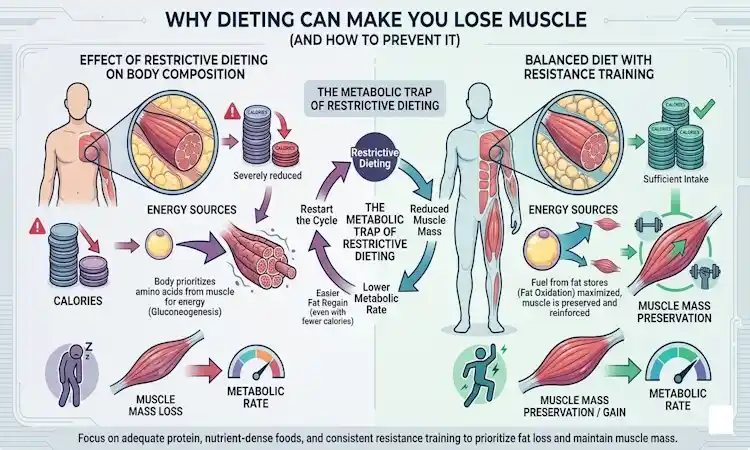
Here’s the truth: when food is low, your body pulls energy from more than one place. It can tap body fat, but it can also break down muscle tissue, especially if the plan is aggressive or your training and protein are off. That’s why dieting makes you lose muscle instead of fat can feel so real, even when you’re “doing everything right.”
The good news is you can shift the odds. Below is a simple breakdown of why muscle loss happens during fat loss, plus a clear plan to keep your muscle while you lean out.
What your body is really doing in a calorie deficit
Weight Loss Programs
Diet & Weight Loss
Diet & Weight Loss
Diet & Weight Loss

Diet & Weight Loss
A calorie deficit means you’re eating fewer calories than you burn. Think of it like a monthly budget. If your paycheck shrinks but your bills stay the same, you’ll pull money from savings. Your body does the same, it pulls energy from stored fuel.
That stored fuel comes in a few forms:
- Glycogen: stored carbs in your muscles and liver that you can use fast.
- Water weight: water your body holds, including water stored alongside glycogen.
- Body fat: stored energy in fat cells.
- Muscle protein: the amino acids that make up muscle tissue (your body can break some down when energy or protein is too low).
So when you lose “weight,” you might be losing a mix of water, glycogen, fat, and some lean tissue. This is also why two people can lose the same pounds and look totally different.
Another piece matters: your body cares about survival, not aesthetics. When you’re under-fueled, it tries to keep you functioning with the least effort. Sometimes that means burning fuel that’s easier to access, even if that choice costs you strength.
If you’ve ever wondered why weight loss causes muscle loss, this mix-and-match approach is the answer. You’re not just shrinking fat cells. You’re managing a whole system under stress. For a clear, non-hyped explanation of why weight loss rarely comes only from fat, see Scientific American’s overview of why you don’t just lose fat.
Fat is stored energy, but it is not always the easiest energy to use
Fat is a great long-term fuel source, but it’s not always the fastest. Using fat for energy takes more steps and depends on oxygen, time, and the right signals. By contrast, glycogen is like cash in your wallet. It’s quick.
When dieting feels stressful (hard workouts, poor sleep, high life stress), your body often leans on quicker energy. That can mean more glycogen use and, in harsher situations, more amino acids pulled from muscle.
This also explains a common frustration: fat loss is slower than scale loss, especially in the first 1 to 2 weeks. Early on, the scale often reflects glycogen and water shifts more than actual fat.
Why early weight loss can look like fat loss but is often water and glycogen
Glycogen lives in your muscles and liver. It also holds water. When you eat fewer calories, and often fewer carbs, glycogen drops. As glycogen falls, the water stored with it drops too.
That’s why the scale can fall fast after a new diet. Clothes may feel looser, and you might look “tighter.” It’s motivating, but it can also trick you.
The trap is what happens next. People assume that fast drop is pure fat, so they cut harder to keep the pace. That’s when muscle loss during a calorie deficit becomes more likely.
A quick scale drop at the start usually means you changed stored carbs and water, not that you “melted” pounds of fat overnight.
The most common reasons dieting makes you lose muscle instead of fat
Muscle is expensive tissue. It takes energy to maintain and repair. When resources run low, your body starts asking, “Do I really need all of this?” If your plan doesn’t give a strong reason to keep muscle, your body may let some go.
If you’re thinking, “Why am I losing muscle instead of fat while dieting?” these are the usual culprits.
The deficit is too large, so your body breaks down muscle for quick fuel
A very large calorie cut creates a big energy gap. Your training still needs fuel, your brain still needs glucose, and your body still has daily demands. When food doesn’t cover it, your body has to make up the difference.
One way it does that is by turning amino acids into glucose. Those amino acids can come from your diet, but they can also come from muscle. In other words, when calories get very low, muscle can become a backup “ingredient” for keeping your system running.
Signs the deficit may be too big often show up fast:
- Strength drops week to week, not just day to day
- Hunger feels constant, even after meals
- Sleep gets lighter or you wake up early
- Irritability increases, small things set you off
- Progress stalls after an early whoosh
Crash diets and long fasts can make this worse, especially without guidance. Some people do fine with short, structured approaches, but most end up losing muscle while trying to lose weight, then regaining fat later. Harvard Health has a helpful cautionary breakdown in Trying to lose weight? Be careful not to lose muscle.
Not enough protein, or protein spread poorly across the day
Protein gives your body the building blocks to repair and keep muscle. When protein is too low, your body can still lose weight, but it has less material to maintain lean tissue. That’s a big reason why people see “skinny-fat” results after weeks of dieting.
Timing matters too. If you eat most of your protein at dinner, you leave long gaps where your muscles get little support. Many common patterns cause trouble:
Skipping breakfast, then grabbing a pastry and coffee. Snacking through the day with low-protein foods. Saving the “healthy meal” for nighttime.
You don’t need extreme math to improve this. Use a simple target: include a palm-sized portion of protein at each meal, about 3 to 4 times per day. On training days, aim a bit higher. Also, try to pair protein with fiber-rich carbs and healthy fats so meals actually satisfy you.
This one change often answers how to keep muscle while losing fat, because it reduces the need for your body to “borrow” amino acids from muscle.
You are doing lots of cardio but not training your muscles to stay
Cardio burns calories and improves heart health. It’s not the enemy. The issue is when dieting plus lots of cardio becomes the whole plan.
Muscle works on “use it or lose it.” If you don’t give your body a reason to keep muscle, it may decide it’s extra weight you don’t need. Resistance training sends the opposite message: “Keep this tissue, I need it.”
Another issue is recovery. High cardio volume in a deficit can stack fatigue on fatigue. Then your lifting suffers, or you stop lifting. Strength drops, and muscle loss risk rises.
A quick myth check helps here: lifting doesn’t make you bulky. It builds shape and strength. When calories are low, it’s more about keeping what you already earned.
Stress hormones and poor sleep make muscle easier to lose
If you’re stressed and sleeping 5 to 6 hours, your cut gets harder. High stress can raise cortisol. Over time, that can increase cravings, reduce training drive, and slow recovery.
Sleep loss also changes appetite signals. You feel hungrier and less satisfied. Meanwhile, your workouts feel harder, which can push you to do less strength work and more “easy” cardio. That combo can lead to muscle loss during calorie deficit phases.
The fix is simple, not always easy:
Keep a consistent sleep and wake time most days. Build a 20 to 30-minute wind-down routine. Avoid stacking your hardest training days on your lowest-calorie days.
If you want practical red flags and next steps, this article outlines signs your diet is causing too much muscle loss in a way that’s easy to self-check.
How to stop losing muscle while dieting and target fat loss instead
You don’t need a perfect plan. You need a plan that keeps muscle on your side. That means four basics: a moderate deficit, enough protein, consistent strength training, and real recovery.
A helpful mindset shift: fat loss is like sanding a piece of wood. If you rush, you gouge it. Slow, steady passes create a smooth finish.
Set a moderate deficit and track progress the right way
For most people, slower loss protects strength and muscle better. A good target is about 0.5 to 1 percent of body weight per week. That pace tends to feel more livable, which means you can keep training well.
Tracking also matters. If you rely only on daily scale weight, you’ll chase noise. Instead, use a small set of signals:
- Weekly weight averages (not single weigh-ins)
- Waist measurement
- Progress photos every 2 to 4 weeks
- Strength numbers on key lifts
Daily swings happen because of sodium, stress, carbs, and digestion. That’s normal. If your waist is shrinking and strength is steady, you’re usually on track, even if the scale acts weird.
Talk to a clinician before dieting if you’re pregnant, have a medical condition, take meds that affect weight, or have a history of disordered eating. Muscle retention is important, but safety comes first.
If your plan makes you weaker every week, it’s not a “willpower problem.” It’s a design problem.
For more context on why protecting lean mass matters during weight loss, Sword Health shares a clear summary in how to maintain muscle during weight loss.
Lift weights with a plan, keep protein high, and add smart cardio
Strength training is your anchor. Aim for 2 to 4 full-body sessions per week, depending on your schedule and experience. Focus on big, simple moves (squat pattern, hinge, push, pull, carry). Try to add a rep or small amount of weight over time, even while cutting.
While dieting, don’t take every set to failure. Leave 1 to 3 reps in reserve most of the time. That keeps performance up and recovery realistic.
Protein stays non-negotiable. Keep that palm-sized portion at each meal. Add a protein-forward snack if needed (Greek yogurt, cottage cheese, a shake, jerky with fruit). Also, don’t ignore fiber and hydration. Vegetables, beans, berries, and whole grains help hunger feel calmer, and water supports training.
Cardio works best when it supports lifting, not when it replaces it. Two approaches tend to fit busy lives:
A few short sessions each week (20 to 30 minutes), or a daily step goal. If you like harder intervals, place them away from leg day when possible, so your lower body can recover.
A simple weekly structure could look like this:
- 3 days strength training
- 2 days light cardio or longer walks
- 2 easier

The content provided on tokeepyoufit.com is intended for general informational and educational purposes only. All materials on this site, including articles, recipes, tips, guides, opinions, and product recommendations, are not a substitute for professional advice from a qualified medical, nutrition, or fitness expert. Users should consult a licensed professional before making any decisions related to health, diet, or exercise. Please read our full Medical Disclaimer here.
Dietary Supplements

Dietary Supplements
NeuroQuiet – Daily Support for Brain Health, Hearing, and Tinnitus Relief

Dietary Supplements

Dietary Supplements

Dietary Supplements
Nagano Tonic – Daily Support for Energy, Vitality, and Balance