

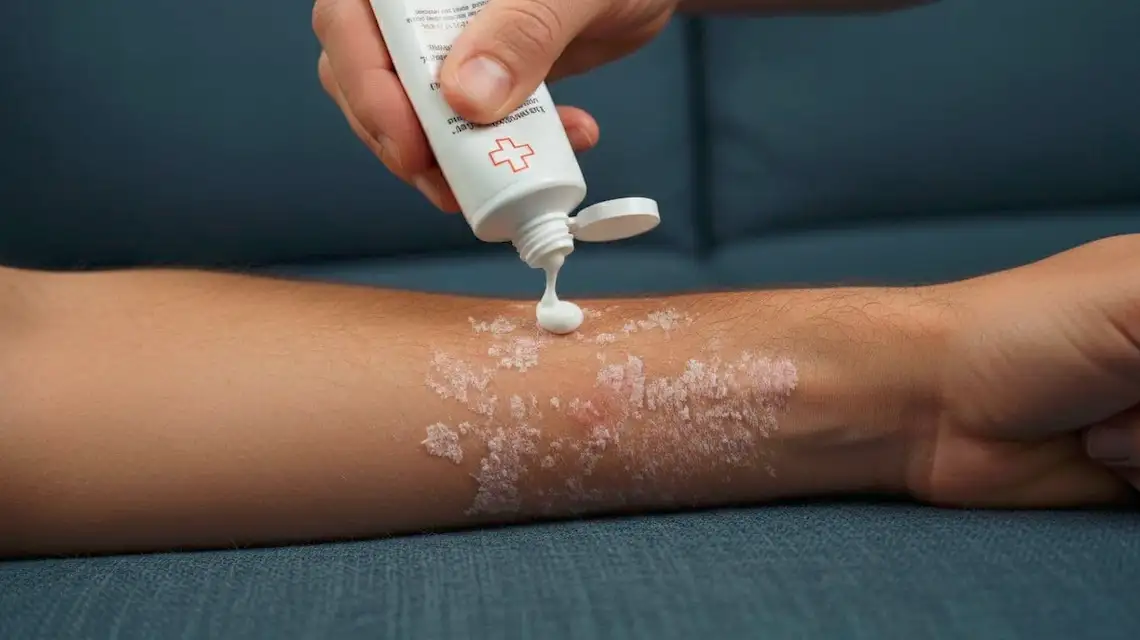
If you are asking what treats psoriasis, you are not alone. Psoriasis is a long-term skin condition driven by the immune system. It speeds up skin cell growth and causes red, scaly patches that itch and burn. There is no cure yet, but many treatments can clear skin, cut itch, and prevent flares.
Some options work in days, others take weeks to months. Topicals often help within 2 to 6 weeks. Light therapy and pills may take 4 to 12 weeks. Biologics can show results by week 4, with peak results by 3 to 6 months.
This guide covers at-home care, over-the-counter picks, prescription creams and light therapy, and advanced pills and biologics. The tone here is hopeful and practical, because with the right plan, control is possible for most people. Let’s get you confident about next steps.
What treats psoriasis? How treatment works and how doctors choose
Psoriasis happens when the immune system sends strong signals that speed up skin growth. Skin cells pile up and form thick, scaly plaques. The skin barrier gets dry and cracked, nerves fire up itch, and redness builds.
Treatments target several steps: they calm the immune signal, slow skin growth, reduce scale, and rebuild the barrier. Some focus on the skin surface, like moisturizers and topical creams. Others work deeper, like pills, light therapy, and biologics that target specific immune pathways. The main goal is clear or almost clear skin with less itch and burning, plus fewer flares over time.
Dermatologists choose a plan by severity, type, and location. Mild psoriasis covers small areas and has low impact on daily life. Moderate to severe psoriasis covers more skin or impacts sleep, work, or mood. Special locations like scalp, face, hands, feet, nails, and skin folds often need tailored care. Joint pain can point to psoriatic arthritis, which often needs pills or biologics.
Timelines vary. Topical steroids and vitamin D creams may improve plaques in 2 to 6 weeks. Light therapy often shows progress by week 4 to 8. Pills can work in 2 to 8 weeks, depending on the drug. Biologics may start clearing by week 4, with best results by 12 to 24 weeks. In the sections below, you will learn how to use at-home routines, which OTC actives help, what to expect from prescriptions, and how to combine treatments safely.
The basics: why psoriasis flares and what treatments target
In psoriasis, immune cells send strong signals that tell skin cells to grow too fast. New cells reach the surface in days instead of weeks. That fast turnover causes thick, scaly plaques and inflammation.
Treatments work by cooling that immune signal, slowing skin growth, and softening or lifting scale. Moisturizers help the barrier and cut itch. When needed, stronger options calm the process from the inside.
How doctors match treatment to severity and location
Mild disease often means small body areas, like less than 3 to 5 percent of the skin. Moderate to severe covers larger areas, or it severely affects life, sleep, work, mood, or self-esteem. Location matters. Scalp, face, skin folds, hands, feet, and nails can be stubborn or sensitive, so doctors may pick special formulas or non-steroid creams there. Joint pain, morning stiffness, or swollen fingers may point to psoriatic arthritis and change the plan.
Setting goals and tracking progress
Set targets you can measure, like 75 to 90 percent clearer skin, fewer flares, and itch below 3 on a 0 to 10 scale. Take photos every 2 to 4 weeks in the same light. Log itch and sleep. Follow up every 8 to 12 weeks to adjust the plan. Slow and steady wins here.
At-home and OTC treatments that calm psoriasis fast
Daily care helps most people with mild psoriasis. It also boosts results from prescription treatments in moderate to severe cases. Think of it like priming a wall before painting. You improve the surface, then every other step works better.
Short, lukewarm showers, thick moisturizers, gentle shampoo, and sun safety make a strong base. Proven OTC actives, like salicylic acid and coal tar, can reduce scale and calm plaques. A few lifestyle shifts also reduce flares and help meds work better. The goal is a routine that fits your day, so you actually stick with it.
Moisturizers and bathing that soothe plaques
Pick thick creams or ointments with petrolatum, ceramides, or urea. Apply right after a short lukewarm shower to trap water in the skin. Pat dry, then seal in moisture.
For stubborn scale, a short soak or a warm compress can loosen plaques. Then apply a moisturizer or a medicated cream. This softens edges and makes actives absorb better.
OTC actives that treat psoriasis
- Salicylic acid: Loosens and lifts scale. Useful for thick plaques and scalp.
- Coal tar: Slows skin cell growth. Can help itch and reduce scale. It may smell or stain fabric, so use at night or with old towels.
- 1% hydrocortisone: Good for short flares on small areas. Use for a few days, not for long-term daily use. Avoid broken or infected skin.
If a spot does not improve in a few weeks, check with a doctor. OTC tools help, but prescription options may be needed.
Lifestyle steps that reduce flares
- Stress tools: Try walks, breathing exercises, short meditations, or yoga. Even 10 minutes helps.
- Steady sleep: Aim for regular sleep and wake times. Keep a dark, cool room.
- No smoking: Smoking worsens psoriasis and slows response to treatment.
- Less alcohol: Heavy drinking triggers flares and adds risk with some meds.
- Healthy weight: Weight loss can improve plaques and help treatments work better.
- Gentle sun: Short, careful sun exposure may calm plaques. Always use sunscreen, never burn.
Scalp and sensitive skin care tips
Use medicated shampoos with coal tar or salicylic acid for the scalp. Massage into the scalp, not just the hair, and leave on as directed. For the face and skin folds, use gentle, fragrance-free products. Ask your doctor about non-steroid options for these thin or sensitive areas.
Prescription treatments that treat psoriasis, from creams to biologics
When psoriasis covers larger areas, affects sleep or daily life, or involves joints, prescriptions help restore control. Doctors may start with topical steroids and vitamin D creams, then step up to light therapy, pills, or biologics based on severity and response. The right option depends on your skin, your health, and your goals.
Below is a quick, clear guide to how each category works, how fast they act, common side effects, and basic safety checks.
Topical medicines your doctor may start with
- Steroid creams, ointments, foams, and solutions: Reduce redness and itch fast, often within 1 to 3 weeks. Stronger steroids are used for thick plaques on the body, lower strength for face, folds, and genitals. Common side effects include skin thinning with overuse, stretch marks, and acne-like bumps. Doctors often use short bursts, then step down. Weekend or pulse use can help prevent rebound.
- Vitamin D analogs, like calcipotriene or calcitriol: Slow skin cell growth and help maintain clear skin. Often combined with a steroid to boost results and reduce steroid use.
- Topical retinoid, like tazarotene: Helps thin plaques and reduce scale. Can irritate, so pair with moisturizer and use as directed.
- Non-steroid options for face and folds, like calcineurin inhibitors (tacrolimus, pimecrolimus): Calm inflammation without steroid thinning risk. They can sting at first, which often fades.
Light therapy that clears skin without pills
- Narrowband UVB: A proven in-office or home treatment done 2 to 3 times per week. It slows fast turnover and reduces inflammation. Many see progress by week 4 to 8. Eye protection is required.
- Excimer laser or lamp: Targets small, stubborn spots with focused UVB. Helpful for plaques on elbows, knees, or scalp edges.
- PUVA: Combines a drug called psoralen with UVA light. Used for tough cases under close supervision. Not the same as tanning beds. Skip tanning beds, they raise skin cancer risk without the control or safety of medical light.
Pills for psoriasis: pros, cons, and timing
- Methotrexate: Calms the immune system and can help skin and joints. Often works in 4 to 8 weeks. Requires lab checks for liver and blood counts. Avoid alcohol or limit it.
- Cyclosporine: Fast acting, sometimes within 2 to 4 weeks. Usually a short-term rescue due to blood pressure and kidney risks. Requires regular labs and blood pressure checks.
- Acitretin: A vitamin A derivative that helps thick plaques and palmoplantar psoriasis. Works best when combined with light therapy. Can dry skin and lips. Not safe in pregnancy and has long-lasting birth defect risks.
- Apremilast: An oral option that reduces inflammation through PDE4 inhibition. Often helps in 4 to 8 weeks. Common side effects include stomach upset, headache, and weight loss. No lab monitoring is usually needed, but tell your doctor about mood changes.
Always follow your doctor’s guidance on timing, labs, and birth control needs where relevant.
Biologics and targeted injections for clear skin
Biologics target key immune pathways, like TNF, IL-17, and IL-23. Many people reach high clearance rates and maintain control long term.
- TNF blockers: Examples include adalimumab, etanercept, and infliximab.
- IL-17 blockers: Examples include secukinumab, ixekizumab, and brodalumab.
- IL-23 blockers: Examples include guselkumab, risankizumab, and tildrakizumab.
- IL-12/23 blocker: Ustekinumab targets a shared pathway.
- Targeted oral, TYK2 inhibitor: Deucravacitinib is a once daily pill that targets signaling inside immune cells.
Most biologics are shots given at home on a set schedule. Some are infusions at a clinic. Doctors check for infections before starting, like TB or hepatitis, and may repeat labs over time. Report fevers, cough that will not quit, or new infections. Biosimilars can lower cost and expand access.
Build a smart psoriasis plan: combine treatments, stay safe, and save money
Psoriasis control often improves when you combine treatments in a smart way. Moisturizers boost any plan. Topicals can pair with light therapy. A biologic can pair with a vitamin D cream or a mild steroid for spot touch-ups. The goal is better results with fewer side effects.
Know when to call the doctor, how to track progress, and how to lower costs. You do not need to do everything at once. Build a plan in layers and stick with it long enough to see what works.
Combining treatments for better results
- Steroid plus vitamin D analog: Use the combo daily during a flare, then reduce to weekends for maintenance as advised.
- Light therapy plus topical: Moisturize, treat scale, then use UVB as scheduled. This pairing often clears faster.
- Biologic plus moisturizer: Maintain the barrier to reduce itch and flares between doses.
- Rotation and breaks: Doctors may rotate steroid strengths or forms and plan rest periods. Follow the plan and avoid overuse.
Side effects and safety checks to know
- Skin thinning and stretch marks: Can happen with strong steroids on thin skin or with long use. Use as directed and take breaks.
- Infection warning on stronger meds: Call if you have fever, a cough that lingers, or pus. Pause treatment only if your doctor says so.
- Labs and checks: Some pills need regular blood work. Keep appointments so issues do not sneak up.
- New joint pain, swollen fingers, or morning stiffness: Report these. Psoriatic arthritis is treatable, and early care helps.
When to see a dermatologist or get urgent help
- See a dermatologist if plaques cover large areas, if scalp or nails are severe, if pain or itch disrupts sleep, or if joints hurt in the morning.
- Get urgent help for widespread redness and heat, fever with rash, or pus and rapid swelling. These can be signs of infection or a severe flare that needs fast care.
Costs, insurance, and support programs
- Use generics when possible for topicals and pills.
- Ask about biosimilars for biologics to reduce cost.
- Prior authorization: Your doctor’s notes, body photos, and a record of tried treatments can speed approval.
- Manufacturer copay cards and patient assistance: Many programs lower out-of-pocket costs.
- Home UVB units: For long-term plans, home treatment may save time and money, with a doctor’s guidance.
- Stay organized: Keep a simple log of flares, photos, and what you tried. It helps with coverage and care decisions.
Quick reference: timelines for common psoriasis treatments
| Treatment type | Typical time to see results | Notes |
|---|---|---|
| Thick moisturizers, emollients | Days to 2 weeks | Reduce itch, improve scale, boost other treatments |
| OTC salicylic acid or coal tar | 1 to 4 weeks | Helps lift scale and slow growth |
| Topical steroids, vitamin D | 2 to 6 weeks | Faster on body plaques than face or folds |
| Narrowband UVB | 4 to 8 weeks | Needs 2 to 3 sessions per week |
| Pills, like methotrexate | 4 to 8 weeks | Lab monitoring varies by drug |
| Biologics and TYK2 inhibitor | 4 to 12 weeks | Peak results by 3 to 6 months |
Conclusion
Psoriasis is manageable when treatment matches your skin, your goals, and your life. Start with daily care, like thick moisturizers, short showers, and smart sun. Then talk with a dermatologist about topicals, light therapy, pills, or biologics, based on your severity and any joint symptoms. If you asked what treats psoriasis, the answer is a plan tailored to you.
Track progress with photos and an itch score, and adjust every 8 to 12 weeks. Combine treatments to boost results and cut side effects. Ask about generics, biosimilars, and support programs to lower costs. Most of all, stay consistent. Clearer skin and fewer flares are within reach when you build a steady, personalized routine.
Related post: Natural Remedies for Hormonal Skin Problems
What Treats Psoriasis FAQ: What Works and Why
What actually treats psoriasis?
Several options help. Topicals, light therapy, oral drugs, and biologics. The plan depends on severity, skin location, and your health.
Are there cures for psoriasis?
No cure exists. Treatments control symptoms, clear skin, and reduce flares. Long-term care keeps it stable.
What over-the-counter options help?
Thick moisturizers reduce itch and scaling. Salicylic acid softens plaques. Coal tar can calm scaling and itch. Use fragrance-free products.
Which prescription creams work best?
Topical steroids are first-line for many. Vitamin D analogs, calcineurin inhibitors, and topical retinoids also help. Doctors often combine a steroid with vitamin D.
What is phototherapy and who needs it?
Phototherapy uses controlled UV light in a clinic or at home. Narrowband UVB is most used. It helps moderate psoriasis, especially widespread plaques.
Which pills treat psoriasis?
Methotrexate, cyclosporine, acitretin, apremilast, and deucravacitinib can help. These need monitoring for side effects. Your doctor will match the drug to your needs.
What are biologics and when are they used?
Biologics target immune pathways that drive psoriasis. Options include TNF, IL-17, IL-23, and IL-12/23 inhibitors. They are used for moderate to severe disease or when other treatments fail.
How fast do treatments work?
Topicals may help in 2 to 4 weeks. Phototherapy often needs 6 to 12 weeks. Oral drugs and biologics vary, some clear skin in 4 to 12 weeks.
Can I treat scalp psoriasis?
Yes. Medicated shampoos with coal tar or salicylic acid help. Topical steroids, vitamin D lotions, and foams are used. Gentle combing loosens scale.
What about nail psoriasis?
Topical steroids, vitamin D, or calcineurin inhibitors can help nails. Injections into the nail fold or systemic therapy may be needed for severe cases.
Is psoriasis on skin folds treated differently?
Yes. Use low-strength steroids for short periods. Calcineurin inhibitors work well and avoid skin thinning. Keep folds dry and reduce friction.
Do lifestyle changes make a real difference?
Yes. Moisturize daily, quit smoking, and limit alcohol. Manage stress and sleep. Maintain a healthy weight, it can improve response to treatment.
Does diet help?
Some people see benefit with weight loss if overweight. A heart-healthy diet supports overall health. Gluten-free helps only if you have celiac disease.
Are “natural” remedies safe or effective?
Evidence is mixed. Aloe and oatmeal can soothe. Avoid potent herbal creams without labels. Always check for interactions.
How are psoriatic arthritis symptoms treated?
NSAIDs help pain. Methotrexate, apremilast, and biologics can control joint and skin disease. Early treatment protects joints.
What side effects should I know about?
Topicals can thin skin if overused. Phototherapy can burn and adds some skin cancer risk over time. Oral drugs and biologics may raise infection risk. Your care team will monitor labs when needed.
Do I need tests before starting certain treatments?
Often yes. Doctors may screen for TB, hepatitis B and C, and check blood counts and liver function. Vaccines may be updated before biologics.
Can I use treatments during pregnancy?
Some are safe, others are not. Topical steroids and phototherapy are often used. Many oral drugs and some biologics are avoided. Always review plans with your doctor.
How long will I need treatment?
Psoriasis is chronic. Many people stay on maintenance therapy. Plans may change as your skin improves or life events occur.
Can treatments be combined?
Yes. Doctors often pair topicals with phototherapy or systemic drugs. Combining can improve results and lower doses.
When should I see a dermatologist?
If you have widespread plaques, nail changes, or joint pain. OTC care fails after a few weeks. If symptoms affect sleep, work, or mood.
How do costs compare?
Topicals are often cheapest. Phototherapy and older oral drugs cost less than many biologics. Insurance coverage varies, ask about assistance programs.
How can I prevent flares?
Treat early, use your maintenance plan, and avoid triggers. Common triggers include skin injury, infections, severe stress, and certain drugs. Keep skin moisturized year-round.

Gas S. is a health writer who covers metabolic health, longevity science, and functional physiology. He breaks down research into clear, usable takeaways for long-term health and recovery. His work focuses on how the body works, progress tracking, and changes you can stick with. Every article is reviewed independently for accuracy and readability.
- Medical Disclaimer: This content is for education only. It doesn’t diagnose, treat, or replace medical care from a licensed professional. Read our full Medical Disclaimer here.