

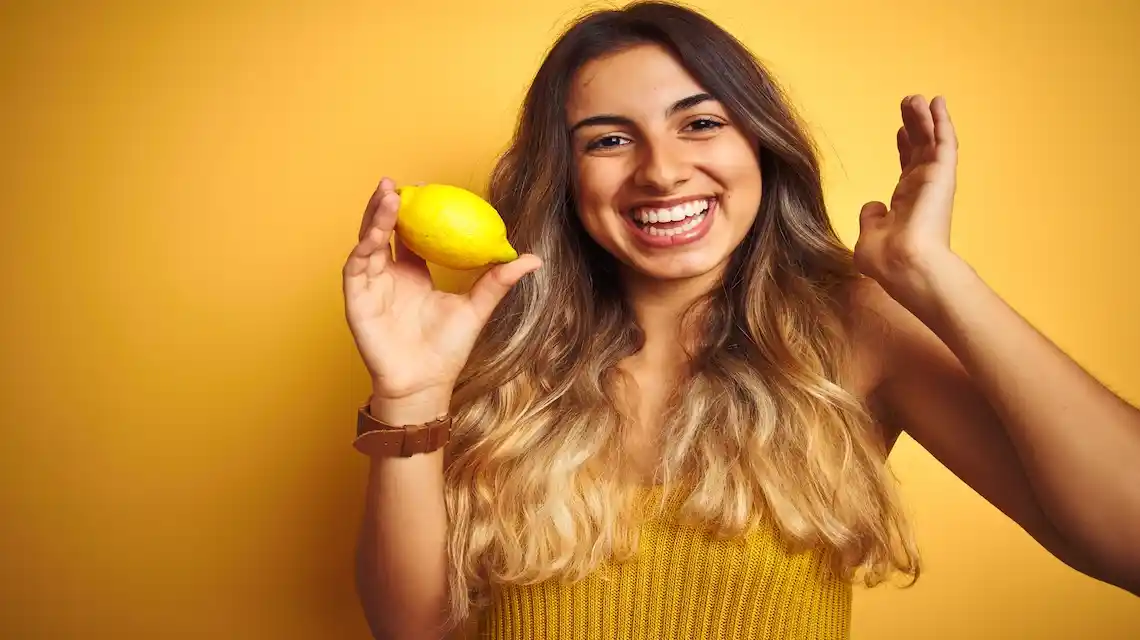
Squeezing a lemon on your hair and sitting in the sun sounds simple. It is cheap, easy, and all over TikTok and YouTube. Many people see it as a “natural” way to get soft highlights in summer.
But Risks of Using Lemon Juice to Lighten Your Hair are very real, and they go far beyond a little dryness. People have reported painful burns, rough hair, and color that is hard to fix later. Doctors and stylists are both warning against this viral trick.
This guide is not a how‑to. It focuses on what can go wrong, why lemon is harsher than it looks, and safer paths if you still want lighter hair without wrecking it.
How Lemon Juice Lightens Hair (And Why It Can Be Risky)
Lemon juice has a lot of citric acid. When that acid sits on your hair in strong sunlight, it reacts with the pigment in the hair strand. The sun gives energy to the acid, and the pigment starts to break down. That is what makes the hair look lighter.
On paper, that might sound close to what salon lightener does. In some ways it is. Both change your natural color by breaking pigment bonds. The big difference is control. In a salon, timing, strength, and aftercare are planned. With lemon and sun, your hair is left on its own, and your scalp and skin are exposed too.
Health writers at Medical News Today explain how lemon can lighten hair but also irritate skin. When you add strong UV rays on top, the risks climb fast.
The science in simple words: what lemon and sun do to your hair
Think of your hair like a colored cotton T‑shirt. If you leave that shirt in the sun day after day, the shade fades and the fabric gets weaker.
Lemon juice speeds that fading. The acid lifts the cuticle a bit and helps the sun reach the pigment inside the hair. It is similar to very weak bleach. The color may lighten, but the “fabric” of your hair can also thin, dry out, and snap.
Why “natural” does not always mean safe for your hair
People often think natural equals gentle. Lemon feels safe because it grows on trees and sits in your fridge. But natural things can be strong. Vinegar is natural and still stings a cut. Chili peppers are natural and can burn your eyes.
Lemon juice is a strong acid. On hair, that acid can roughen the cuticle, which is the outer shell that keeps moisture in. Once that shell is lifted and chipped, hair loses water fast and tangles more. Salon lightening products are also harsh, but stylists can choose lower strengths, add bonding treatments, and rinse at the right time. At home, with a bottle of lemon and no plan, the damage is not controlled at all.
Hidden Risks of Using Lemon Juice to Lighten Your Hair
The Risks of Using Lemon Juice to Lighten Your Hair show up in several ways. Some affect how your hair feels, others how it looks, and some hit your skin and scalp.
Dry, brittle, and broken strands from strong acidity
Your scalp makes natural oils that move down the hair shaft and protect it. Lemon juice strips those oils. The acid also opens and roughens the surface of the hair.
After a few rounds, hair can feel:
- Dry and straw‑like
- Rough to the touch
- Frizzy even after brushing
Weak hair breaks more easily, so you may see more split ends and short broken pieces around your head. Curly hair, which is already more dry by nature, can lose its shape and spring. Color‑treated or bleached hair is even more at risk because it is already damaged. A doctor quoted in a FreshPlaza report on the viral lemon hair hack warns that this drying effect can make strands very fragile.
Uneven color, brassiness, and patchy light spots
Lemon juice does not spread or lift like salon color. It soaks in more where the hair is thin or more porous. The sun also hits some areas more than others, like the top of your head and the front pieces.
The result is often:
- Streaky, uneven light spots
- Orange or yellow bands, especially on darker hair
- Random bright patches that do not blend
On dark brown or black hair, the acid often pulls warm tones first. That can leave a rusty or brassy look that feels more “fried ends” than beach blonde. Fixing this in a salon can be hard. Your stylist may need stronger lightener or more color to even things out, which adds even more stress to hair that is already dry.
Scalp irritation, burning, and long term sensitivity
Your scalp skin is thin and sensitive. Straight lemon juice on that skin can sting right away. Add sun, and the heat makes it worse. People with dandruff, eczema, or small scratches on the scalp may feel burning, itching, or see red patches.
Children and teens who copy trends are more likely to soak their whole head or leave it on for hours. That raises the chance of peeling, sore spots, and long term sensitivity to hair products that never bothered them before.
Sun damage to hair and skin when lemon is involved
Lemon juice plus UV light is not just a hair issue. Any juice that drips on your face, neck, or arms can cause problems when you go out in the sun.
Some people get a reaction called phytophotodermatitis. In simple terms, that means plant juice plus sunlight causes a burn‑like rash. Citrus fruits are one of the triggers. The skin can blister, hurt, and later heal with darker or lighter patches. You can read more about this in WebMD’s guide to phytophotodermatitis.
Hair itself also takes extra sun damage. With the cuticle weakened by acid, UV light dries the inner parts faster, so strands look dull and feel rough.
Safer Ways to Lighten Hair and Protect Your Scalp
The good news: you can want lighter hair and still protect your scalp and skin. You do not have to choose between flat color and fried ends. In fact, many experts say the risks of using lemon juice to lighten your hair are not worth the small, uneven lift you may get.
Beauty and skin doctors quoted in Everyday Health’s review of lemon hair lightening note that salon help or gentler products are usually safer.
When to talk to a stylist instead of trying lemon juice
A quick chat with a stylist is worth it if you have:
- Very dark or almost black hair
- Hair that is already colored, bleached, or relaxed
- Very dry, fine, or curly hair
- A sensitive, itchy, or flaky scalp
In these cases, lemon can cause more damage than you expect. Ask your stylist about options like low‑lift highlights, balayage for soft brightness, or a gloss that adds shine and a tiny bit of tone. These methods still use chemicals, but a pro can watch your hair, time the process, and add treatments to help protect the bonds.
Gentler lightening options and protective habits
You can also brighten your look without direct acid and sun on your head.
Some ideas:
- Use a purple shampoo if your hair is already light but looks brassy.
- Try a salon or store‑bought lightening spray that is made for hair.
- Use a deep conditioner or hair mask once a week to keep strands soft.
- Wear a hat or use a UV‑protective hair mist at the beach or pool.
If someone still decides to test lemon, they should at least dilute it with water, avoid rubbing it on the scalp, keep sun time short, and follow with a rich conditioner. Even with those steps, it is still not a risk‑free method.
Conclusion
Lemon juice seems like a sweet shortcut to sun‑kissed strands, but the hidden costs add up. You now know how the acid and UV light team up to strip pigment and moisture, and how that can leave you with dry hair, uneven color, and sore skin.
The Risks of Using Lemon Juice to Lighten Your Hair include brittle strands, brassiness that is tough to fix, scalp burns, and skin reactions like phytophotodermatitis. Quick “natural” tricks often ignore long term hair health and the real condition of your scalp.
If you want lighter hair, think about how you want it to look and feel next year, not just next week. Talk with a stylist, choose gentler products, and protect your skin in the sun. In the end, healthy, strong hair is worth far more than a fast, risky lemon experiment.
Smart FAQs About the Risks of Using Lemon Juice to Lighten Your Hair
Is using lemon juice to lighten hair actually safe?
Lemon juice is often seen as “natural,” but that doesn’t mean it’s risk-free.
The citric acid in lemon juice opens the hair cuticle and, with UV light, breaks down pigment. This process dries the hair out and can weaken the strands.
Occasional, lightly diluted use might be less risky for healthy, untreated hair, but frequent or strong applications can lead to dryness, split ends, and breakage. If your hair is already fragile, color-treated, chemically processed, or very curly, the risk is higher.
How does lemon juice damage hair?
Lemon juice mainly causes dryness and weakness. Here is what tends to happen:
- The acid lifts the hair cuticle, so moisture escapes more easily.
- UV exposure plus acid breaks down both pigment and protein in the hair shaft.
- Hair feels rough, looks dull, and tangles more.
Over time, this can mean more split ends, frizz you can’t control, and hair that snaps when you brush or style it.
Can lemon juice irritate the scalp or skin?
Yes, it can. Lemon juice is highly acidic, and that can sting or burn.
Common reactions include:
- Redness or itching on the scalp
- Burning on sensitive or broken skin
- Flaking or a tight, uncomfortable feeling
If you already have a sensitive scalp, eczema, psoriasis, or any cuts or sunburn, lemon juice can make those worse. Never apply lemon juice to broken skin, and rinse it off right away if you feel strong burning.
Is it risky to sit in the sun with lemon juice in my hair?
This is where many risks increase. Lemon juice plus sun means:
- Higher chance of sunburn on your scalp, ears, and face
- More UV damage to the hair itself
- Possible eye irritation if it drips or you touch your eyes
You also raise your long-term UV exposure, which ties into a higher risk of skin cancer. If you still choose to do it, you should protect your skin with sunscreen, a hat when possible, and sunglasses, and keep lemon away from your scalp and skin as much as you can.
What can go wrong with the color when I use lemon juice?
Lemon lightening is very unpredictable. Results depend on your starting color, hair condition, and how often you use it.
Possible color issues:
- Patchy, uneven light spots
- Brassy or orange tones on darker hair
- A dull, faded look on color-treated hair
Once the color is uneven, it can be hard and sometimes costly for a colorist to fix. Lemon does not work like salon bleach, so you have much less control over the result.
Is lemon juice safe on dyed, bleached, or chemically treated hair?
This is where lemon juice becomes especially risky.
On already processed hair, it can:
- Strip or distort your hair color
- Expose and exaggerate brassiness
- Increase dryness and breakage because the cuticle is already stressed
If you have highlights, balayage, permanent color, a relaxer, or a perm, using lemon juice can push your hair past its limit. In many cases, stylists advise skipping lemon altogether on treated hair.
Can kids or teens use lemon juice to lighten their hair?
Younger people often have more sensitive skin and scalp, so risks can be higher. Lemon juice can sting, cause irritation, and encourage sunburn, especially near the hairline and part.
If a teen still wants to try it, adult supervision is important. Use a very diluted mix, avoid the scalp as much as possible, limit sun time, and protect the skin with sunscreen and a hat. For young kids, it’s usually better to skip lemon lightening and talk to a stylist about safer options.
How often is “too often” to use lemon juice on hair?
Hair does not bounce back quickly from acid and UV damage. Using lemon juice more than once every few weeks can build up stress on the cuticle.
Signs you are overdoing it include:
- Hair that feels rough or stiff even after conditioner
- More hair in your brush or shower drain
- Ends that look frayed or “white” at the tips
If you notice these, stop using lemon juice, focus on moisture and protein care, and consider a trim.
Are there safer alternatives to lighten hair at home?
No at-home method is completely risk-free, but some options tend to be gentler than straight lemon juice plus sun. For example:
- Purple or blue toning products: Help reduce brass and make existing lighter pieces look brighter, without lifting more color.
- Professional at-home lightening kits: Still chemical, but they come with instructions and products designed for hair, not for food.
- Glosses or semi-permanent color: Can brighten and add shine instead of stripping pigment.
The safest path if you want a noticeable, even lighter color is a consultation with a licensed stylist. They can suggest a method that fits your hair type, color history, and tolerance for damage.
If I still want to use lemon juice, how can I reduce the risks?
If you decide to try it anyway, treat it like a controlled experiment, not a casual trick. A simple example routine:
- Mix lemon juice with water or a conditioner, for example half and half, instead of using it straight.
- Apply mainly to mid-lengths and ends, not the scalp.
- Limit sun time, about 20 to 30 minutes, and protect your skin.
- Rinse well, then use a rich, hydrating conditioner or mask.
- Give your hair several weeks to recover before doing it again.
Pay attention to how your hair feels over the next few days. If it feels drier, rougher, or more tangled than usual, that is your sign to stop and switch to gentler methods.
 How To Use Rosemary Water For Hair Safely At Home
  How To Exfoliate Peeling Skin After Sunburn
  How To Use Green Color Corrector Under Eyes
  What Causes Dark Circles Under Eyes
  Best Skincare Routine for Aging Skin
  How To Remove Sun Tan From Hands