

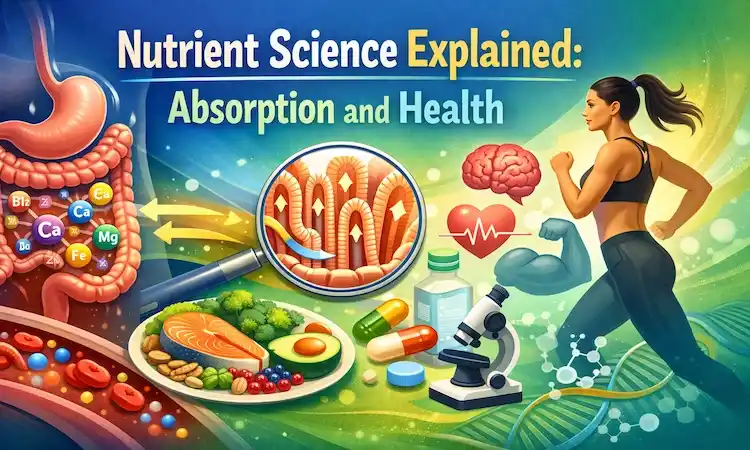
Eating “healthy” doesn’t always lead to healthy results. That’s because food labels and tracking apps mostly count what goes in, not what your body can use. Nutrient science focuses on that missing step: absorption and what happens after. Your gut has to break food down, move nutrients across the intestinal wall, and deliver them where they’re needed. Stress, sleep, alcohol, medications, and even a short-term stomach bug can change that process. So can common issues like low stomach acid, low fiber intake, or long gaps between meals that leave you under-fueled.
This matters in real life. Two people can eat the same diet and get very different outcomes. One may build muscle and feel steady energy, while the other struggles with fatigue, hair shedding, or slow recovery. When you understand absorption, you can stop guessing and start making choices that actually work for your body.
Nutrient Bioavailability: Why Absorption Matters More Than Intake
Bioavailability is the share of a nutrient you absorb and use, not just what you eat. It’s the difference between “on the plate” and “in your cells.” This is why a perfect-looking diet can still leave you short on iron, B12, vitamin D, magnesium, or zinc. It’s also why supplements don’t always fix things fast. If the gut can’t absorb well, more intake won’t fully solve it.
Food form matters. Heme iron from meat is easier to absorb than non-heme iron from plants. Calcium from fortified drinks can be helpful, but it may not act the same as calcium packaged in whole foods with protein and other minerals. Fat-soluble vitamins (A, D, E, K) need dietary fat to absorb well. If someone eats very low fat for long stretches, they can come up short even with “clean” meals. On the flip side, ultra-processed foods can come with nutrients added back in, but that doesn’t mean they’ll be absorbed in the same way as nutrients in whole foods.
Your digestive system sets the stage. Stomach acid helps release minerals like iron and calcium from food. Bile helps absorb fats and fat-soluble vitamins. Pancreatic enzymes help break down protein and fat so you can use amino acids and essential fatty acids. If any part of this chain is off, bioavailability drops. Common culprits include chronic stress (which can slow digestion), heavy alcohol intake, low fiber diets, and certain medications (like acid reducers).
Cooking and prep can raise or lower bioavailability. Heat can reduce some vitamins, like vitamin C, but it can boost others, like lycopene in tomatoes. Soaking and cooking beans lowers phytates and can improve mineral absorption. Pairing foods helps too: vitamin C-rich foods improve non-heme iron absorption, so lentils with bell peppers often beat lentils alone.
Some people argue that “if you eat enough, you’ll absorb enough.” That can be true for many healthy adults, most of the time. But it breaks down during rapid growth, pregnancy, aging, intense training, gut issues, or periods of low appetite. The practical goal isn’t perfection, it’s consistency: eat nutrient-dense foods, pair them well, and watch for signs your body isn’t getting what it needs.
For reliable nutrient fact sheets and supplement guidance, the NIH Office of Dietary Supplements is a solid reference: ods.od.nih.gov. For more details, read the full article: Nutrient Bioavailability: Absorb More From Food.
GLP-1 Nutrition: Prevent Deficiencies and Muscle Loss
GLP-1 medications can be helpful for appetite control and blood sugar. They also change how people eat, often fast. Smaller portions, less interest in food, and early fullness can make it harder to meet protein and micronutrient needs. That’s where nutrition has to get more structured. Without a plan, it’s easy to lose muscle along with fat, and to drift into low intakes of iron, B12, folate, calcium, and fiber.
The main risk isn’t that GLP-1 drugs “cause” deficiencies directly. The bigger issue is reduced intake and narrowed food choices. Many people start avoiding meat, crunchy vegetables, and higher-fat foods because they feel heavy or trigger nausea. If protein drops too low, muscle protein breakdown can outpace muscle building. Over time, that can hurt strength, balance, and metabolic rate, even if the scale looks great.
Protein becomes the anchor. Most people do better spreading it across the day, rather than trying to “make up for it” at dinner. If large meals feel rough, use smaller, protein-forward options: Greek yogurt, cottage cheese, eggs, tofu, tempeh, ground meats, fish, or protein smoothies. Liquids can be easier early on. Add fiber slowly, since sudden jumps can worsen bloating. Think oats, chia, berries, cooked vegetables, and beans in small portions, then build up as tolerated.
Micronutrients need attention too. If someone eats less red meat and fewer legumes, iron can drop. If dairy intake falls, calcium and vitamin D can suffer. If overall food variety shrinks, potassium and magnesium can lag. A standard multivitamin may help cover gaps, but it shouldn’t replace food. It’s still smart to check labs, since low ferritin, low B12, or low vitamin D can mimic “normal” GLP-1 side effects like fatigue.
A common counterpoint is that weight loss itself improves health markers, so nutrient details don’t matter as much. Weight loss can help, but muscle loss and low nutrient intake can create new problems. The best outcome pairs fat loss with strength maintenance. That means resistance training, enough protein, and regular meals even when hunger is low.
If you’re looking for medication background and safety info, NIDDK has patient-friendly resources on diabetes medicines, including GLP-1 drugs: https://www.niddk.nih.gov/health-information/diabetes/overview/managing-diabetes/diabetes-medicines. For more details, read the full article: GLP-1 Nutrition: Prevent Deficiencies on Wegovy.
Gut Microbiome: How It Controls Nutrient Absorption
Your gut microbiome helps decide what you absorb, how well you tolerate foods, and how your immune system reacts. These microbes don’t “steal” all your nutrients, but they do compete for some, produce others, and shape the gut lining that absorbs them. When the microbiome is diverse and supported, digestion tends to feel smoother and nutrient status is easier to maintain.
One clear example is fiber. You can’t digest many fibers, but gut bacteria can. When they ferment fiber, they make short-chain fatty acids (like butyrate) that help maintain the gut barrier. A stronger barrier supports steadier absorption and may lower gut irritation. Another example is vitamin K2, which can be produced by certain gut bacteria. Some bacteria also help with biotin metabolism. That doesn’t mean you should rely on microbes instead of diet, but it shows how tightly nutrition and gut health are linked.
The microbiome also affects mineral absorption through the gut environment. Fermentation can lower colon pH, which may help certain minerals stay in a form that’s easier to absorb. At the same time, gut inflammation can reduce absorption. If someone has chronic diarrhea, frequent bloating, or alternating constipation and loose stool, they may be at higher risk for low iron, magnesium, and fat-soluble vitamin issues, depending on the cause.
Food choices shape the microbiome quickly. Diets low in plant variety can reduce microbial diversity. Diets that include a wide range of plants tend to support it. Aim for variety across vegetables, fruits, beans, whole grains, nuts, seeds, herbs, and spices. Fermented foods can help some people. Yogurt, kefir, kimchi, and sauerkraut introduce microbes and can support gut comfort, though responses vary. If fermented foods trigger symptoms, it may be better to focus on gentle fibers first.
Antibiotics are another factor. They can be lifesaving, but they often reduce helpful bacteria along with harmful ones. After a course of antibiotics, people sometimes notice new food sensitivities or GI changes. Rebuilding doesn’t require expensive powders. Start with steady meals, plant variety, adequate protein, and enough fluids. If probiotics help, great, but they’re optional, not magic.
Some people argue that the microbiome trend is overhyped because we can’t measure it perfectly. That’s fair. You don’t need fancy testing to apply the basics. Your daily pattern matters more than a one-time report. If digestion is steady, stools are regular, and energy is good, you’re likely supporting a gut environment that helps, not hinders, nutrient absorption.
Chrononutrition: Best Time to Eat for Metabolic Health
Chrononutrition is the idea that timing affects how your body handles food. Your metabolism follows a circadian rhythm, including insulin response, digestion speed, and hunger hormones. For many people, the body handles carbs better earlier in the day, while late-night eating can raise next-day blood sugar and disrupt sleep. Timing won’t fix a poor diet, but it can sharpen results from a good one.
Start with the most practical point: consistency helps. Eating at random times can push you into long gaps, followed by overeating late. That pattern often means fewer nutrients overall, more cravings, and worse sleep. A steady meal pattern supports appetite signals, and it also makes it easier to hit protein and fiber targets.
Breakfast matters for some, not all. If someone wakes up hungry, a protein-forward breakfast can reduce snacking later. Think eggs with toast and fruit, Greek yogurt with oats and berries, or tofu scramble with rice and veggies. If someone isn’t hungry early, forcing a big meal can backfire. In that case, a smaller option can still help, like a smoothie with protein, milk, fruit, and a spoon of nut butter.
Late-night eating is the usual trouble spot. It often becomes the “catch-up meal” after under-eating all day. If you find yourself raiding the kitchen at 10 pm, the fix often starts at lunch. Eat enough earlier so dinner doesn’t become a calorie and sugar surge. For sleep, many people do best finishing larger meals at least 2 to 3 hours before bed. If you need something later, choose a small snack that won’t sit heavy, like yogurt or a banana with peanut butter.
Training time also matters. If you lift weights, a protein dose within a few hours of training helps muscle repair. If you do cardio, a mix of carbs and protein after can support recovery. Timing doesn’t need to be perfect, but skipping food after hard training can increase soreness and reduce next-session performance.
Some people argue that timing is irrelevant if calories and macros match. Total intake is still the main driver, but timing affects adherence and hunger. If eating earlier reduces cravings and improves sleep, it’s not a minor detail. It’s a way to make a good plan feel easier, which is what keeps results going.
Protein Quality: Leucine Thresholds for Muscle Growth
Protein isn’t just about grams. Quality and distribution matter, especially for muscle. Leucine is a key amino acid that helps trigger muscle protein synthesis. You don’t need to obsess over leucine numbers, but the concept helps explain why 20 grams of one protein can act differently than 20 grams of another.
High-quality proteins tend to have more essential amino acids and more leucine per serving. Whey, milk, eggs, chicken, fish, and lean meats usually hit the mark with smaller portions. Many plant proteins are healthy but less dense in leucine, so you often need a larger serving, or better combinations, to reach the same muscle-building signal. Soy is a strong plant option. Pea and rice blends can work well too.
A practical approach is to aim for a “protein dose” at each meal. Many active adults do well with 25 to 40 grams per meal, depending on body size and goals. Smaller people may need less, larger people may need more. Older adults often benefit from higher per-meal protein, since the muscle-building response can be less sensitive with age.
Distribution is where most people miss. They get 10 grams at breakfast, 15 at lunch, then 60 at dinner. That pattern leaves muscle under-supported all day. Spread it out instead. Add eggs or Greek yogurt at breakfast. Add chicken, tuna, tofu, or beans plus a grain at lunch. Keep dinner solid, but not the only meal that counts.
Protein quality also includes digestibility. If a protein source causes GI issues, it won’t be consistent. Some people tolerate lactose-free dairy better than regular dairy. Others do better with cooked legumes rather than large salads. The best protein is the one you can eat regularly without feeling awful.
A common pushback is that focusing on leucine is “bodybuilder talk.” It doesn’t have to be. Muscle is health insurance. It supports glucose control, joint stability, and independence as you age. Even two to three well-built protein meals per day can make a real difference.
For a clear overview of protein sources and how much people often need, Harvard T.H. Chan’s nutrition page is a helpful starting point: https://www.hsph.harvard.edu/nutritionsource/what-should-you-eat/protein/
Mineral Interactions: Nutrients That Block Absorption
Minerals can compete. This is one of the most overlooked reasons people stay low in iron, calcium, or zinc even when intake looks fine. The gut has limited transporters, and some minerals share them. Timing and pairing can matter as much as dose.
Iron is a classic example. Calcium can reduce iron absorption when taken together in larger amounts. That doesn’t mean you can’t eat foods with both, but if you’re correcting low iron, it’s smart to separate iron supplements from calcium supplements. Tea and coffee can also reduce non-heme iron absorption because of polyphenols and tannins. If iron is a concern, have coffee away from iron-rich meals, or add vitamin C-rich foods to help offset the effect.
Zinc and copper can also compete. High-dose zinc supplements taken long term can lower copper status. This is why “more” isn’t always safer, especially with single-nutrient supplements. Stick to targeted dosing when you have a reason, and check labs when appropriate.
Magnesium and calcium can compete as well, mostly in supplement form. Many people tolerate them fine together in food, but large supplemental doses can cause GI upset and reduce absorption efficiency. Splitting doses can help, and it often feels better on the stomach.
Phytates in whole grains, beans, nuts, and seeds can bind minerals like iron and zinc. These foods are still worth eating because they come with fiber and other benefits. Prep methods can reduce phytates: soaking beans, sprouting, fermenting, and thorough cooking. Pairing matters too. Add vitamin C to plant-based meals to improve iron absorption. Use leavened bread over dense, unleavened options if iron or zinc is a major concern.
Some people argue this makes healthy foods sound “bad.” They aren’t bad. The point is context. If labs are normal and energy is good, you don’t need to micromanage mineral pairing. If you’re actively treating low ferritin, anemia, or low zinc, then details matter. Small changes, like taking iron away from calcium and coffee, can raise results without increasing the dose.
Personalized Nutrition: Biomarkers That Guide Diet Choices
Personalized nutrition doesn’t require expensive DNA kits. It starts with symptoms, history, and basic biomarkers. Labs can show what’s happening beneath the surface and help you stop guessing. The goal isn’t to chase perfect numbers, it’s to connect diet choices to real outcomes.
Common, useful markers include a complete blood count (CBC), ferritin, vitamin B12, vitamin D, fasting glucose, A1c, lipids, thyroid markers when indicated, and a basic metabolic panel. For athletes, frequent dieters, or people on GLP-1s, it can also help to track weight trend, waist measurements, strength numbers, and recovery. Biomarkers are only part of the picture, but they give you feedback that food logs can’t.
Ferritin is a good example. Many people, especially menstruating women, have “normal hemoglobin” but low ferritin. They aren’t anemic yet, but they can feel tired, cold, and weak during workouts. In that case, focusing on iron-rich foods, vitamin C pairing, and separating iron from calcium and coffee can help. B12 is another. Low B12 can show up as fatigue, tingling, or brain fog, especially in vegetarians, vegans, and older adults with reduced absorption. Vitamin D is common too, especially in winter or for people with low sun exposure. Repleting it can support bone health and muscle function.
Glucose markers help guide carb choices and timing. If A1c is creeping up, that doesn’t mean “no carbs.” It can mean better carb quality, more protein and fiber at meals, strength training, and fewer late-night high-sugar snacks. Lipids can guide fat choices. Some people do better with more unsaturated fats, more fiber, and fewer ultra-processed foods.
A fair counterpoint is that labs can create anxiety and over-control. That happens when people test too often or react to tiny shifts. The fix is simple: test with a purpose, review trends, and focus on big levers. Food quality, protein, fiber, sleep, and movement usually beat micro-adjustments.
Personalized nutrition works best when it stays practical. Use biomarkers to pick priorities, then build meals you’ll actually eat. Repeat labs after a reasonable window, often 8 to 16 weeks for many changes, and adjust based on both numbers and how you feel.
Women’s Nutrient Science: Cycle, Perimenopause, Menopause
Women’s nutrient needs shift across the month and across life stages. The menstrual cycle changes appetite, fluid balance, and even how some people tolerate carbs. Perimenopause and menopause bring changes in muscle, bone, and fat distribution, often with the same calorie intake as before. Nutrition can’t stop aging, but it can lower the fallout.
During the luteal phase (after ovulation), many women feel hungrier and crave carbs. That’s not a willpower issue. It’s partly driven by hormone shifts and higher energy needs. A practical fix is to plan for it: increase protein slightly, include more fiber-rich carbs, and don’t let meals get too small. Magnesium-rich foods (like pumpkin seeds, beans, and leafy greens) and adequate hydration can help with cramps and mood in some people, though results vary.
Iron is a key nutrient during menstruating years. Regular blood loss raises the risk of low ferritin. If you feel wiped out during workouts, get short of breath easily, or notice hair shedding, it’s worth checking ferritin and discussing results with a clinician. Pair iron-rich foods with vitamin C, and be careful about taking iron with calcium or coffee.
In perimenopause, sleep often worsens. Poor sleep raises hunger and reduces training drive. This is where meal timing and steady protein matter. Aim for protein at breakfast and lunch, not just dinner. Add resistance training to protect muscle. Bone health becomes more important too. Calcium, vitamin D, vitamin K, and protein all support bone, along with strength work and impact activity when appropriate.
After menopause, the drop in estrogen can speed muscle loss and change where fat is stored. Many women need more protein than they expect, plus more focus on strength training. Fiber stays important for cholesterol and gut health. Alcohol tolerance often drops, and sleep disruption from alcohol can hit harder, which then affects appetite and recovery.
A common message women hear is to “just eat less” as hormones change. That often backfires. Undereating lowers protein and micronutrients, increases cravings, and can worsen muscle loss. A better approach is to keep meals nutrient-dense, raise protein, keep fiber steady, and adjust portions based on hunger, training, and results.
Conclusion
Nutrient science is less about perfect eating and more about usable nutrition. Absorption, timing, gut health, and food pairing all shape what your body gets from the same meal. If you’re on a GLP-1, training hard, managing blood sugar, or moving through perimenopause, those details matter even more. The goal is simple: protect muscle, cover micronutrients, and keep digestion steady. That usually means protein at each meal, more plant variety over the week, smart mineral timing when you’re correcting a deficiency, and a meal schedule that supports sleep.
Don’t let complexity slow you down. Start with one upgrade you can keep, like a stronger breakfast, a higher-protein lunch, or beans added twice a week. If symptoms persist, use basic labs to guide next steps. When your body can absorb what you eat, you feel the difference where it counts, energy, strength, mood, and long-term health.

Gas S. is a health writer who covers metabolic health, longevity science, and functional physiology. He breaks down research into clear, usable takeaways for long-term health and recovery. His work focuses on how the body works, progress tracking, and changes you can stick with. Every article is reviewed independently for accuracy and readability.
- Medical Disclaimer: This content is for education only. It doesn’t diagnose, treat, or replace medical care from a licensed professional. Read our full Medical Disclaimer here.