
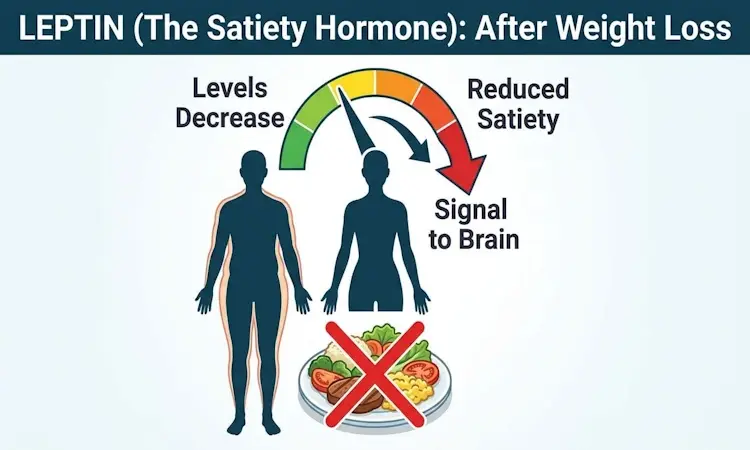
You hit your goal weight, your clothes fit again, and people notice. Then something confusing happens: you’re hungrier than you were before, meals feel less satisfying, and cravings show up like clockwork. If you’ve wondered, “Why is maintenance harder than losing?” you’re not imagining it.
A big part of the answer is leptin and ghrelin after weight loss. Leptin is one of the body’s key “I’m fed” signals, and ghrelin is a major “time to eat” signal. After weight loss, leptin often drops and ghrelin often rises. As a result, your brain gets louder hunger messages and weaker fullness messages, even if your habits are solid.
Weight Loss Programs

Diet & Weight Loss

Cooking

Diet & Weight Loss
Diet & Weight Loss
The good news is you’re not powerless. Once you understand what these hormones do, you can set up meals and routines that make weight maintenance feel more normal, not like a daily fight.
Meet leptin and ghrelin, the two hormones that shape hunger and fullness
Think of appetite like a thermostat. You can open a window (use willpower), but the thermostat still tries to bring the room back to its “set” temperature. Leptin and ghrelin are two of the signals that help set that appetite thermostat.
Leptin is often described as a satiety hormone. It helps communicate energy availability to the brain over time. Ghrelin is often called the hunger hormone. It rises before meals and usually falls after eating. Neither hormone works alone, and neither determines your choices. Still, they shape how hard or easy those choices feel.
Here’s a quick way to compare them:
| Hormone | Main “job” | Where it’s made (mostly) | Typical pattern |
|---|---|---|---|
| Leptin | Signals energy stores and supports fullness over time | Fat cells | Higher with more body fat, often drops with fat loss and dieting |
| Ghrelin | Triggers hunger and meal initiation | Stomach | Rises before meals, falls after eating, may increase after weight loss |
In real life, this can look like: you finish a meal that used to satisfy you, yet you’re thinking about food again an hour later. Or you wake up hungry in a way you didn’t during the diet. Those aren’t character flaws. They’re signals.
At the same time, hormones don’t remove responsibility. They shift the slope of the hill. Your plan still matters, but the plan has to match the new biology.
Leptin: your body’s “fuel gauge” that helps you feel satisfied
Leptin is made mostly by fat cells. In general, more body fat means more leptin circulating in the blood. Leptin then signals the brain (especially areas involved in appetite and energy use) that energy is available.
When leptin signaling is working well, it tends to support:
- Feeling satisfied after eating
- A steadier drive to be active
- Normal energy use and temperature regulation
- Signals tied to reproduction and thyroid function (in simple terms, the body “feels safe” enough to invest in these processes)
Many people with higher body fat have high leptin levels, yet they still feel hungry. That’s often explained as leptin resistance, meaning the brain doesn’t “hear” the leptin signal clearly. In plain terms, the message gets muffled. If you want a medically oriented overview of symptoms and treatment approaches, the Obesity Medicine Association’s leptin resistance guide is a helpful starting point.
Here’s the twist after weight loss: even if leptin ran high before, fat loss lowers leptin, and eating in a deficit can lower it further. So the brain may read your new body as “running low,” even when you’re doing great.
Ghrelin: the “meal starter” hormone that ramps up appetite
Ghrelin is produced largely in the stomach. It tends to rise before you eat and fall after you eat. That’s why hunger often builds on a schedule, especially if you eat around the same times daily.
Ghrelin also does more than flip hunger on. For many people, it increases:
- Thoughts about food
- Interest in highly rewarding foods
- The “pull” to snack, even without true physical hunger
After dieting, ghrelin increases after weight loss in many people, which can make appetite feel louder during maintenance. Sleep loss and stress can also push hunger signals in the wrong direction for a lot of us. For a consumer-friendly explanation of what ghrelin does and why it matters, see Healthline’s overview of ghrelin.
If maintenance feels harder than the diet, it’s often because your body is trying to restore its old weight, not because you “lost motivation.”
What changes after weight loss, and why cravings can feel intense
After weight loss, many people run into a predictable pattern: leptin drops, ghrelin rises, and food feels more rewarding. This cluster of changes is often called appetite adaptation weight loss (also described as adaptive appetite responses). It’s one reason cravings after weight loss can feel so intense, even months later.
Several things can happen at once:
First, lower leptin can reduce background satiety. In other words, you may feel like you need more food to reach the same “settled” feeling.
Second, higher ghrelin can make hunger feel urgent. It can also increase food focus, so you notice snacks, smells, and ads more than you used to.
Third, the brain often becomes more responsive to food reward after restriction. That doesn’t mean you’re addicted to food. It means your brain is doing a normal survival job: paying attention to calories when it thinks calories are scarce.
Researchers have looked at how hormones shift after different types of weight loss. A 2025 review in the International Journal of Obesity summarized changes in fasting appetite-related gut hormones following weight loss across calorie restriction, exercise, or both. You can see the paper here: meta-analysis on appetite-related hormones after weight loss.
None of this guarantees weight regain. It does explain why “just keep doing what you did to lose” can feel miserable. Maintenance usually needs a different approach, with more food, more structure, and fewer diet-style rules.
Why leptin often drops fast after fat loss (and even faster with a big calorie deficit)
Leptin tracks body fat, so fat loss lowers leptin. Still, leptin can drop faster than expected during aggressive dieting because low energy intake itself can reduce leptin beyond what fat loss alone would predict. That’s one reason a steep deficit can feel like it flips a switch in your mood and appetite.
People describe low leptin symptoms dieting in everyday terms, such as:
- Feeling colder than usual
- Low energy, low drive, or “heavy legs” in workouts
- Irritability and a shorter fuse
- Poor sleep, or waking up hungry
- Strong cravings and a “never full” feeling
Those experiences can have many causes, so don’t self-diagnose from symptoms alone. The practical takeaway is simpler: if your deficit was large and long, your body may still be recovering from that signal, even if the scale is stable now.
Why ghrelin can stay higher after dieting, even when you are eating “enough”
Ghrelin is part of a system designed to restore weight. When you lose weight, the body often responds by increasing hunger cues and making food more appealing. That can happen even if you’re eating a reasonable maintenance intake.
In classic human research, weight loss has been linked with higher circulating ghrelin levels. One early example is a PubMed-indexed study on weight loss and increased ghrelin. You don’t need to read the full paper to benefit from the point: hunger hormones after calorie deficit can stay elevated for a while.
Diet quality also matters. Highly processed meals that are low in protein and fiber often don’t blunt hunger well. So you can hit your calories and still feel snacky. Faster weight loss and repeated diet cycles can also make the “eat” signal feel stronger for some people, partly because the body has learned that restriction tends to return.
How to manage leptin and ghrelin after weight loss without extreme rules
You can’t manually turn leptin up and ghrelin down like a volume knob. However, you can build a lifestyle that reduces unnecessary hunger and makes the remaining hunger easier to handle.
Think of it like steering a boat against a current. You won’t erase the current, but you can stop rowing in the wrong direction.
Start with two guiding ideas:
- Eat in a way that earns fullness. That means protein, fiber, and food volume.
- Reduce “false hunger.” That means sleep, stress support, and training that protects muscle.
If you have diabetes, thyroid disease, an eating disorder history, or you use weight-loss medications, talk with a clinician or dietitian for personalized guidance. The goal here is safe, general support for maintenance.
Build meals that keep you full: protein, fiber, and enough food volume
A maintenance plan fails when meals look “clean” but don’t satisfy. Most people do better when each meal has a clear protein anchor, a high-fiber carb or produce, and some fat for staying power.
Simple, practical targets:
- Protein: include a palm-sized serving at each meal (chicken, fish, Greek yogurt, eggs, tofu, lean beef, beans plus a grain).
- Fiber: add a high-fiber carb or legume (berries, oats, beans, lentils, potatoes with skin, whole-grain bread).
- Volume: build space on the plate with water-rich produce (salads, roasted vegetables, soup, fruit).
- Fat: include a small amount (olive oil, avocado, nuts, cheese) so meals feel complete.
Protein helps because it tends to increase satiety and reduces the odds you’ll feel hungry again soon. Fiber and water-rich foods help because they add bulk and slow digestion, which can reduce that “bottomless pit” sensation.
One common trap is liquid calories. Smoothies, fancy coffees, and juices can fit calories in fast, but they often don’t feel as filling as chewing solid food. If you love them, pair them with something chewable and protein-rich.
Lifestyle moves that lower “false hunger”: sleep, stress, strength training, and maintenance breaks
Not all hunger is about energy needs. Sometimes it’s the brain asking for relief, rest, or a break.
Sleep matters because poor sleep often increases appetite and cravings the next day. A steady bedtime and morning light can help more than people expect.
Stress can push you toward quick-reward foods. That’s not weakness. It’s biology plus habit. A short walk, a protein-forward snack, or a 10-minute reset (breathing, music, journaling) can prevent a stress spiral.
Strength training supports muscle, which helps keep your daily energy use healthier. It also gives you a non-scale win to chase. Even two to three sessions per week can help many people feel more stable in maintenance.
Finally, consider maintenance breaks after long deficits. That means a planned period at a slightly higher intake (often closer to true maintenance), with consistent training and protein. It can reduce diet fatigue and make cravings less sharp, without turning into “weekend damage control.”
A 2023 longitudinal study linked metabolic adaptation with increased appetite after weight loss, which supports the idea that maintenance can come with real appetite pressure. The citation is here: PubMed record on metabolic adaptation and appetite.
To make this actionable, use this simple check-in for the next two weeks:
- Prioritize 7 to 9 hours in bed most nights.
- Add protein at breakfast (even if it’s small).
- Build one high-volume meal daily (big salad, soup, or extra vegetables).
- Lift weights 2 days per week, or keep a steady resistance routine at home.
- If hunger feels relentless, consider a small calorie increase for a set time, then reassess.
The aim isn’t zero hunger. The aim is hunger that fits your day, not hunger that runs it.
Conclusion
Leptin and ghrelin after weight loss can make maintenance feel unfair. Leptin often goes down, ghrelin can go up, and cravings after weight loss can get louder. That response is common, and it doesn’t mean you failed. It means your body noticed the change and is trying to protect energy stores.
Stop trying to push harder and set up smarter defaults instead. For losing weight, upgrade one meal, add more protein, more fiber, and more volume. Then choose one lifestyle habit, like better sleep, stress support, or strength training, and stick with it for the next two weeks. Then reassess your hunger, energy, and weight trend. With a steady plan, appetite adaptation becomes something you manage, not something that controls you.

The content provided on tokeepyoufit.com is intended for general informational and educational purposes only. All materials on this site, including articles, recipes, tips, guides, opinions, and product recommendations, are not a substitute for professional advice from a qualified medical, nutrition, or fitness expert. Users should consult a licensed professional before making any decisions related to health, diet, or exercise. Please read our full Medical Disclaimer here.
Dietary Supplements

Dietary Supplements
Dietary Supplements
Dietary Supplements
Dietary Supplements