

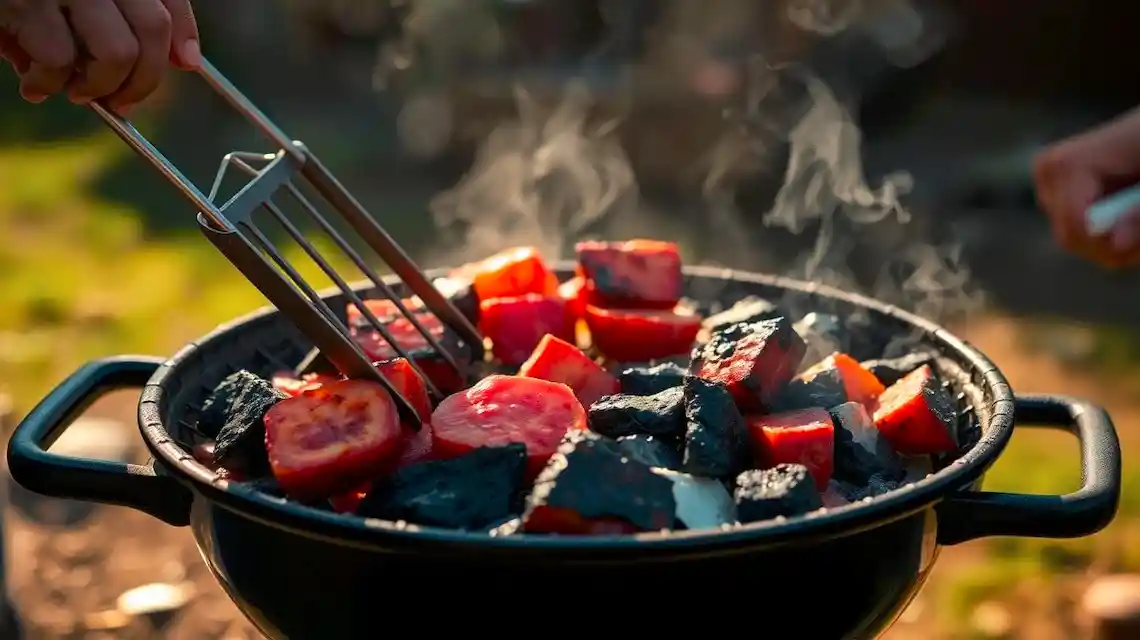
Does a charcoal grill look a little scary right now? All that fire, smoke, and black dust can feel like a lot if you have never used one before. The good news is that how to use a grill with charcoal is actually simple once you learn a few key steps.
This guide walks you through everything from choosing charcoal and tools, to lighting the coals, cooking your food, and shutting the grill down safely. You will learn how to get that rich smoky flavor, control the heat, and keep your food from burning or sticking.
By the end, you will know how to get ready, light and cook with confidence, and clean up so your next cook is even easier.
Get Ready: Tools, Safety, and Charcoal You Need Before You Grill
Before you strike a match, a little prep makes the whole process smoother and safer. Think of it like packing your bag before a trip. When everything is in place, you can relax and enjoy the cooking.
Choose the right charcoal and understand the difference between briquettes and lump
Charcoal comes in two main types: briquettes and lump.
Briquettes are small, uniform blocks made from compressed charcoal and other ingredients. They:
- Burn longer
- Give steady heat
- Are easier for beginners to control
They are great for foods that need more time, like chicken legs or thicker pork chops.
Lump charcoal is made from pieces of real hardwood. It:
- Lights quickly
- Burns hotter
- Responds faster to airflow changes
It works well when you want strong heat, like for searing steaks or burgers. If you want to compare in more detail, you can check this guide on lump charcoal vs briquette charcoal.
For most beginners learning how to use a grill with charcoal, briquettes are the easier choice. They give you more even heat and longer cooking time. Good quality charcoal matters because it affects both flavor and how well you can control the temperature.
Gather basic tools: chimney starter, lighter, tongs, and grill brush
Having the right tools nearby keeps you safe and makes grilling less stressful.
Here are the basics:
- Chimney starter: A metal cylinder that helps you light charcoal without lighter fluid. It gives you hot coals faster and with cleaner flavor.
- Long matches or grill lighter: Keep your hands away from the flame.
- Heat proof gloves: Help you handle hot parts of the grill or chimney starter.
- Long tongs: Let you move food and coals without getting too close to the heat.
- Spatula: Handy for burgers, fish, and other flat foods.
- Instant read thermometer: Helps you cook meat to a safe, juicy temperature instead of guessing.
- Stiff grill brush: Used to clean the grates before and after cooking.
These simple tools make the whole process smoother and safer, especially when you are just starting out.
Set up your grill in a safe spot and check airflow vents
Place your charcoal grill on a flat, stable surface. Keep it away from:
- Walls and railings
- Trees and low branches
- Anything that can catch fire
Keep children and pets away from the grill area.
Most charcoal grills have bottom vents and a top vent on the lid. These control how much air reaches the coals, which controls the heat.
- Open vents wide when starting the fire, so the coals get plenty of oxygen.
- Once the grill is hot, you can partly close the vents to lower the heat.
Make sure the lid fits well. A good fit helps you control airflow and smoke like a simple “heat dial.”
Clean and prep the grill grates so food will not stick
A clean grill cook better and smells better.
- Remove old ash from the bottom of the grill. Ash blocks airflow and can make the fire weak.
- Place the grates on the grill.
- Preheat the grill a bit, then use your grill brush to scrub off old bits of food.
- Fold a paper towel, dip it in cooking oil, and use tongs to rub it over the grates.
Starting with clean, oiled grates helps prevent sticking, gives better grill marks, and reduces sudden flare ups from old grease.
Light the Charcoal: Simple Steps to Start Your Fire Every Time
Now that you are set up, it is time to light the coals. A calm, step by step approach keeps things safe and steady.
How to use a chimney starter for fast, even hot coals
A chimney starter is the easiest way to get hot coals.
- Fill the chimney about three quarters full with charcoal. Use more for longer or hotter cooks.
- Place a couple of sheets of crumpled newspaper or a natural fire starter under the chimney.
- Set the chimney on the lower grate of the grill.
- Light the paper from several sides through the holes at the bottom.
You will see smoke first, then flames inside the chimney. After about 10 to 15 minutes, the top coals will turn gray or white on the edges, and you may see small flames at the top.
When most of the coals are covered in light gray ash, put on your heat proof gloves. Carefully lift the chimney by the handle and slowly pour the hot coals onto the lower grate of the grill. Use long tongs or a metal tool to spread the coals where you want them.
Using lighter fluid safely if you do not have a chimney starter
If you do not have a chimney starter, you can use lighter fluid, but you must do it carefully.
- Place enough charcoal in the grill for your cook.
- Arrange the coals into a mound or small pyramid.
- Sprinkle a small amount of lighter fluid evenly over the coals. Do not soak them.
- Wait about one minute, so the fluid soaks in and the fumes settle.
- Light the coals with a long match or lighter.
The most important rule: never add lighter fluid to coals that are already lit or hot. That can cause a dangerous flare.
Lighter fluid can leave a smell and taste on your food if you use too much. Try to use it only when a chimney starter is not an option. Many grillers share this view in places like this charcoal briquettes vs lump discussion.
Know when the charcoal is ready to cook on
You are ready to cook when:
- The coals are mostly covered with light gray ash.
- You see a soft orange glow underneath.
- Large open flames have died down.
A simple hand test helps you judge the heat at grate level:
| Heat Level | Hand Time Over Grate | Good For |
|---|---|---|
| High | 2–3 seconds | Burgers, thin steaks, quick searing |
| Medium | 4–5 seconds | Chicken pieces, sausages, veggies |
| Low | 6–7 seconds | Slow cooking, thicker cuts, indirect heat |
Hold your hand about 5 inches above the grate and count. When it gets too hot to keep it there, note the number of seconds.
Grill With Confidence: Set Up the Coals, Cook Your Food, and Shut Down Safely
Your coals are hot and ready. Now you will learn how to arrange them, place your food, and end the cook safely.
Set up direct and indirect heat zones for better control
A simple two zone setup gives you much better control than one big pile of coals.
- Push most or all of the coals to one side of the grill. This is your direct heat zone, which is hot.
- Leave the other side with no coals under the grate. This is your indirect heat zone, which is cooler.
Use direct heat to sear food and get color, then move it to indirect heat to cook through without burning.
Examples:
- Burgers: Sear over direct heat, then move to indirect if they brown too fast.
- Chicken thighs: Start skin side down over direct for crisp skin, finish over indirect so the inside cooks without burning.
- Veggies: Sear over direct heat for grill marks, then shift to indirect so they soften.
Learning heat zones is a big part of knowing how to use a grill with charcoal like someone with experience, not a beginner.
If you want a deeper dive on how different charcoal types affect heat and zones, check out this guide on the difference between hardwood lump and briquette charcoal.
Place food on the grill and use the lid and vents to manage heat
Pat your food dry with paper towels, then coat it lightly with oil or a light marinade. Too much wet sauce causes flare ups and sticking.
When you place food on the grill:
- Put quick cooking foods, like thin steaks or shrimp, over direct heat.
- Put thicker cuts, like bone in chicken, mostly over indirect heat.
Use the lid to control how fast food cooks.
- Lid open: Hotter on the bottom, cooler on top, good for quick searing.
- Lid closed: Heat surrounds the food, like an oven, better for thicker meats and longer cooks.
Adjust the vents like a simple control knob:
- Open vents more to raise heat.
- Close vents partway to lower heat.
Try not to lift the lid every minute. Every time you open it, heat escapes and cooking slows.
Avoid common mistakes like flare ups, burned food, and dry meat
Beginners often run into the same problems:
- Flare ups: Caused by fat dripping onto hot coals. Move food to the indirect side until the flames settle. Keep a safe distance and do not spray water, which kicks up ash.
- Burned outside, raw inside: Heat is too high. Sear quickly, then move to indirect heat and close the lid to finish.
- Dry meat: Happens when you overcook or press meat. Do not press burgers with a spatula, it forces juices out. Use an instant read thermometer instead of cutting into meat.
- Sticking: Comes from dirty grates, wet food, or turning too soon. Clean and oil the grates, let food sear before you flip it.
Small habits like these make your food taste better and help you relax at the grill.
Put out the coals, clean up, and store your grill for next time
When you are done cooking:
- Close all the vents and put the lid on the grill. This cuts off oxygen and slowly puts out the coals.
- Let the grill sit until everything is completely cool. This can take several hours or overnight.
- When cool, scoop out the ash and any unburned bits of charcoal. Place them in a metal container or an ash bucket, not in plastic or paper.
- Brush the grates again to remove any stuck food. A light coat of oil on the grates can help prevent rust.
Close the lid and store your grill out of heavy rain if possible. A clean grill with empty ash and oiled grates will be ready for your next cook with much less work.
Conclusion
You now know the basics of how to use a grill with charcoal from start to finish. You learned how to pick charcoal, gather simple tools, set up your grill safely, and light the coals without stress. You also saw how to build heat zones, use the lid and vents, and avoid common mistakes that ruin good food.
For your first cook, try something simple like burgers, chicken thighs, or sausage. Focus on learning how the heat feels and how your grill responds. With each session, you will gain more control, and that smoky flavor will become second nature.
Thanks for reading, and enjoy your next meal hot off the charcoal grill.
Related post:
Charcoal Grill FAQs for Confident Backyard Cooking
How much charcoal should I use?
For a small grill or a quick cook, use about 30 to 40 briquettes.
For a full-size kettle grill, use about 50 to 75 briquettes.
If you are cooking something that takes longer than 30 to 40 minutes, plan to add more charcoal partway through.
How do I light charcoal without lighter fluid?
Use a chimney starter.
- Fill the top with charcoal.
- Place crumpled newspaper or a natural fire starter under it.
- Light the paper from several sides.
In about 15 to 20 minutes, the top coals should turn gray and ashy. Then pour them carefully into the grill.
When is the charcoal ready to cook on?
Wait until most of the charcoal is covered with a thin gray ash.
You should see a steady orange glow, not tall flames.
This usually takes 15 to 25 minutes, depending on the amount of charcoal and the weather.
Should I leave the grill lid open or closed when lighting charcoal?
Keep the lid open while you light the charcoal.
The coals need lots of air to catch and burn evenly.
Once the coals are hot and spread out, you can put the grate on, add food, and close the lid if you want higher, more even heat.
How do I control the temperature on a charcoal grill?
Use the vents and the amount of charcoal.
Open vents more for higher heat, close them partway for lower heat.
Use more charcoal for hot, fast cooking, and fewer coals for low and slow.
Give the grill a few minutes to respond when you adjust vents.
What are direct heat and indirect heat on a charcoal grill?
Direct heat means the food sits right over the coals. Use it for burgers, steaks, hot dogs, and thin cuts.
Indirect heat means the food sits on the side, away from the coals. Use it for chicken thighs, whole chicken, roasts, ribs, and larger cuts.
How do I set up a two-zone fire?
Push all the hot coals to one side of the grill.
That side is your direct heat zone.
The empty side is your indirect heat zone, where you cook foods that need more time or gentler heat.
Can I mix lump charcoal and briquettes?
Yes, you can mix them.
Lump burns hotter and reacts faster to vent changes.
Briquettes burn more evenly and longer.
Many people use a blend to get both strong heat and steady burn.
How do I know when my grill is at the right temperature?
Use a grill thermometer if your lid has one, or use a separate probe thermometer.
No thermometer? Try the hand test: hold your hand about 5 inches above the grate.
3 to 4 seconds is high heat, 5 to 6 seconds is medium, 7 to 8 seconds is low.
Move your hand if it feels too hot, do not push it.
Should I oil the grill grates?
Yes, lightly oil clean grates before you cook.
Use tongs and a folded paper towel dipped in high heat oil, like canola or peanut oil.
This helps reduce sticking and gives better grill marks.
How do I keep food from sticking to the grates?
Preheat the grill until the grates are hot.
Clean the grates with a grill brush or a ball of foil held with tongs.
Lightly oil the grates and pat your food dry before seasoning.
Let food sear before you flip; if it sticks, wait another minute.
When should I put the lid on while grilling?
Use the lid when you want even heat and some smoke flavor.
Close it for thicker cuts, bone-in meats, or anything that needs more than a few minutes per side.
Leave the lid open for quick items like thin burgers, shrimp, or hot dogs when you want a fast sear.
Where should the vents be, top or bottom?
Use both.
The bottom vents feed air to the coals. More open, hotter fire.
The top vent lets smoke and hot air escape and also pulls air through the grill. Keep it at least partly open so the fire does not choke.
How do I add more charcoal during a long cook?
Light new charcoal in a chimney starter until it is ashy, then add it to the existing coals.
If you add unlit charcoal directly to the fire, do it in small amounts along the edges.
That slows the temperature drop and avoids a strong surge of smoke.
Can I use lighter fluid, and is it safe?
You can, but many people avoid it because of the smell and taste.
If you use it, follow the bottle directions, and never add fluid to hot or lit coals.
Let the coals burn until they are fully ashy before cooking so the fluid burns off.
What kind of charcoal should I buy, lump or briquettes?
Briquettes are easy to stack, consistent, and good for long cooks.
Lump charcoal burns hotter, lights faster, and creates less ash.
For most home grilling, either works fine. Try both and see which you like.
How do I use wood chips or chunks for smoke flavor?
Soak wood chips in water for about 20 to 30 minutes, then drain.
Place a handful on top of hot coals, or wrap them in foil and poke holes.
Wood chunks can go straight onto the coals and last longer.
Use mild woods for poultry and fish, stronger woods like hickory for red meat.
How do I stop flare-ups from fat drips?
Keep a cool zone with no coals under part of the grate.
If flames flare up, move the food to the cool side.
Close the lid for a moment and close the bottom vents a bit to slow the fire.
Trim excess fat from meat before grilling to reduce drips.
How long should I let meat rest after grilling?
Rest most meats for 5 to 10 minutes after grilling.
Steaks and chops need about 5 minutes.
Larger cuts, like a whole chicken or roast, need 10 to 15 minutes.
Resting lets juices settle so the meat stays moist when you slice it.
How do I clean a charcoal grill after cooking?
While the grates are still warm, brush off food bits with a grill brush or foil ball.
After everything cools, empty the ash into a metal container and throw it away once fully cold.
Wipe the inside of the lid and bowl sometimes to remove built-up soot.
Oil the grates lightly before the next cook to keep them in good shape.
How do I dispose of charcoal and ash safely?
Let the coals burn out with all vents closed, then cool completely.
This can take many hours, sometimes overnight.
Scoop ash and leftover pieces into a metal bucket or pan.
Once you are sure they are cold, throw them in the trash. Do not dump hot ash on the ground or in a plastic bin.
Can I reuse leftover charcoal?
Yes, as long as the pieces are still solid.
After the grill is cold, pick out the larger chunks and store them in a dry place.
Next time you grill, add fresh charcoal on top and light as usual.
 How to Make a Cheese Grilled Sandwich
  Simple Grill Recipes That Make Dinner Easy And Fun
  How to Cook Ribs on the Grill
  How Long To Grill Salmon In Foil