

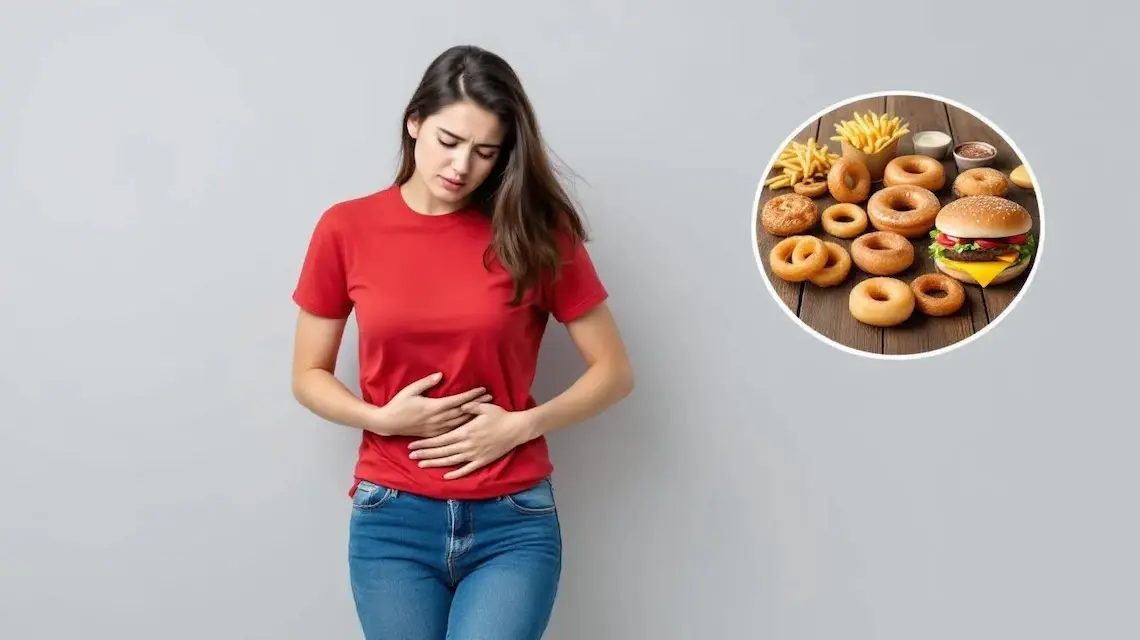
That greasy burger tasted great, but now your stomach feels like a brick. The good news is you can calm an upset stomach after heavy, oily food with a few simple steps. In this post, you’ll learn how to sip the right drinks, choose gentle foods, and use smart habits to feel better fast. We’ll also touch on how to stop bloating after eating so you can prevent this mess next time.
Why Greasy Foods Upset Your Stomach
If you’ve ever reached for fried chicken or a loaded burger, only to end up clutching your stomach in regret, you’re not alone. Greasy foods can hit your stomach hard, stirring up a mix of bloating, nausea, and even cramps. Understanding why your gut reacts this way sheds light on how to settle an upset stomach after eating greasy food and prevent future discomfort.
Slow Digestion Makes It Worse
Your digestive system works at its own pace, but high-fat, greasy meals can drag the process down. Fat slows the stomach’s ability to break down food, meaning that burger or pizza slice sits in your belly longer than a salad or grilled chicken breast. The heavier the meal, the harder your stomach has to work, leading to:
- A feeling of fullness that lingers longer than you want
- Uncomfortable bloating as the body tries to process the fat
- Odd, noisy gurgles from delayed digestion
Because fat-rich foods take their time going through your stomach, you’re more likely to notice and be bothered by signs of an upset stomach.
Too Much Bile Can Irritate
Your liver produces bile to help digest fats. When you eat greasy foods, your gallbladder pumps out more bile to break down all that extra fat. For some people, this flood of bile can irritate the stomach lining and intestines, adding to the discomfort.
If your digestive tract is sensitive, this process can spark:
- Cramps or tightness low in your belly
- A queasy, unsettled feeling
- Occasional bursts of diarrhea as the body tries to flush out what it can’t break down easily
Sensitive Stomachs React More Strongly
Not everyone deals with greasy food in the same way. If your stomach tends to be sensitive, spicy fries or deep-fried snacks can set off more intense symptoms. Some people have medical issues like acid reflux, irritable bowel syndrome (IBS), or gallbladder concerns, making them even more prone to discomfort.
Common signs that your stomach is upset after greasy food include:
- Bloating and burping
- Nausea (sometimes leading to vomiting)
- Mild to moderate cramping
- Changes in bathroom habits
If you often struggle with these symptoms, keep an eye on portions and food choices. Limiting heavy meals can support a calmer belly.
For more detailed help managing related symptoms, see these tips to keep acid reflux away and learn how certain eating habits play a role in digestive health.
The Science in Simple Terms
When you load up on greasy foods, your stomach gets overwhelmed. Fats don’t mix well with stomach acids, so the process takes longer and gives gut bacteria more time to ferment, which creates extra gas. This gas leads directly to bloating and that uncomfortable, distended feeling in your stomach. Think of it as a traffic jam in your digestive highway—it’s crowded, slow, and everyone’s honking.
Tuning in to how your system responds will help you decide how to settle an upset stomach after eating greasy food and make choices that fit your comfort level.
Immediate Steps to Settle Your Stomach After Eating Greasy Food
Feeling uneasy after a greasy meal is uncomfortable, but you can start feeling better within minutes by making smart choices right after eating. Let’s cover the most effective ways to calm an upset stomach—from natural drinks to gentle movement and the right over-the-counter options. By following these practical steps, you’ll help your digestive system recover and avoid prolonging your discomfort.
Soothing Remedies: Teas, Ginger, and Hydration
Natural remedies can make a big difference when your stomach is turning after a heavy, oily meal. The right choices soothe your digestive system and give it a much-needed boost.
- Drink plenty of water: Hydration helps thin out stomach acid and moves food and fat through your system more easily. Sip water slowly instead of chugging to avoid extra bloating.
- Try ginger tea: Ginger has long been used to ease nausea and fight inflammation that comes with an upset stomach. A warm cup of ginger tea can calm queasiness within minutes.
- Peppermint tea for comfort: Peppermint works by relaxing gut muscles and lessening cramps or spasms. A hot mug after a greasy meal often helps you feel lighter.
- Electrolyte drinks (when queasy): If you feel shaky or slightly sick, a small glass of diluted electrolyte beverage (like sports drink or coconut water) can help restore balance. Just keep the serving size reasonable to avoid extra sugar.
Being mindful about these soothing remedies is a simple way to support your gut after a heavy meal. For more ideas about food choices that maintain digestive balance, check out these foods for gut bacteria balance.
Gentle Movement and Rest
The way you move (and when you rest) after a greasy meal plays a big role in how quickly you recover. The trick is to keep things light—avoid anything that jostles your stomach too hard, and give your body a chance to digest.
- Take a gentle walk: Moving helps kick-start digestion by telling your body it’s time to process what you just ate. Even a 10- to 15-minute stroll can ease bloating and reduce sluggishness.
- Stand or sit upright: Lying down after eating greasy food can make symptoms worse by pushing stomach acid back up the esophagus and slowing digestion. Stay upright for at least 30 minutes to help prevent heartburn and indigestion.
- Avoid strenuous activity: Don’t jump into a workout or do heavy chores right away. Too much movement can stress your stomach, but light stretching and casual pacing works wonders.
- Listen to your body: When your stomach is less upset, gentle resting helps you recover. Find a comfortable chair where you can relax without feeling compressed or slouched.
Balancing movement with mindful rest gives your stomach the best conditions to settle down and get back on track.
Over-the-Counter Aids and When to Use Them
Sometimes natural steps aren’t quite enough, especially if you’re dealing with persistent nausea, bloating, or acid reflux. Over-the-counter remedies can offer quick relief, but knowing which to use, and when, saves you from overdoing it.
Common options include:
- Antacids: Products like Tums or Maalox neutralize stomach acid, making them great for soothing heartburn after greasy meals.
- Simethicone: This ingredient (found in products like Gas-X) helps reduce gassiness and pressure caused by greasy foods.
- Bismuth subsalicylate: Brands such as Pepto-Bismol relieve both nausea and mild diarrhea.
Use OTC aids carefully:
- Check the label for interactions if you take any daily medications.
- Stick to the recommended dosage; overusing antacids can lead to electrolyte imbalances.
- Contact a healthcare provider if pain is severe, lasts more than a day, or involves vomiting, blood, or fever.
Over-the-counter relief is safe for most people after an occasional heavy meal. If you have ongoing stomach issues after eating greasy foods, it’s best to consult your doctor and consider long-term strategies.
Taking these immediate steps makes a big difference when deciding how to settle an upset stomach after eating greasy food.
Long-Term Habits to Prevent Digestive Discomfort from Greasy Foods
Committing to healthier daily habits is the best way to keep your stomach calm, even when you enjoy the occasional greasy meal. These tweaks help your digestive system work efficiently, reduce the risk of that uncomfortable heaviness, and make it easier to recover if you slip up. Let’s look at two lifestyle shifts that are proven to make a difference for lasting gut comfort.
Adopting Mindful Eating Practices: The Power of Paying Attention
Mindful eating means fully focusing on your food during meals, turning off distractions and tuning in to your hunger, fullness, and satisfaction cues. It may sound simple, but this practice has a big impact on digestion, especially if you often ask yourself how to settle an upset stomach after eating greasy food.
When you eat mindfully, you:
- Slow down and chew each bite thoroughly, making food easier to break down.
- Notice when your stomach feels satisfied, which helps prevent overeating.
- Feel more connected to your hunger signals, lowering the chance of eating out of habit or stress.
Eating slowly gives your digestive system time to start working before you overload it with more food. Try putting your fork down between bites or savoring the scent, texture, and flavor of your meals. Tracking your meals or patterns in a food diary can also help you spot habits that affect your stomach. For example, you might see a link between rushed meals and discomfort.
By treating every meal as a moment to slow down and listen to your body, you help your gut recover from the effects of greasy foods and avoid issues before they start.
Including Digestive-Friendly Foods in Your Diet
What you put on your plate shapes the health of your gut in powerful ways. Adding ingredients that ease digestion and support healthy bacteria gives your body a better chance of handling heavier foods without discomfort.
Consider stocking up on these digestive-friendly choices:
- Fiber-rich fruits and veggies: Apples, berries, carrots, and leafy greens are packed with fiber that keeps things moving and reduces bloating after a fatty meal.
- Whole grains: Brown rice, oats, and quinoa promote regularity, helping you stay comfortable even when your meals are less than perfect.
- Fermented foods: Yogurt with live cultures, kefir, sauerkraut, and kimchi add helpful probiotics to your diet, feeding the good bacteria needed for smooth digestion.
- Seeds like chia and flax: These tiny foods help balance gut health and add fiber without much effort.
Making small, steady changes, like swapping refined carbs for whole grains or adding an extra serving of veggies, trains your system to handle whatever comes its way. Healthy habits don’t just ease symptoms in the moment, they help answer how to settle an upset stomach after eating greasy food before it even happens.
When to Seek Medical Attention for Ongoing Stomach Issues
Stomach trouble after greasy food is usually temporary. Most of the time, you’ll start to feel better within a few hours by following simple steps for how to settle an upset stomach after eating greasy food. But when the discomfort sticks around or takes a turn for the worse, it’s important to recognize the warning signs. Ignoring lasting symptoms could delay treatment for something more serious, and nobody wants that stress hanging over their head.
Warning Signs: When Your Upset Stomach Isn’t Just Indigestion
Most discomfort from greasy foods fades with time and self-care. But some symptoms mean you should stop self-treating and check with a healthcare professional. Take note of these red flags:
- Persistent or severe abdominal pain. If pain lasts more than a few hours or is intense, this isn’t normal after a heavy meal.
- Repeated vomiting. If you can’t keep fluids down or vomiting won’t stop, you risk dehydration.
- Blood in vomit or stool. Black, tar-like stool or red blood is never just a simple upset stomach.
- Unintentional weight loss. Dropping weight without trying, especially with ongoing belly problems, needs a doctor’s attention.
- Fever, chills, or sweating with stomach pain. This combo may signal an infection or inflammation.
- Severe bloating with an inability to pass gas or stool. This can point to a blockage.
- Yellowing of the skin or eyes. Known as jaundice, this can come from gallbladder or liver trouble.
It helps to listen to your body—nobody knows your “normal” better than you do. Trust your instincts. If something feels really off, reach out for support.
When Occasional Trouble Becomes Chronic
If you regularly have to figure out how to settle an upset stomach after eating greasy food, and it’s not just a rare treat, that’s a sign your body isn’t coping well. Chronic digestive problems may point to conditions like acid reflux, gallstones, irritable bowel syndrome (IBS), or even problems with your pancreas or liver.
Here’s when to get a professional’s opinion:
- Symptoms happen after almost every fatty meal.
- You need over-the-counter remedies all the time, not just once in a while.
- Discomfort is affecting your mood, sleep, or work.
- Dietary changes and home care don’t make a difference.
Why Prompt Care Matters
Putting off a visit for persistent tummy trouble can make recovery harder and stress you out. Underlying issues like ulcers, infections, food intolerances, or even certain autoimmune concerns could be at play. Good gut health connects to your whole body’s well-being, so taking care of symptoms early protects your overall health. Your immune system relies heavily on your digestive tract’s stability, as shown in this breakdown on gut health and immunity.
If you or someone you know experiences any of the warning symptoms above, don’t wait to get help. Your health is worth the extra attention, and catching a problem early always brings peace of mind.
Conclusion
Taking care of how to settle an upset stomach after eating greasy food comes down to quick relief and smart prevention. By choosing soothing drinks, moving gently, and resting when needed, you set up your body for a faster recovery. Preventative habits like eating mindfully and choosing gut-friendly foods help reduce future discomfort and let you enjoy meals with more confidence.
Staying consistent with healthy habits pays off every day. If you want simple ideas to support your digestion and long-term well-being, you might find these good health habits helpful. Better stomach health starts with small shifts you can stick to.
Thanks for reading and taking steps for your digestive health.
FAQ:
What causes stomach discomfort after eating greasy food?
Heavy oils and fats are hard for your stomach to break down. This can slow digestion and lead to bloating, nausea or cramps.
Can drinking water help calm my stomach?
Yes, sipping water can help flush extra fat from your stomach and may ease discomfort. Don’t gulp large amounts quickly—this can make you feel more bloated.
Are there foods or drinks that settle the stomach fast?
Plain toast, crackers, bananas or plain rice are gentle on the stomach. Ginger tea or peppermint tea can help too. Avoid fizzy drinks and caffeine, which might make things worse.
Should I lie down after eating too much greasy food?
It’s better to stay upright. Lying down after a heavy meal can cause acid reflux. Try sitting or taking a gentle walk to aid digestion.
How long does it take for my stomach to feel better?
Mild symptoms usually go away within a few hours. Greasy foods can linger, though, so symptoms may last longer if you ate a large meal.
Is antacid or Pepto-Bismol safe for this?
Most over-the-counter antacids or stomach soothers can help with mild symptoms if used as directed. If you have a medical condition or take medication, check with your doctor.
What should I avoid eating until my stomach feels better?
Skip more fatty, fried or spicy foods. Dairy and rich desserts can also make symptoms worse. Stick with light, bland meals until you feel normal.
Are there any home remedies that really work?
Ginger tea, peppermint tea or a heating pad on your stomach may provide comfort. Small, frequent sips of water and bland snacks help most people.
When should I see a doctor?
See a doctor if you have stomach pain that won’t go away, vomiting that lasts more than a few hours, signs of dehydration, blood in your stool or if you’ve had similar issues before.
Can I prevent these stomach problems in the future?
Eat smaller portions of greasy foods, chew well and don’t rush your meal. Pair heavier foods with fruits or veggies to help digestion. Listen to your body and stop eating when you feel full.
 Health Benefit of Sesame Seed
  Healthiest Breakfast Cereal for Children
  How To Remove Sun Tan From Hands
  Vegan Oil Free Mayonnaise Recipe
  How to Take Care Your Nails
  Nutrition to Enhance Athletic Performance