

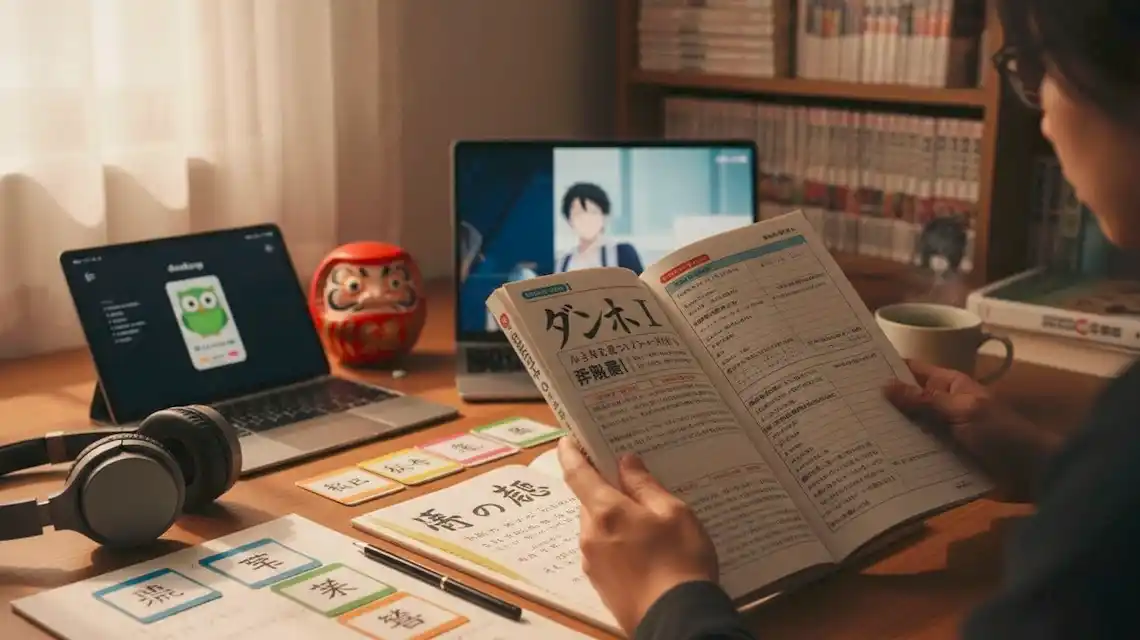
You open a textbook or app, see strange symbols and unfamiliar sounds, and your brain wants to shut down. Learning Japanese can feel like trying to read the Matrix at first.
The good news: people around the world learn Japanese every year while working, studying, and living normal lives. You can too, if you follow a clear, simple method that fits your schedule.
This guide breaks down how to learn Japanese step by step, using small habits, clear goals, and tools that actually work in 2025. You will see how to handle the writing system, get used to Japanese sounds, start basic grammar, and turn practice into a daily habit you can stick with.
Let’s make Japanese feel less scary, and a lot more doable.
Start With Clear Reasons and a Simple Plan to Learn Japanese
If you do not know why you are learning, it is easy to quit when things get hard. Your reason is the fuel that keeps you going when hiragana looks like a pile of noodles.
So start by getting honest about what you want from Japanese, then turn that into a simple 3‑month plan.
Decide why you want to learn Japanese and how far you want to go
Different goals need different levels of Japanese.
Common reasons include:
- Travel and basic conversation in Japan
- Watching anime without subtitles
- Talking with Japanese friends or family
- Studying or working in Japan
Think about levels like:
- Basic conversation: greetings, simple questions, daily small talk
- Daily life: shopping, transport, simple phone calls, basic reading
- Fluent: work meetings, deep talks, reading news and books
Write down one main reason, like “talk comfortably on my next trip,” and one short‑term goal for the next 3 months, like “learn hiragana and hold a 1‑minute self introduction.” This keeps your study focused and real.
Build a simple weekly study routine you can actually follow
A clear routine is the hidden key for anyone asking how to learn a new language with busy life. You do not need 3 hours a day. You need steady, repeatable time.
A solid beginner routine could look like this:
- 20–30 minutes a day, 5 days a week
- Split roughly into:
- 10 minutes vocabulary and kanji
- 10 minutes listening or pronunciation
- 5–10 minutes grammar or practice sentences
Pick 2 or 3 main tools, for example a beginner app, a grammar textbook, and a flashcard app, and stick with them for at least a month. If you keep this routine, you will feel real progress, even with a busy schedule.
For help choosing tools, reviews like Best Apps To Learn Japanese 2025 can give you an overview of current options.
Learn the Basics Fast: Sounds, Writing, and Core Grammar
Before you worry about fancy slang or advanced kanji, you need strong basics. Think of it like building a house. If the foundation is solid, everything else feels easier.
This stage is about four things: sounds, hiragana and katakana, starter kanji, and simple grammar.
Master Japanese sounds and pronunciation so you understand what you hear
Japanese sound rules are actually simpler than English. There are fewer sounds, and nearly every syllable is pronounced clearly. That is great news for your ears and mouth.
Helpful tips:
- Use audio resources from day one. Apps and sites with native audio, or YouTube channels for beginners, let you copy real speech.
- Shadow short phrases. Play a short line, pause, and repeat it out loud, trying to match rhythm and speed. This “shadowing” builds both listening and speaking.
- Record yourself. Use your phone, say a few phrases, and compare to native audio. This feels awkward, but it fixes mistakes fast.
You will hear people talk about pitch accent. It affects how natural you sound, but you do not need to master it in week one. At the start, focus on clear vowels and consonants, and on copying whole phrases.
Learn hiragana and katakana in your first month
Hiragana and katakana are two phonetic scripts. Each has about 46 basic characters that represent sounds, not ideas.
- Hiragana is used for native Japanese words and grammar endings.
- Katakana is used for foreign words, sound effects, and some emphasis.
Many beginners try to skip straight to kanji. That usually backfires. If you learn these two scripts in your first month, everything else becomes easier: apps, textbooks, menus, even subtitles.
Simple ways to learn them:
- Use spaced repetition flashcards to review a few characters many times a day.
- Write each character by hand 3–5 times while saying the sound out loud.
- Read simple practice words, like basic food names or days of the week.
Aim for 2–4 weeks of daily practice. You do not need perfect handwriting, just fast recognition. Once you can read hiragana and katakana without thinking, Japanese starts to feel less like a mystery code.
For structured script and beginner practice, curated lists of apps like The 10 best apps for learning Japanese can help you pick tools that fit your style.
Start kanji the smart way with common, useful characters
Kanji looks scary because there are thousands of characters. You do not need thousands to start.
Begin with 5–10 kanji a week, focused on common, useful words, for example:
- Numbers
- Days of the week
- Basic verbs like “eat,” “see,” “go”
- Everyday nouns like “water,” “book,” “station”
Use spaced repetition apps and simple mnemonics, short stories that connect shape and meaning. Learn the meaning and a couple of words that use each kanji. Consistent small steps beat wild cramming sessions.
Remember, you can already start speaking and reading basic sentences with very few kanji. Do not wait until “after kanji” to use your Japanese.
Use simple grammar patterns to talk about yourself and daily life
Japanese grammar feels different from English, but it follows clear patterns.
Focus first on:
- Basic sentence order: topic + object + verb
- Simple “desu” sentences, like “I am a student” or “This is coffee”
- Talking about likes and dislikes
- Talking about what you do, want, can do, and plan to do
Pick one beginner textbook or structured course and follow it in order, rather than hopping around. This helps you meet grammar in a logical sequence.
Use grammar to talk about real life:
- Introduce yourself with your name, where you are from, and your hobbies
- Order food, ask for the check, or say what you want to eat
- Talk about your day, what time you wake up, work, study, and sleep
Even short, simple sentences build confidence. The key is to connect grammar to real situations instead of treating it like math.
Turn Japanese Into a Daily Habit With Fun Practice and Real Input
Once you have some basics, the next step is staying consistent. The best way is to mix “study” with things you already enjoy, like anime, games, YouTube, or music.
Grow your Japanese vocabulary with spaced repetition and real examples
Vocabulary is the fuel for every skill. If you want to know how to learn Japanese in a way that sticks, build a strong word bank.
Use a spaced repetition app daily for:
- Core words like numbers, colors, and common verbs
- Topic sets like food, school, travel, or hobbies
- Starter kanji and the words that use them
Do not learn random word lists only. Try to see each word in a real sentence, from a textbook, graded reader, or short podcast. This helps your brain connect meaning, grammar, and sound.
Review a little every day instead of cramming once a week. Ten minutes of smart review beats one exhausting study marathon.
Resources that compare apps, such as the Reddit thread Best apps to learn Japanese in 2025, can help you choose an SRS tool that fits you.
Make listening and speaking practice part of your normal day
You do not have to wait until you are “ready” to start listening and speaking. You get ready by doing them.
For listening:
- Use beginner podcasts or graded audio
- Watch slow Japanese YouTube channels
- Listen to the same short clip many times instead of chasing new content
For speaking:
- Use language exchange apps to chat with real people
- Book short online lessons with tutors when you can
- Talk to yourself out loud, narrating simple actions or thoughts
You will feel awkward and make mistakes. That is normal. Your goal is not perfect grammar, it is getting your mouth used to Japanese sounds and patterns.
Use anime, games, and Japanese media without getting overwhelmed
Japanese media is a great motivator, but it can also feel too hard if you dive straight into complex shows.
Use it in a focused way:
- Start with Japanese audio and subtitles in your language
- Rewatch a short scene with Japanese subtitles once you know the story
- Pause now and then to catch simple phrases, but do not stop every line
Choose easier content at first, like kids’ shows, slice‑of‑life anime, or games with simple menus and lots of repeated lines. Your goal is not to understand every word. Aim to notice words and patterns you have studied and enjoy small wins.
Conclusion: A Simple 30‑Day Action Plan To Start Japanese
Learning Japanese does not need to be confusing. The core idea of how to learn Japanese is simple: clear goals, strong basics, and daily contact with the language.
Here is a 30‑day starter plan:
- Week 1: Focus on hiragana and a few basic phrases like greetings.
- Week 2: Add katakana and more listening to simple audio or video.
- Week 3: Start 5–10 easy kanji, learn basic grammar patterns and “desu” sentences.
- Week 4: Add more speaking practice, short tutoring or language exchange, and begin using easy native content.
You do not need huge study blocks. Even 15–20 minutes a day, if you keep going, will move you forward. Start small, stay curious, and your future self will be glad you began today.
Related post:
Practical FAQs About Learning Japanese Effectively
How long does it usually take to learn Japanese?
It depends on your goal, how often you study, and your study method.
If you study about 1 hour a day with a decent plan:
- 3 to 6 months: You can handle basic phrases, hiragana, katakana, and simple conversations.
- 1 to 2 years: You can talk about daily life, understand common topics, and read simple texts if you study steadily.
- 3+ years: With focused study, you can reach a strong conversational level and read more complex material.
Consistency matters more than talent. Short daily sessions usually beat long random study days.
Should I learn hiragana and katakana before anything else?
Yes, learn hiragana and katakana as early as you can. They are the base of written Japanese.
Once you know them, you can:
- Read beginner textbooks and apps as they were designed.
- Avoid relying on romaji, which slows progress if you use it for too long.
- Pronounce words more accurately, since each character has a clear sound.
You do not need to be perfect before moving on, but aim to read them comfortably within the first month.
How many kanji do I need to know to read basic Japanese?
For everyday reading, most learners aim for about 1,000 to 2,000 kanji.
Rough guide:
- 300 to 500 kanji: Easy children’s books, signs, menus, very simple manga.
- 1,000 kanji: Graded readers, easier manga, basic news for learners.
- 2,000+ kanji: Most newspapers and many novels become possible, though you will still look up words.
You do not need to learn kanji all at once. Start with kanji that appear in the words you already know, so they feel useful right away.
What is the best way to start learning Japanese as a complete beginner?
Use a simple, clear setup so you do not get overwhelmed. For example:
- Learn hiragana first, then katakana.
- Use a beginner textbook or structured course, such as Genki or Minna no Nihongo, or a good online course.
- Add spaced repetition flashcards for vocabulary and kanji.
- Listen to slow, clear Japanese every day, even if you understand very little.
The key is to combine reading, listening, speaking, and writing from the start, even at a tiny scale.
Is self-study enough, or do I need a teacher or class?
You can reach a solid level with self-study, especially with modern resources, but many people improve faster with some guidance.
A teacher or tutor helps you:
- Fix bad pronunciation and habits early.
- Practice speaking in a safe, low-pressure setting.
- Stay accountable with homework and feedback.
If classes are not possible, consider online tutoring once a week and do the rest on your own with apps, textbooks, and media.
Which is more important: grammar or vocabulary?
You need both, but at different times.
In the early stages, basic grammar is very helpful, because Japanese sentence structure is different from English. Once you understand how particles and word order work, vocabulary becomes much easier to use.
After that, you will make faster progress by:
- Learning common words and phrases that fit your interests.
- Studying grammar patterns as they appear in real sentences, not in isolation.
Think of grammar as the frame and vocabulary as the bricks. You will not get far without either one.
How can I practice speaking Japanese if I do not live in Japan?
You can get good speaking practice without living in Japan. Some options:
- Online tutors on platforms like iTalki or Preply.
- Language exchange partners who want to practice English.
- Speaking out loud to yourself, shadowing YouTube videos or podcasts.
Shadowing helps a lot. You listen to a short clip, then repeat it while trying to match the rhythm and sound. It feels strange at first, but it trains your mouth and ear at the same time.
What are some effective daily habits for learning Japanese?
Small, steady habits beat intense, irregular sessions. For example:
- 10 minutes of flashcards for vocabulary and kanji.
- 10 to 20 minutes of listening, such as podcasts, anime, or YouTube, with or without subtitles.
- 5 to 10 minutes of reading, even if it is graded readers or short messages.
- 5 minutes of speaking, talking to yourself, reading aloud, or chatting with a partner.
Pick a routine you can keep on your worst day. Once it feels easy, increase time or difficulty.
Do I need to watch anime or Japanese dramas to learn?
You do not need to, but they help a lot if you enjoy them.
Anime and dramas can:
- Boost listening skills and help you get used to natural speech.
- Show you how people speak in casual vs polite situations.
- Keep you motivated when textbook study feels boring.
If you do not like anime, choose content you enjoy, such as news for learners, vlogs, cooking shows, or music. The best resource is the one you will actually use.
How do I avoid mixing up polite and casual Japanese?
Japanese has different levels of politeness, so it is easy to mix them at first.
A simple approach:
- Use polite form (ます / です) in most situations, such as with teachers, coworkers, or strangers.
- Use casual form with close friends, family, and in some online spaces.
When you learn a new verb, practice both forms, for example:
- 食べます (tabemasu, polite)
- 食べる (taberu, casual)
Clear labels in your notes, such as “polite” and “casual”, help keep things straight.
Is it too late for adults to become fluent in Japanese?
No, adults can reach a very high level. You may not sound exactly like a native, but you can speak fluently, read books, and live or work in Japanese.
Adults often:
- Plan better and use study time more wisely.
- Use learning strategies that children do not have.
- Connect new information to what they already know.
Age matters less than time, consistency, and method. If you can keep going for years instead of weeks, you can get very far.
 Lighter Footprint Beekeeping Equipment
  What Is Brood in Beekeeping?
  Best Way To Learn Italian
  Outdoor Activities for Teens That Are Actually Fun
  How to Become a Content Creator on X
  How to to Learn Spanish Even When You Are Busy