

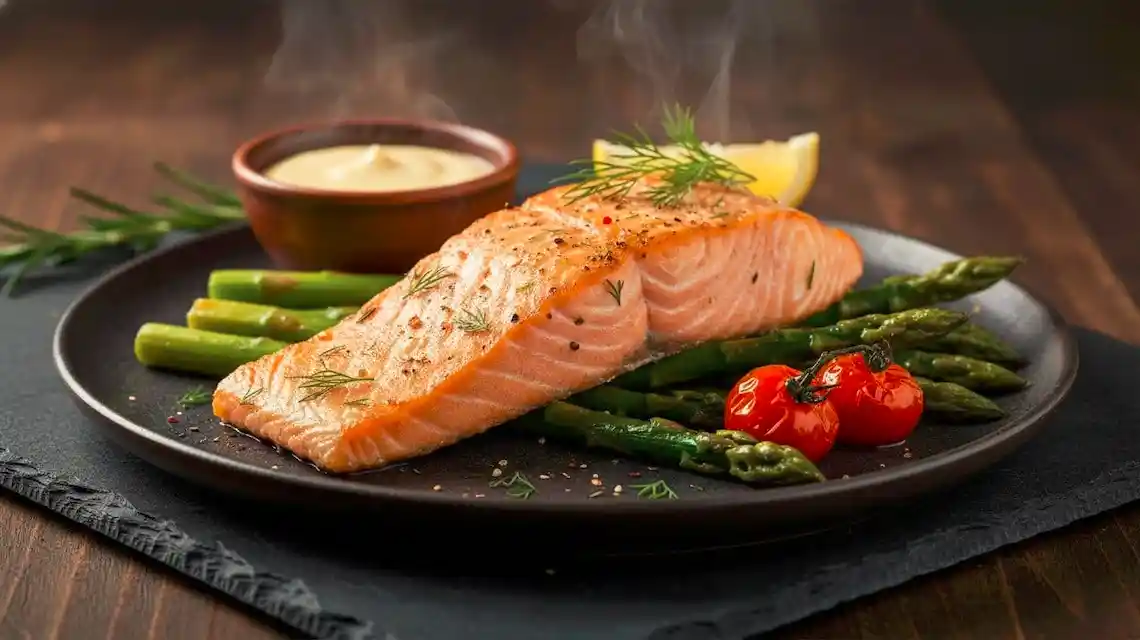
Wondering how to cook the salmon without overthinking dinner? You are in the right place. In a few minutes, you will know how to pick good fish, prep it fast, choose the best cooking methods, and lock in a perfect finish. This guide covers times, temperatures, and how to tell when salmon is done. You will also get quick sauces and sides that make it a full meal. Keep it simple, keep it tasty, and get confident with salmon tonight.
Pick, prep, and season salmon so it cooks up juicy and flavorful
Great salmon starts before the pan. Choose a fillet that looks moist, feels firm, and smells clean and briny. Bright color is good. Avoid brown spots or dry edges. If you see pin bones, no problem, they come out in seconds. Skin-on fillets are easier to cook and stay moist, plus the skin can get crispy and delicious.
Thickness matters. A thin tail piece cooks fast, a thick center-cut needs more time. That is why even thickness gives more even results. Use temperature, not just time. The USDA says 145 F for fully cooked fish. Many chefs pull salmon at 125 to 130 F for a moist, medium center that flakes but stays silky.
Fresh or frozen both work. Frozen salmon can be very high quality if it was vacuum sealed and handled well. Thaw it safely, then pat it dry so it browns instead of steams.
Seasoning does not need to be fancy. A little oil, a good pinch of salt, and something bright like lemon does a lot. Oil helps conduct heat and keeps the surface from sticking, salt wakes up the fish, and aromatics or spices add character.
Want oven guidance you can trust? Check out this simple method for baked salmon at 400 F from The Kitchn, which mirrors the timing you will see below: Easy Lemon-Herb Baked Salmon.
How to choose salmon at the store, fresh or frozen
- Fresh fish should smell like the sea, not fishy.
- Look for moist flesh, bright color, and no browning.
- Press lightly, it should spring back.
- Common types: Atlantic (mild), sockeye (rich), coho (balanced), king or chinook (buttery).
- Frozen is great if vacuum sealed and thawed right.
- Skin-on fillets are easier to cook and more forgiving.
- Pick even thickness for even cooking.
Quick prep: remove pin bones, pat dry, and keep the skin on
Run your fingers along the flesh to find pin bones. Pull them out with tweezers. Pat the fish very dry, top and skin side, for better browning. Score the skin lightly or press it flat with a spatula for the first 10 seconds of searing so it does not curl. Brush with a little oil and season with salt before any method. Let the salmon sit at room temp for 10 to 15 minutes while you heat your oven, pan, or grill.
Seasonings that always work with salmon
- Salt, pepper, lemon zest
- Garlic, paprika, olive oil
- Maple or honey with soy and a pinch of chili
- Dill, yogurt, lemon
- Cajun spice with a touch of brown sugar
If you marinate, keep it short, 15 to 30 minutes. Avoid very acidic marinades for long times. Acid can make the surface mushy.
Safe thawing and storage tips
Thaw salmon in the fridge overnight, still sealed, on a plate. For a faster option, submerge a sealed fillet in cold water and change the water every 30 minutes until thawed. Do not thaw on the counter. Store raw salmon in the coldest part of the fridge and cook within 1 to 2 days.
Best ways to cook salmon at home, step by step
These methods are simple and repeatable. Use a timer, and use an instant-read thermometer for reliable results. Aim for 125 to 130 F in the center for a moist, medium finish, or go to 145 F if you prefer fully cooked.
Pan seared salmon with crispy skin
Preheat a heavy skillet on medium high until hot. Add a thin film of oil. Place salmon skin-side down. Press gently for 10 seconds so the skin stays flat. Cook 3 to 5 minutes, until the sides look opaque about halfway up. Flip and cook 2 to 3 minutes more. For a 1 inch thick fillet, target 125 to 130 F in the center. Add a knob of butter and lemon at the end if you like. For a pro-style walkthrough, this guide breaks it down well: Restaurant-Style Pan Seared Salmon.
Oven baked or roasted salmon at 400 F
Heat the oven to 400 F. Line a sheet pan with foil or parchment for easy cleanup. Oil the fish and season it. Bake skin-side down. For a 1 inch fillet, cook 10 to 12 minutes. For 1.5 inches, cook 12 to 15 minutes. Broil for 1 to 2 minutes at the end for extra color, and watch closely. Pull the fish when the center hits 125 to 130 F for medium, then rest 3 minutes.
Grilled salmon that does not stick
Preheat the grill to 450 to 500 F. Clean and oil the grates very well. Oil the fish. Place salmon skin-side down, close the lid, and cook 4 to 6 minutes. Flip once with a thin spatula and cook 2 to 3 minutes more. Or use a cedar plank and cook 10 to 14 minutes without flipping. Pull at 125 to 130 F in the thickest part. For more grill tips and variations, see these helpful notes on grilling salmon from Mowi: Best Methods for Cooking Salmon.
Air fryer salmon for busy nights
Heat the air fryer to 390 F. Spray the basket. Place seasoned fillets in a single layer. Air fry 7 to 9 minutes for 1 inch thickness. No need to flip. Check for 125 to 130 F in the center. If using a sweet glaze, brush it on in the last 2 minutes to avoid burning.
Know when salmon is done, plus easy sauces and sides
Perfect salmon is juicy, not dry, with flakes that separate with a fork. Rest your fish for a few minutes so juices settle. Carryover heat will raise the temperature a touch after you pull it from the heat.
How to tell if salmon is done
Use an instant-read thermometer. Slip it into the center from the side of the fillet. For moist, medium salmon, pull at 125 to 130 F, then rest 3 minutes. The USDA number is 145 F for fully cooked fish. Look for flakes that separate with gentle pressure, and a center that looks just slightly glossy, not raw. It will keep cooking off the heat.
Fast sauces and glazes that level up flavor
- Lemon butter sauce: 2 tablespoons butter, 1 tablespoon lemon juice, pinch of salt and parsley.
- Dill yogurt: 1 half cup Greek yogurt, 1 tablespoon lemon juice, 1 tablespoon chopped dill, salt.
- Maple soy glaze: 2 tablespoons maple syrup, 1 tablespoon soy sauce, 1 teaspoon rice vinegar.
- Chimichurri: olive oil, parsley, garlic, a splash of vinegar, and chili flakes.
Want a quick skillet finish with big flavor? Try this popular method for garlic butter salmon, which you can adapt to any pan-seared fillet: Garlic Butter Salmon recipe.
Easy sides that pair with salmon
- Roast broccoli or asparagus in the same 400 F oven.
- Rice, quinoa, or couscous to catch sauces and juices.
- A crisp green salad with lemon vinaigrette.
- Crispy potatoes or sweet potatoes for a hearty plate.
Keep your plate balanced and colorful. A squeeze of lemon on both fish and veg ties the whole meal together.
Leftovers and reheating without drying out
Cool leftovers fast, then store in an airtight container for 3 to 4 days. Reheat gently at 275 F for 10 to 12 minutes, or in the microwave at 50 percent power in short bursts. You can skip reheating and enjoy salmon cold in salads, grain bowls, or sandwiches. Do not reheat more than once.
Conclusion
You now know how to pick good fish, prep it simply, choose a method, and cook to 125 to 130 F for a moist, medium finish. Start with one method this week, maybe pan seared or oven baked, then add a quick sauce. Small steps lead to reliable results. Have a question about timing, gear, or sauces? Drop it in the comments and we will help you cook salmon with confidence next time.
Related post:
- How Do You Cook Tuna Fish?
- How to Cook Teriyaki Broccoli
- Choosing the Right Fats for Your Cooking Styles
How to Cook The Salmon Fish FAQs:
What’s the best internal temperature for salmon?
For moist salmon, pull at 120 to 125°F for medium-rare, or 130 to 135°F for medium. The FDA says 145°F, though many cooks find that dry. Measure in the thickest part with an instant-read thermometer.
How do I know when salmon is done without a thermometer?
Press the top gently. It should feel just firm, not hard. The flesh should flake, and the center should be slightly translucent, not raw.
Should I cook salmon with the skin on?
Yes, if you can. The skin protects the flesh and helps keep it moist. Cook skin side down first, then flip briefly. If you prefer no skin, remove after cooking; it peels off easily.
What’s the easiest way to bake salmon?
Heat the oven to 400°F. Pat dry, season, and place on a lined sheet, skin side down. Bake 10 to 14 minutes for a 1-inch thick fillet, or until it reaches your target temperature.
How do I pan-sear salmon without it sticking?
Use a hot pan and high-heat oil. Pat the fish very dry, season, then place skin side down and don’t move it for 3 to 5 minutes. Flip and cook 1 to 3 minutes more. A well-heated pan releases the skin on its own.
Can I grill salmon without it falling apart?
Yes. Preheat to medium-high, oil the grates well, and keep the skin on. Grill skin side down most of the time. Flip once if needed. A grill basket helps with smaller pieces.
What about broiling?
Broil on the top rack for 6 to 10 minutes, depending on thickness. Keep a close eye on it. Broiling gives crisp edges and a tender center.
Is poaching a good option?
Great for soft, juicy salmon. Simmer water or stock with aromatics at 160 to 180°F. Add the salmon and cook 8 to 12 minutes, until just opaque.
How long should I marinate salmon?
Keep it short. Acidic marinades (with citrus or vinegar) need only 15 to 30 minutes. Longer can make the texture mushy. If using a salt-and-herb rub, go 30 to 60 minutes.
Do I need to brine salmon?
A quick brine adds seasoning and moisture. Use 1 tablespoon kosher salt per cup of water, submerge for 15 to 30 minutes, then pat dry. Skip extra salt in the seasoning.
When should I salt salmon?
Salt 15 to 60 minutes before cooking for better seasoning and surface drying. If you forgot, salt right before cooking. Avoid salting and then leaving it out for hours.
Wild vs. farmed salmon, do I cook them differently?
Wild salmon is leaner, so it cooks faster and dries out sooner. Aim for lower target temps and shorter times. Farmed salmon has more fat and stays moist longer.
Should I remove pin bones?
Yes. Run your finger along the center line and use tweezers to pull any bones you feel. It takes a minute and makes serving easier.
How do I thaw frozen salmon safely?
Thaw in the fridge overnight. For a quicker method, seal in a bag and submerge in cold water for 30 to 60 minutes, changing the water if it warms. Don’t thaw on the counter.
Can I cook salmon from frozen?
You can. Bake at 400°F for 18 to 25 minutes, depending on thickness. Rinse off ice glaze, pat dry, season, and add a minute or two under the broiler if you want color.
What simple seasonings work best?
Salt, pepper, olive oil, and lemon cover the basics. Add garlic, paprika, dill, or a touch of brown sugar for balance. Don’t bury the fish in heavy sauces.
How do I reheat cooked salmon without drying it out?
Warm gently at 275 to 300°F for 10 to 15 minutes, or until just heated. Or flake it cold into salads, grain bowls, or tacos to avoid overcooking.
How long does salmon keep?
Raw salmon keeps 1 to 2 days in the fridge. Cooked salmon keeps 3 to 4 days. Freeze raw or cooked salmon for up to 3 months for best quality.
Any tips for air fryer salmon?
Set to 390 to 400°F. Cook seasoned fillets for 7 to 10 minutes, depending on thickness. Check early, since air fryers vary. Line the basket for easy cleanup.
What oils are best for high-heat cooking?
Use oils with higher smoke points, like avocado, canola, or refined olive oil. Save extra virgin olive oil for finishing and flavor.
 How to Cook a Lasagna at Home
  How Do You Cook Tuna Fish?
  How to Cook Teriyaki Broccoli
  How to Cook Delicious Spaghetti at Home
  How to Make the Best Egg Omelette (10-Minute Guide)
  Cooking Steak In a Stainless Steel Pan