

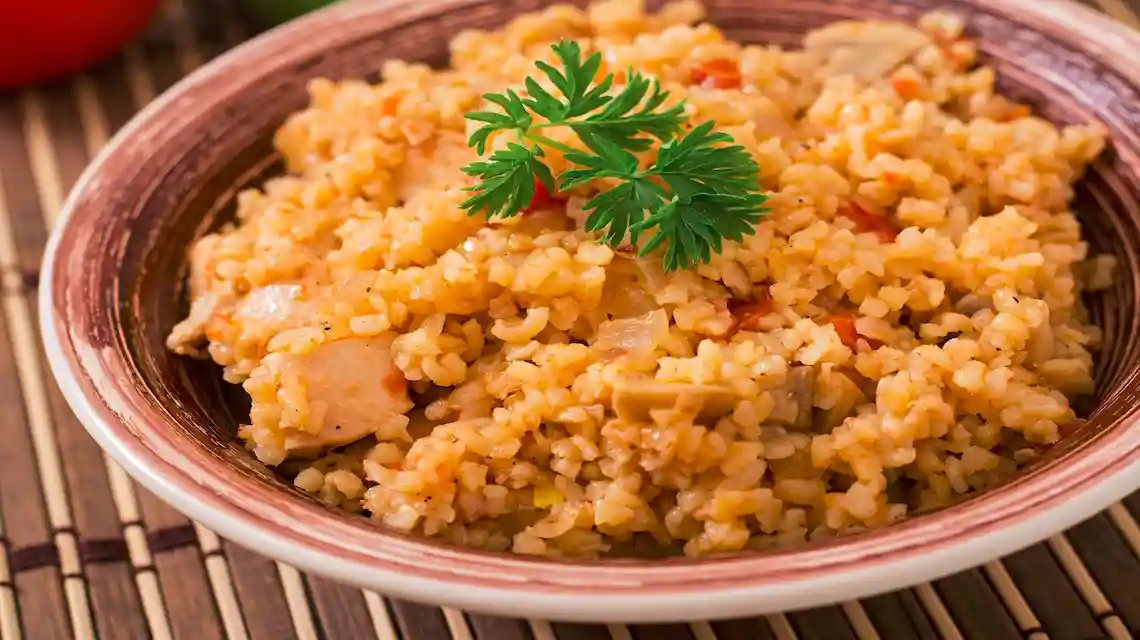
If you have a bag of bulgur in your pantry and you are not quite sure how to cook bulgur, you are not alone. This grain looks a bit like rice or couscous, but it cooks even faster. Bulgur is made from cracked, parboiled wheat, so it softens quickly and keeps a light, nutty flavor that works in many dishes.
Once you know how to cook bulgur, you can turn it into salads, pilafs, grain bowls, or simple sides in under 20 minutes. In this guide, you will learn how to pick the right type of bulgur, follow an easy stovetop method, try no-boil and microwave tricks, and use cooked bulgur in everyday meals.
What Is Bulgur and Which Type Should You Use?
Bulgur starts as whole wheat kernels. The grains are parboiled, dried, then cracked into smaller pieces. This process is why bulgur cooks so fast compared with whole grains like brown rice or wheat berries.
You will see bulgur a lot in Middle Eastern and Mediterranean cooking. It is the grain in tabbouleh, stuffed vegetables, and many simple pilafs. If you want a deeper background on the grain itself and the main types, the guide on what is bulgur wheat explains it in clear detail.
For home cooking, you mostly need to know two things. First, bulgur has a mild, nutty taste and a chewy bite that holds up well in salads and soups. Second, the grind size affects how you cook it and how it feels in your mouth. Once you match the grind to your recipe, the cooking part is easy.
Bulgur basics: texture, flavor, and quick cooking
Because bulgur is parboiled before it is dried and cracked, it cooks in a fraction of the time that whole wheat kernels need. You usually only simmer it for a few minutes, then let it rest and steam.
The texture is tender but slightly chewy, a bit like al dente pasta. The flavor is gentle and nutty, so it works as a base for bold toppings, herbs, and dressings. It does not fight with other flavors, it carries them.
Bulgur shows up in dishes like tabbouleh salad, where fine grains soak up lemon and parsley, and in pilafs where it stands in for rice. Once you taste it with olive oil, salt, and a squeeze of lemon, it is easy to see why many families use it weekly.
Fine, medium, and coarse bulgur: what is the difference?
Most packages list bulgur as fine, medium, or coarse. The smaller the pieces, the faster they soften and the softer the finished texture.
- Fine bulgur: tiny grains that often cook by soaking. Great for tabbouleh, cold salads, and meat or veggie patties.
- Medium bulgur: a bit larger, nice and fluffy in pilafs or warm salads.
- Coarse bulgur: chunky pieces that stay firm. Good for hearty sides, stuffing, or dishes where you want a strong bite.
If the bag does not say, look at the grains. If they look almost like couscous, they are probably fine or medium. If they look chunky, treat them like coarse and give them more time to cook.
How to Cook Bulgur on the Stove (Foolproof Method)
If you want a reliable method for how to cook bulgur, start with the stovetop. It works well for most medium and coarse bulgur and is easy to adjust for fine grains. For another clear overview, you can also check the simple tutorial.
Here is a flexible method you can use as your base.
Step-by-step stovetop method with easy water ratio
Use this as your go-to for medium or coarse bulgur.
- Measure the bulgur
Start with 1 cup of dry bulgur. This gives about 2 to 3 cups cooked. - Rinse the grains (optional but helpful)
Place the bulgur in a fine-mesh strainer. Rinse under cool water until it runs clear. This removes dust and gives a cleaner taste. - Boil the water or broth
In a small pot, bring about 2 cups of water or broth to a boil for each cup of bulgur. For fine bulgur, you can use a bit less liquid, around 1¾ cups. - Add bulgur and season
Stir in the bulgur, a pinch of salt, and a drizzle of olive oil if you like. - Simmer briefly, then turn off the heat
Let the pot come back to a gentle simmer, then cover, lower the heat, and cook for 3 to 5 minutes. After that, turn off the heat, keep the lid on, and let it sit. - Steam until tender
Leave the covered pot alone for 10 to 15 minutes. The grains soak up the liquid and finish cooking. - Fluff and taste
Uncover, fluff with a fork, and taste a spoonful. The grains should be tender but not mushy. If they are still a bit firm, cover again and rest for 5 more minutes.
For fine bulgur, you can pour boiling water over the grains in a bowl instead of simmering, then cover and rest. Use enough hot water to just cover the grains by about a half inch.
How to fix common bulgur cooking mistakes
Bulgur is forgiving, so most mistakes are easy to fix.
- Too wet or soupy: Leave the pot uncovered on low heat for a few minutes and stir gently. If there is still extra liquid, pour the grains into a fine strainer and let the water drain off.
- Too dry or undercooked: Sprinkle in a few tablespoons of hot water or broth, cover, and let the bulgur sit for 5 to 10 minutes. The grains will drink up the extra moisture.
- Mushy texture: This often comes from too much liquid or a lot of stirring. Next time, stick close to the 1-to-2 ratio, avoid stirring while it steams, and check for doneness a bit earlier.
Once you see how flexible it is, you can relax and adjust the method to your own stove and pot.
No-Boil and Quick Methods: Soaking, Microwave, and Meal Prep Tips
Sometimes you need bulgur even faster or do not want to turn on the stove. Soaking and microwave methods are perfect in that case. A guide like how to cook bulgur wheat can give extra timing ideas, but the basics are very simple.
How to cook fine bulgur by soaking in hot or cold water
Fine bulgur often cooks just by soaking.
- Hot water soak: Put fine bulgur in a bowl and pour hot water over it until it is covered by about a half inch. Cover the bowl and let it sit for 15 to 20 minutes. Fluff with a fork, check the texture, and drain any extra water.
- Cold water soak: For salads like tabbouleh, you can cover fine bulgur with cold water and let it sit in the fridge for 45 to 60 minutes. The grains will slowly soften and stay a bit firmer, which works well in fresh salads.
If the grains taste too firm, add a splash more water and wait a few more minutes.
Microwave method for busy days
The microwave works well when you want a small batch.
- Add 1 cup bulgur and 2 cups water or broth to a large microwave-safe bowl.
- Cover the bowl loosely with a plate or microwave-safe lid.
- Microwave on high for about 3 minutes.
- Stir carefully, then microwave for another 2 to 3 minutes.
- Let the covered bowl rest for 10 minutes so the bulgur can steam.
Use oven mitts and be careful when lifting the cover, since the steam will be hot. Fluff with a fork and adjust with a splash of hot water if needed.
Easy ways to use cooked bulgur in everyday meals
Once you have a container of cooked bulgur in the fridge, quick meals become much easier. It keeps well for 3 to 4 days in a sealed container.
Simple ways to use it:
- Grain bowls: Use bulgur as the base, then add roasted vegetables, chicken or beans, a spoon of yogurt, and some herbs.
- Salads: Toss cooled bulgur with chopped cucumber, tomato, parsley, lemon juice, olive oil, salt, and pepper. For more ideas, try this quick and easy bulgur salad.
- Swap for rice: Serve bulgur as a side with stews, grilled meat, or sautéed vegetables.
- Soups and stews: Stir a scoop of cooked bulgur into broth-based soups near the end of cooking for extra body and texture.
Conclusion
Learning how to cook bulgur comes down to a few simple steps: pick the right grind, use a basic stovetop or soaking method, then season it with flavors you love. Once you have made it a couple of times, it feels as easy as cooking rice or pasta.
Keep some cooked bulgur on hand and you can throw together fast salads, grain bowls, and sides all week. Try using bulgur in your next salad or as a base for a simple bowl with veggies and a squeeze of lemon. After that, you will probably want to keep a bag of it in your pantry all the time.
Clear & Helpful FAQs About Cooking Bulgur
How do you cook basic bulgur on the stove?
For simple, fluffy bulgur, use a 1:2 ratio of dry bulgur to water or broth.
- Rinse 1 cup of bulgur in cold water and drain.
- Bring 2 cups of water or broth to a boil.
- Stir in the bulgur, add a pinch of salt, then cover.
- Turn the heat to low and cook for 10 to 15 minutes, until tender.
- Turn off the heat and let it sit, covered, for 5 minutes, then fluff with a fork.
Coarse bulgur usually needs a full 15 minutes, while fine bulgur cooks faster.
Do you need to soak bulgur before cooking?
You only need to soak fine or medium bulgur, and only when the recipe calls for it.
For salads like tabbouleh, many cooks skip boiling and use this method:
- Pour hot water over fine bulgur, just to cover it.
- Let it sit for 15 to 20 minutes.
- Fluff with a fork, then squeeze out extra water if it seems wet.
Coarse bulgur cooks better with simmering instead of just soaking.
What’s the right water ratio for different types of bulgur?
The ratio depends on the grind size. Check the package, but these are good starting points:
| Bulgur grind size | Typical use | Water or broth ratio | Method |
|---|---|---|---|
| Fine | Tabbouleh, salads | 1:1 to 1:1.2 | Soak in hot water |
| Medium | Pilafs, sides, salads | 1:1.5 to 1:1.75 | Soak or simmer |
| Coarse | Pilafs, bowls, stuffing | 1:2 | Simmer |
| Extra coarse | Hearty dishes, stews | 1:2.25 | Longer simmer |
If the bulgur is still firm, add a splash of hot water, cover again, and rest a few more minutes.
How do you keep bulgur from turning mushy?
Mushy bulgur usually comes from too much water or cooking it too long.
To keep it fluffy:
- Measure the water, do not guess.
- Turn the heat low once it comes to a boil.
- Stop cooking while it is still slightly firm, then let it rest, covered.
- Fluff gently with a fork instead of stirring hard with a spoon.
If it already turned soft, spread it on a tray to cool and dry a bit. That will improve the texture.
Can you cook bulgur like rice in a rice cooker?
Yes, bulgur works well in a rice cooker.
Basic method:
- Rinse the bulgur.
- Use about 1 cup bulgur and 2 cups water or broth.
- Add salt and a splash of oil or a small pat of butter if you like.
- Use the white rice setting.
- Let it sit on warm for 5 to 10 minutes, then fluff.
If the bulgur is too firm at the end, add a bit of hot water, close the lid, and let it steam a little longer.
How can you add more flavor to plain bulgur?
Bulgur picks up flavor easily, so small tweaks go a long way.
Some simple ideas:
- Use chicken, beef, or vegetable broth instead of water.
- Toast the dry bulgur in a bit of oil or butter for 2 to 3 minutes before adding liquid.
- Stir in garlic, onion, herbs, or spices while it cooks.
- Finish with olive oil, lemon juice, or fresh herbs like parsley or cilantro.
If you like pilaf-style sides, sauté onion and garlic first, then add bulgur and liquid.
Is bulgur gluten-free?
No, bulgur is not gluten-free. It is made from wheat that is parboiled, dried, then cracked.
If you need a gluten-free option, use quinoa, buckwheat, or millet instead, and cook them according to their own directions, not bulgur ratios.
How do you reheat cooked bulgur without drying it out?
Bulgur reheats well if you add a bit of moisture.
Try one of these:
- Stovetop: Add 1 to 2 tablespoons of water per cup of bulgur, cover, and warm on low, stirring once or twice.
- Microwave: Sprinkle with water, cover loosely, and heat in short bursts, fluffing between each.
If the grains still feel dry, drizzle with a little olive oil or melted butter and stir.
Can you cook bulgur in the microwave?
You can, and it is handy for quick meals.
- Add 1 cup bulgur and 2 cups hot water or broth to a large microwave-safe bowl.
- Cover with a plate or microwave-safe lid.
- Cook on high for 5 minutes.
- Let it stand, covered, for 10 minutes.
- Fluff with a fork and check the texture.
If it is still firm, microwave for 1 to 2 more minutes, then rest again.
What’s the best way to use bulgur in salads like tabbouleh?
For salads, the texture matters more than anything.
- Use fine or medium bulgur for classic tabbouleh.
- Soak it in hot water, do not boil, so the grains stay light.
- Once it is tender, squeeze out extra water with your hands or a clean towel.
- Toss with a generous amount of herbs, lemon juice, olive oil, and salt.
Aim for grains that are soft enough to chew easily, but not pasty or sticky.
 How to Cook The Salmon Fish
  How to Cook a Lasagna at Home
  How Do You Cook Tuna Fish?
  How to Cook Teriyaki Broccoli
  How to Cook Delicious Spaghetti at Home
  How to Make the Best Egg Omelette (10-Minute Guide)