

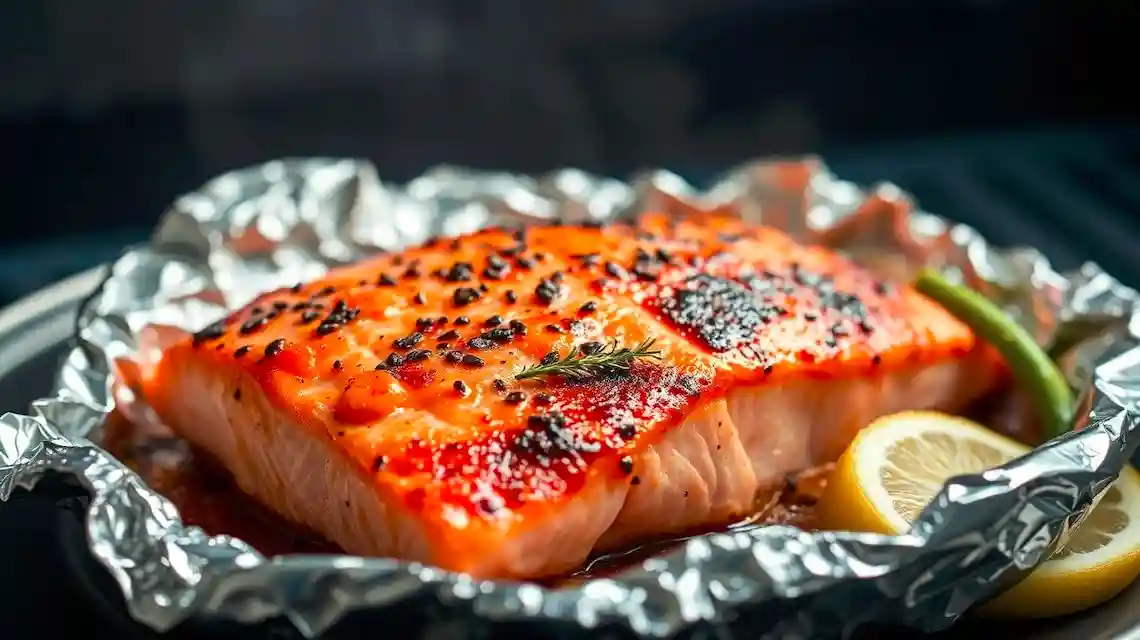
Grilling salmon in foil is one of the easiest ways to get tender, flaky fish without stress. The big question is, how long to grill salmon in foil so it comes out moist and not dry or overcooked.
The short answer: timing depends on a few key things. Thickness of the fillet, grill temperature, whether the foil packet has veggies or sauce, and if the salmon has skin all affect cook time.
This guide gives you a simple timing chart, clear step by step tips, and easy ways to tell when salmon is done even if you do not have a thermometer. By the end, you will feel confident firing up the grill and pulling off perfect salmon that tastes like something from your favorite restaurant patio.
Key Factors That Affect How Long To Grill Salmon In Foil
There is no single perfect number for grilling time. Two pieces of salmon can cook at very different speeds depending on how they are cut and how hot the grill runs.
Think of grilling salmon in foil like baking cookies. Size, oven temperature, and how crowded the pan is will all change how long they take. Salmon works the same way.
The three big factors are:
- Thickness of the fillet
- Grill temperature and where you place the packet
- How the foil packet is built, simple or loaded with extras
Once you understand these, the timing ranges later will make a lot more sense. Many trusted recipes, like this popular guide for grilled salmon, follow the same logic, just with slightly different flavors or marinades.
Let us break down each factor in simple terms so you can adjust on the fly.
How salmon thickness changes grilling time in foil
Salmon thickness has a bigger effect on time than total weight. A long but thin fillet cooks faster than a short, very thick center cut.
- Thin fillets, about 1/2 inch thick, cook quickly.
- Average store fillets are usually 3/4 to 1 inch thick.
- Thick center cut pieces can be 1 to 1 1/4 inches or more.
Heat needs to travel through the fish from outside to center. If the fillet is twice as thick, it will take several minutes longer to cook, even at the same grill temperature.
Most of the timing ranges in this post assume a fillet that is around 3/4 to 1 inch thick, which matches what most people buy at the store. If your salmon is much thinner or thicker, use the quick reference chart later to adjust the time.
Grill temperature and heat zones (medium vs medium high)
When a reacipe says “grill over medium heat,” what does that mean? For foil salmon, medium heat is usually around 375 to 400°F with the lid closed.
This heat level is strong enough to cook the salmon in under 20 minutes, but gentle enough that the foil does not scorch and the fish does not dry out.
Very high heat cooks faster, but it can:
- Burn the bottom of the foil
- Overcook the edges while the center is still underdone
Gas grills make it easy to hit a steady medium heat. Charcoal grills work well too if you let the coals cool a bit and place the packet over the hotter, but not flaming, area.
Foil packet style: single layer vs sealed pouch with veggies
How you wrap the salmon also affects timing.
A simple packet that holds just the salmon with some oil or butter, maybe a few lemon slices, heats up quickly. There is less food inside, so hot air and steam reach the fish faster.
A fully sealed pouch stuffed with vegetables or a heavy sauce takes longer because:
- The veggies need time to soften
- Extra liquid has to heat before the salmon cooks evenly
If you stack two fillets on top of each other in one packet, or fold the foil in many layers, the heat has more to push through. That can add a few minutes to your grill time.
Exact Grill Times for Salmon in Foil (With Simple Timing Chart)
Here is where we answer the big question: how long to grill salmon in foil so it turns out moist and flaky.
The times below assume:
- Grill at medium heat, about 375 to 400°F
- Lid closed for most of the cook
- Foil packet sealed, with one even layer of salmon
Think of these as smart starting points. You will still want to check for doneness near the end of the range.
Standard timing: how long to grill salmon in foil over medium heat
For most people, the standard situation looks like this: a 3/4 to 1 inch thick fillet, in a sealed foil packet, cooked over medium heat.
In that case, a very reliable rule of thumb is:
- Grill for about 12 to 16 minutes over medium heat.
Start checking at the 12 minute mark. Carefully open one end of the packet (turn your face away from the steam), then use a fork to peek at the thickest part.
If the fish is almost opaque and just starting to flake, you are in the sweet spot. If it looks raw or very glossy in the center, close the packet and cook a few minutes longer.
Keeping the lid closed most of the time is important. Each time you lift it, the heat drops, and your salmon can take longer and cook less evenly. Many step by step guides, like this one on how to grill salmon the right way , follow that same advice.
Quick reference: cooking time ranges by thickness
Use these simple ranges as a fast cheat sheet for foil grilled salmon over medium heat:
- Thin fillets (about 1/2 inch): 8 to 12 minutes
- Medium fillets (about 3/4 inch): 12 to 15 minutes
- Thick fillets (about 1 inch or more): 14 to 18 minutes
If your packet has a lot of vegetables, potatoes, or a thick sauce, add about 2 to 3 minutes. Check at the low end of the range, then add time in small steps.
Adjusting grilling time for different grills and foil setups
Not every grill runs the same, and not everyone uses the same foil wrap.
- If your grill runs hot or you cook closer to high heat, the salmon may be done a bit faster, often near the low end of the ranges. Watch closely because it can overcook quickly.
- If your grill runs a little cool, or you prefer medium low heat, expect to add 2 to 4 minutes. The upside is that lower heat is more forgiving.
If you use a double layer of foil, you get more protection from flare ups, but the packet may need 1 to 2 extra minutes since heat has to pass through more metal.
Skin on or skin off: does it change how long to grill salmon in foil?
Skin acts like a tiny heat shield. With skin on, the side facing the grill has a bit more protection.
In a sealed foil packet, the difference is small, but you might notice:
- Skin on fillets sometimes take about 1 extra minute to reach the same doneness.
The timing rules above still apply whether you have skin or not. When you check for doneness, look at the thickest part of the fillet, not the thin tail end, since the tail will always cook faster.
Step by Step: How To Grill Salmon in Foil So It Is Juicy, Not Dry
Knowing the right time helps, but the way you prep and grill the salmon also matters. Here is a simple walkthrough that ties everything together.
Prep the salmon and foil packet for even cooking
Start with dry fish. Pat the salmon on all sides with paper towels. Dry surface helps the seasoning stick and keeps the texture from getting mushy.
Season with:
- Salt and pepper
- Optional extras like lemon slices, garlic, fresh dill, or paprika
Lightly oil the dull side of the foil with olive oil or melted butter so the salmon does not stick. Place the salmon in the center.
Fold the foil up around the fish and pinch the edges together to form a sealed pouch. Leave a little space above the salmon so steam can move around. This “air pocket” helps the fish cook more evenly.
If your fillet is thick on one end and very thin on the other, you can fold the thin end slightly under to even out the thickness.
Preheat the grill and place the foil packet the right way
Preheat your grill to medium heat before you put the salmon on. You want the grates hot enough that the packet sizzles gently soon after it hits the grill.
Set the foil packet:
- Over direct medium heat on a gas grill
- Over hot, but not flaming, coals on a charcoal grill
Close the lid and leave it closed for most of the time. This traps heat so the timing ranges you read earlier stand up in real life.
How to tell when grilled salmon in foil is done (without overcooking)
The best signs of doneness are visual and based on texture.
Your salmon is ready when:
- The flesh looks mostly opaque, not shiny raw pink
- It flakes easily when you press it with a fork
- The flakes are just beginning to separate
If you like tools, you can also use an instant read thermometer. Aim for about 125 to 130°F in the thickest part for moist, tender salmon.
Try not to open the packet over and over. Each time you open it, steam escapes, heat drops, and the fish cooks slower. Check near the earliest time in the range, then give it another 2 to 3 minutes if needed.
Resting, serving, and flavor ideas for foil grilled salmon
After you take the packet off the grill, open the foil and let the salmon rest for 3 to 5 minutes. This short rest lets the juices settle so the fish stays moist when you cut into it.
Easy ways to serve:
- Over rice or quinoa with a squeeze of lemon
- With grilled or roasted vegetables on the side
- Flaked into tacos with a simple slaw and lime
You can change the flavor without changing the timing. Try different herbs (dill, basil, thyme), citrus (lemon, lime, orange), or sauces like teriyaki or a light honey mustard glaze. As long as the thickness and heat stay similar, your timing stays almost the same.
Conclusion
To recap, the simple answer to how long to grill salmon in foil is about 12 to 16 minutes over medium heat for a 3/4 to 1 inch thick fillet in a sealed packet. Thicker pieces, cooler grills, or packets packed with vegetables will need a few extra minutes.
Thickness, grill temperature, foil packet style, and skin on or off all shift the final time a bit, but the visual and texture clues stay the same. Once you try this method once or twice, you will start to feel the timing and will not worry about dry fish.
Give foil grilled salmon a try this week, watch the clock, and use your fork as your guide. After a couple of cooks, you will be able to judge doneness almost by instinct and enjoy juicy, perfectly cooked salmon whenever you want.
Related post:
FAQ: Timing Your Foil-Grilled Salmon Just Right
How long should I grill salmon in foil at 400°F?
For most fillets, grill 12 to 15 minutes at 400°F.
Thinner pieces lean closer to 10 to 12 minutes.
Thicker fillets that are over 1 inch often need 15 minutes.
Check for flaky flesh and an internal temp of 135 to 140°F in the thickest spot, then let it rest a few minutes. The temperature will keep rising a bit off the grill.
How long do I grill salmon in foil on a gas grill?
Heat the grill to medium or medium-high, about 375 to 400°F.
Place the foil packet on the grates, close the lid, and cook 12 to 15 minutes.
Start checking for doneness at 10 minutes if your fillet is thin or you cut it into portions.
How long do I grill salmon in foil on a charcoal grill?
Let the coals turn gray and spread them for medium, even heat.
Place the foil packet over indirect or low direct heat and cook 12 to 16 minutes.
Charcoal heat can run hotter in spots, so start checking at 10 to 12 minutes. Move the packet if you see the foil scorching.
Does the thickness of the salmon change the grilling time?
Yes, thickness matters more than weight.
Use this rough guide:
- ½ inch thick: 8 to 10 minutes
- ¾ inch thick: 10 to 12 minutes
- 1 inch thick: 12 to 15 minutes
- Over 1 inch: 15 to 18 minutes
Thick center-cut fillets always take longer than skinny tail pieces.
How long should I grill a whole salmon side in foil?
For a whole side (about 1½ to 2 pounds), plan on 15 to 20 minutes at 375 to 400°F.
Check the thickest part with a thermometer at 12 to 15 minutes. The thin edges will cook faster, which is normal. Pull the fish when the thickest part hits about 135°F, then rest it in the foil for 5 minutes.
How do I know my foil-grilled salmon is done without overcooking it?
Look for these signs:
- The flesh turns opaque and loses its raw shine
- It flakes easily when you press it with a fork
- The center is just slightly translucent, not raw
If you use a thermometer, aim for 135 to 140°F, then let it rest a few minutes. USDA says 145°F for safety, which you will hit after resting if you pull it a bit earlier.
Should I flip salmon when it’s wrapped in foil?
No, you do not need to flip foil packets.
The salmon steams in its own juices and cooks from both the grill heat and the trapped steam.
If you flip, you risk tearing the foil and losing juices. Just place the packet on the grill, close the lid, and leave it alone until you start checking for doneness.
How long should salmon in foil rest after grilling?
Let it rest 3 to 5 minutes in the foil after you take it off the grill.
The carryover heat finishes cooking the center and helps keep the fish moist. Open the foil carefully away from your face because the steam will be hot.
Can I grill frozen salmon in foil, and how long does it take?
You can, but it takes more time and the texture may be a bit firmer.
If grilling from frozen in a tight foil packet at 375 to 400°F, plan on about 20 to 25 minutes.
Separate any frozen fillets so they are not stacked, and add a little extra oil or butter in the packet to help keep them moist.
How long to grill salmon in foil with vegetables?
Vegetables that cook fast, like zucchini, cherry tomatoes, bell peppers, or thin asparagus, match salmon well.
If you slice veggies thin and spread them in a single layer under or around the salmon, they will cook in about the same 12 to 15 minutes at 375 to 400°F.
Harder vegetables, like potatoes or carrots, should be par-cooked or sliced very thin, or cooked in a separate packet for 20 to 25 minutes.
Does skin-on salmon in foil take longer to grill?
Skin-on salmon takes about the same time in foil as skinless salmon.
Plan on 12 to 15 minutes at 375 to 400°F for average thickness.
The skin helps protect the flesh from drying out, so it can be a bit more forgiving if you go a minute or two over.
Is the grilling time different for farmed vs wild salmon?
Wild salmon is usually leaner and thinner, so it cooks faster.
Start checking wild salmon at 8 to 10 minutes, even if you are aiming for the usual 12 to 15 minutes.
Farmed salmon tends to be thicker and fattier, so it often needs the full 12 to 15 minutes, sometimes up to 18 minutes for a very thick fillet.
Can I partially open the foil while grilling to get more color?
Yes, but wait until the salmon is nearly done.
Cook in a sealed packet for about 10 to 12 minutes, then carefully open the foil on top and cook 2 to 4 more minutes. This can give you a bit more color and let excess moisture escape.
Watch closely so it does not dry out.
What happens if I grill salmon in foil for too long?
If you overcook it, the salmon turns dry, tough, and chalky.
The albumin (white protein) will leak out and form thick white clumps on the surface.
To avoid this, start checking a few minutes before you think it will be ready, especially with thinner fillets or wild salmon.
Can I grill salmon in foil at a lower temperature for longer?
You can grill at 350°F if your grill runs cooler or you prefer gentler heat.
At 350°F, plan on 15 to 20 minutes for average fillets.
The lower temperature can give you slightly more margin before the fish dries out, but you still need to check near the end so you do not overshoot.
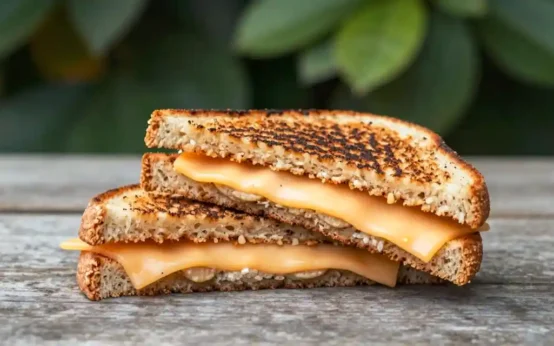 How to Make a Cheese Grilled Sandwich
 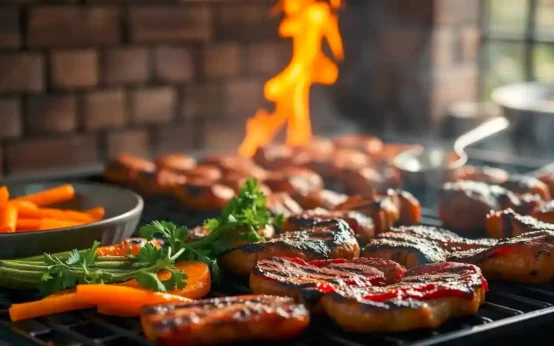 Simple Grill Recipes That Make Dinner Easy And Fun
 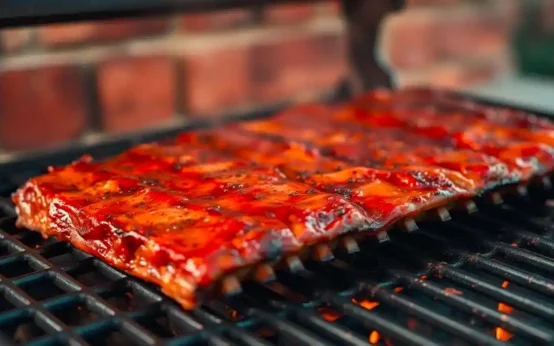 How to Cook Ribs on the Grill
  How To Use A Grill With Charcoal