

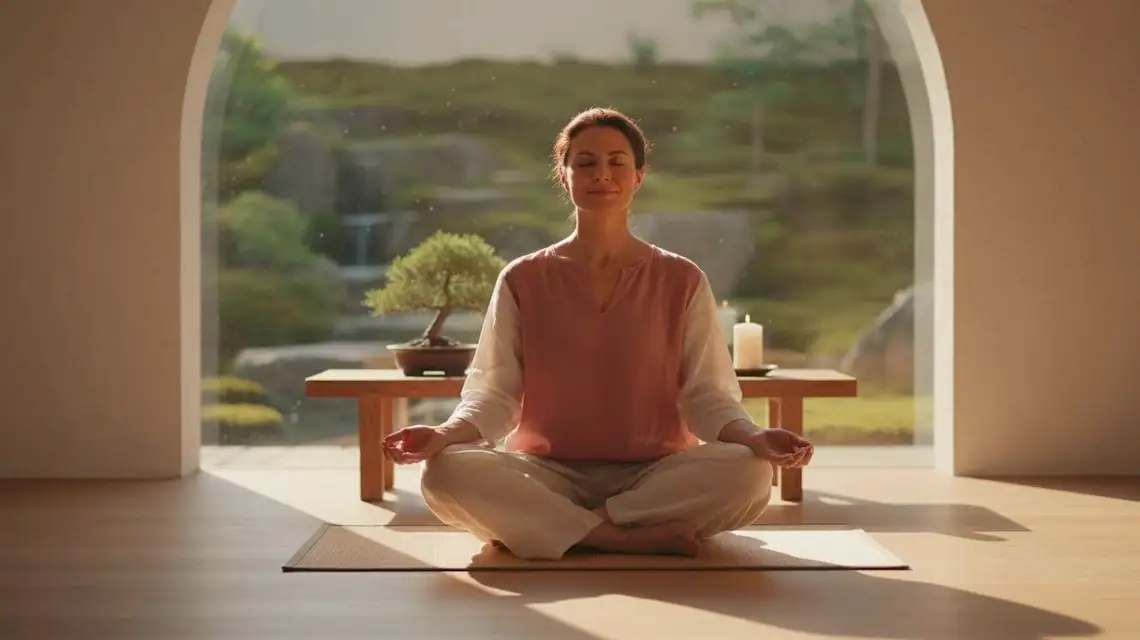
If you have ever wondered, “how do you do TM meditation?”, you are not alone. Transcendental Meditation (TM) is often described as a quiet, simple practice you do twice a day, sitting comfortably with your eyes closed and using a personal mantra.
Yet when people search online, they find different tips, confusing rules, and long debates. It is easy to feel unsure about what is accurate and what is not.
This guide explains the basics in plain language. You will learn what TM is, how a typical session flows, what to expect, and how to approach it in a safe, respectful way. Official TM training is taught by certified teachers, so this article is for general understanding, not a replacement for professional instruction.
What Is TM Meditation And How Is It Different From Other Methods?
Transcendental Meditation is a simple, structured technique that uses a silent mantra. You sit comfortably, close your eyes, and let the mind settle on its own, without effort or control. Many people like TM because it feels easy and natural rather than like a mental workout.
According to the Cleveland Clinic overview of Transcendental Meditation, TM uses a word or phrase repeated in the mind to help the nervous system relax. You are not trying to focus hard on that word. Instead, you let it come and go, which often leads to a deep sense of rest.
When people ask, “how do you do TM meditation,” they are usually comparing it with other popular styles. For example:
- Mindfulness meditation often asks you to notice thoughts, body sensations, or feelings and watch them with curiosity.
- Breath-focused meditation asks you to place attention on your breathing, such as counting breaths or feeling the air move in and out.
TM works differently. It uses a sound (mantra) that is not tied to meaning or breath. You allow attention to follow that sound in a light, effortless way. Thoughts are allowed to appear. You do not fight them or control them.
Many people say this style helps the body enter a very restful state while the mind stays quietly alert. The structure of TM, along with its training system, is part of what sets it apart from more informal approaches you might learn from apps or videos.
A quick overview of TM meditation in plain language
TM stands for Transcendental Meditation, introduced by Maharishi Mahesh Yogi in the mid 20th century. The full technique is usually learned through a certified TM teacher in an official course.
In a typical TM session, you:
- Sit down in a comfortable chair.
- Close your eyes gently.
- Use a mantra (a simple sound) silently in your mind.
- Continue for about 20 minutes.
- Practice twice a day, often morning and late afternoon.
You do not try to breathe in a special way. You do not try to stop thoughts. The mantra helps the mind settle, like a boat gliding toward still water.
If you want a more detailed background, the Wikipedia article on the Transcendental Meditation technique offers history, research, and how it is generally structured.
How TM meditation is different from mindfulness or breathwork
Mindfulness often says, “Notice what is here.” You might sit and watch your thoughts like clouds in the sky. Breathwork usually says, “Pay attention to your breath.” You may count breaths, lengthen your exhale, or follow air in and out.
TM takes a softer route. You gently repeat a mantra in the mind and let whatever happens, happen. Thoughts, images, and sounds are not enemies. They are part of the experience.
The goal is not perfect focus. TM is designed to allow the mind to dip into a quiet, restful place while staying awake. For many people, this feels less like effort and more like letting go.
Why people ask, “How do you do TM meditation the right way?”
A lot of beginners worry about doing TM “wrong.” They wonder:
- “What if I pick the wrong mantra?”
- “What if I sit the wrong way?”
- “What if I cannot stop my thoughts?”
TM is meant to be easy and natural. You are not trying to force silence or sit like a statue. The official TM courses provide personal mantras, detailed instruction, and follow up support. This helps address those worries one by one.
This article focuses on general understanding. The goal is to help you know what TM usually looks like, how to prepare, and what questions to ask if you decide to work with a certified teacher.
Step By Step: How Do You Do TM Meditation In Daily Life?
So, how do you do TM meditation in a normal day? While the exact technique and personal mantra come from a teacher, the overall flow is simple and gentle.
You make time, sit comfortably, use your mantra in a relaxed way, allow thoughts and feelings to come and go, and then end the session slowly. The feeling is often quiet and restful, not dramatic.
A review from Simply Psychology on practicing Transcendental Meditation also describes this general pattern for beginners.
Create the right space and time for TM meditation
Most TM practitioners sit for about 20 minutes, twice a day. Many choose:
- Once in the morning, before the day speeds up.
- Once in the late afternoon or early evening, before dinner.
You do not need a fancy room. A simple, quiet spot works well:
- Turn off notifications.
- Let family or roommates know you will be “off duty” for a short time.
- Dim the lights if that feels calming.
Sit in a chair with your feet on the floor, hands resting easily, and your back supported but not rigid. The main rule is comfort. If your body is at ease, your mind can settle more easily.
How to sit, relax, and get started with your TM session
When you start:
- Sit down in your chosen spot.
- Close your eyes gently, not tightly.
- Take 30 seconds to a minute to settle in.
Notice your body. Let your shoulders drop. Soften your jaw. Allow small movements if you need to adjust. You do not have to freeze or hold a yoga pose.
The goal at this stage is to shift from “doing mode” into “resting mode.” You are giving yourself permission to pause.
Using a mantra in TM meditation without forcing your mind
In TM, a mantra is a simple sound used only in the mind. It is not a phrase you chant out loud. In official TM instruction, a teacher gives you a personal mantra that fits the tradition.
Because of that, it is wise to be careful with random “TM mantras” you see online. They may not follow the official system. The TM.org guide to meditation techniques explains why correct guidance matters for this method.
During a session, you would gently begin to think your mantra. You do not force it or repeat it in a harsh way. Instead, you let it be light and natural. As the mind calms, the mantra may become softer, more subtle, or even fade out.
If you notice it has slipped away and you are caught in thoughts, that is normal. When you notice, you simply return to the mantra in a soft, easy way.
What to do with thoughts, emotions, and noise during TM
Thoughts will appear. That is part of TM. You do not need to push them away. Emotions, body sensations, and outside noises can show up too. All of that is allowed.
Here is the simple pattern:
- You are thinking the mantra softly.
- A thought or memory appears.
- You drift with that for a while.
- At some point, you notice you forgot the mantra.
- You return to the mantra gently.
Common experiences include restlessness, daydreams, random memories, or even planning your to-do list. These do not mean you are failing. Many teachers explain that this is the mind releasing tension as it settles down.
How to end your TM meditation session safely
Near the end of your 20 minutes, you stop using the mantra. Stay seated with your eyes closed for about 1 to 2 minutes.
This short “cool down” is important. It lets your body and nervous system shift gently from deep rest back into normal activity. If you jump up too fast, you might feel groggy or stressed.
After those 1 to 2 minutes, open your eyes slowly. Sit for a few more breaths if you like. Try not to grab your phone right away. Give yourself a small buffer before going back to work, family, or screens.
Tips, Benefits, And Next Steps For Learning TM Meditation Properly
Once you see the basic flow, the next step is staying consistent and getting the right support. TM is simple, but real change usually comes from regular practice and good guidance.
Research has looked at TM and health outcomes for years. Some studies, summarized in resources like the Cleveland Clinic TM article, suggest it may help with stress and heart health. Results vary from person to person, and it is not a magic fix.
Practical tips to make TM meditation easier to stick with
These simple moves can make daily practice more realistic:
- Tie it to a habit: Do TM after brushing your teeth or after breakfast.
- Set gentle reminders: Use phone alarms with calm labels, like “Quiet time.”
- Tell someone: Let a friend or partner know you are building this habit.
- Start with low pressure: Expect messy sessions. That is normal.
What matters most is consistency, not perfection. Track how you feel over a few weeks. Notice changes in stress, mood, sleep, or focus, instead of judging each single session.
Common mistakes beginners make and how to avoid them
New meditators often:
- Try too hard to empty the mind.
- Judge each session as good or bad.
- Sit in an uncomfortable position.
- Skip the rest period at the end.
You can avoid these by choosing comfort first, being kind to yourself, and remembering that TM is meant to be effortless. If your mind races, that is okay. If you feel bored, that is okay too.
Even on days when you feel restless or distracted, your TM session still counts. You are still giving your body and mind a chance to settle, even if it does not feel peaceful right away.
Potential benefits of TM meditation for stress, sleep, and focus
People often report:
- Feeling calmer during the day.
- Sleeping more deeply.
- Thinking more clearly.
- Handling stress with more ease.
Results are personal. Some people feel changes in a few days. Others notice shifts over weeks or months. The key is steady practice, realistic expectations, and support when you need it.
When to find a certified TM teacher or explore other options
If you are serious about learning exactly how to do TM meditation in the traditional way, the usual next step is to contact an official TM center or certified teacher. They can explain:
- How the course works.
- What it costs.
- What follow up support is included.
Ask questions until you feel clear and comfortable. If the official training is not available or affordable, remember that other simple meditation styles, such as basic mindfulness or breath awareness, can still offer many benefits.
This article is for education only and is not medical or psychological advice. If you have health concerns, talk with a doctor or mental health professional before starting a new practice.
Conclusion
Transcendental Meditation is a simple, quiet practice that uses a personal mantra, done for about 20 minutes twice a day. You now know the basic flow of a session, how to sit, what to do with thoughts, and how to end in a gentle way. You also know how to answer “how do you do TM meditation” in clear, friendly terms.
Start small, be kind to yourself, and focus on building a steady habit instead of chasing perfect silence. If you want the full, traditional technique, the next step is learning from a certified TM teacher who can guide you personally.
If you feel curious, try setting aside a few minutes today for quiet sitting, or research local TM resources and see what feels like the right next step for you.
Related post:
- Sleep Meditation Techniques for Fighting Insomnia Naturally
- Meditation To Calm The Mind And Body
- How Does Meditation Reduce Stress And Anxiety?
FAQs: How To Practice TM (Transcendental Meditation)
What is Transcendental Meditation (TM) in simple terms?
Transcendental Meditation is a silent form of mantra meditation.
You sit comfortably with eyes closed and quietly think a specific sound, called a mantra, in your mind.
The idea is not to focus hard or control thoughts. You let the mantra come and go in a relaxed way. With practice, the mind settles, and the body relaxes deeply.
How do you actually do TM step by step?
In general, the practice looks like this:
- Sit in a chair with your back supported, feet on the floor, hands in your lap.
- Close your eyes and relax for half a minute or so.
- Gently begin thinking your mantra inside your mind.
- If you notice thoughts, sensations, or sounds, you do not fight them. You simply return to the mantra in an easy way.
- Continue for about 20 minutes.
- At the end, stop thinking the mantra and sit quietly with eyes closed for 1 or 2 minutes before opening your eyes.
The official TM method is taught in person by certified TM teachers, who give a personal mantra and detailed guidance.
Do I need a teacher to learn TM?
The official TM organization teaches TM through in‑person courses with certified teachers.
They give you a personal mantra and show you how to use it in a very specific way.
If you want to practice TM as it is traditionally taught under that name, you need to learn it from a trained teacher.
There are other mantra meditations you can learn from books or apps, but they are not the official TM method.
How long should each TM session be?
The standard TM instruction is 20 minutes, twice a day.
Most people do one session in the morning and one in the late afternoon or early evening.
If you are new and 20 minutes feels long, you can build up gradually, but the official method uses the 20‑minute format.
What is the correct posture for TM?
You do not need a special yoga pose. Use this setup instead:
- Sit in a comfortable chair or on a sofa.
- Keep your back supported, relaxed, and fairly upright.
- Place your feet flat on the floor or crossed at the ankles.
- Rest your hands on your lap.
- Keep your eyes gently closed.
The goal is comfort without strain, so you can sit still without effort.
What is a TM mantra and why is it important?
A TM mantra is a simple sound used silently in the mind.
It does not have a meaning you think about during practice.
In TM, the mantra acts like a gentle mental tool that helps attention settle inward.
The official TM method uses a set of traditional mantras chosen by the teacher for each person.
Can I choose my own mantra for TM?
In official TM teaching, you do not choose your own mantra.
A certified teacher selects one for you based on set guidelines.
If you pick your own word or phrase and repeat it on your own, you may still get benefits, but that is no longer the standardized TM method. It is a more general mantra meditation.
What do I do with thoughts during TM?
You let thoughts come and go.
You do not try to stop them, judge them, or push them away.
When you notice that you have drifted into thoughts, you simply and lightly return to the mantra.
That gentle return is part of the practice, not a mistake.
How is TM different from mindfulness meditation?
Mindfulness usually trains you to notice thoughts, feelings, or sensations in the present moment.
You often observe the breath or body and label or notice experiences.
TM uses a mantra and does not focus on watching thoughts closely.
You repeat the mantra easily, and as the mind settles, awareness becomes quieter on its own.
You are not trying to track each thought or feeling.
Do I need to sit in silence, or can I use music?
TM is practiced in silence without music or guided voice tracks.
Background noise from daily life is fine, as long as it is not too distracting.
If you like meditating with music, you can do that at other times, but that is a different style, not TM as it is taught.
When is the best time of day to do TM?
The standard recommendation is twice a day:
- Once in the morning before breakfast or work.
- Once in the late afternoon or early evening, before dinner if possible.
You want a time when you can sit quietly and are not half asleep.
Late‑night sessions are possible, but most people find them less restful than earlier ones.
Can I do TM lying down?
TM is meant to be done sitting up with back support.
Lying down tends to make you fall asleep, which changes the practice.
If you are sick or have mobility issues, a modified position may be needed, but that is something a teacher should guide.
What if I feel restless or bored while doing TM?
Restlessness, boredom, or doubt show up for many people, especially in the early days.
If you feel that way:
- Notice the feeling without making it a big deal.
- Gently return to the mantra.
- Remind yourself that you do not have to feel calm every time to benefit.
Some sessions feel peaceful, others feel busy. Both are normal.
Is TM safe for everyone?
Most healthy adults can practice TM without problems.
Some people with serious mental health conditions may need extra support.
If you have a history of severe anxiety, psychosis, or trauma, talk with a mental health professional and, if you work with a TM teacher, let them know your background.
Never stop prescribed treatment without medical advice.
How long does it take to feel results from TM?
Some people feel more relaxed after the first few sessions.
Others notice changes more gradually over weeks or months.
Common reports include better sleep, less reactivity, and clearer focus.
The key is regular practice, usually 20 minutes twice a day, rather than waiting for something dramatic to happen in one sit.

Gas S. is a health writer who covers metabolic health, longevity science, and functional physiology. He breaks down research into clear, usable takeaways for long-term health and recovery. His work focuses on how the body works, progress tracking, and changes you can stick with. Every article is reviewed independently for accuracy and readability.
- Medical Disclaimer: This content is for education only. It doesn’t diagnose, treat, or replace medical care from a licensed professional. Read our full Medical Disclaimer here.