

How do you cook tuna fish without drying it out? Start by deciding if you’re using fresh tuna steaks or canned tuna. Both are fast, tasty, and easy to flavor. In this guide, you’ll get step-by-step methods, safe temps, and flexible seasoning ideas that work any night.
Tuna cooks quickly, so short times matter if you want a tender bite. We’ll use common tools you already have, like a skillet, grill, oven, or air fryer. Simple pantry flavors like lemon, garlic, and soy bring it to life. If you’re new to cooking tuna, keep it simple and focus on doneness. That’s the secret to juicy results.
Pick the Right Tuna and Prep It for Success
Canned vs. Fresh Tuna: What to Use and When
Canned tuna and fresh tuna steaks both earn a spot in your kitchen, just for different reasons.
- Canned tuna: Budget friendly, shelf stable, and already cooked. It is great for salads, melts, wraps, and quick pasta. Skipjack and albacore are common. Oil-packed tuna tastes richer and stays moist, so it suits sandwiches and melts. Water-packed tuna is lean, so it works well in light salads. For guidance and recipe ideas from a trusted source, see NOAA’s page on tuna recipes.
- Fresh tuna steaks: Best for searing, grilling, baking, air frying, or gentle poaching. Look for yellowfin or ahi for quick sears and grilling. Albacore steaks can be baked or seared too.
Label tips: When possible, choose brands with MSC or Dolphin Safe logos to support better fishing practices. For mercury, choose skipjack more often, and limit albacore, especially for kids and people who are pregnant. Balance matters, so switch up your choices through the month.
Safety, Thawing, and Doneness (Medium-Rare vs Well-Done)
Canned tuna is fully cooked and ready to eat. For fresh tuna, thaw in the fridge overnight, or under cold running water in a sealed bag. Pat steaks dry before cooking for better browning.
The USDA recommends 145°F for fish. Many cooks prefer tuna steaks at medium-rare, about 125 to 130°F, which keeps them moist. Visual cues help: raw center for rare, a blush center for medium-rare, and opaque throughout for well-done. Use clean cutting boards and knives, and refrigerate leftovers within 2 hours.
Discover delicious recipes and healthy meal! Elevate Your Cooking with the Mediterranean Diet
Simple Seasoning and Quick Marinades
You do not need much to make tuna shine. Try any of these:
- Simple: salt, pepper, lemon, garlic, and olive oil.
- Asian-leaning: soy sauce, honey, ginger, and sesame oil.
- Bold crusts: Cajun spice or cracked black pepper.
Marinate steaks for 15 to 30 minutes max to protect the texture. For high-heat searing, grab oils with higher smoke points, like avocado, canola, or grapeseed. Dry rubs make a great crust. Finish with a squeeze of lemon or a spoon of butter for a glossy finish. For a marinade you can riff on, check this easy garlic herb tuna steak marinade.
How Do You Cook Tuna Fish? Easy Methods and Step-by-Step
Below are three core methods with times and temps. A thermometer keeps you on track. Pull tuna at 125 to 130°F for medium-rare, or cook longer if you like it more done. Keep in mind that carryover heat raises the temp a bit as it rests.
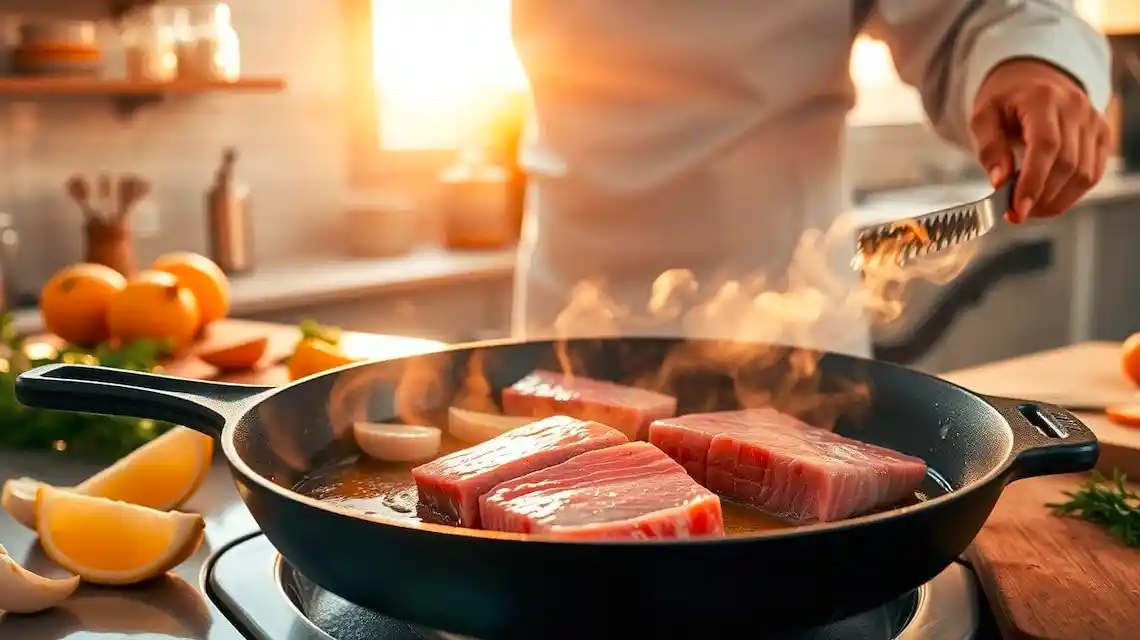
Pan-Seared Tuna Steak (Fast, Restaurant-Style)
- Heat a heavy skillet over high heat until very hot. Cast iron works well.
- Pat tuna dry. Oil the fish lightly, then season with salt and pepper.
- Sear 1-inch steaks for 1 to 2 minutes per side for rare to medium-rare. Add 30 to 60 seconds per side for more doneness.
- Target 125 to 130°F for medium-rare. Let rest 3 minutes.
- For a sesame crust, press steaks into sesame seeds before searing.
- Finish with lemon, a splash of soy, or a quick pan sauce.
For visual guidance and a fast timing blueprint, see this six-minute method for seared ahi tuna steaks.
Grilled Tuna: Charred Outside, Juicy Inside
- Preheat grill to high. Clean and oil the grates.
- Oil and season the tuna.
- Grill 1-inch steaks about 2 minutes per side for medium-rare, turning once.
- For crosshatch grill marks, rotate the steak halfway through each side.
- Brush a light glaze of soy, honey, and lime in the last minute.
- Remove at 125 to 130°F for medium-rare. Rest a few minutes, then slice across the grain.
Swap ideas: Use a Cajun rub for heat, or a simple lemon pepper blend for a clean, bright flavor.
Bake, Air-Fry, or Poach for Tender, No-Fuss Tuna
- Bake: Heat oven to 400°F. Place 1-inch steaks on a lightly oiled sheet. Bake 8 to 12 minutes, until 125 to 130°F for medium-rare.
- Air fry: Set to 390°F. Lightly oil and season tuna. Air fry 6 to 9 minutes, checking early to avoid overcooking.
- Poach: Simmer water, broth, or olive oil at a gentle bubble. Submerge tuna and cook 4 to 8 minutes, until just opaque on the edges. Do not boil hard. Flavor the liquid with lemon slices, herbs, garlic, or peppercorns.
If you prefer well-done tuna, bake or poach. These methods cook more evenly and help prevent a dry, tough texture.
Fast Tuna Meals: Salads, Melts, Bowls, and Pasta
Classic Tuna Salad That Stays Creamy
- Mix 1 can tuna (drained) with 2 to 3 tablespoons mayo or Greek yogurt, 1 tablespoon lemon juice, 1 rib celery (chopped), and 1 tablespoon pickle or relish. Season with salt and pepper.
- Add-ins: a small spoon of mustard, chopped dill, red onion, or capers.
- Serve in lettuce wraps, on crackers, or in a sandwich.
- Chill 15 minutes for best flavor.
Serving idea: Fold in cooked pasta and peas for an easy tuna pasta salad. Or add diced avocado and cucumbers for a fresh, light bowl.
Golden Tuna Melt in 10 Minutes
- Butter bread. Add a layer of tuna salad. Top with cheddar or Swiss.
- Toast in a skillet over medium heat, 3 to 4 minutes per side. Or broil open-faced until the cheese bubbles and goldens.
- Add tomato slices or pickles if you like. Serve with a squeeze of lemon.
Quick swap ideas:
- Use sourdough for extra crunch.
- Add a slice of roasted pepper or a spoon of pesto.
- Try a slice of provolone and a dusting of Italian seasoning.
For more tuna cooking ideas and flavor combos inspired by different techniques, you can scan a broad overview of ways to cook fresh tuna and adapt them to your tools at home.
Conclusion
Cooking tuna is fast and flexible. Choose canned for speed, or fresh steaks for searing or grilling. Season simply, watch the temp, and stop right at doneness for juicy results. If you came here wondering how do you cook tuna fish, start tonight with a pan-seared steak or make a golden tuna melt for lunch. Try one method, then build your own routine. Keep it hot, keep it short, and enjoy tender tuna every time.
Related post:
- How to Cook Delicious Spaghetti at Home
- Easy Make Oatmeal Cookies
- Choosing the Right Fats for Your Cooking Styles
How Do You Cook Tuna Fish FAQs: From Steaks to Cans
What are the best ways to cook fresh tuna steaks?
Sear, grill, bake, air fry, or poach. Tuna cooks fast and dries out if overdone. Aim for medium-rare to medium unless you need it well-done for safety.
- Sear: Hot pan, high smoke point oil, 1 to 2 minutes per side.
- Grill: Oiled grates, high heat, 2 to 3 minutes per side.
- Bake: 400°F, 8 to 12 minutes, depending on thickness.
- Air fry: 400°F, 6 to 8 minutes.
- Poach: Simmer in olive oil or broth, 6 to 10 minutes.
How do I keep tuna from drying out?
Start with high heat, do not overcook, and rest briefly. Pat dry, oil lightly, and cook to 125 to 130°F for medium-rare or 135°F for medium. Remove from heat just before your target since carryover heat finishes the job.
What internal temperature should I cook tuna to?
For safety, 145°F is the FDA guideline. Many cooks prefer 125 to 130°F for medium-rare since tuna is lean and tastes better less done. Choose based on your risk tolerance and the quality of your fish.
How long should I cook a 1-inch tuna steak?
About 1.5 to 2 minutes per side for a quick sear, 2 to 3 minutes per side on the grill, or 8 to 10 minutes in a 400°F oven. Adjust for thickness and heat.
Should I marinate tuna? For how long?
Yes, but keep it short. Tuna is dense and does not need long marinating. Try 15 to 30 minutes. Use oil, acid, and salt for balance. Soy sauce, lemon, garlic, sesame oil, or a pepper crust work well.
Can I eat tuna rare?
Yes, many people serve tuna rare or medium-rare. Use high-quality, very fresh tuna from a trusted source. If you are pregnant or immune compromised, cook to 145°F.
What oil is best for searing tuna?
Use oils with a high smoke point. Avocado, canola, grapeseed, peanut, or light olive oil work. Avoid extra-virgin olive oil for high heat, it smokes too fast.
How do I season tuna steaks?
Keep it simple. Salt and pepper, then add one of these:
- Lemon zest and garlic
- Cracked peppercorn crust
- Cajun or blackening spice
- Soy, ginger, and sesame
- Olive oil, capers, and herbs
How do I grill tuna without it sticking?
Preheat the grill very hot, clean grates well, and oil both the grates and the fish. Do not move the steak until it releases on its own, then flip once.
Can I cook tuna from frozen?
Thaw first for even cooking. Thaw in the fridge overnight or under cold running water in a sealed bag. Pat dry before cooking. If you must cook from frozen, bake at 400°F and allow extra time.
What is the best way to cook canned tuna?
Keep it quick. Add to pasta, rice bowls, or salads at the end so it stays moist. For a tuna melt, mix with mayo, lemon, celery, and pepper, then broil on bread with cheese until bubbly. For patties, mix with egg and breadcrumbs, pan-fry 2 to 3 minutes per side.
Should I buy tuna packed in oil or water?
Oil-packed has richer flavor and better texture, great for salads and sandwiches. Water-packed is leaner and works well when mixing with mayo or dressing. Drain gently, do not rinse, you lose flavor.
How do I make tuna salad taste better?
Use acid and crunch. Try lemon juice, Dijon, capers, celery, pickles, red onion, and fresh herbs. Add a bit of olive oil for richness. Season with salt and pepper. Chill 15 minutes to meld flavors.
What kind of tuna is best for cooking?
For steaks, look for ahi or yellowfin, sometimes bluefin if available. For cans, skipjack has stronger flavor, albacore is milder and chunkier. Choose brands that label the species and catch method.
How can I tell if tuna is fresh?
Look for firm, moist flesh with a clean, ocean smell. Color ranges from deep red to pink depending on species. Avoid fish that looks dull, mushy, or has a sour odor.
How do I avoid a strong fishy taste?
Buy fresh fish, keep it cold, and cook it the same day if possible. Pat dry and salt just before cooking. Use bright flavors like lemon, herbs, or a light soy-citrus sauce.
Is mercury a concern with tuna?
Yes, in larger species it can be. Canned light tuna, usually skipjack, is lower. Albacore and bigeye tend to be higher. Most adults can eat light tuna a few times per week. People who are pregnant or feeding young children should follow their doctor’s guidance.
How should I store cooked tuna and leftovers?
Cool and refrigerate within 2 hours. Store up to 3 days in a sealed container. Reheat gently, or serve cold in salads. If it smells off, discard it.
Can I sous vide tuna?
Yes, it gives precise results. Cook at 110 to 120°F for rare to medium-rare, 30 to 45 minutes, then sear quickly in a very hot pan. Chill fully if you plan to serve later.
What sides pair well with tuna?
Try citrus slaw, grilled vegetables, rice or quinoa, roasted potatoes, or a crisp salad. A bright sauce like chimichurri, salsa verde, or lemon-herb yogurt works well.
 How to Cook The Salmon Fish
  How to Cook a Lasagna at Home
  How to Cook Teriyaki Broccoli
  How to Cook Delicious Spaghetti at Home
  How to Make the Best Egg Omelette (10-Minute Guide)
  Cooking Steak In a Stainless Steel Pan