

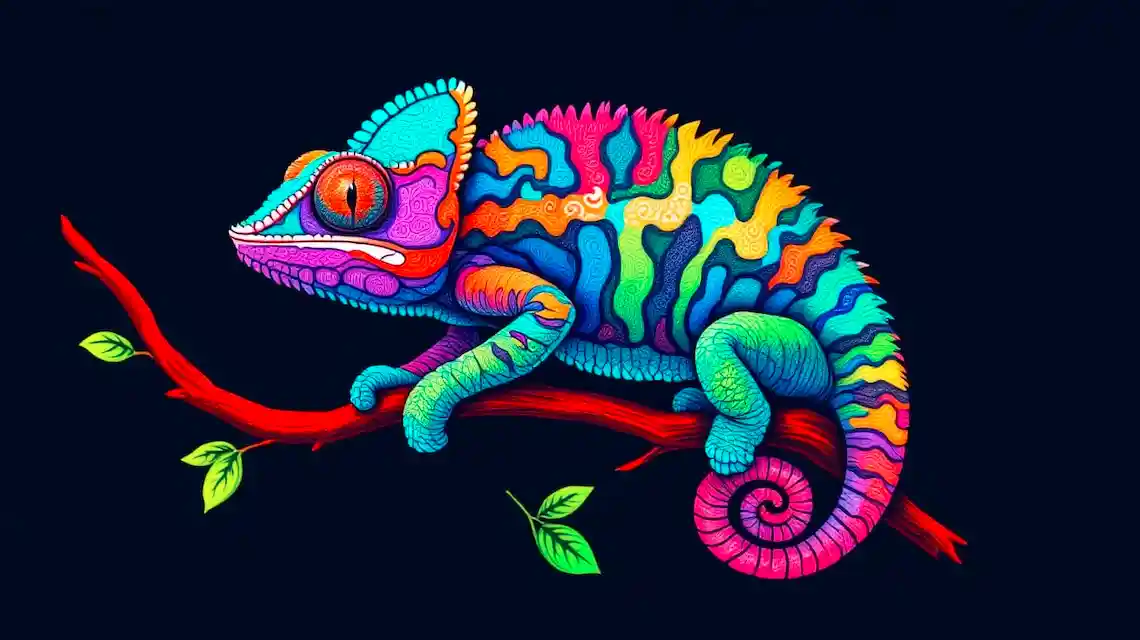
A chameleon can vanish into a leaf like a living magic trick. Bright green one moment, fiery yellow the next, it looks like pure illusion. So how do chameleon change color? They shift tiny crystals in their skin and move pigments in thin layers, controlled by nerves and hormones.
This post makes the science simple. You will see the myths, the real mechanics, the reasons they do it, and a few fun extras. Many people think color change is only for hiding. It is also for talking to other chameleons, cooling or warming the body, and handling stress.
We will clear up what chameleons can and cannot match. They do not copy plaid sofas or neon signs. They tweak how light reflects off special cells called iridophores, then mix it with browns, reds, and yellows from pigment cells. That mix creates the colors we see.
By the end, you will know what triggers a shift, how fast it happens, and why some species flash brighter than others. Expect plain explanations, quick examples, and zero fluff. If you love animals or you just want a smart answer for a curious kid, you are in the right place.
Ready to see how this “magic” works in real life, step by step? Let’s keep it easy, clear, and fun.
The Myth and Reality of Chameleon Color Change
Cartoons taught us that a chameleon can snap to any color and vanish on command. Real chameleons are amazing, but they are not magic. Their color shift is gradual, usually over seconds to a few minutes, and it is not a perfect copy of the background. Think close enough to break up the outline, not a photo filter.
If you are wondering how do chameleon change color, the short answer is this: nerves and hormones tell special skin cells to move pigments and tune tiny crystals. That mix changes how light bounces off the skin. You see green fade to brown, spots brighten, or stripes pulse. It feels a bit like a living mood ring, only with brain control and survival on the line.
Common Misconceptions About Instant Camouflage
A common myth says a chameleon can match any backdrop in a blink. It cannot. Most species shift within minutes, and the result is a set of natural tones, like greens, yellows, browns, and blacks. They do not copy plaid, logos, or neon. Their skin is built to reflect certain wavelengths, not to print patterns.
Another myth says the eyes scan the scene and the skin mirrors it. Vision matters, but the brain runs the show. The nervous system sends signals that trigger changes in two main layers. Pigment cells spread or bunch up, which darkens or lightens the skin. Iridophores, packed with guanine crystals, change spacing, which shifts blues and greens by bending light. Stress chemicals and temperature can speed or slow this response.
Not every chameleon is a master color shifter. Veiled chameleons change well, showing greens to tan and bold bands during courtship or stress. Panther chameleons are the poster child for bright shifts, with blues and reds when they display. Jackson’s chameleons change more modestly, often cycling greens and browns that help with cover.
People expect a perfect backdrop match because it looks simple on screen. In nature, good camouflage is about blur and contrast, not exact copy. The real trick is control. Once you know how do chameleon change color at the cellular level, those slow, strategic shifts make perfect sense.
How Chromatophores Make the Magic Happen
If you want a simple, true answer to how do chameleon change color, start with their skin. It is a living screen made of stacked cell layers. Some cells hold pigments, others act like tiny mirrors. Together, they tune light and create the colors you see.
Chromatophores are the star cells. They shift pigments or reflect light, controlled by the brain and by hormones. Think of them as adjustable pixels that can spread, shrink, and even redirect light to paint the skin in real time.

Step-by-Step: The Color Change Process
The color shift follows a clear chain of events. A side-by-side diagram here would help, showing brain to nerves to cells.
- Stimulus hits. A rival appears, a mate approaches, or the air cools. Emotions and body temperature matter.
- The brain sends signals. Nerves carry fast messages. Hormones add longer, body-wide cues that prime the skin.
- Chromatophores respond. These are the main types:
- Melanophores: hold black and brown melanin. They spread to darken the skin, or pull pigment inward to lighten it.
- Xanthophores: carry yellow and some red pigments.
- Erythrophores: hold deeper reds, useful in displays.
- Iridophores: contain guanine crystals. They do not have pigment. They reflect and scatter light, which makes structural blues and greens.
- Cells expand or shrink. Pigment cells flatten and spread like umbrellas, or fold up like tight bundles. Iridophores change the spacing of their crystals. When the spacing widens, longer wavelengths reflect, so colors shift toward yellow and red. When spacing tightens, shorter wavelengths reflect, so you see more blue.
- Colors mix on the skin. Structural blues from iridophores pass up through yellow xanthophores, which creates bright greens. Add brown from melanophores, and the tone drops to olive. Pull melanin inward, and the same mix looks lighter and more vivid.
Temperature and stress adjust the speed. Warm skin and a jolt of adrenaline can make changes snap into place faster. Cooler skin or calm behavior slows it down.
Role of Skin Layers and Pigments
Chameleon skin is built in tiers, each with a job. A simple cross-section graphic would be perfect here.
- Upper reflective layer: packed with iridophores. Their guanine crystals act like a tunable mirror. This layer sets the base hue by choosing which wavelengths bounce back.
- Middle pigment layer: xanthophores and erythrophores add yellow to red. They tint the reflected light. Melanophores sit deeper and slide melanin up or down, which changes brightness and contrast.
Stacking these layers creates rich, shifting colors. For example, turquoise forms when tight iridophore spacing reflects strong blue, then a thin wash of yellow pigment turns it blue-green. Push melanin up, and that turquoise becomes sea green. Pull melanin down, and it pops brighter.
Not all chameleons change the same way. Panther chameleons rely heavily on iridophore tuning for bold blues and greens, with pigments adding reds and yellows. Some species use more pigment movement and show softer greens and browns. The mechanism is shared, but the balance between structure and pigment varies by species.
This layered, signal-driven system is the real answer to how do chameleon change color. It is physics and pigment, guided by the nervous system, all working in seconds on living skin.
Why Do Chameleons Change Color? Reasons Beyond Hiding
Color change is survival tech, not a parlor trick. It helps chameleons hunt, hide, talk to rivals and mates, and manage body heat. If you are asking how do chameleon change color in the wild, think purpose first. Each shift has a job tied to food, safety, or reproduction.
Camouflage: The Ultimate Survival Tool
Chameleons use color to blur their outline among leaves, branches, or rocks. In wet forests, greens and olives break the shape of the body against light and shadow. In dry scrub or deserts, sandy browns and muted grays help them blend with bark and stones.
There are two flavors of cover:
- Passive camouflage: background-friendly colors that match the habitat most of the time.
- Active camouflage: quick shifts to blend better when a bird or snake gets close, or when stalking an insect.
This camouflage fools eyes that watch for contrast and motion. Insects miss a slow-moving shape that looks like a leaf. Birds scan for bold edges, not soft greens with broken patterns.
Fun example: picture a veiled chameleon inching along a branch. It rocks gently like a leaf in wind, turns a matte olive with faint bars, and seems to vanish. You notice the toes first, then the whole body snaps into view only when it moves.
Communication and Mating Signals
Color also speaks. Bright shades can say both come here and back off. Males often flash bold blues, reds, or yellows during the breeding season, which shows strength and good health. Rivals see a warning. Females see a strong mate.
Patterns matter as much as color. Stripes, bars, and spots carry meaning:
- Territorial displays: dark bars with high contrast tell other males to keep out.
- Courtship: males pulse side stripes and head patches when approaching a receptive female.
- Female responses: a calm olive or soft green can signal openness, while darker tones with speckling or black spots signal rejection.
Field work in Madagascar notes that male panther chameleons show faster, larger shifts when rivals appear, especially during peak breeding. Those displays settle fights before they turn risky.
Temperature and Health Indicators
Color helps manage heat. Darker skin absorbs sunlight and warms the body on cool mornings. Lighter tones reflect heat to prevent overheating at noon.
Health shows on the skin too. A stressed chameleon can darken suddenly. A sick one may look pale or washed out. In captivity, keepers track baseline colors, feeding, and behavior. Quick tips:
- Dark for warmth, light to cool.
- Persistent pallor, dullness, or uneven patches can flag stress or illness.
This ability ties to survival. Warm muscles mean faster strikes at insects. Clear signals mean fewer fights. Smarter camouflage means living another day.
Fun Facts and What We Still Don’t Know
Chameleons surprise even after you know the basics. Beyond the physics and pigments, there are quirks, limits, and open questions. Here is a quick tour that ties curiosity to real science, and points to where research is going next.
Quick Facts That Might Surprise You
- Two spectra of sight: Chameleons see our visible colors and also ultraviolet. UV cues can boost displays and help with finding mates.
- Not all species shift boldly: Several species stick to greens and browns. Desert types often use subtle light-to-dark changes tied to heat.
- Structural color, not paint: Those blues and greens come from crystal spacing in iridophores. Pigments then tint that light.
- Family ties: Chameleons sit within Iguania, close to agamid lizards. Their tunable iridophores likely built on traits shared with reptile relatives.
- Bone glow under UV: Some species show faint blue patterns from bone-based fluorescence. It may aid close-range signals at dawn or dusk.
What Science Is Still Chasing
Researchers are still refining the answer to how do chameleon change color at the deepest levels.
- Genetic switches: Teams are comparing genomes to find the gene networks that set crystal size, pigment stores, and display range between species.
- Nerve and hormone timing: We know adrenaline and MSH matter. The exact wiring that sets speed and patterns across the body is still being mapped.
- Evolutionary steps: Studies compare chameleons and other iguanians to trace when tunable iridophores and strong displays first took off.
- Climate stress: Rising heat and UV can skew thermoregulation and signaling. Habitat shifts may also change how well displays work in the wild.
See Them Up Close, The Right Way
Want to watch a real color shift? Visit an accredited zoo or reptile center. Stand back, move slow, skip flash, and give them shade and quiet. You get a front-row seat, they get calm, natural behavior.
Conclusion
A chameleon’s color shift is not magic, it is smart biology. We moved from myths to real skin science, from chromatophores and tunable crystals to the signals that set them in motion. We covered why they change, from camouflage and courtship to heat control and health cues, then capped it with facts that show how much more there is to learn.
That first hook still holds. The answer to how do chameleon change color blends physics, pigments, nerves, and purpose, all working in seconds. When you spot that sudden green or a flare of blue and red, you are seeing survival, conversation, and temperature control in action.
Got thoughts, questions, or a story from the field? Drop a comment and share. Want to dig deeper into reptiles, behavior, or color in nature? Explore our related guides and keep the curiosity going.
Thanks for reading, and keep looking closely at the living world. The wonder of how do chameleon change color is a reminder that even common animals carry rare science in plain sight.
Related post: Can Cats Get Depressed?
Chameleon Color Change FAQ
How do chameleons change color?
They shift tiny crystals in their skin to reflect different light. These crystals sit in cells called iridophores. When the spacing changes, the skin reflects new wavelengths, so we see new colors. Dark pigments from deeper cells move too, which adds depth and shade.
Is it pigment or something else?
Both. Structural color comes from crystal spacing, which sets the main hue. Pigment cells, like melanophores, xanthophores, and erythrophores, add black, yellow, and red tones. The mix gives the final look.
What triggers the change?
Signals from the brain and hormones set it off. Mood, light, and body temperature all play a part. A threat, a rival, or a mate can prompt fast shifts.
How fast can they change?
Some species switch in seconds. A full pattern can take a bit longer, often under a minute. Small tweaks happen even faster.
Do they match any background like a TV screen?
No. They do not copy exact colors or patterns. They shift within a set range based on their species, mood, and light.
Is color change only for camouflage?
No. Social signals come first in many cases. They also use color to manage heat. Darker shades absorb heat, lighter ones reflect it.
Do all chameleons change color the same way?
The mechanism is similar, but range varies by species. Panther and veiled chameleons show bold shifts. Some species only move from light to dark greens and browns.
Do babies change color too?
Yes, but with a smaller range. As they grow, crystal layers and pigment cells mature, so the palette expands.
What colors can they make?
Greens, yellows, reds, blues, blacks, and whites are common. Blues often come from crystal structure, not blue pigment. Pure purple is rare.
Why do chameleons look paler at night?
They relax their skin and reduce contrast in low light. Many turn lighter or more uniform to save energy and stay calm.
Can stress affect their colors?
Yes. Stress often brings darker, duller tones or strong contrast. Chronic stress can flatten color range and signal poor health.
Do they see colors we do not?
They see a wide color range, including some UV cues. Some skin patches reflect UV, which may carry signals we cannot see.
Does temperature change their color range?
Yes. Heat prompts lighter shades to avoid overheating. Cool temps bring darker hues to soak up warmth.
How is this different from octopus color change?
Chameleons tune light with nanocrystals and move some pigments. Octopuses use muscles to expand chromatophores and can add texture. Both are fast, but the physics differ.
Can a chameleon turn the exact color of a bright red shirt?
Not always. They have limits set by their cells and structure. Saturation and hue ranges vary by species.
Do pet chameleons need special light for healthy color?
Yes. They need proper UVB, heat, and visible light. Good lighting supports vision, behavior, and normal color signals.
Are color changes a sure sign of mood?
They give clues, but context matters. A bright male may display to claim space. A dark color might mean stress, cold, or illness. Watch behavior and setting together.
Can you predict a color shift before it happens?
Often. Subtle posture changes, eye focus, and skin tension come first. Then colors swing as the crystals and pigments move.
Does diet change their colors?
Diet supports pigment health, so it can influence vibrancy. It will not invent new colors outside the species range. Proper hydration also matters.
 Dog Trick Training for Beginners
  Gingivitis Cats Symptoms Every Pet Parent Should Know
  How to Make Dog Cookies at Home
  Wet Food or Dry Food for Cats?
  What Is the Healthiest Hamster Breed for Your Home?
  Cat Food Intolerance Symptoms: How To Spot Them Early