

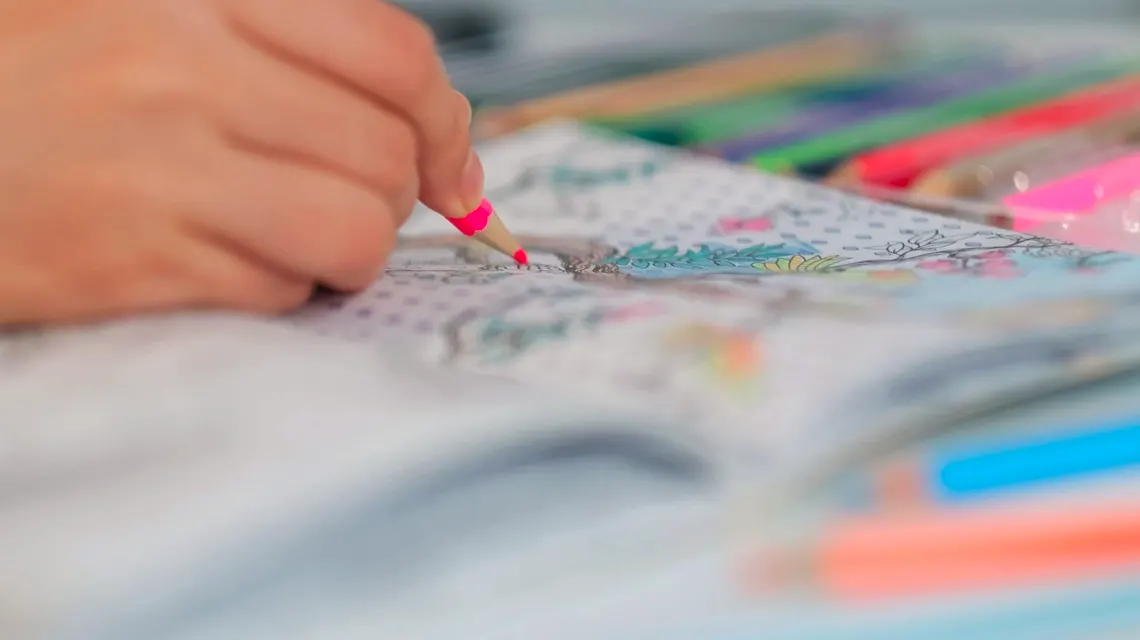
Your alarm goes off, you grab your phone, and before you even sit up, your brain is full of emails, news, and messages. The day races by in a blur of meetings, school runs, chores, and glowing screens. By evening, your body is tired, but your mind is still buzzing.
No wonder so many adults are picking up colored pencils again. How coloring reduces stress is not just a cute trend. Research shows that focused coloring can calm the nervous system and ease worry. Coloring for stress relief can mean adult coloring books, printable pages, a tablet app, or simple doodling on scrap paper. This guide walks you through how it works, what the real benefits are, and easy ways to start today.
How Coloring Reduces Stress: What Actually Happens in Your Brain
Coloring might look simple, but your brain works hard in a calm, focused way when you do it. Think of it like a gentle workout that helps your thoughts slow down and line up, instead of spinning out of control.
Scientists have started to study this more closely. For example, researchers writing in the journal Art Therapy compared coloring to free drawing and found that structured coloring can reduce anxiety in adults who were already feeling stressed out (Does Coloring Reduce Anxiety?). That kind of result helps explain why coloring feels so soothing.
Coloring helps your brain focus on one simple task
When you color, your brain pays attention to:
- The lines on the page
- The shape of each space
- The colors you want to use next
This type of focused attention gives your mind less space for racing thoughts. Worries about work, family, or money have a harder time pushing in when you are calmly deciding which shade of blue to use.
In many ways, this focus is similar to mindfulness. You are not forcing yourself to think positive thoughts. You are simply staying with the page, one small area at a time. That steady attention helps your nervous system move away from stress and toward calm, even if the rest of your life is still busy.
Coloring activates the relaxation response in your body
Coloring is a slow, repeated motion. Your hand moves, your eyes follow the lines, you fill one small space, then the next. Over a few minutes, your breathing often gets deeper and more steady without you trying.
When that happens, your body can shift out of fight-or-flight mode. Heart rate may slow a bit, muscles in your neck and shoulders can loosen, and levels of stress chemicals like cortisol may start to drop. The Mayo Clinic notes that calm coloring supports mindfulness and relaxation, which helps ease symptoms of stress and anxiety for many people (mental health benefits of coloring).
Coloring is not a cure for anxiety, depression, or medical problems, and it should not replace professional help when you need it. But as a simple tool, it can support your body’s natural ability to relax.
Color and creativity give your emotions a safe outlet
Stress is not just in your body. It also shows up as feelings that are hard to name or talk about. Coloring gives those feelings a quiet, safe place to go.
Picking dark colors when you feel heavy or bright colors when you crave energy can be a form of nonverbal expression. You do not have to explain what you are feeling to anyone. The page holds it for you. Art therapists use similar ideas, and some early research links creative coloring with lower anxiety and better mood in both medical and everyday settings.
Many people say they reach for coloring when they feel angry, sad, or drained because it feels easier than trying to put everything into words. Over time, that habit can help your brain connect creativity with comfort, which makes stress easier to handle.
Key Benefits of Coloring for Stress Relief in Everyday Life
Knowing how coloring reduces stress is helpful, but what does it look like in real life? The best part is that you can fit coloring into small pockets of time you already have.
Health writers and therapists often point to adult coloring as a simple way to ease daily stress and support mental health, which matches what many people report in their own lives (benefits of adult coloring). Here are a few ways it can help.
Coloring gives your mind a break from screens and constant noise
Most of us spend hours each day staring at phones, tablets, and laptops. Notifications, messages, and feeds keep the brain on high alert. Even when you sit down at night, your attention can still feel pulled in ten directions.
Coloring is a quiet, offline activity. There are no pop-ups and no urgent pings. When you spend just 10 to 15 minutes filling in a page, your eyes get a rest from blue light, and your mind gets a break from fast scrolling. Many people describe this as a small mental reset after a long day.
Coloring can improve mood and sleep by helping you unwind
Stress often carries into the night. If you jump from a busy day to a bright screen in bed, your brain may stay wired long after you want to sleep.
A calm coloring routine in the evening can send your body a different message. When you sit with a cup of tea and color a simple page, your muscles can loosen, your thoughts slow, and you give your mind time to shift gears. That smoother transition can make it easier to fall asleep and wake up feeling less tense.
Everyone is different, so results vary, but many people say they feel lighter, more settled, or less tightly wound after even a short coloring session.
Coloring builds a sense of control and small daily wins
Stress often comes from feeling like life is out of your control. Bills, deadlines, and family needs can stack up in ways you cannot change overnight.
A coloring page is the opposite. It has clear edges, simple rules, and small choices. You pick the colors, decide where to start, and stop when you want. Finishing a section or a whole page gives a clear, visible win. That sense of progress can spill over into other parts of your life, helping you feel more capable and steady, even when bigger problems are still there.
How to Use Coloring to Reduce Stress: Simple Tips to Get Started Today
You do not need fancy tools or lots of free time to get the stress relief benefits of coloring. Start small and keep it easy.
Choose the right coloring tools and pages for relaxation
Use what you already have if you can. A cheap set of colored pencils, crayons, or markers works fine. For pages, you can grab a simple adult coloring book or print free sheets at home. For example, you can find beginner-friendly stress relief coloring pages with large, flowing shapes online (free stress relief coloring printables).
If tiny details make you tense, skip very complex designs at first. Choose pages with bigger shapes, soft patterns like waves, flowers, or mandalas, and plenty of open space. The goal is to feel calm, not to struggle with a tiny maze of lines.
Turn coloring into a short daily stress relief habit
Coloring works best when you do it regularly, even for a few minutes. Try ideas like:
- Ten minutes of coloring with a snack after work
- A short coloring break during lunch, instead of scrolling through social media
- A calm coloring time before bed, with soft music or a candle
Some people like to add slow, deep breathing while they color to increase the relaxing effect. Remind yourself that the point is to feel better, not to create perfect art. If you only finish a small corner, that still counts as stress relief.
Conclusion
Now you know how coloring reduces stress in a simple, real way. It focuses your mind on one gentle task, activates your body’s natural relaxation response, gives your emotions a quiet outlet, and brings everyday benefits like better mood, better sleep, and a small sense of control.
You do not need to be an artist to enjoy this. Grab some colors, pick a page, and set a timer for just 10 minutes today. Notice how your body and mind feel before you start and after you finish. That tiny pause might be the calmest part of your day.
How Coloring Reduces Stress FAQs:
How does coloring actually reduce stress in the brain?
Coloring shifts your attention from worries to a simple, structured task. That shift gives your mind a break from constant problem-solving and mental chatter.
When you color, your brain moves into a calmer state, similar to light meditation. Heart rate and breathing can slow down, and muscle tension often drops.
Researchers have found that focused, repetitive activities like coloring can reduce activity in the amygdala, the part of the brain that responds to stress and threat. That is a big reason many people feel more relaxed after even 10 to 20 minutes of coloring.
Is coloring really like meditation, or is that just hype?
Coloring is not a replacement for formal meditation, but it shares a few key features. You focus on a simple task, you stay in the present moment, and your senses (sight and touch) guide the experience.
This kind of focus helps quiet racing thoughts. Many people find it easier to sit and color than to sit in silence and watch their breath, so coloring can feel like a more approachable entry point into mindfulness.
You could think of it as a low-pressure, guided form of mindfulness, especially if you color detailed patterns that naturally draw your attention.
Why do adult coloring books feel so calming compared to just doodling?
Adult coloring books usually include structured shapes, patterns, and mandalas. This structure removes the pressure to create something from scratch. You are making choices, not inventing the whole page.
That sense of gentle guidance matters. It reduces decision fatigue and perfectionism, which can both feed stress. With a coloring page, the lines are already there, so you relax into the process.
Doodling can be relaxing too, but some people overthink it. They judge their ideas or worry about results. A ready-made page removes a lot of that mental noise.
How long should I color to feel a real stress reduction?
Most people notice a change in mood after about 10 to 20 minutes of focused coloring. If your mind is racing, you might need a little longer to settle in.
Short, regular sessions work better than a single long one. For example:
- 15 minutes after work
- 10 minutes before bed
- A quick 5-minute break between meetings
Pay attention to your body. If your shoulders drop, your breathing slows, and your thoughts feel less sharp or jumpy, your stress level is likely coming down.
Is coloring better for stress than scrolling on my phone?
For stress relief, coloring usually beats mindless scrolling. Social feeds often trigger comparison, news overload, and information fatigue. That keeps your nervous system on alert.
Coloring, in contrast, pulls your attention into a calm, sensory task. You are choosing colors, filling shapes, and watching the page slowly change. That process is more likely to move you into a relaxed, focused state, instead of a wired, restless one.
If you want to test it, compare how you feel after 15 minutes of coloring versus 15 minutes of scrolling. Most people report that coloring leaves them less tense and more clear-headed.
Do you need to be “artistic” to get the stress benefits of coloring?
Not at all. The stress relief comes from the process, not the artistic skill. Your brain does not require a great final result to relax. It responds to focus, repetition, and a sense of gentle control.
If you can hold a pencil and make basic color choices, you are set. You do not need perfect shading, fancy techniques, or a social-media-ready page. In fact, chasing perfection often adds pressure, which works against relaxation.
Give yourself permission to color “badly.” The more you let go of judging the outcome, the more relief you will feel.
What kind of coloring is best for reducing stress?
The “best” type is the one you will actually enjoy and keep doing. That said, some features tend to help with stress relief:
- Repetitive patterns (like mandalas or geometric designs) can support a meditative focus.
- Moderate detail keeps your attention engaged without tiring your eyes.
- Colors you love matter more than any “correct” color theory.
If you feel calmer with nature themes, choose flowers or landscapes. If you like order, choose patterns with clear symmetry. The key is to notice what feels soothing for you, then use more of that.
Can coloring help with anxiety and sleep problems?
Coloring will not cure anxiety or insomnia, but it can help calm your nervous system, which supports better sleep and a more stable mood.
Using coloring as a pre-sleep ritual works well for many people. Dimming the lights, putting your phone away, and coloring quietly for 15 to 30 minutes teaches your brain that it is time to slow down.
If your anxiety is intense or long-term, coloring is best used as one tool in a bigger support plan that might include therapy, medication, or other lifestyle changes.
Is there any science behind adult coloring for stress, or is it just a trend?
There is growing, though still limited, research on adult coloring. Several small studies have found that coloring structured patterns, especially mandalas, can lower reported anxiety and stress levels in the short term.
Researchers believe this effect comes from a mix of focused attention, repetition, and mild sensory pleasure. These are the same elements found in many relaxation techniques.
The science is still evolving, but current findings support what many people already feel in daily life. Coloring is not magic, but it can be a simple, low-cost stress tool with real benefits.
How can I make coloring a regular, stress-reducing habit?
Treat coloring like a short daily ritual, not a rare treat. A few ideas:
- Pick a small, easy-to-reach kit (a book and a few pencils) and keep it visible.
- Attach coloring to an existing habit, like your evening tea or your lunch break.
- Set a timer for 10 or 15 minutes so it feels manageable.
If you like structure, you might decide, “I color one page per week,” or “I color for 10 minutes every weeknight.” The goal is consistency, not perfection. Over time, your brain will start to link coloring with a sense of calm, and it will get easier to slip into that state when you sit down with your pencils.
 Can Migraines Be Triggered by Stress
  How to Manage Work Stress in Simple, Real-Life Ways
  Mindfulness Stress Reduction For Real-Life Stress
  What Are the Reason for Stress
  How to Reduce Stress