

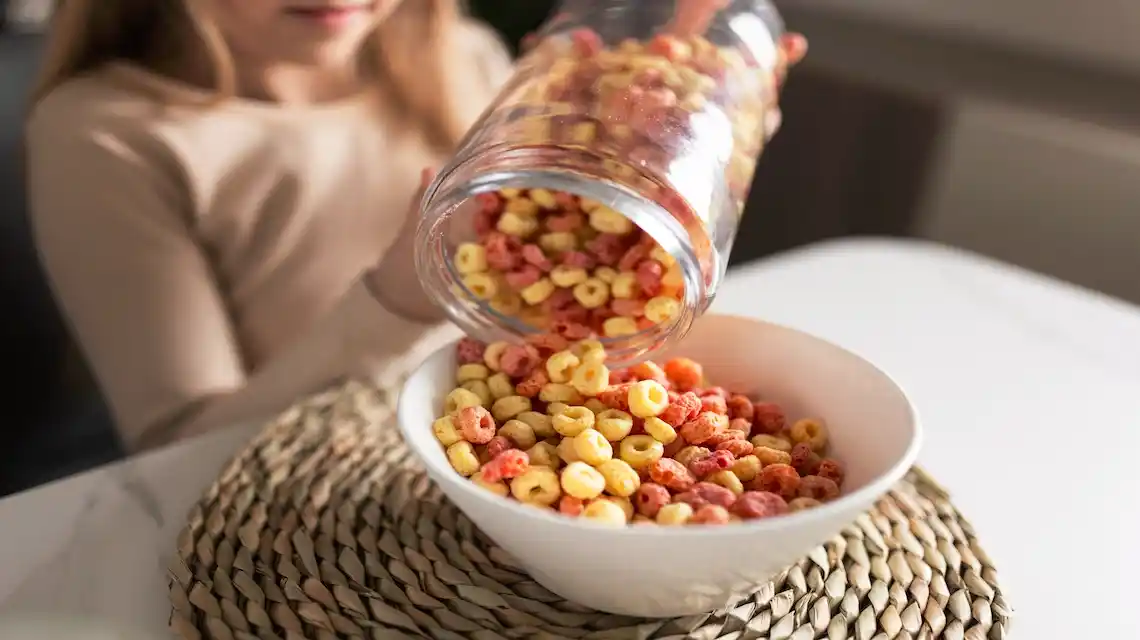
A rushed school morning can make a box of cereal feel like a lifesaver. But not every colorful box is a smart choice for your child’s body or brain. The right cereal can support steady energy, better focus, and a more positive mood through the morning. The wrong one can leave kids wired, then tired, by 10 a.m.
Labels do not make this easy. Big nutrition claims, smiling mascots, and “whole grain” stamps crowd the front of the box. Meanwhile, the real story sits in tiny print on the side panel.
This guide breaks down what truly makes the healthiest breakfast cereal for children, what to avoid, and how to upgrade the cereal you already have in your pantry. No complicated rules, just simple checks you can remember even with a lunch box in one hand and a backpack in the other.
What Makes a Breakfast Cereal Healthy for Children?
School-age kids need breakfast that works like slow, steady fuel, not a quick spark that burns out. A healthy cereal should help them feel full, keep their blood sugar stable, and provide some of the nutrients they do not always get later in the day.
The healthiest breakfast cereal for children will usually be made from whole grains, have a decent amount of fiber and protein, and keep added sugar low. When that cereal is paired with milk or yogurt and some fruit, you have a simple meal that supports learning, play, and growth.
Key nutrients kids need to start the day strong
Think of breakfast like packing a small toolbox for your child’s morning. You want a few key tools.
Fiber
Fiber slows the way sugar enters the blood. It helps kids feel full longer and can prevent that mid-morning crash. Look for at least 3 to 4 grams of fiber per serving. Whole grain oats, wheat, and bran are great sources.
Protein
Protein is the “stay full” nutrient. It helps with growth and focus. Aim for at least 3 grams of protein from the cereal itself, then add milk, soy milk, or yogurt to boost the total.
Complex carbs
Whole grains give long-lasting energy. They digest more slowly than refined grains, so kids get a steadier supply of fuel. Words like “whole oats,” “whole wheat,” or “brown rice” on the ingredient list point to complex carbs.
Iron and B vitamins
Many kids do not get enough iron, which can sap their energy and attention. B vitamins help the body turn food into usable energy. Most unsweetened or lightly sweetened cereals are fortified with these nutrients, which can be a real plus.
Calcium
The cereal itself may not have much calcium, but when eaten with milk, fortified plant milk, or yogurt, breakfast can give a strong dose for growing bones.
A quick way to think about it: fiber and protein keep kids full, complex carbs keep them going, and iron, B vitamins, and calcium support growth and brain function.
Sugar, salt, and additives to watch out for on the label
The tricky part is what you do not want too much of.
Added sugar is sugar that is put into the cereal during processing. It includes ingredients like cane sugar, honey, brown sugar, corn syrup, maple syrup, and fruit juice concentrates. These all count as added sugar, even if they sound “natural.”
For most kids:
- Try to keep cereal to no more than 6 to 8 grams of added sugar per serving.
- For very young kids or if they eat cereal more than once a day, lean closer to 5 grams or less.
Sodium matters too. High-sodium cereals are not helpful when kids already get plenty of salt from snacks and restaurant food. Look for under 200 milligrams of sodium per serving, and ideally closer to 140 milligrams or less.
Artificial colors and flavors can also be a concern, especially for kids who react with behavior changes or headaches. If you want dye-free options, groups like the Center for Science in the Public Interest share lists of healthy cereals for kids with no food dyes, which can be a helpful shortcut.
How to Read Cereal Labels and Choose the Healthiest Option
Front-of-box claims can be very misleading. To find a low sugar kids cereal that still tastes good, you need a quick label routine. Once you do it a few times, it feels like second nature.
Simple label checklist for the healthiest breakfast cereal for children
Use these simple rules of thumb when you grab a new box:
- Whole grain is listed first. Look for words like “whole grain oats,” “whole wheat,” “whole grain corn,” or “bran” at the top of the ingredient list. If it just says “wheat flour” or “rice,” it is likely refined.
- At least 3 to 4 grams of fiber. This usually means you are getting a high fiber cereal for kids, not a sugary puff that disappears in two bites. Bran flakes, shredded wheat, and oat-based squares are good examples.
- At least 3 grams of protein. More is better, especially if your child does not eat much protein at other meals.
- No more than 6 to 8 grams of added sugar. If you see 12 or more grams of sugar, that cereal is more like dessert.
- A short ingredient list with words you recognize. Grains, nuts, seeds, and simple sweeteners are easier to understand than a long list of artificial colors and preservatives.
If a cereal does not check every single box, that is okay. Use this list as a guide, not a rule book. Small improvements add up.
For brand ideas that meet many of these targets, you can look at this lower sugar cereals for kids list created by a registered dietitian.
Understanding whole grains, fiber, and protein claims on the box
Marketing on the front of the box often plays word games:
- “Made with whole grain” can mean there is only a small amount of whole grain mixed in.
- “Multi grain” only means there is more than one type of grain, not that any are whole.
- “Natural” does not say anything about sugar levels or how processed the cereal is.
To see if a cereal is truly whole grain, ignore the front and go straight to the ingredient list. The first grain should start with the word “whole,” or it should be clearly a whole food, like oats or barley.
For fiber and protein, do not rely on flashy claims. Check the Nutrition Facts panel instead. A cereal that says “good source of fiber” should actually show at least 3 grams per serving. If the protein box shows 1 gram, that cereal will not keep your child full for long.
Red flags: cereals that look healthy but are mostly sugar
Some cereals dress up like health food. They might have:
- Pictures of fruit splashing in milk
- Words like “fit,” “smart,” “energy,” or “sport”
- Earth-toned boxes that look “natural”
But when you flip the box, you find high sugar, low fiber, and almost no protein. For example, you might see a cereal with berries on the box and “whole grain” in big letters. On the side panel, it has 11 grams of added sugar, 1 gram of fiber, and 1 gram of protein. That is more candy than breakfast.
When two boxes look similar, use this quick tie-breaker: pick the one with more fiber, fewer grams of added sugar, and whole grain listed first.
Healthy Cereal Ideas Kids Will Actually Eat
Healthy cereal does not have to taste like cardboard. With a few smart picks and some simple upgrades, you can keep mornings quick and still feed your kids well.
For inspiration and taste-tested ideas, you can check out this list of healthy cereals for kids from an RD and mom and compare the labels to what you find in your own store.
Better cereal choices for busy school mornings
Look for these types of cereals when you shop:
- Plain whole grain flakes. These are usually light in color without frosting or colored specks. They tend to have more fiber and less sugar.
- Bran cereals. Bran flakes or bran sticks often have high fiber and very little added sugar.
- Oats or oat-based squares. Toasted oat rings or squares can be a great low sugar kids cereal if you pick the plain or lightly sweetened versions.
- Muesli without candy. Choose mixes with oats, nuts, and dried fruit, not chocolate pieces or marshmallows.
Turn any of these into a more complete breakfast by pairing them with:
- Milk or fortified plant milk
- Plain yogurt
- Fresh or frozen fruit like banana, berries, or sliced apple
That way, the meal has whole grains, protein, and natural sweetness from fruit, not just sugar from the box.
Easy ways to upgrade the cereal your child already loves
You do not need to toss every colorful cereal in the trash. A few small tweaks can turn a sugary favorite into a more balanced meal.
Try these ideas:
- Mix and match. Combine a sweet cereal half-and-half with a plain whole grain cereal. Kids still see the “fun” pieces, but the overall sugar drops and fiber goes up.
- Sweeten with fruit, not sugar. Add sliced banana, berries, or diced pear instead of sprinkling extra sugar or using flavored syrup.
- Use plain yogurt instead of flavored yogurt. Flavored yogurts often have as much sugar as ice cream. Plain yogurt with a drizzle of honey and some cereal on top tastes like a parfait.
- Add a protein side. Serve a small bowl of your child’s favorite cereal with a side of scrambled eggs, nut butter toast, or a cheese stick.
Progress matters more than perfection. Even one simple change, like mixing cereals or adding a protein side, makes breakfast more nourishing.
Conclusion
When you strip away the marketing, a healthy cereal choice for kids is pretty simple. Look for whole grains, at least a few grams of fiber and protein, and a modest amount of added sugar. Save brightly colored, very sweet cereals for occasional treats, not daily habits.
Those small label choices ripple into real life. Kids who start the day with steady energy and better focus are more ready to learn, play, and handle big feelings.
This week, pick one small step. Swap to a cereal with more fiber, check the added sugar line on the box, or try mixing your child’s favorite with a plain whole grain choice. Tiny changes at breakfast can add up to stronger minds and healthier bodies over time.
Related post:
Healthiest Breakfast Cereal for Children FAQs:
How can I tell if a breakfast cereal is actually healthy for my child?
Start with the ingredient list, not the front of the box.
A healthier cereal for kids usually:
- Lists a whole grain first, like whole oats, whole wheat, or brown rice
- Has low added sugar (aim for 6 grams or less per serving)
- Contains fiber and at least a little protein
- Has no artificial colors and fewer artificial flavors
If sugar, corn syrup, or another sweetener is in the first two ingredients, it is more like a dessert than a breakfast.
What should I look for on the cereal nutrition label?
Use the label as a quick checklist. These targets work well for most kids:
| Nutrient | Better Choice Target (per serving) |
|---|---|
| Added sugar | 0–6 g |
| Fiber | 3 g or more |
| Protein | 3–5 g or more |
| Whole grain | Listed as first ingredient |
| Sodium | 140 mg or less, if possible |
You do not have to hit these numbers perfectly every time. Try to pick cereals that come close most mornings.
How much sugar is too much in kids’ breakfast cereal?
For everyday use, treat more than 6 grams of added sugar per serving as high.
Many “kid” cereals have 10 to 15 grams per serving, and that does not count extra sugar from milk or juice. Those are better as occasional treats, not daily breakfast.
If your child loves a sugary cereal, you can:
- Mix half sweet cereal with half plain whole-grain cereal
- Use the sweeter one as a topping instead of the main bowl
Are colorful “kids’ cereals” ever okay?
They can fit into a balanced diet, just not as an everyday habit.
Think of bright, sugary cereals like:
- A weekend treat
- A dessert cereal after a small bowl of a healthier one
- Something to mix in small amounts with a better base cereal
Focus on teaching your child that most days, breakfast is about fuel, not candy. The more often they see whole-grain options, the more normal those choices become.
Which ingredients should I avoid in children’s cereal?
Try to limit cereals that are heavy in:
- Added sugars like sugar, high-fructose corn syrup, dextrose, or cane sugar at the top of the list
- Artificial colors such as Red 40, Yellow 5, or Blue 1
- Hydrogenated or partially hydrogenated oils
- Very high sodium for no good reason
You do not have to avoid these forever. Just keep them from showing up in the cereal bowl every day.
Is a whole-grain, high-fiber cereal always the best choice?
Whole grains and fiber are great, but the “highest” fiber cereal is not always best for kids.
Very high-fiber cereals can:
- Taste too “rough” or bland for some children
- Cause gas or tummy aches if kids are not used to that much fiber
For most school-age children, a cereal with 3 to 5 grams of fiber per serving is a strong choice. Make sure your child drinks water during the day, since fiber works better with enough fluids.
What about toddlers, are breakfast cereals safe for them?
For toddlers, the main issues are sugar and choking risk.
Keep it safer by:
- Choosing plain whole-grain cereals with very low or no added sugar
- Avoiding large, hard flakes or big crunchy clusters that are hard to chew
- Soften cereal with milk or yogurt for younger toddlers
If you are not sure whether a cereal is safe, test it. Press it between your fingers. If it does not crush or soften easily, it may be too hard for a younger child.
How big should a child’s cereal portion be?
Portion sizes on boxes often fit adults more than kids.
As a simple guide:
- Young children (2–4 years): about ½ to ¾ cup of cereal
- Older kids (5–12 years): about ¾ to 1 cup, sometimes more if they are very active
Pair cereal with protein and fat, like milk, yogurt, nut butter, seeds, or egg on the side. This keeps kids full longer so they are not starving by mid-morning.
Can my child eat cereal every day, or should we switch it up?
Kids can eat cereal most days if you stick with healthier choices and add protein and healthy fats. Variety still helps.
Mix things up by rotating:
- Different whole-grain cereals
- Oatmeal or overnight oats
- Whole-grain toast or waffles with nut butter
- Eggs with fruit on the side
Ask your child what they like, then keep 2 or 3 reliable options in the pantry so mornings stay simple.
Are “fortified” kids’ cereals good for nutrition?
Fortified cereals add vitamins and minerals, which can help cover gaps in some children’s diets. That does not make a sugary cereal a healthy one.
Use this rule of thumb:
Fortification is a bonus, not a free pass. Pick cereal for its grain quality, sugar, and fiber first, then treat added vitamins as extra support, not the main reason to buy it.
Is organic or gluten-free cereal automatically healthier for kids?
Not always.
- Organic means the ingredients were grown under certain rules, but the cereal can still be high in sugar and low in fiber.
- Gluten-free is helpful for kids with celiac disease or gluten sensitivity, but many gluten-free cereals use refined grains and can be low in fiber.
If you choose organic or gluten-free, still check sugar, fiber, whole grains, and ingredient quality the same way you would with any other cereal.

Gas S. is a health writer who covers metabolic health, longevity science, and functional physiology. He breaks down research into clear, usable takeaways for long-term health and recovery. His work focuses on how the body works, progress tracking, and changes you can stick with. Every article is reviewed independently for accuracy and readability.
- Medical Disclaimer: This content is for education only. It doesn’t diagnose, treat, or replace medical care from a licensed professional. Read our full Medical Disclaimer here.