

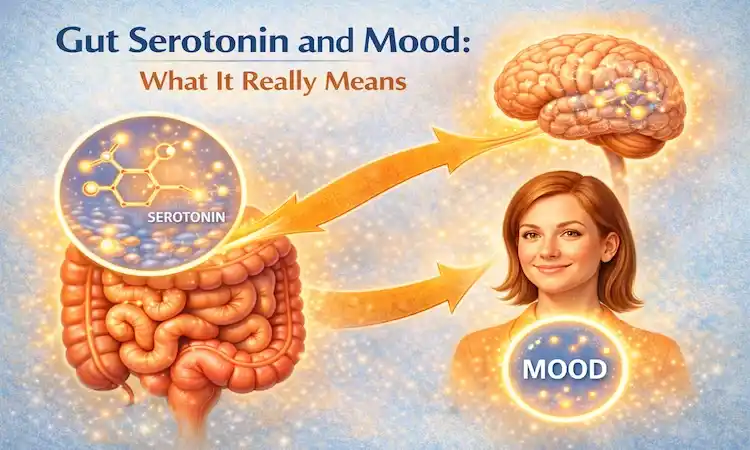
You’ve probably heard the claim that most serotonin is made in the gut. It’s true in a narrow way, and it’s also the start of a common misunderstanding.
Here’s the confusing part: the serotonin produced in your digestive tract mostly stays in your digestive tract. It doesn’t simply flow into your brain and “fix” your mood. So when people talk about gut serotonin and mood, it can sound like a direct pipeline that doesn’t exist.
This guide puts it in plain English. You’ll learn what gut serotonin actually does, why the serotonin blood brain barrier matters, how the gut brain axis can shape how you feel, and which habits tend to support both digestion and mental health.
This isn’t medical advice. If your mood feels heavy, scary, or stuck, you deserve real support from a clinician, not a food rule or a supplement trend.
What gut serotonin really is, and why it is not the same as brain serotonin
“Serotonin” gets talked about like a single substance with one job: happiness. In real life, serotonin is more like a versatile messenger used in different places for different reasons. Where it’s made and where it acts matters.
Most serotonin is made in the gut to run digestion, not to set your mood
A big share of your body’s serotonin is produced in the digestive tract, mainly by specialized cells in the gut lining (enterochromaffin cells). Think of it as local traffic control for your intestines.
Gut serotonin helps coordinate:
- Movement of food through the intestines (motility)
- Fluid balance in the gut, which affects stool consistency
- Nausea and vomiting signals, especially when the gut senses irritation or toxins
This is one reason some anti-nausea medications target serotonin receptors in the gut, because blocking certain serotonin signals can reduce vomiting. It’s less “serotonin equals happiness” and more “serotonin helps your gut decide how to respond.”
The gut also has its own nervous system (the enteric nervous system). It uses many gut neurotransmitters, including serotonin, to keep digestion running without you having to micromanage it.
Why serotonin in your gut does not just travel into your brain
Even if your gut makes a lot of serotonin, it doesn’t mean your brain can use it. The brain is protected by the blood brain barrier, a tight filter that carefully controls what gets from the bloodstream into brain tissue.
Serotonin made in the gut doesn’t cross this barrier in any meaningful way. Mood-related serotonin signaling happens inside the brain, using serotonin that the brain makes for itself.
So where does brain serotonin come from? Your brain builds it using tryptophan, an amino acid from food. That’s where “indirect connection” starts to matter: gut function can influence tryptophan availability and inflammation levels, which can then influence brain chemistry. But it’s not a simple transfer of gut serotonin into the brain.
If you want a readable breakdown of why the “serotonin story” is more complicated than pop health makes it sound, this piece from Psychology Today on depression, serotonin, and the gut is a helpful starting point.
So how can your gut affect mood if gut serotonin stays in the gut?
If gut serotonin mostly stays local, why do people notice that constipation, diarrhea, bloating, or reflux can change their mood fast? And why does stress show up in the stomach for so many people?
The answer is the “two-way chat” between your gut and brain. The gut doesn’t need to ship serotonin into the brain to affect mood. It can change the signals your brain receives all day long.
Here are the main routes, step by step, that can connect gut serotonin and mood without pretending it’s a direct serotonin transfer.
The gut brain axis: signals that travel by nerves, hormones, and the immune system
The gut brain axis is basically a communication network between your digestive tract and your brain. It runs both ways: your brain influences digestion, and your gut sends constant status updates back to the brain. Kaiser Permanente has a clear, practical overview of how gut health and mental health are connected if you want the big picture.
One major route is the vagus nerve, a large nerve that acts like a highway carrying information from the body up to the brain. In everyday terms, it’s a “how are things going down there?” channel.
Gut serotonin can play a role here through serotonin vagus signaling. When serotonin is released in the gut, it can activate local nerve endings, and that can influence messages traveling up the vagus nerve. This doesn’t mean serotonin itself is moving into your brain. It means serotonin is helping set the tone of gut-to-brain signaling.
Another route is your immune system. Your gut lining is a barrier between you and the outside world. When it’s irritated or inflamed, immune signals can rise. Higher inflammation has been linked with changes in energy, motivation, sleep quality, and “brain fog” feelings. It’s not always dramatic. Sometimes it’s just that low-grade inflammation makes the brain work harder.
Then there’s the stress response. When you’re stressed, the brain can trigger hormone changes (including cortisol) that alter gut movement, sensitivity, and secretion. That’s why stress can cause diarrhea for one person and constipation for another. Over time, this can become a loop: gut symptoms increase worry, and worry increases gut symptoms. That feedback loop is a big piece of gut brain axis mood issues in real life.
Research on microbes adds another layer. Gut bacteria break down food into byproducts (metabolites) that can influence gut barrier function and immune signaling. The details are still being mapped, and not every study translates cleanly to humans. For a more technical, up-to-date review, see Frontiers on microbes’ influence on mental health.
Tryptophan metabolism: one ingredient, two main routes that can matter for mood
Tryptophan is an amino acid you get from protein foods. Your body uses it for several jobs, including making serotonin. But tryptophan doesn’t have one destiny. Tryptophan metabolism can take different routes based on what your body needs and what’s happening with stress and inflammation.
Two simplified paths matter for mood conversations:
- Serotonin pathway: Tryptophan can be used to support serotonin production, including inside the brain.
- Kynurenine pathway: Tryptophan can also be broken down into kynurenine and related compounds, a route that tends to increase when the immune system is activated.
Here’s the careful, non-hype version: when more tryptophan is pulled toward the kynurenine pathway, less may be available for serotonin production in the brain. Researchers have linked shifts in this balance with mood disorders, but it’s complex. It’s not a simple “more kynurenine equals depression” equation, and it’s not a guarantee that changing your diet will change your brain chemistry.
This is also where gut health can matter indirectly. If gut inflammation is high, immune signaling can increase, and that may push tryptophan metabolism toward kynurenine. If gut function is steadier, the body may have less reason to run immune alarms.
You’ll sometimes see headlines that make this sound like an easy fix. Reality is slower and more personal. Even promising research should be read as “this may be part of the puzzle,” not “this is the whole story.” If you’re curious about emerging ideas without treating them like settled fact, this summary on gut serotonin’s possible role in depression and mood captures why scientists are interested while the debate continues.
What the research supports, what is still uncertain, and what to do with the info
The strongest takeaway is also the least exciting: gut serotonin and mood are connected, but not in a straight line. Gut neurotransmitters, microbes, immune signals, and stress hormones can all influence how your brain feels. At the same time, mood is shaped by sleep, trauma history, relationships, genetics, work stress, movement, medications, and more.
So what’s supported?
- The gut and brain communicate constantly through nerves, hormones, and immune signals.
- Gut issues and mood symptoms often show up together, and each can worsen the other.
- Tryptophan metabolism and inflammation can influence brain chemistry, at least in some people.
What’s still uncertain?
- Which microbial patterns actually cause mood changes versus simply showing up alongside them
- Who benefits from specific probiotics or diet protocols, and who gets worse
- How to turn gut-based insights into reliable mental health treatment for most people
If you want a sober read on “cause vs correlation” in this area, Nature has a thoughtful review on distinguishing causative and correlative roles of the gut microbiota in mental health.
Habits that support both gut health and steadier mood (without chasing quick fixes)
Most people do best with boring, repeatable basics. Try one change at a time so you can tell what helps.
- Eat at consistent times when you can, because irregular eating can irritate motility and blood sugar swings can affect mood.
- Aim for more fiber-rich foods (beans, oats, berries, vegetables) and increase slowly if you’re prone to bloating.
- Try fermented foods if tolerated (yogurt, kefir, sauerkraut), but skip them if they trigger reflux or histamine-like symptoms.
- Hydrate steadily, because constipation and headaches can both worsen irritability.
- Protect sleep, since poor sleep can increase stress hormones and gut sensitivity the next day.
- Move daily, even a short walk, because movement supports motility and can lower stress.
- Use simple stress skills (slow breathing, time outside, short breaks), because your gut listens closely to your nervous system.
A quick caution: sudden, big diet changes can backfire, especially for sensitive stomachs. “More fiber” is great until it’s 30 grams overnight and you feel like a balloon.
For readers interested in the evidence discussion around probiotics and serotonin signaling, this open-access review, Exploring the serotonin-probiotics-gut health axis, lays out proposed mechanisms and limits.
When to talk to a clinician, and a quick note on supplements and SSRIs
If mood symptoms are persistent or intense, don’t treat gut work like a substitute for care. Talk to a clinician if you notice:
- Low mood most days for 2 weeks or more
- Loss of interest, numbness, or hopelessness
- Panic attacks or constant anxiety that disrupts daily life
- Suicidal thoughts or self-harm urges (seek urgent help)
- Severe insomnia or sleeping far more than usual
- Unexplained weight loss
- Blood in stool, black stool, or ongoing vomiting
- Ongoing diarrhea or constipation that doesn’t improve
A note on SSRIs: they work by changing serotonin signaling in the brain, not by adding serotonin from the gut. They can cause gut side effects because the gut uses serotonin too.
Be cautious with supplements that alter serotonin pathways. 5-HTP and St. John’s wort can interact with antidepressants and other meds, raising the risk of serotonin syndrome. If you’re already on a psychiatric medication, ask a clinician or pharmacist before mixing anything “mood support” into the routine.
Conclusion
The clean truth about gut serotonin and mood is this: gut serotonin is mainly a digestion tool, not a mood chemical that travels into your brain. Mood effects happen more indirectly, through the gut brain axis, immune signals, stress hormones, and shifts in tryptophan metabolism (including the kynurenine pathway).
The most useful approach is also the most humane. Support your gut with steady meals, fiber you can tolerate, sleep, movement, and stress skills, then take mood symptoms seriously when they don’t lift. If your gut or mood feels out of control, that’s not a personal failure, it’s a sign to get help.
Choose one habit and stick with it for two weeks. Jot down your digestion and mood in a quick note each day. Those small, steady tweaks can teach you a lot about the Gut-Brain Axis, often more than any headline.

Gas S. is a health writer who covers metabolic health, longevity science, and functional physiology. He breaks down research into clear, usable takeaways for long-term health and recovery. His work focuses on how the body works, progress tracking, and changes you can stick with. Every article is reviewed independently for accuracy and readability.
- Medical Disclaimer: This content is for education only. It doesn’t diagnose, treat, or replace medical care from a licensed professional. Read our full Medical Disclaimer here.