

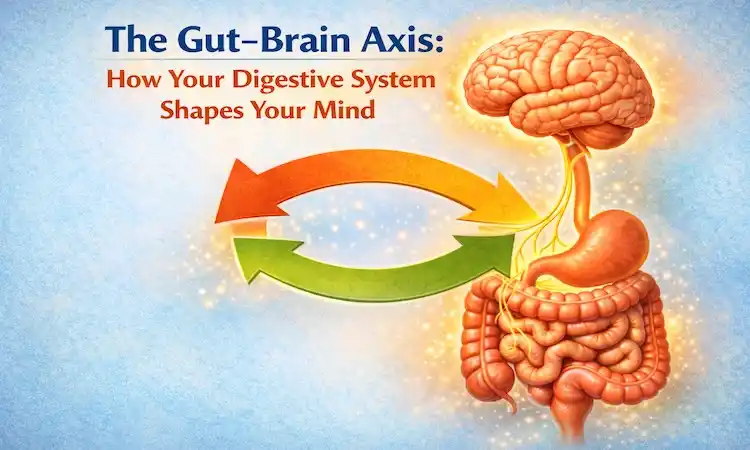
Your stomach doesn’t just handle food, it also sends signals that shape how you feel and think. The Gut–Brain Axis is the two-way link between your digestive system and your brain, and it helps explain why stress can upset your gut, and why gut trouble can cloud your mood. In this post, you’ll learn what that connection is, which gut signals matter most (like nerves, hormones, and immune messages), and what everyday habits can support both digestion and mental clarity.
Gut-Brain Axis Two-Way Signaling
The gut and the brain stay in constant contact, sending messages back and forth all day. This two-way system is called the gut-brain axis. It helps explain why a stressful week can upset your stomach, and why a heavy, greasy meal can leave you feeling sluggish or irritable.
A big part of this communication runs through the vagus nerve, which acts like a fast message route between your intestines and your brain. But it’s not the only path. Hormones and immune signals also carry updates. When your gut senses food, inflammation, or changes in your microbiome, it can release chemicals that influence mood, focus, and sleep. At the same time, your brain can change gut movement, stomach acid, and how sensitive your gut feels.
Your gut microbes play a major role in this loop. They help break down fiber and make short-chain fatty acids, which support the gut lining and can affect inflammation levels. Some microbes also help with the building blocks for neurotransmitters such as serotonin and GABA. Most serotonin is made in the gut, where it helps control digestion. Even though gut-made serotonin doesn’t simply travel into the brain, it still matters because it can shape nerve signaling and immune activity that reaches the brain.
Inflammation is another key messenger. If the gut lining gets irritated or more “leaky,” immune cells can release cytokines. Those signals can change how you feel mentally, including low mood and brain fog. This doesn’t mean the gut is the only cause of these symptoms, but it can be one piece of the puzzle.
Some people think gut-brain talk is overhyped, or that fixing the gut will fix everything. That’s not how it works. Mental health issues can start in the brain, the body, or both, and they often need more than one approach. Also, not every probiotic helps every person, and diet changes don’t work the same way for everyone.
Still, the evidence supports a real connection. Practical habits can support healthier signaling, like eating more fiber-rich foods, getting regular sleep, moving your body, and finding ways to lower chronic stress. If you notice ongoing gut symptoms with anxiety or mood changes, it’s worth discussing both sides with a clinician so nothing gets missed. For a clear look at how signals move both ways between your gut and brain, check out Gut-Brain Axis Two-Way Signals Explained.
Vagus Nerve (practical, not fluffy): The Gut-Brain Axis
Your gut and your brain talk all day. That back-and-forth is called the gut-brain axis, and the vagus nerve is one of the main wires in the system. It runs from your brainstem down through your neck, into your chest, and into your belly, sending signals in both directions. A lot of what you feel as “stress in my stomach” or “butterflies” is your nervous system doing its job, not some mysterious vibe.
Here’s the practical part, most of the traffic on the vagus nerve goes from the gut up to the brain. That means your digestion, gut movement, and immune activity can shape mood and focus. When your gut feels off, your brain often follows. Poor sleep, long gaps between meals, heavy alcohol, and chronic stress can all push this system toward a fight-or-flight state. In that mode, digestion slows, your appetite cues get weird, and you may feel tense or wired.
You don’t need fancy tools to support the gut-brain axis. Start with basics that calm the nervous system and help digestion work better.
- Eat on a steady rhythm. Big, random swings in meal timing can stir up gut stress.
- Build meals with protein, fiber, and healthy fats. That combo supports steadier blood sugar, which helps your brain stay even.
- Take a 10-minute walk after meals. It can help gut movement and reduce that heavy, stuck feeling.
- Breathe in a way that signals safety. Try 4 seconds in through your nose, 6 seconds out, for 2 to 3 minutes. Longer exhales tend to slow your heart rate.
- Use cold in small doses if you tolerate it. Splash cool water on your face, or end a shower with 15 to 30 seconds of cooler water. Stop if you feel dizzy.
Some people say vagus nerve work is overhyped, and they’re right about one thing: humming once won’t fix IBS, anxiety, or depression. But small, repeatable habits can shift your baseline over time, especially when paired with good sleep and medical care when needed.
If you want a simple check, notice your body after meals. Less rushing, less chest tightness, and more steady energy often mean the gut-brain axis is getting the message: you’re safe enough to digest. The vagus nerve is one of the clearest links in the Gut-Brain Axis, connecting your gut and brain in a direct line. For easy, everyday ways to support digestion, see Vagus Nerve for Digestion: Simple Daily Reset.
Serotonin myth (gut ≠ brain serotonin): what the gut-brain axis really means
A lot of people hear “most serotonin is made in the gut” and assume that means gut serotonin directly boosts mood. It doesn’t work that way. Yes, your gut makes a large share of the body’s serotonin, mostly inside the digestive tract. But gut serotonin and brain serotonin are two separate pools, and they don’t freely mix.
Here’s the key reason: serotonin can’t easily cross the blood-brain barrier, which is the brain’s security system. So the serotonin produced by gut cells doesn’t simply travel to your brain and turn into “happy chemicals.” In the gut, serotonin has hands-on jobs like helping control movement of food through the intestines, supporting secretion, and signaling nausea in some cases. It’s more about digestion than emotion.
Brain serotonin is made in the brain from tryptophan, an amino acid from food. The brain controls that process tightly. That’s why mood-related treatments usually target serotonin signaling in the brain (how serotonin is released, re-absorbed, or received by receptors), not the raw amount made in the gut.
Still, the gut can affect the brain, just not by shipping serotonin upstream. The gut-brain axis works through several routes: the vagus nerve (a fast communication line), immune signals (inflammation can change brain function), stress hormones, and microbial byproducts. Gut microbes also influence how tryptophan is used in the body, which can change how much is available for the brain to make its own serotonin. That’s an indirect path, but it’s real.
A common counterpoint is, “If gut serotonin doesn’t reach the brain, why do gut problems and anxiety often show up together?” Because shared signaling systems can link them. Stress can change gut movement and sensitivity. Ongoing gut irritation can raise inflammatory signals that affect sleep, energy, and mood. It’s a two-way street, without requiring gut serotonin to cross into the brain.
Bottom line: supporting gut health can support mental health, but the story isn’t “more gut serotonin equals better mood.” If you want a science-backed overview of serotonin’s roles, the NIH has a clear summary: https://www.ncbi.nlm.nih.gov/books/NBK557878/. Serotonin made in your gut doesn’t turn into brain serotonin, and Gut Serotonin and Mood: What It Really Means explains why this matters for the Gut-Brain Axis.
Metabolites (SCFAs/butyrate) > “take probiotics”
The gut-brain axis is the two-way link between your digestive system and your nervous system. Your gut talks to your brain through nerves (like the vagus nerve), immune signals, and hormones. But one of the most practical ways to support that connection often gets overlooked: the chemicals your gut microbes make.
Those chemicals are called metabolites, and a big one is short-chain fatty acids (SCFAs). The star SCFA is butyrate. When certain gut bacteria ferment fiber, they produce butyrate and other SCFAs (like acetate and propionate). These metabolites help keep the gut lining strong, which matters because the gut wall is a key “gatekeeper” for inflammation. When that barrier is supported, the immune system tends to stay calmer, and that can affect mood, stress response, and mental clarity.
Butyrate also supports healthy gut movement and can influence neurotransmitter pathways indirectly. It’s not that butyrate is a mood pill, it’s that it helps create the conditions where the gut and brain communicate with less noise. If you’ve ever noticed that constipation, bloating, or food sensitivity makes you more anxious or irritable, that’s the gut-brain axis in real life.
This is where “just take probiotics” can fall short. Probiotics can help some people, but they don’t always colonize well, and results vary by strain, dose, and the person’s current gut setup. More important, swallowing bacteria doesn’t guarantee you’ll get the metabolites you want. If the microbes don’t have the right fuel, they can’t produce much butyrate.
A more reliable approach is to feed the butyrate producers. That usually means more fermentable fiber from foods like beans, lentils, oats, barley, apples, and slightly green bananas. Cooked-and-cooled potatoes or rice can add resistant starch, another butyrate-friendly fuel. If you add fiber fast, gas can spike, so go slow and hydrate.
Probiotics still have a place, especially after antibiotics or during diarrhea, but they work best as support. For day-to-day gut-brain health, focus on what your microbes make, not just which microbes you swallow. For the Gut-Brain Axis, the biggest drivers are microbial metabolites like short-chain fatty acids, not just taking probiotics, as explained in Butyrate, Fiber, and the Gut-Brain Axis.
Barriers + brain fog (measured, not hype)
Brain fog isn’t a personality flaw. It’s a real barrier that shows up as slow thinking, shaky focus, and a short mental fuse. The tricky part is that it can feel random. One day you’re sharp, the next you reread the same sentence five times. If you want progress, skip the hype and measure what’s happening.
Start by naming the barrier in plain terms. “I lose words in meetings,” “I can’t start tasks,” “I forget why I opened a tab.” Specific beats vague. Then track it for a week. Keep it simple, a 30-second note twice a day: sleep hours, caffeine, alcohol, meals, movement, stress level, and a 1 to 10 brain-fog score. Patterns show up fast when you stop relying on memory.
Common causes aren’t mysterious. Poor sleep, dehydration, and long stretches of screen time can blunt attention. Some meds can do it too, as can allergies, low iron, hormone shifts, and recovery after illness. If you want a clear overview of possible reasons, Harvard Health has a solid explainer: https://www.health.harvard.edu/blog/what-is-brain-fog-and-how-can-you-clear-it-202306062943.
Once you have data, remove friction in small, testable moves. Try a two-day sleep reset (same wake time, no late caffeine). Add a water goal before noon. Eat protein at breakfast if you usually don’t. Do a 10-minute walk after lunch. Pick one change at a time so you can tell what helped.
It’s easy to dismiss brain fog as “just stress” or “lack of discipline.” Stress can cause it, but that doesn’t make it fake. And discipline doesn’t fix a sleep debt or a medication side effect. Measurement keeps you honest. If fog lifts when you sleep 7.5 hours, that’s a lever you can pull again. If nothing changes after basic fixes, that’s useful too. It’s a sign to talk with a clinician and review labs, meds, and symptoms.
The goal isn’t perfection. It’s fewer bad days, faster recovery, and barriers you can actually see and move. Shifts in gut barrier function have been linked to cognitive issues like brain fog, often tied to the Gut-Brain Axis, as explained in Leaky Gut and Brain Fog: What to Know.
Gut-Brain Axis Hidden Disruptors People Ignore
The gut-brain axis is the two-way link between your digestive system and your nervous system. When it’s working well, your mood feels steadier, your digestion is predictable, and your energy doesn’t crash as often. When it’s off, the signs can look random, such as bloating, loose stools, constipation, brain fog, low mood, poor sleep, and even a short fuse.
One hidden disruptor is chronic stress that never fully shuts off. Stress changes gut movement and can make the gut lining more sensitive. It also shifts the balance of gut bacteria. People often shrug this off because stress feels normal, but “normal” doesn’t mean harmless. If you’re wired at night, clenching your jaw, or always rushing meals, your gut notices.
Sleep is another big one. A few late nights can change hunger hormones and increase cravings for sugary, salty foods. That combo can irritate the gut and feed the wrong bacteria. Some people say they can function fine on five hours. Maybe they can at work, but the gut-brain axis still pays the bill over time.
Ultra-processed foods don’t just affect weight. Many are low in fiber and high in additives that can bother sensitive guts. If most meals come from boxes, drive-thrus, or snack bags, the microbiome has fewer tools to make calming compounds like short-chain fatty acids.
Alcohol can be sneaky here. Even moderate drinking can disrupt sleep, irritate the stomach lining, and change gut bacteria. The next-day anxiety some people feel is not “all in your head.” The gut can push that feeling along.
Medications matter too. Antibiotics can be necessary, but they can also wipe out helpful bacteria. Frequent NSAID use (like ibuprofen) may irritate the gut lining for some people. Acid blockers can help reflux, yet long-term use may shift digestion and gut bacteria. Don’t stop meds on your own, but it’s smart to review them with your clinician.
Finally, don’t ignore your eating habits. Skipping meals, eating too fast, or eating while stressed can trigger symptoms even with “healthy” food.
Small fixes add up: eat more fiber-rich foods, add fermented foods if you tolerate them, slow down at meals, limit alcohol, and protect sleep. If symptoms persist, get checked for causes like IBS, food intolerances, or infections. A lot of gut-brain axis issues start with everyday habits people don’t think much about, as covered in Hidden Gut-Brain Triggers: Sleep, Alcohol, Antibiotics.
Probiotics and Psychobiotics (Strain-Specific Evidence)
Probiotics aren’t one-size-fits-all. The benefits you hear about usually come from studies on a specific strain, at a set dose, taken for a certain length of time. Change any of those details and the results can shift. That’s why “probiotic” on a label doesn’t tell you much on its own. The strain name (letters and numbers included) matters, because two strains from the same species can act very differently in the gut.
Psychobiotics are probiotics (and sometimes prebiotics) studied for effects on mood, stress, and sleep, often through the gut-brain connection. Some strains appear to support calmer stress responses, less gut discomfort tied to stress, or better sleep quality. These effects are usually modest, and they don’t replace therapy, meds, or solid sleep habits. Still, for some people, they can be a helpful add-on, especially when stress shows up as bloating, irregular stools, or a “wired” feeling at night.
Look for products that list the full strain ID, the CFU count at the end of shelf life (not “at time of manufacture”), and clear storage instructions. A probiotic that requires refrigeration may lose potency if it sits in heat. Also check how long the study ran. Many trials last 4 to 12 weeks, so taking a capsule for a few days and expecting a big change usually leads to disappointment.
Skeptics often point out that probiotic research is messy, and they’re right. People start with different gut microbiomes, diets, stress levels, and sleep patterns, so results vary. Some studies are small, and not every trial finds a benefit. That doesn’t mean probiotics are useless, it means you should treat them like targeted tools, not magic.
If you want to try one, pick a strain backed by human trials for your goal (constipation, antibiotic-associated diarrhea, IBS symptoms, or stress-related complaints). Track a few simple markers for 2 to 4 weeks, such as stool form, bloating, and sleep quality. Stop if symptoms worsen. And if you’re immunocompromised, pregnant, or dealing with severe GI symptoms, talk with a clinician first. The research on psychobiotics isn’t one-size-fits-all, the benefits depend on the exact strain and how it affects the gut-brain axis, as explained in Probiotics for Anxiety: Strains, Limits, and Safety.
Practical self-tracking + red flags
Self-tracking helps you spot patterns without guesswork. Keep it simple for 10 to 14 days. Use a notes app or a small notebook. Track meals and timing, plus a few body signals: bloating, pain, nausea, heartburn, stool type and frequency, and energy. Add stress level, sleep length, and any intense workouts. If you can, note caffeine, alcohol, and new supplements. These often change symptoms more than people think.
Also track brain-side symptoms that can tie back to the gut. Write down anxiety spikes, low mood, brain fog, headaches, and restless sleep. Don’t assume it’s “all in your head” or “all in your gut.” The point is to see what moves together. For example, a high-stress day may line up with looser stools, or a late heavy meal may line up with reflux and poor sleep.
A common counterpoint is that tracking makes people obsessive. That can happen if you log every bite for months. Keep your tracking short-term and focused. Pick three goals, such as fewer flare-ups, steadier stools, and better sleep. Then stop and review what you learned. The goal isn’t perfect control, it’s clearer cause and effect.
What to look for in your notes:
- Timing patterns (symptoms right after meals, or the next morning)
- Dose patterns (one coffee is fine, two triggers urgency)
- Context (symptoms only appear during work stress)
- Clusters (bloating plus brain fog plus poor sleep)
Red flags need faster medical help. Don’t wait these out: blood in stool, black or tarry stool, ongoing fever, vomiting that won’t stop, trouble swallowing, unexplained weight loss, anemia, severe belly pain, new symptoms after age 50, or diarrhea that lasts more than a few days with dehydration. Seek care sooner if you’re pregnant, immunocompromised, or have a family history of colon cancer or inflammatory bowel disease.
Bring your short tracking log to your appointment. It gives your clinician a clean timeline, and it can speed up the right next steps. Basic self-tracking can help you spot patterns and early warning signs, as shown in Gut-Brain Symptoms Checklist: Track Mood and Digestion.
Conclusion
The Gut–Brain Axis is a two-way street, your gut sends signals that can shape mood, focus, and stress response; what you eat and how you live can change that message. Fiber-rich plants, steady protein, and enough water help support a healthier microbiome, which can mean calmer days and clearer thinking over time. Add small habits that stack, chew slowly, eat on a routine, and cut back on ultra-processed foods when you can. Pick one change to start today, then track how your sleep and energy feel this week, and share your results in the comments.

Gas S. is a health writer who covers metabolic health, longevity science, and functional physiology. He breaks down research into clear, usable takeaways for long-term health and recovery. His work focuses on how the body works, progress tracking, and changes you can stick with. Every article is reviewed independently for accuracy and readability.
- Medical Disclaimer: This content is for education only. It doesn’t diagnose, treat, or replace medical care from a licensed professional. Read our full Medical Disclaimer here.