

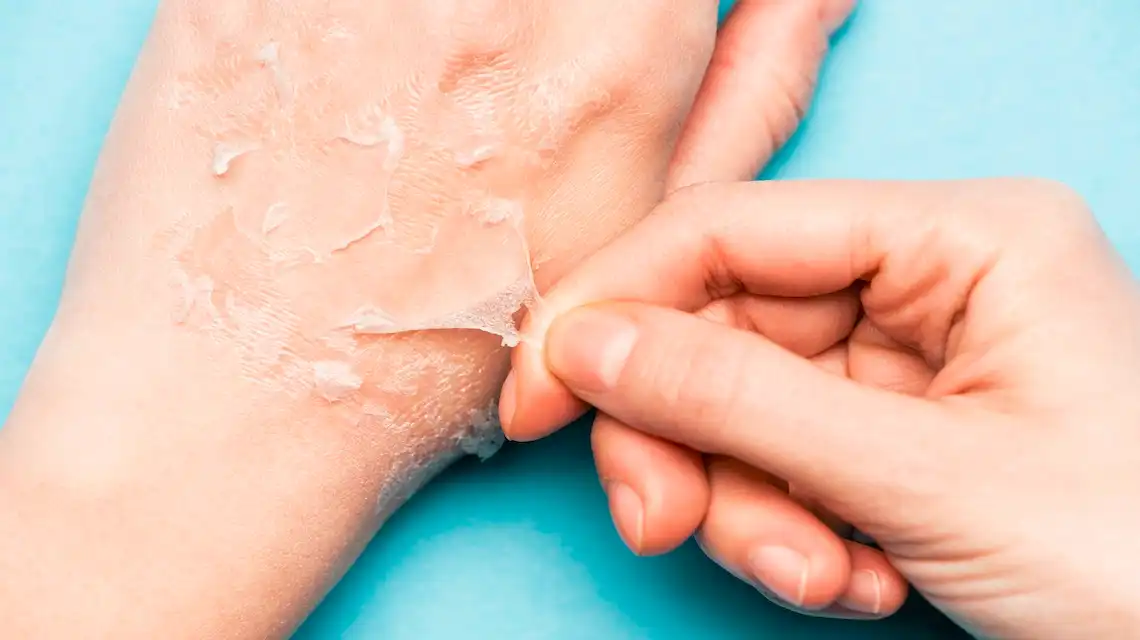
You spend a long day in the sun, maybe at the beach or a backyard party, and go to bed a little pink but not too worried. The next morning you notice your shoulders are tight, itchy, and starting to flake. A few days later, thin strips of skin are hanging off. It is oddly satisfying and a little gross at the same time.
This is usually when the urge hits to scrub everything off in the shower. But if you try to exfoliate peeling skin after sunburn the wrong way, you can end up with raw, painful patches and stubborn dark spots.
This guide walks you through what is actually happening when your skin peels, how to remove loose skin gently, what to avoid, and how to help your skin heal smooth and calm instead of red and patchy. The goal is patient, gentle care, not a fast fix.
Why Skin Peels After Sunburn And Why Gentle Exfoliation Matters
A sunburn is a real burn, just like the name says. Ultraviolet (UV) rays damage your skin cells, and your body reacts with redness, heat, and soreness. When the damage is bad enough, those cells cannot be repaired, so your body gets rid of them.
Peeling is your skin’s way of taking out the trash. Sheets and flakes of dead cells lift off so newer, fresher skin can take their place. According to dermatologists at the Skin Cancer Foundation, peeling is a normal part of the healing process after you have burned your skin in the sun, and it is a sign those damaged cells are being shed for a reason. You can read more about that in their article on why skin peels when you get sunburned.
The problem is that peeling looks messy. It is tempting to grab a scrub, a loofah, or your fingernails and help things along. Harsh exfoliation can rip off skin that is not ready, harm the new layer underneath, and open tiny cracks that let bacteria in. That can lead to infection, more redness, and sometimes dark marks and scars.
So the goal is not to stop peeling, because that is normal. The goal is to support what your skin is already doing by treating it with a light touch.
What Happens To Your Skin During A Sunburn
When UV rays hit your skin, they damage the DNA inside skin cells. Your body sees that damage as a threat and turns on an inflammatory response. A few hours later, the classic signs of sunburn show up: redness, heat, swelling, and pain.
Your immune system starts clearing out the cells that are too damaged to stay. Those dead cells collect together in the top layer of skin, and after a day or two, they begin to separate from the living layers.
That is when you see peeling, flaking, and sheets of skin coming off in the shower. It can look dramatic, but this shedding is a normal, healthy step as long as the deeper skin stays intact.
Why You Should Not Pick Or Aggressively Scrub Peeling Skin
It is so tempting to pull off those hanging strips. The trouble is, you rarely grab only the skin that is truly dead.
Picking or scrubbing too hard can:
- Tear living skin and cause bleeding
- Increase your risk of skin infection
- Make redness and swelling last longer
- Leave behind dark spots or scars on some skin tones
Cleveland Clinic dermatology experts advise against active exfoliation on peeling burns for these reasons and instead suggest gentle care that lets skin shed on its own pace. You can see their approach in this guide on how to treat a peeling sunburn.
If you must touch peeling skin, your pressure should feel more like brushing dust off a table, not scrubbing dried food off a pan.
How To Exfoliate Peeling Skin After Sunburn Safely Step By Step
The safest way to exfoliate peeling skin after sunburn is to focus more on hydration and healing than on the act of exfoliating. Think of exfoliation as a tiny supporting role, not the star of the show.
Wait For The Right Time Before You Exfoliate Peeling Skin After Sunburn
Timing matters a lot. If your skin is still hot to the touch, swollen, or very painful, it is not ready for exfoliation of any kind.
Good signs that you can start gentle exfoliation:
- The burn no longer feels hot or throbbing
- Redness has started to fade a bit
- Peeling has begun on its own with loose, dry flakes
For many people this happens around day three to five, but listen to your body, not the calendar. Exfoliation should not sting, burn, or make your skin feel tighter. If it hurts, stop and go back to soothing care.
Start With Cooling, Hydrating Care Instead Of Scrubbing
Before you even think about how to exfoliate, help your skin calm down and rehydrate.
Helpful first steps include:
- Cool (not icy) showers or compresses to ease heat
- A gentle, fragrance‑free cleanser to wash away sweat and sunscreen
- Pure aloe vera gel or a soothing gel cream for short‑term relief
- A light lotion or cream with ingredients like glycerin, ceramides, or oat
Dermatology clinics like Riverchase Dermatology often recommend bland, fragrance‑free moisturizers and aloe based products to support peeling skin. You can see examples and tips in their piece on what to do about sunburn peeling.
Drink water through the day too. It will not fix a burn by itself, but it helps support your skin barrier as it heals.
This stage can last several days. Think of it as preparing the canvas before you gently brush away what is already loose.
Gentle Ways To Exfoliate Peeling Skin After Sunburn
When the burn has cooled and peeling has clearly started, you can use very soft methods:
1. Soft washcloth or microfiber cloth
In the shower, use lukewarm water and a soft, clean cloth. Add a small amount of gentle cleanser if your skin tolerates it. With almost no pressure, move in small circles over the peeling areas. You are only helping the skin that is already lifting off.
2. Let water do some of the work
A short bath or shower can soften loose flakes so they come off with very light rubbing from your hands. If a piece resists, leave it alone.
3. Mild chemical exfoliant (only on mostly healed skin)
Very low‑strength lactic acid or PHA (polyhydroxy acid) can sometimes help smooth leftover roughness, but only when the skin looks pink at most, not bright red, and has mostly stopped peeling. Do not use this on severe burns, open skin, or blisters, and test a tiny area first.
No matter which method you try, the goal is the same: nudge, do not force.
What To Avoid When Exfoliating Peeling Sunburned Skin
Some products and habits can turn a mild peel into a bigger problem. While your skin heals, skip:
- Scrubs with big grains or sharp particles, they create micro‑tears
- Rough loofahs or exfoliating gloves, they are too abrasive
- Hot showers, they strip natural oils and increase inflammation
- Retinol or retinoids, they speed up cell turnover on already stressed skin
- Strong acids like glycolic or high‑strength salicylic acid, they can burn
- Alcohol‑based toners, they dry and sting damaged skin
- Picking or peeling large flakes by hand, this can rip off live skin
Dermatology clinics that share sunburn do’s and don’ts, such as The Skin Surgery Centre, consistently warn against strong exfoliants and retinoids on fresh burns. You can see their guidance in the article on the do’s and don’ts of sunburn season.
Aftercare: Moisturizing And Protecting Skin So It Heals Smoothly
What you do right after gentle exfoliation affects how well your skin recovers.
Right after you get out of the shower or bath:
- Pat your skin dry with a soft towel instead of rubbing.
- While your skin is still slightly damp, apply a rich but gentle moisturizer. Look for ceramides, glycerin, aloe, or colloidal oatmeal.
- If you need to go outside, use a broad‑spectrum sunscreen with SPF 30 or higher on the area once it is fully absorbed.
Wear loose, soft clothing over the burned area so fabric does not rub off fragile new skin. Try to stay out of direct midday sun while the area is healing, since new skin is extra sensitive and burns faster.
When To Skip Exfoliation And See A Doctor About Your Sunburn
Sometimes the safest way to care for peeling skin is not to exfoliate at all, but to get medical help. Sunburn is a real injury, and severe burns can make you quite sick.
If your burn is serious, even light exfoliation is too much and can slow healing or invite infection.
Warning Signs Your Sunburn Needs Medical Care
Call a doctor or urgent care instead of treating at home if you notice:
- Large or many blisters, especially if they cover a big area
- Severe pain that painkillers do not ease
- Fever, chills, or flu‑like feeling
- Nausea, vomiting, or confusion
- Signs of infection, such as yellow crust, pus, bad smell, or spreading redness
- A burn that covers a large part of your body, like your back or both legs
Children, older adults, and people with medical conditions are more at risk for complications, so err on the side of caution.
How To Prevent Peeling And The Need To Exfoliate Next Time
The best way to deal with peeling is to avoid getting burned in the first place. A few habits make a big difference:
- Use a broad‑spectrum sunscreen every day on exposed skin
- Reapply sunscreen every 2 hours and after swimming or sweating
- Wear hats, sunglasses, and long‑sleeved, lightweight clothing
- Seek shade when the sun is strongest, usually late morning to mid‑afternoon
On healthy, unburned skin, gentle regular exfoliation with a soft cloth or mild chemical exfoliant can help keep your skin smooth so you are less tempted to scrub hard after any future burn. Smart sun habits mean you will not have to think about how to exfoliate peeling skin after sunburn nearly as often.
Conclusion
Peeling after sunburn is your body’s way of clearing out damaged cells, not a flaw you have to fix fast. You can exfoliate peeling skin after sunburn safely if you wait for the right time, use an extra‑light touch, and focus more on soothing, moisture, and protection than on scrubbing.
Keep three simple ideas in mind: let peeling start on its own, use only very gentle exfoliation, and baby the new skin with hydration and sunscreen. If your burn blisters, covers a large area, or makes you feel sick, skip exfoliation and get medical help instead.
Your skin is trying to heal. Give it patience, water, and shade, and it will do most of the work for you.
Related post:
Smart FAQs About Exfoliating Peeling Skin After a Sunburn
Can I exfoliate while my skin is still sunburned and painful?
No, you shouldn’t exfoliate skin that is red, hot, swollen, or painful.
At that stage, your skin barrier is damaged and very sensitive. Scrubs, acids, or even rough washcloths can cause more injury, delay healing, and raise the risk of infection or scarring.
Focus on cooling, soothing, and gentle hydration until the burn calms down and the pain improves.
When is it safe to exfoliate peeling skin after a sunburn?
Wait until:
- The redness has faded to a light pink or your normal tone.
- The skin is no longer hot or painful to the touch.
- Peeling is dry and flaky, not raw or weepy.
For many people this takes about 5 to 7 days, but it can be longer for severe burns. If an area still hurts, looks shiny and tight, or has blisters, skip exfoliation there.
Is it better to use a physical scrub or a chemical exfoliant?
For recently sunburned skin, gentle is the priority.
Physical exfoliants (scrubs with grains, cleansing brushes, rough washcloths) can be too harsh and can cause tiny tears in fragile skin.
Mild chemical exfoliants like low-strength lactic acid or PHA (polyhydroxy acid) are often better, but only after the skin has mostly healed. Use a low percentage, go slowly, and moisturize well afterward.
If you are not sure, start with a soft, damp washcloth and light pressure before trying any acids.
How should I exfoliate peeling sunburned skin without causing damage?
Think “buff lightly,” not “scrub it off.” A simple approach:
- Wash with cool or lukewarm water and a fragrance-free, gentle cleanser.
- Pat the skin dry, leaving it slightly damp.
- If using a soft cloth, massage in small circles with almost no pressure. Stop if it stings.
- If using a mild chemical exfoliant, apply a thin layer and avoid any raw spots.
- Follow with a rich, non-irritating moisturizer and broad-spectrum SPF in the morning.
If your skin stings, burns, or gets more red afterward, you did too much. Give it a few days of rest.
Should I peel or pick off the flaking skin?
No, do not peel or pick.
Those loose bits of skin may look tempting, but they are still attached to healing layers underneath. Pulling them off can:
- Tear healthy new skin.
- Cause bleeding or scabs.
- Increase the chance of dark marks or scars.
Let the flakes shed on their own. If they bother you, trim hanging pieces gently with clean scissors instead of tugging.
What can I do instead of exfoliating while my skin heals?
Your main goals are comfort and barrier repair. Helpful options include:
- Cool compresses: Damp, cool (not icy) cloths to calm heat and sting.
- Aloe vera or soothing gels: Choose alcohol-free, fragrance-free formulas.
- Rich but gentle moisturizers: Look for glycerin, ceramides, hyaluronic acid, or colloidal oatmeal.
- Oral pain relief: Over-the-counter ibuprofen or acetaminophen can help with pain and swelling, if you can take them.
Wear loose, soft clothing and avoid hot water, saunas, and heavy sweating on the area until it feels better.
How often should I exfoliate once the peeling starts?
Start slow. For most people with mild to moderate burns:
- Begin with once a week of very gentle exfoliation.
- If your skin tolerates it, you can move up to twice a week, but no more.
Peeling from a sunburn is not the same as regular dry skin. The goal is just to smooth the flakes, not to get a “deep exfoliation.”
Which ingredients should I avoid on recently sunburned or peeling skin?
Freshly sunburned or peeling skin reacts easily, so skip products with:
- Strong acids like high-strength glycolic or salicylic acid
- Retinoids (retinol, tretinoin, adapalene) until fully healed
- Alcohol-heavy toners or astringents
- Fragrance, menthol, or strong essential oils
- Scrubs with rough particles like walnut shell or sugar crystals
Focus on fragrance-free, alcohol-free, and for sensitive skin labels until your skin feels normal again.
Can exfoliating help fade sunburn-related discoloration or tan lines?
Gentle exfoliation can help speed up the natural shedding of damaged surface cells, which may slightly improve uneven color over time.
For lingering dark spots or uneven tone, pair light exfoliation with:
- Daily broad-spectrum SPF 30 or higher.
- Hydrating serums or moisturizers with niacinamide or aloe.
Improvement is gradual. Consistent sun protection will help more than aggressive exfoliation.
When should I see a doctor about peeling sunburned skin?
Get medical care if you notice:
- Large blisters or blisters on the face, groin, hands, or feet
- Severe pain, swelling, or deep redness that keeps getting worse
- Fever, chills, nausea, or feeling very unwell
- Yellow crust, pus, or a bad smell from the skin
- Peeling over a large area in a child, older adult, or someone with a chronic illness
These can be signs of a serious burn or infection, and home exfoliation is not safe in those cases.
 How To Use Rosemary Water For Hair Safely At Home
  How To Use Green Color Corrector Under Eyes
  What Causes Dark Circles Under Eyes
  Best Skincare Routine for Aging Skin
  How To Remove Sun Tan From Hands
  How To Make Face Less Puffy