

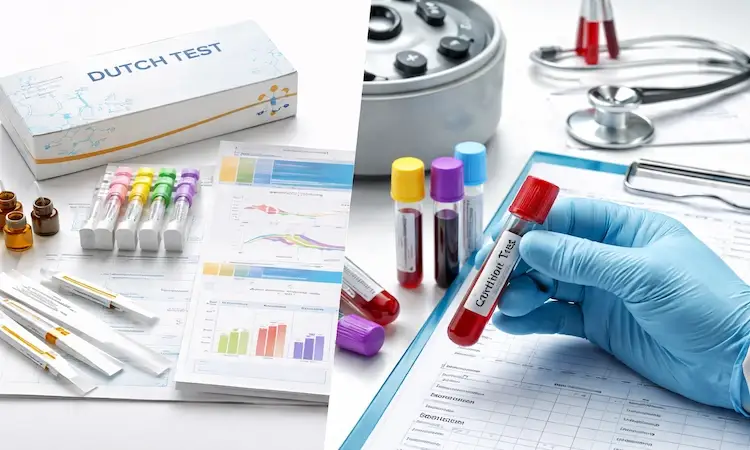
Cortisol is your body’s built-in “get moving” hormone. It helps regulate energy, blood sugar, blood pressure, and how you respond to stress. The tricky part is that cortisol isn’t steady. It follows a daily pattern, like a tide that rises and falls.
So when someone asks, “What’s the most accurate cortisol test,” the real question is usually this: DUTCH Test vs Blood Test, which one matches what’s happening in real life symptoms like afternoon crashes, wired-at-night sleep, or constant anxiety?
Accuracy depends on timing (morning vs night), sample type (blood, saliva, urine), and what you’re trying to learn (a single moment vs your daily rhythm). By the end of this article, you’ll know what each test can and can’t tell you, when to take results seriously, and how to choose a smart next step with your clinician.
What “accurate cortisol” really means (and why one number can mislead)
When people say they want an “accurate” cortisol test, they often mean, “I want a result that explains how I feel.” That’s fair, but cortisol biology doesn’t always cooperate.
Cortisol changes hour by hour. A single value can be perfectly “normal” and still miss a problem with timing. That’s why clinicians talk about patterns like cortisol rhythm and cortisol slope analysis (how steeply cortisol drops from morning to night). Some people have a healthy total amount of cortisol, but the curve is shifted. Others have a flatter curve, meaning they don’t get a strong morning rise, or they stay too high at night.
It also helps to separate acute stress from chronic stress patterns:
- Acute stress can spike cortisol for a short time (an argument, a tough workout, a medical visit).
- Chronic stress can look different: sometimes higher output, sometimes lower output, sometimes a flatter or “reversed” curve where nights are higher than mornings.
Another key point is the goal of testing. A primary care clinician or endocrinologist may be screening for major endocrine disease (like Cushing syndrome or adrenal insufficiency). In that context, “accurate” means the test helps rule in or rule out serious conditions. If you’re trying to understand day-to-day symptoms, you often need a rhythm-focused approach.
A simple example: someone gets a morning blood cortisol that looks fine, then they crash hard at 2:30 pm every day. That blood draw can’t “see” the crash because it only captured one moment. On the flip side, one terrible night of sleep can push a morning reading higher than usual, even if your usual rhythm is different.
The cortisol rhythm basics: morning peak, daytime drop, night low
For many people, cortisol is highest in the early morning. It rises around waking, supports alertness, then gradually drops through the day, reaching its lowest point at night.
Your curve can shift for practical reasons. Light exposure in the morning helps set the rhythm. Late-night screen time and bright light can push cortisol later. Caffeine, intense workouts, and even a packed commute can bump cortisol higher than you expect. Shift work and frequent travel can also blur the curve because your brain is trying to guess what “morning” even means.
Symptoms often track the curve more than the average. A person might feel tired in the morning if their peak is weak, anxious at night if their evening level runs high, or foggy in the afternoon if their slope drops too fast.
Common reasons cortisol results look “off” even when nothing is wrong
Cortisol testing is sensitive. Many “abnormal” results come from timing or everyday variables, not disease. Common causes include:
- Wrong collection time (especially for blood draws)
- Travel across time zones, night shifts, or irregular sleep
- Current illness, fever, or recent injury
- Steroid medications (pills, inhalers, creams, injections)
- Birth control hormones, pregnancy, or recent postpartum changes
- Dehydration (can matter for urine-based testing)
- Heavy exercise, alcohol, or high stress right before the test
If you have concerning symptoms like fainting, unexplained weight loss, severe weakness, new purple stretch marks, or sudden blood pressure changes, don’t self-test and guess. Call a clinician and ask what workup is appropriate.
DUTCH Test explained: what it measures and what it is best at
The DUTCH Test (Dried Urine Test for Comprehensive Hormones) is popular because it aims to show patterns, not just a single number. It uses dried urine samples collected at multiple times, often across a day, so it can estimate your cortisol rhythm and related markers.
Instead of only measuring cortisol itself, it also looks at hormone metabolite testing, meaning breakdown products your body makes after it uses and processes hormones. In cortisol testing, metabolites can suggest overall output and how quickly cortisol is being converted and cleared.
This is a different lens than blood testing. Blood shows what’s circulating right now. Dried urine testing is closer to a “what happened over the last several hours” snapshot, repeated across the day. Some versions also include cortisone (the inactive form) and other related markers, which can help a clinician interpret why symptoms don’t match a simple cortisol value.
If you want a manufacturer explanation of free vs metabolized cortisol, see metabolized vs free cortisol.
Collection is usually at home, which many people like. You collect urine on filter paper at specific times (depending on the kit), let it dry, then ship it to the lab. Convenience is real, but so is user error. Timing and following instructions matter.
DUTCH testing is often used in a functional medicine stress test style evaluation, especially when someone has persistent fatigue, sleep issues, or anxiety that basic labs haven’t explained. It’s still lab data that needs clinical context. Results are most useful when a trained clinician interprets them alongside symptoms, sleep schedule, medications, and health history. A balanced consumer view is covered in the DUTCH Test overview.
How dried urine and cortisol metabolites can show a fuller 24-hour picture
Think of cortisol like money in your checking account. A blood test shows your balance at one moment. Urine metabolites are more like looking at your spending over time.
This idea connects to traditional 24-hour urine cortisol testing, which is a long-used method in medicine for certain clinical questions. Multiple dried urine collections can be a more practical way to estimate patterns across the day without asking you to store a full jug in the fridge.
Because samples are collected at different times, a clinician can look at your daily curve and do a form of cortisol slope analysis. That’s helpful for people whose symptoms are time-based, like “I’m fine until lunch,” or “I can’t fall asleep even when I’m exhausted.”
When DUTCH can be a smart choice (and when it may not be enough)
DUTCH testing can be a good fit when your main goal is pattern tracking, such as:
- Ongoing fatigue with an afternoon slump
- Sleep problems (especially waking at 2:00 to 4:00 am)
- Anxiety or feeling “wired,” with normal basic labs
- Tracking changes after lifestyle changes (sleep schedule, training load, caffeine changes)
It may not be enough when the question is, “Do I have a serious adrenal disorder?” It’s not meant to be a stand-alone diagnostic test for Cushing syndrome or Addison disease. Collection mistakes can also create confusing results, and cost and insurance coverage vary.
If you’re unsure where it fits medically, an endocrinology perspective can be helpful. See an endocrinology guide to the DUTCH Test.
Blood cortisol testing: strengths, blind spots, and how to make it more useful
A blood cortisol test measures cortisol in your bloodstream at that moment. That’s its biggest strength and its biggest limitation. It’s fast, widely available, and commonly used in conventional care.
Blood testing shines when clinicians are screening for bigger endocrine issues, especially when symptoms are severe or there are clear red flags. But it can be a blunt tool for day-to-day complaints because cortisol has a strong daily rhythm. A “normal range” result doesn’t always mean “normal for your symptoms,” it means your value falls within a broad population range for that time of day.
Timing is everything. Many cortisol blood tests are drawn in the morning because that’s when cortisol is usually highest. If a morning draw is taken too late, or your sleep schedule is unusual, interpretation gets harder.
There’s also the “white coat” effect. If you’re anxious about needles, running late, or arguing in the parking lot, your cortisol may rise. That doesn’t make the test useless, it just means context matters.
Blood testing becomes more informative when clinicians use it strategically: ordering it at a specific time, repeating it if needed, or adding related labs like ACTH or DHEA-S depending on symptoms and suspicion.
A quick note: salivary testing is often used for salivary cortisol rhythm and late-night cortisol questions. Research continues to compare saliva and serum performance in different settings, including salivary cortisol compared to serum.
What blood cortisol does well: screening for serious endocrine problems
If a clinician suspects Cushing syndrome (too much cortisol) or adrenal insufficiency (too little), blood testing is part of the standard medical path. It’s not always the first step, but it’s commonly involved in the evaluation.
In suspected Cushing syndrome, experts often prefer tests that capture abnormal cortisol regulation, not just a random serum value. The American Academy of Family Physicians notes limitations of using serum cortisol alone for initial screening, and discusses preferred options like late-night salivary cortisol, 24-hour urine-free cortisol, and dexamethasone suppression testing in Choosing Wisely guidance.
If results are clearly abnormal, an endocrinologist may order confirmatory testing. That’s not a reason to panic, it’s how the process works when hormone systems are involved.
How to avoid the most common blood test pitfalls
If you’re getting blood cortisol tested, small choices can make the result more meaningful.
- Ask what time the lab draw should be, and stick to it.
- Avoid intense exercise and alcohol the day before, unless your clinician says otherwise.
- Tell your clinician about steroid meds (including inhalers, creams, joint injections).
- Try to sleep normally the night before, as best you can.
- Don’t stop prescribed meds on your own, ask first.
One abnormal value often leads to a repeat test or a follow-up test, not a diagnosis. Cortisol is reactive by design, so clinicians usually look for patterns, consistency, and symptoms that match.
DUTCH Test vs Blood Test: a simple guide to choosing the right next step
If you’re stuck deciding between DUTCH Test vs Blood Test, start by naming your goal. Are you trying to rule out a serious condition, or are you trying to understand why your energy and sleep feel off?
Here’s a plain-language comparison:
| Feature | DUTCH Test (dried urine) | Blood cortisol test |
|---|---|---|
| What it measures | Cortisol and metabolites across multiple samples | Cortisol level at one moment |
| Best for | Daily pattern, estimated overall output, cortisol slope analysis | Medical screening, acute evaluation, clear red flags |
| Rhythm insight | Often yes (multiple time points) | Limited unless repeated or paired with other tests |
| Convenience | At-home collection | Lab visit, needle draw |
| Cost and coverage | Varies, may be out-of-pocket | Often covered when medically indicated |
| How results are used | Symptom-pattern mapping, clinician interpretation needed | Screening and follow-up testing pathways |
A simple decision flow helps. If you have red flag symptoms, a history of steroid use, major blood pressure changes, unexplained weight changes, fainting, or severe weakness, start with a medical evaluation and conventional testing. If your main issue is daily energy swings, sleep disruption, and stress-response symptoms with otherwise normal basic labs, rhythm-focused testing (DUTCH or salivary rhythm testing) may be more aligned.
No test replaces basics. While you investigate, tighten the simple levers that affect cortisol: consistent wake time, morning light, balanced meals, smarter caffeine timing, and a training load your body can recover from.
Quick decision checklist based on your main goal
- Do you need to check a single morning level as part of a clinical workup?
- Are you trying to map a daily pattern tied to symptoms?
- Do you have red flag symptoms that warrant medical evaluation first?
- Do you work night shifts or have an irregular sleep schedule?
- Are you on any steroid medication (inhaled, topical, injected, or oral)?
- Are you trying to understand insomnia, especially waking overnight?
- Do your symptoms hit at a consistent time each day (like an afternoon crash)?
- Do you need a test that’s more likely to be covered by insurance?
- Can you follow detailed at-home collection instructions carefully?
Conclusion
Blood cortisol testing is a helpful snapshot, especially when a clinician needs to screen for serious endocrine problems and decide on follow-up testing. The DUTCH approach can add value when you’re trying to understand daily patterns, because it looks at cortisol and metabolites across multiple time points, not just one moment.
In the end, “accurate” cortisol testing is mostly about timing and context. Your sleep schedule, stress level, medications, and collection method can matter as much as the number on the page.
Talk with your clinician about what you’re feeling, what meds you take (especially steroids), and the exact goal of the test. While you’re lining up a cortisl lab, stick to the basics, steady sleep, regular meal times, sensible caffeine use, and enough recovery can help more than most people think.

Gas S. is a health writer who covers metabolic health, longevity science, and functional physiology. He breaks down research into clear, usable takeaways for long-term health and recovery. His work focuses on how the body works, progress tracking, and changes you can stick with. Every article is reviewed independently for accuracy and readability.
- Medical Disclaimer: This content is for education only. It doesn’t diagnose, treat, or replace medical care from a licensed professional. Read our full Medical Disclaimer here.