

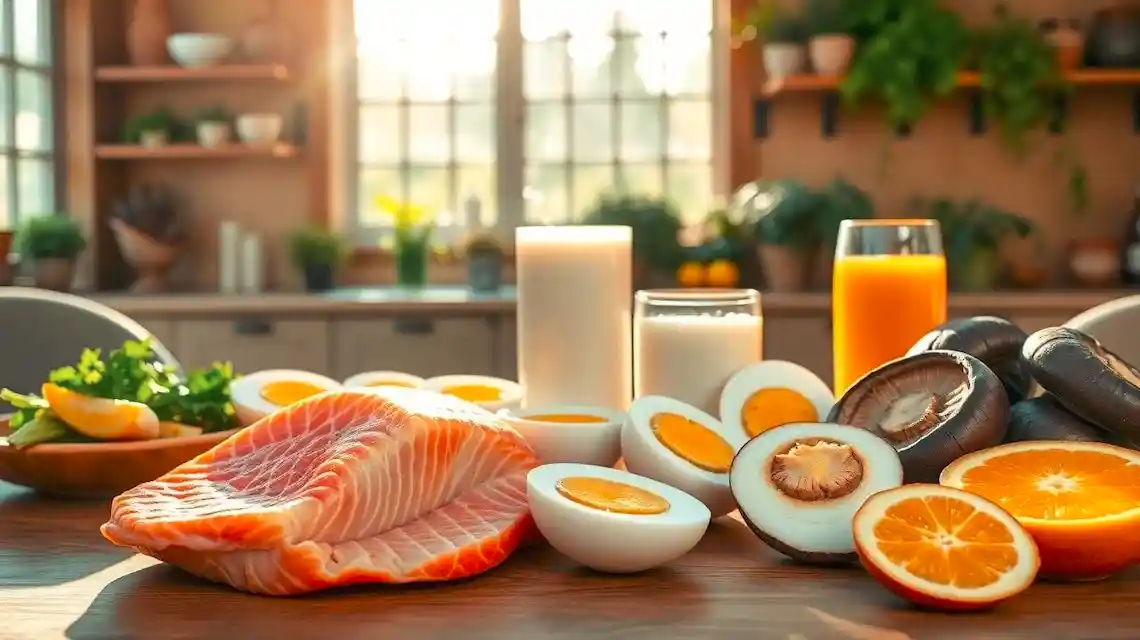
Low sunlight in winter, long office hours, and sunscreen use can all leave you short on a dietary source of vitamin D. That matters, because vitamin D supports bones, muscles, and immune function. The good news, you can cover most needs with smart grocery picks and a few label-reading skills.
This guide shows what vitamin D does, how much you need, and which foods actually deliver. You will get everyday serving ideas, budget swaps, and safety notes. The focus is food first. If your levels run low or you have higher needs, talk with a healthcare professional about testing and whether a supplement fits your plan.
Vitamin D basics for a diet-first plan
Vitamin D is a fat-soluble nutrient that helps your body absorb calcium. It supports strong bones and teeth, steadies muscle action, and plays a role in immune balance. Your skin can make vitamin D from sunlight, but many people still fall short, especially in winter or if they avoid sun or cover up.
Food can fill the gap. Fatty fish, egg yolks, and fortified foods lead the pack. Mushrooms exposed to UV light add a plant-based option. Labels list vitamin D as micrograms or IU. Quick math, 1 microgram (mcg) equals 40 IU.
Daily targets are simple. Most kids and adults 1 to 70 years need about 600 IU, which is 15 mcg, each day. Adults over 70 need 800 IU, which is 20 mcg. Infants need 400 IU, which is 10 mcg. The tolerable upper limit for most adults is 4,000 IU, which is 100 mcg. For details, see the NIH Vitamin D fact sheet.
Two forms show up in food, vitamin D2 and D3. D3 is found in animal foods like fish and eggs. D2 is found in mushrooms and some fortified foods. Both help raise vitamin D levels. D3 may raise it a bit more in some people, though total intake and consistency matter most. Harvard’s overview of vitamin D sources explains where each form comes from and how to think about food choices.
Diet-first works for many people. If you live far from the equator, have darker skin, cover your skin, or rarely eat fish, you may still need more. In that case, a healthcare professional can check your blood level and advise next steps.
What vitamin D does for your body
Vitamin D helps your gut absorb calcium, which supports strong bones and teeth. It also supports muscle function, so your legs feel steady on stairs. It plays a role in immune health and may influence mood balance. Think of it like a key that unlocks the benefits of calcium and steady movement.
How much vitamin D do you need each day?
- Most kids and adults 1 to 70 years, about 600 IU, or 15 mcg, per day
- Adults over 70 years, 800 IU, or 20 mcg, per day
- Infants, 400 IU, or 10 mcg, per day
- Upper limit for most adults, 4,000 IU, or 100 mcg
Needs can vary with health status, skin tone, location, and sun exposure. If you are unsure, ask a healthcare professional about testing.
Vitamin D2 vs D3 in foods
- D3 shows up in fish, egg yolks, and some fortified dairy.
- D2 shows up in mushrooms and some fortified foods.
- Both raise vitamin D levels, D3 may raise it a little more in some people.
- Labels may list vitamin D2 or D3. Check the ingredient list or fortification line.
Can you get enough from diet alone?
Many people can meet targets with fish, eggs, and fortified foods. Still, some come up short in winter or with limited sun. Use the foods below to build a diet-first plan. If your blood level is low, a supplement may help, but only with guidance from a healthcare professional.
Best dietary source of vitamin D: top foods you can eat today
Fatty fish and seafood with the most vitamin D
Salmon, trout, mackerel, sardines, and canned light tuna are top choices. Typical portions, 3 to 4 ounces cooked, can provide about 200 to 600 IU, which is 5 to 15 mcg. Wild salmon often has more than farmed. Canned salmon and sardines are budget friendly and shelf stable.
Cod liver oil is very high in vitamin D, often 400 to 1,000 IU per teaspoon, but it acts more like a supplement, not an everyday cooking fat.
Safety tip, choose lower mercury fish more often, such as salmon, sardines, trout, and canned light tuna. For a quick reference on fish choices, see the Dietary Guidelines list of food sources of vitamin D.
Egg yolks and dairy foods
Egg yolks contain vitamin D3. Amounts vary with the hen’s diet, often around 40 to 80 IU, which is 1 to 2 mcg, per yolk.
In the US, cow’s milk is commonly fortified with vitamin D, usually about 2.5 mcg, which is 100 IU, per 8 ounces. Some yogurts are fortified, many cheeses are not. Lactose free milk is often fortified too. Check the Nutrition Facts panel or brand website.
Fortified plant milks, cereals, and juices
Almond, soy, oat, and other plant milks are often fortified with 2 to 3 mcg, which is 80 to 120 IU, per cup. Many breakfast cereals add vitamin D, often 10 to 20 percent Daily Value per serving. Some orange juices are fortified as well.
Label tip, find vitamin D listed as mcg and percent Daily Value. Aim for products with at least 15 to 25 percent DV per serving. For background on typical fortified choices, the Harvard Nutrition Source has a clear guide to vitamin D in foods.
UV-exposed mushrooms for a plant-based boost
Mushrooms exposed to UV light can be rich in vitamin D2. Some brands list 5 to 10 mcg, which is 200 to 400 IU, per 3-ounce serving. Look for packages that say UV-exposed or high vitamin D.
Quick tip, place store-bought mushrooms gill-side up in sunlight for 15 to 30 minutes before cooking. It can raise their vitamin D content.
How to meet your daily vitamin D needs with simple meals
A sample day that hits your goal
- Breakfast, fortified whole grain cereal with 1 cup milk or plant milk, plus a sliced banana
- Lunch, salmon salad on whole wheat toast with greens, or sardine toast with lemon and herbs
- Snack, fortified yogurt with berries
- Dinner, baked trout, roasted carrots and broccoli, and a small side of quinoa
Quick swaps
- Use canned salmon, canned light tuna, or sardines when fresh fish is pricey
- Stir fry UV-exposed mushrooms with tofu and vegetables
- Choose fortified orange juice or plant yogurt if you avoid dairy
Vegetarian and vegan ways to get vitamin D from food
- Vegetarians, egg yolks, fortified milk or yogurt, cereals, and UV-exposed mushrooms
- Vegans, fortified plant milks and yogurts, cereals, tofu or meat alternatives if fortified, and UV-exposed mushrooms
Always check labels for vitamin D in mcg per serving, then mix and match to reach your daily total.
Winter and low-sun strategies
- Stock your pantry, canned salmon or sardines, fortified cereals, and shelf-stable plant milks
- Batch cook fish once or twice a week, portion for quick lunches
- Include some healthy fat at meals, vitamin D is fat soluble, so pair with olive oil, avocado, or nuts
Smart labels, limits, and safety
- Read the Nutrition Facts panel. Vitamin D is listed in mcg and sometimes IU. Remember 1 mcg equals 40 IU
- The upper limit for most adults is 4,000 IU, which is 100 mcg. Food alone rarely exceeds this, but high dose supplements can
- Choose low mercury fish more often, look for lactose free or plant-based fortified options if needed, and check in with a healthcare professional if you have health conditions, are pregnant, or plan to use a supplement.
Conclusion
You can cover your needs with a smart mix of fish, eggs, fortified milks and cereals, and UV-exposed mushrooms. Start simple, pick one or two new foods this week, then check labels for mcg per serving and build from there. If you think your levels are low, ask a healthcare professional about testing and whether a supplement fits your plan. With a thoughtful dietary source of vitamin D strategy, your plate can do most of the work. What will you try first this week?
Related post:
How Can I Get Vitamin D Naturally
Best Time to Take Vitamin B12 for Energy
Dietary Source of Vitamin D FAQs:
What foods naturally have vitamin D?
Fatty fish, cod liver oil, egg yolks, and beef liver provide vitamin D. Top picks include salmon, trout, mackerel, sardines, herring, and tuna. Most plant foods do not have vitamin D unless fortified, except UV-exposed mushrooms.
Which fish have the most vitamin D?
- Salmon, 400 to 1,000 IU per 3.5 oz, varies by species and farming
- Mackerel, about 300 to 400 IU per 3.5 oz
- Sardines, about 250 to 300 IU per 3.5 oz
- Rainbow trout, about 600 to 650 IU per 3.5 oz
- Canned light tuna, about 150 to 200 IU per 3 oz Numbers can vary by brand and season.
Are mushrooms a good source?
Yes, if exposed to UV light. UV-treated mushrooms can provide 200 to 800 IU per 3.5 oz, sometimes more. Regular mushrooms grown in the dark have very little.
What about fortified foods, and how much do they have?
In the U.S., many products are fortified. Typical amounts per serving:
- Cow’s milk, 100 IU per cup
- Plant milks, 100 to 150 IU per cup
- Yogurt, 100 to 150 IU per cup
- Breakfast cereals, 40 to 100 IU per serving
- Orange juice, 100 IU per cup
- Margarine or spreads, varies, check labels Always check the nutrition facts, since brands differ.
Is vitamin D2 different from D3 in food?
Yes. D2 comes from UV-exposed mushrooms and yeasts. D3 comes from animal foods and many fortified products. D3 raises and maintains blood levels a bit better than D2 in most people.
Can I get enough vitamin D from diet alone?
It is possible, but it takes planning. Many people need a mix of fish, fortified foods, and sometimes a supplement, especially in winter or with limited sun.
How much vitamin D do I need each day?
- Infants 0 to 12 months, 400 IU
- Age 1 to 70, 600 IU
- Adults over 70, 800 IU
- Pregnancy and breastfeeding, 600 IU Upper limit for most adults, 4,000 IU per day unless your clinician advises otherwise.
What are good options for vegetarians or vegans?
- UV-exposed mushrooms
- Fortified plant milks, yogurts, cereals, and juices
- Vegan D3 supplements made from lichen, if needed Read labels to confirm vitamin D is included.
Do eggs and dairy help?
Yes, but amounts are modest. One egg yolk has about 40 to 50 IU. Cheese is usually low unless fortified. Milk and yogurt are helpful if fortified.
Does cooking reduce vitamin D?
Vitamin D holds up well to baking and grilling. Frying can cause some loss. Mushrooms keep most of their D2 after cooking, especially if they were UV-treated.
Any mercury or safety concerns with fish sources?
Pick low mercury fish most of the time. Good choices include salmon, sardines, trout, and herring. Limit high mercury fish like king mackerel, shark, swordfish, and tilefish.
How do I improve absorption?
Vitamin D is fat soluble. Eat sources with a meal that includes some fat, such as olive oil, avocado, nuts, or dairy. If you take a supplement, take it with your largest meal or one that contains fat.
Are supplements better than food?
Food adds protein, omega-3s, and other nutrients. A supplement helps fill gaps if your intake is low or your levels are low. Many people do well with 1,000 to 2,000 IU per day, but test results and medical advice should guide the dose.
What does IU mean, and how do I convert it?
IU stands for International Units. For vitamin D, 1 microgram equals 40 IU. Example, 10 micrograms equals 400 IU.
Who is more likely to need dietary or supplemental vitamin D?
People with limited sun, darker skin, higher body weight, older age, malabsorption conditions, or certain medications, such as some anticonvulsants, steroids, or orlistat. A blood test is the best way to check status.

Gas S. is a health writer who covers metabolic health, longevity science, and functional physiology. He breaks down research into clear, usable takeaways for long-term health and recovery. His work focuses on how the body works, progress tracking, and changes you can stick with. Every article is reviewed independently for accuracy and readability.
- Medical Disclaimer: This content is for education only. It doesn’t diagnose, treat, or replace medical care from a licensed professional. Read our full Medical Disclaimer here.