

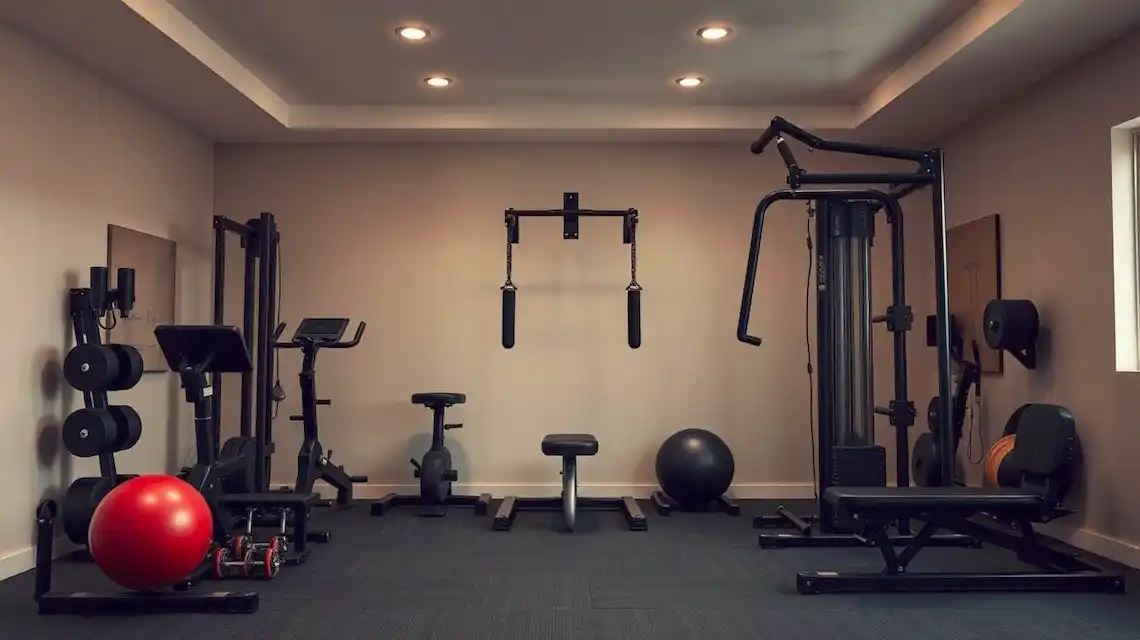
If your gym membership card gets more dust than use, it’s time to bring the workout home. With the best home gym workout equipment, you can hit every muscle group without filling your living room with bulky machines. We’ll look at must-have basics, smart add-ons, and gear that supports workouts for people who sit all day at work.
You will get a clear plan for strength, cardio, and recovery. Start with one item, stack small habits, and train consistently. Want quick wins? Pick one strength tool and one cardio tool that you will actually use. Over four weeks, track progress, then add the next piece with confidence.
How to choose the best home gym workout equipment for your space and goals
Think of your home gym like a toolkit. You do not need every tool on day one. You need the right ones for your job. Follow this simple decision path.
Mini checklist:
- Goals: strength, fat loss, or general fitness.
- Space: measure floor space, ceiling height, and doorways.
- Noise: plan for neighbors, kids, or roommates.
- Budget: set a cap and buy in phases.
- Safety: stable setups and injury prevention matter.
Measure your space before buying. For small rooms, tape the footprint on the floor to see fit and flow. Measure door frames for gear delivery. Plan storage with racks, wall hooks, and bins. Check ceiling height for jumps and ropes. Most people need 8 to 9 feet for overhead moves.
Choose gear that can grow with you. Adjustable weights let you progress without crowding your room. Compact walking pads are a 2025 favorite for daily steps at home. Both trends save space and build consistent habits.
Keep noise in mind if you live in an apartment. Quiet drive systems, rubber mats, and smart workout times keep peace at home. Pick items that fold, roll, or store upright. This protects your space and keeps training easy to start.
Start with clear goals: strength, fat loss, or general fitness
Goals drive smart choices. Match your first items to your top outcome.
- Strength and muscle: adjustable dumbbells or one kettlebell.
- Sample workouts:
- 20 minutes, every minute: 6 goblet squats, 6 rows.
- Upper day: bench press, one-arm row, overhead press.
- Lower day: RDLs, split squats, weighted carries.
- Sample workouts:
- Fat loss and cardio: walking pad or indoor bike.
- Sample workouts:
- Walking intervals: 2 minutes easy, 1 minute brisk, repeat 10 times.
- Bike: 30 seconds hard, 90 seconds easy, repeat 12 times.
- Steps focus: build to 8,000 to 10,000 steps daily.
- Sample workouts:
- General fitness: bands, a bench, and a jump rope.
- Sample workouts:
- Circuit: band press, band row, step-ups, rope, 3 rounds.
- Push-pull superset: band chest press with face pulls.
- Rope finisher: 30 seconds on, 30 seconds off, 10 rounds.
- Sample workouts:
Measure your space and plan storage before you buy
Typical footprints:
- Walking pad: 48 to 60 inches long.
- Indoor bike: 2 by 4 feet.
- Rower: 8 by 2 feet, often stores upright.
- Bench: about 4 feet long.
Ceiling height matters for jumps and jump rope, aim for 8 to 9 feet. If your ceiling is low, cordless rope handles can solve the problem. Add wall hooks for bands and ropes, a small rack for weights, and under-bed boxes for extras. For apartments, focus on low-noise gear and rubber mats to soften impact and protect floors.
Set a budget and buy in phases
Keep it simple and staged.
- Starter, under $200: bands, jump rope, suspension trainer.
- Core, under $600: add adjustable dumbbells or one kettlebell, plus a folding bench.
- Complete, under $1,200: add a walking pad or a basic indoor bike.
Buy the next piece only after 4 weeks of consistent use. This prevents clutter and keeps motivation tied to progress, not purchases.
Safety, durability, and floor protection matter
Check weight ratings for benches and anchors. Look for secure door anchors and stable frames. For floors, use rubber mats or interlocking tiles in the 8 to 12 mm range. For cardio, quiet drive systems help with shared walls and floors. Review warranties and return windows. Learn basic form before adding load, and keep your training area clear and tidy.
Essential strength gear most homes should start with
Four high-value picks cover full-body training and scale with your progress. Each one works in tight spaces and pairs well with quick circuits.
Adjustable dumbbells: big strength in a small footprint
Adjustable dumbbells pack a whole rack into one set. Common ranges start at 5 to 52.5 pounds, with some models reaching 80 or 90 pounds. Good systems change weight quickly and use safety locks. Compared to a full rack, they save hundreds of dollars and several feet of space.
Pros: compact, fast weight changes, full-body options. Cons: do not drop them, handle shapes vary, top weight limits can cap strength work. For models and insights, see expert picks like Garage Gym Reviews’ best adjustable dumbbells or 2025 rankings from Garage Gym Lab. You can also see real-world durability talk in the Buy It For Life adjustable dumbbells thread, and tested picks from Men’s Health.
Starter moves:
- Goblet squat
- Flat or incline dumbbell bench press
- One-arm dumbbell row
- Standing overhead press
Heavy resistance bands with a door anchor for full-body training
Loop bands and tube sets are small, strong, and versatile. They come in color-coded resistances and can be stacked for more load. Always set your door anchor on the closing side, and check bands for wear or cracks. Bands train pulls, presses, face pulls, hip work, and core drills. They also travel well and are whisper quiet in small apartments.
Great moves: band row, chest press, face pull, pallof press, hip hinge, and band-assisted pull-up holds. Mix tempos and pauses for more challenge without more weight.
One kettlebell that does it all
A single kettlebell can build power, strength, and conditioning. Good starting weights vary by person and training age. Many beginners start with 15 to 25 pounds, intermediates with 25 to 35 pounds, and advanced lifters with 35 to 53 pounds. If you train lower body strength often, pick the higher end. Adjustable kettlebells can save space if you want to progress without storing multiple bells.
Core moves: swings, deadlifts, cleans, presses, front rack lunges, and loaded carries. Pair swings with push-ups for a quick, tough circuit.
A folding flat-to-incline bench for presses and rows
A solid bench upgrades your dumbbell and band training. Look for a pad height that lets your feet plant, a total weight rating of at least 600 pounds, stable feet, and an easy folding design for storage. Adjustable back angles help target chest and shoulder work, and give you support for rows, step-ups, and split squats. Fold it after a session to keep your room clear.
Example session: incline dumbbell press, one-arm row, split squats, and a core finisher. Repeat for 3 rounds.
Best cardio equipment for home gyms, from compact to full size
Cardio gear ranges from pocket-sized to full footprint machines. Pick based on space, noise, and how you like to move. Intervals are simple and effective on any tool.
Jump rope or cordless rope for a tiny space sweat
A jump rope trains footwork, rhythm, and conditioning. Use a mat to protect floors and soften impact. For low ceilings, cordless handles give the same timing without hitting the ceiling. Keep jumps light and ankles stiff for efficiency.
Quick interval: 30 seconds on, 30 seconds off, 10 to 15 rounds. Add single-leg hops or lateral hops for variety.
Walking pad or folding treadmill for daily steps at home
Walking pads slide under a desk or couch and store under a bed. Check deck size, speed range, and motor noise for your space. They are great for long calls, emails, or podcasts. Build a daily steps habit to boost calorie burn without beating up your joints.
Aim for 8,000 to 10,000 steps a day. Simple interval: 2 minutes brisk, 1 minute easy, 20 to 30 minutes total. If your unit inclines, add short hill blocks for a bit more challenge.
Indoor cycling bike for low-impact intervals
Indoor bikes deliver high output with minimal joint stress. Magnetic resistance is quieter and low-maintenance, while friction is cheaper but louder. Fit adjustments for seat height, fore-aft, and handlebar height help comfort and power. Many bikes work with popular training apps if you like guided rides.
Sample workout: 1 minute hard, 2 minutes easy, repeat 10 times. Warm up for 5 minutes and cool down for 5 minutes.
Compact rowing machine that stores upright
A rower hits legs, back, and core with each stroke. It also promotes better posture and strong breathing mechanics. Many compact rowers store upright, which is perfect for tight rooms. Water rowers feel smooth and are quieter, air rowers give a classic feel and louder whoosh, and magnetic rowers are the quietest but can feel more uniform.
Starter ladder: 250 meters easy, 250 meters moderate, 250 meters easy. Repeat 3 to 4 rounds. Keep strokes long and consistent.
Smart extras that boost results and keep you consistent
Small upgrades can improve comfort, safety, and habit tracking. These add-ons keep training friction low so you keep showing up.
Suspension trainer for core strength anywhere
A suspension trainer mounts on a door or ceiling and offers quick length changes. You scale difficulty by moving your feet. Closer to the anchor makes moves harder, farther away makes them easier. It is perfect for travel, small rooms, and core-focused training.
Great moves: rows, push-ups, fallouts, Ys and Ts, reverse lunges, and Bulgarian split squats. Try a 15-minute EMOM with rows and push-ups to build volume.
Cable pulley or wall anchor for push, pull, and rehab work
A compact cable system gives smooth resistance for accessory work. Options include plate-loaded pulleys, band add-ons, or small wall units. Always mount into studs and honor weight limits. Use it for face pulls, triceps pressdowns, curl variations, and anti-rotation core drills like pallof presses. This adds balance to heavy pressing and pulling.
Recovery tools you will actually use
Keep recovery short and simple. A medium-density foam roller, a lacrosse ball, and a light stretch strap cover most needs. Spend 5 to 8 minutes after lifting on upper back, quads, hips, and calves. You will feel less stiff, move better, and train more days each week with fewer aches.
Flooring and storage to protect gear and save space
Use rubber mats or interlocking tiles in the 8 to 12 mm range. This protects floors and softens sound. Add hooks for bands and ropes, shelves for smaller items, and bins for accessories. Keep a clear zone for lifts and jumps so you are never stepping around clutter. A tidy space lowers friction and invites you to train.
Quick size and budget reference
| Item | Typical Footprint | Notes |
|---|---|---|
| Walking pad | 48 to 60 in long | Stores flat, low noise |
| Indoor bike | 2 ft by 4 ft | Magnetic drive is quieter |
| Rower | 8 ft by 2 ft | Many store upright |
| Bench | About 4 ft long | Choose foldable for small rooms |
| Adjustable dumbbells | 1 to 2 sq ft base | Replaces a full rack |
| Budget Tier | Approx. Spend | What to Buy |
|---|---|---|
| Starter | Under $200 | Bands, jump rope, suspension trainer |
| Core | Under $600 | Add adjustable dumbbells or one kettlebell, folding bench |
| Complete | Under $1,200 | Add walking pad or basic indoor bike |
Conclusion
Keep your plan simple. Set goals, measure space, set a budget, then pick 1 to 2 items for strength and 1 for cardio. Use them for 4 weeks, track workouts, and add gear only when you earn it. The best home gym workout equipment is the gear you use often, that fits your life and your room. Start today, stack small wins, and let consistency do the heavy lifting. Ready to move? Choose your first piece, book your next workout, and get it done. Picking the right home gym workout equipment helps you stick with fitness long term by cutting out roadblocks from extreme plans, like lack of time and burnout, so you can train week after week instead of giving up after a few sessions.
Related post:
- How to Stay Active With Back Pain
- Easy Home Workouts to Get Back in Shape
- Improve Fitness With Calisthenics Program
Best Home Gym Workout Equipment: FAQ
What’s the best single piece of home gym equipment to start with?
Adjustable dumbbells cover the most ground in the least space. Pair them with a flat or adjustable bench for presses, rows, and legs. Add a set of resistance bands for warmups and accessory work.
What should I buy first on a tight budget?
Start with resistance bands, a jump rope, and a kettlebell or a pair of fixed dumbbells. This combo hits strength, cardio, and mobility for under $150, depending on quality.
How much space do I need for a solid setup?
A power rack, barbell, bench, and plates need about 8 by 6 feet. Apartments can thrive with a bench, adjustable dumbbells, bands, and a foldable rack or pull-up bar.
Which is better for strength, dumbbells or a barbell?
A barbell with plates loads heavier and progresses faster for squats, deadlifts, and presses. Dumbbells shine for unilateral work, joints, and range of motion. Many lifters use both.
What cardio machine gives the best workout per square foot?
A rowing machine or an air bike delivers full-body work and intense intervals. A jump rope beats both for price and storage. Choose a treadmill if you need low-skill steady cardio.
Are adjustable dumbbells safe and durable?
Good models are safe if you rack them carefully and check locks. Plate-style adjustables are durable, but can feel bulky. Dial systems are fast, but have moving parts to maintain.
Do I need a power rack, or will a squat stand do?
A full rack with safeties is best for heavy squats and benching. A half rack or stands save space, but need spotter arms. If you lift alone, prioritize safety features.
Flat bench or adjustable bench?
An adjustable bench increases exercise variety, like incline presses. A flat bench is cheaper, often more stable, and enough for many programs. Check the pad height and weight rating.
Bumper plates or iron plates for a home gym?
Bumper plates protect floors and allow safer drops on pulls. Iron plates are thinner and cheaper, better for heavy benching in small racks. Many mix bumpers for pulls and iron for presses.
What flooring should I use?
Use 3/8 inch rubber mats for most setups. Go thicker, like 1/2 inch, if you pull heavy or drop weights. Horse stall mats are a budget option, but can smell at first.
How tall should my ceiling be?
Aim for 8 feet to press overhead and do pull-ups without hitting the ceiling. Low ceilings limit overhead work and some rack setups. Measure before you buy.
How heavy should my dumbbells or kettlebells be?
Beginners often start with 5 to 50 pound adjustable dumbbells. For kettlebells, many men start at 16 to 24 kg, many women at 8 to 16 kg. Adjust for training age and goals.
Are smart home gym systems worth it?
They help with guidance and tracking. They cost more, rely on subscriptions, and limit free weight loading. If you want simple and strong, free weights offer better long-term value.
What’s a good starter barbell?
Choose a 20 kg Olympic bar, 28 to 29 mm shaft, with center knurl for squats if you like it. A 15 kg bar suits smaller hands. Look for reliable bearings or bushings, and a 700 lb rating or more.
How do I keep noise down in an apartment?
Use rubber flooring, crash pads, and controlled lowering. Avoid dropping weights. Choose a rowing machine or spin bike over a treadmill. Lift during reasonable hours.
Can I buy used equipment safely?
Yes. Check for bent bars, cracked plates, rust on sleeves, and torn pads. Test the knurl and spin on bars. Used racks and iron plates often last decades.
What’s a balanced home gym under $1,000?
Adjustable dumbbells, a flat or adjustable bench, bands, a pull-up bar, a kettlebell, and mats. If you prefer a barbell path, consider a budget rack, basic bar, and used plates instead.
How do I progress at home without a lot of weight?
Use slower tempo, pauses, higher reps, unilateral moves, and shorter rest. Add range of motion and advanced push-up or split squat variants. Track workouts and add small weekly targets.
How do I store gear in a small space?
Use a wall-mounted rack, folding squat rack, under-bed bins for bands, and vertical plate trees. Choose a bench that stands upright. Keep the floor clear to make training easier.
What safety gear matters most?
Safety arms or straps on your rack, collars for the bar, and solid flooring. A lifting belt helps on heavy sets. Check bolts and attachments every few months.
How do I maintain my equipment?
Wipe sweat off pads and handles after each session. Brush bar knurl and oil the sleeves a few times per year. Inspect bands for cracks and replace at the first sign of wear.

Gas S. is a health writer who covers metabolic health, longevity science, and functional physiology. He breaks down research into clear, usable takeaways for long-term health and recovery. His work focuses on how the body works, progress tracking, and changes you can stick with. Every article is reviewed independently for accuracy and readability.
- Medical Disclaimer: This content is for education only. It doesn’t diagnose, treat, or replace medical care from a licensed professional. Read our full Medical Disclaimer here.