

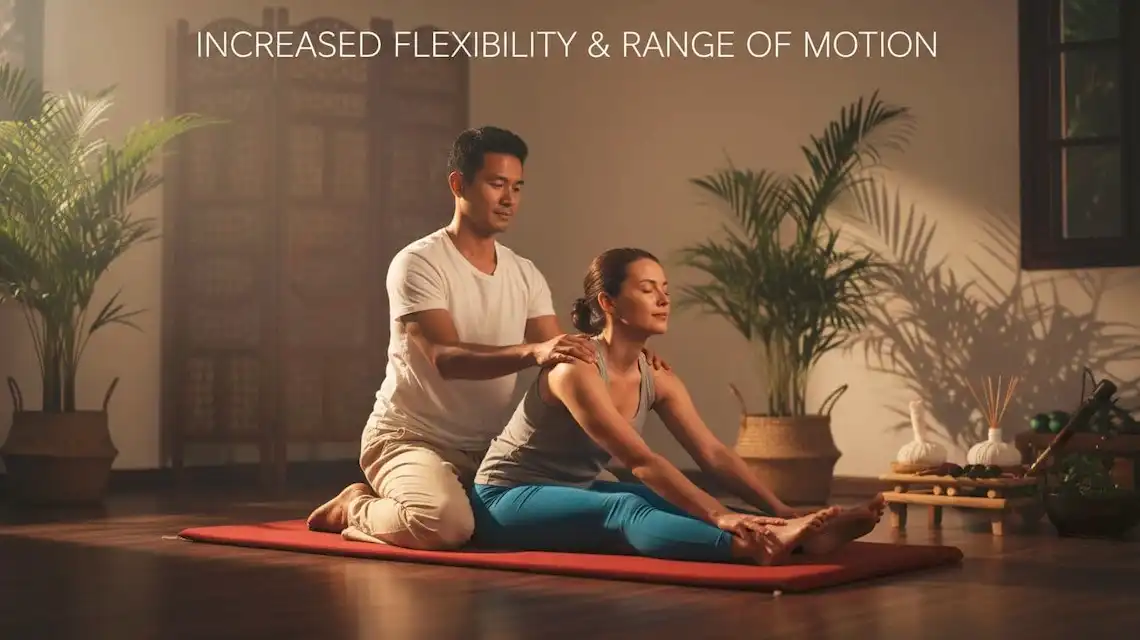
Ever wished you could get the effects of a good stretch and a soothing massage at the same time? That is exactly where the benefits of Thai yoga massage shine. This style of bodywork blends assisted yoga-like poses, gentle stretching, and pressure along energy lines, all done on a padded mat while you stay fully clothed.
Instead of lying passively on a table with oil, you are guided through supported movements that feel like a mix of yoga, massage, and meditation. People often describe feeling both relaxed and refreshed when they stand up.
In this guide, you will learn what Thai yoga massage is, how it works, who it helps most, and the main benefits for your muscles, posture, energy, stress levels, and sleep.
What Is Thai Yoga Massage and How Does It Work?
Thai yoga massage comes from traditional Thai medicine and has roots in Buddhist philosophy. It was traditionally practiced in temples as a way to care for both body and mind. Today, you can find it in yoga studios, wellness centers, and some spa settings.
A typical session takes place on a comfortable floor mat. You wear loose, flexible clothing, similar to what you would wear for yoga or light exercise. There is usually no oil, since the practitioner needs to grab, lift, and move your body with ease.
The practitioner uses:
- Hands and thumbs
- Palms and forearms
- Elbows and sometimes feet
These tools help apply slow, steady pressure and guide you into supported stretches. Many of the movements look like yoga poses, but you are not doing the work alone. The practitioner moves you, supports your weight, and times the stretches with your breathing.
Thai tradition teaches that the body has energy pathways called Sen lines. During Thai yoga massage, the practitioner works along these lines with rhythmic pressure and stretching. The idea is to free blocked energy so that your whole system can function more smoothly.
If you want a quick overview of general Thai massage benefits, medical sites such as Cleveland Clinic explain how this style may improve flexibility, ease pain, and support stress relief.
Key Features That Make Thai Yoga Massage Different
Thai yoga massage feels very different from a regular spa massage on a table.
Instead of lying still while someone works only with their hands, you are part of a flowing sequence of movements. The practitioner may rock you gently, press along muscles, then guide you into a twist, a hip opener, or a supported forward fold.
A few key differences:
- You stay fully clothed in comfortable, stretchy clothes.
- There is usually no oil or lotion.
- You are on a floor mat, not a raised table.
- There is more movement, stretching, and joint mobilization.
This active style is a big reason why the benefits of Thai yoga massage include better flexibility, easier joint mobility, and a feeling of lightness in the body. It is not about deep, painful digging into one spot. It is more like a slow, supported yoga flow that someone else does for you.
Who Can Benefit Most From Thai Yoga Massage?
Many different people enjoy this type of bodywork. It is not only for advanced yogis or very flexible people.
Common groups who may benefit include:
- Desk workers with tight shoulders, stiff necks, and a sore lower back
- Athletes and gym lovers who want to support recovery and mobility
- Yoga students who want deeper stretches with support
- People with tight hips and hamstrings from sitting or driving
- Stressed and tired adults who need nervous system down time
Sessions can be very gentle or more intense. A skilled practitioner adjusts pressure, pace, and range of motion for your body.
People with serious medical issues such as recent surgery, severe osteoporosis, high risk pregnancy, or circulation problems should talk with a doctor first. Sources like Healthline’s overview of Thai massage also suggest checking any health concerns before booking. This helps keep your expectations realistic and supports safe, enjoyable sessions.
Physical Benefits of Thai Yoga Massage for Pain, Flexibility, and Energy
The physical benefits of Thai yoga massage are often what draw people in. Think less stiffness, less heaviness, and more space in your body.
Relieves Muscle Tension and Everyday Aches
If you sit at a computer all day, you probably know the feeling of tight traps, a stiff neck, and a dull ache between your shoulder blades. Thai yoga massage uses slow pressure along these tense areas, combined with gentle stretches, to help muscles soften.
The practitioner might:
- Press along the muscles on either side of your spine
- Stretch your chest to open your shoulders
- Mobilize your neck with careful, supported movement
For someone who stands all day, such as a teacher or retail worker, the focus might be on calves, feet, lower back, and hips. Long holds, rocking, and sustained pressure can reduce the constant grip that tired muscles hold.
Thai yoga massage does not promise to cure medical conditions, but it can reduce tension and discomfort so daily life feels easier.
Improves Flexibility and Joint Mobility Without Straining
One of the standout benefits of Thai yoga massage is improved flexibility without forcing the body. Instead of pushing into a stretch on your own, the practitioner supports your limbs and moves them slowly.
You breathe, relax, and allow gravity plus skilled guidance to do the work. This can:
- Increase range of motion in hips, shoulders, and spine
- Help you twist, bend, and reach with less resistance
- Make daily tasks like tying shoes or lifting groceries feel easier
Because the practitioner watches your reactions closely, they can stop before a stretch becomes painful. That makes Thai yoga massage a gentle way to support flexibility for people who feel stiff or nervous about stretching alone.
You may notice you feel less stiff when you wake up or after a workout, since joints move more smoothly and muscles have more room to lengthen.
Supports Healthy Posture and Body Alignment
Many adults have rounded shoulders, a forward head, and tight hips from hours of screen use. The body adapts to whatever position you hold most.
Thai yoga massage can help unwind that pattern. A session often includes:
- Opening the chest and shoulders
- Lengthening the front of the hips
- Gently tractioning the spine to create space
When the front of the body opens and the spine can lengthen, it is easier to sit and stand upright without strain. Better posture reduces extra pressure on the neck and lower back and can even make breathing feel easier, since the rib cage has more room to move.
You might not walk out with a completely new posture, but you can feel more balanced and aware of how you sit, stand, and move.
Boosts Circulation and Natural Energy Levels
The flowing nature of Thai yoga massage tends to wake up the whole body. Rhythmic pressure, stretching, and joint movement all encourage blood flow.
Better circulation helps your body bring oxygen and nutrients to muscles and tissues. It also helps clear out waste products from areas that feel stagnant.
After a session, many people report:
- Less heaviness in legs and arms
- Warmer hands and feet
- A calm yet energized feeling, not groggy or spaced out
Some massage programs describe how Thai massage can improve blood flow and energy levels along with relaxation, as explained in this article on benefits of Thai massage therapy.
You may walk in feeling drained, then walk out feeling like someone hit a reset button on your body.
Mental and Emotional Benefits of Thai Yoga Massage
The benefits of Thai yoga massage are not only physical. The mental and emotional effects can be just as strong, especially if you are stressed, wired, or stuck in your head.
Reduces Stress and Calms the Nervous System
A Thai yoga massage session has a slow, steady rhythm. The practitioner applies pressure, holds a stretch, gently rocks you, then moves to the next area. Your only job is to breathe and receive.
This predictability sends a signal to your nervous system that it is safe to relax. The body can shift from high alert into a calmer rest and digest state.
As muscles let go, mental tension often eases too. People who feel burned out or overwhelmed often say this is one of the most important benefits of Thai yoga massage. It gives their mind a chance to pause, without needing to talk or solve anything.
Improves Sleep Quality and Deep Relaxation
After a good session, many people feel pleasantly heavy and grounded. The body is tired in a good way, like after gentle yoga or a long walk.
This state can make it easier to fall asleep that night and stay asleep longer. Some people like to book Thai yoga massage in the evening or at the end of a stressful workweek, so they can go home and rest.
Thai yoga massage does not cure insomnia, but by lowering stress, easing muscle tension, and calming the mind, it can support better sleep habits over time. When your body knows how to relax deeply, drifting off tends to come more naturally.
Encourages Mindfulness and Connection to Your Body
During a session, you are invited to notice your breath, your muscles, and the places that feel tight or open. Instead of scrolling on your phone or thinking about work, your attention returns to simple sensations.
This mindful focus can:
- Help you feel more present and grounded
- Reduce constant worry and mental noise
- Increase awareness of posture and stress signals during the day
As you get to know your body better, you may naturally start making kinder choices, like taking stretch breaks, adjusting your chair, or pausing for a few deep breaths when stress rises.
Thai yoga massage can become a regular check-in with yourself, similar to a moving meditation.
Conclusion: Is Thai Yoga Massage Right for You?
The main benefits of Thai yoga massage touch every layer of you. Less muscle tension, better flexibility, easier posture, improved circulation, and more natural energy on the physical side. On the mental and emotional side, you get stress relief, deeper relaxation, better sleep support, and a stronger connection to your own body.
You do not need to be flexible or have yoga experience to try it. It can be an excellent fit for desk workers, athletes, busy parents, and anyone who feels tight, sore, or stressed most days.
If you have medical concerns, talk with your doctor first, then look for a trained, certified Thai massage practitioner in your area. Many studios and therapists share their training and approach on their websites, so you can choose someone who feels like a good match.
Most of all, see Thai yoga massage as a kind form of self care, a way to give your body and mind a real break. Your future, more relaxed self will be glad you tried it.
Related post:
- How Do You Do Yoga At Home Properly
- How To Improve Your Yoga Practice Effectively
- What is Yoga and How Do You Do It?
FAQs:
What is Thai yoga massage and how is it different from regular massage?
Thai yoga massage is a type of bodywork that blends assisted stretching, rhythmic pressure, and gentle joint movement.
You stay clothed in soft, comfortable clothes, and you lie on a mat on the floor, not on a table.
Instead of using oils, the practitioner uses hands, thumbs, elbows, knees, and feet to apply pressure along energy lines and muscles.
It feels like a mix of massage, stretching, and guided yoga, all done for you.
What are the main physical benefits of Thai yoga massage?
Thai yoga massage helps increase flexibility, ease muscle tightness, and improve joint mobility.
The stretching and pressure can reduce stiffness in the back, hips, shoulders, and legs.
Better circulation often follows the session, which may help with recovery after workouts or long hours of sitting.
Many people also notice improved posture and a lighter, more open feeling in their body.
Can Thai yoga massage help with back and neck pain?
Yes, it often helps people with tension in the back, neck, and shoulders.
The practitioner uses targeted stretches and pressure along the spine and surrounding muscles.
This can release tight spots, reduce strain from poor posture, and ease tension headaches that stem from the neck and shoulders.
If you have a diagnosed back condition, talk to your doctor first and let your practitioner know before the session.
Does Thai yoga massage reduce stress and anxiety?
Thai yoga massage tends to have a strong calming effect on the nervous system.
The slow rhythm, mindful breathing, and full body work help the body move out of “fight or flight” and into a more relaxed state.
Many people report feeling grounded, clear, and less anxious after a session.
Regular sessions may support better stress management and emotional balance over time.
How does Thai yoga massage support flexibility and range of motion?
The practitioner moves you through a series of passive stretches, some similar to yoga poses.
Because your muscles are relaxed while the practitioner supports you, you can often stretch further without strain.
Over time, this helps lengthen tight muscles, open stiff joints, and increase your overall range of motion.
This can be especially helpful if you sit often, lift weights, or feel tight from daily stress.
Is Thai yoga massage good for athletes or active people?
Yes, many athletes and active people use Thai yoga massage as part of their recovery routine.
It helps loosen tight muscles, improve circulation, and support quicker recovery after intense training.
The stretches can help prevent overuse injuries by maintaining flexibility in muscles and joints.
It also helps you reconnect with your body so you can notice areas that need extra care.
Can Thai yoga massage improve sleep?
Many people sleep better after a session because their body and mind finally relax.
The parasympathetic nervous system, which is linked to rest and digestion, often becomes more active during and after the massage.
Less pain, reduced muscle tension, and lower stress can all lead to deeper, more restful sleep.
If you struggle with sleep, you may find evening sessions especially helpful.
Does Thai yoga massage help with circulation and energy levels?
The rhythmic pressure and stretching can support blood flow throughout the body.
Better circulation brings more oxygen and nutrients to muscles and tissues, which can reduce fatigue.
Many people feel both relaxed and energized after a session, not drained or sluggish.
You might notice a clear, refreshed feeling rather than a “massage hangover.”
Is Thai yoga massage safe for everyone?
Most healthy adults can receive Thai yoga massage, but it is not right for every person or condition.
People with recent surgery, fractures, severe osteoporosis, uncontrolled high blood pressure, or certain heart issues should avoid it or get medical clearance first.
Pregnant people, especially in the first trimester, should seek therapists trained in prenatal Thai massage.
Always share your health history, injuries, and concerns with your practitioner before you start.
What should I wear and how should I prepare for a session?
Wear soft, stretchy clothing that covers your body, like yoga pants and a T‑shirt or long sleeves.
Avoid tight waistbands, belts, or clothing that restricts movement.
Eat a light meal 1 to 2 hours before, not a heavy one right before the session.
Arrive a few minutes early so you can relax, use the restroom, and talk about any problem areas.
How will I feel during and after Thai yoga massage?
During the session, you may feel deep stretches, gentle pulling, and firm but focused pressure.
Some spots might feel tender, but the goal is comfort, not pain. You can always ask for lighter or stronger pressure.
Afterward, many people feel relaxed, looser, and more at ease in their body.
You might also feel taller, more open in your chest and hips, and more present in your mind.
Can Thai yoga massage support mental clarity and focus?
Yes, by calming the nervous system and relaxing the body, Thai yoga massage often sharpens mental clarity.
Tension in the body tends to feed mental chatter. When the body settles, the mind often follows.
Many people leave their session feeling focused, clear, and less reactive.
That can support better decision making and more patience in daily life.
How often should I get Thai yoga massage to notice benefits?
You may feel a difference after just one session, especially in tension and stress levels.
For ongoing benefits, many people choose once every 2 to 4 weeks.
If you are working through chronic pain or high stress, weekly sessions for a short period may help.
You and your practitioner can adjust the schedule based on how your body responds.
Can Thai yoga massage replace medical treatment or physical therapy?
Thai yoga massage can complement medical care, but it does not replace it.
It may help you manage pain, stress, and tightness, and support overall well‑being.
If you have an injury, chronic illness, or serious condition, keep working with your doctor or physical therapist.
Use Thai yoga massage as a supportive tool, not as your only form of care.
 Gentle Yoga for Beginners
  How Do You Do Yoga At Home Properly
  Benefits of Yoga for Mental Health and Well being
  What is Yoga and How Do You Do It?
  How To Improve Your Yoga Practice Effectively
  How To Get Into Yoga At Home and Stay Healthy