

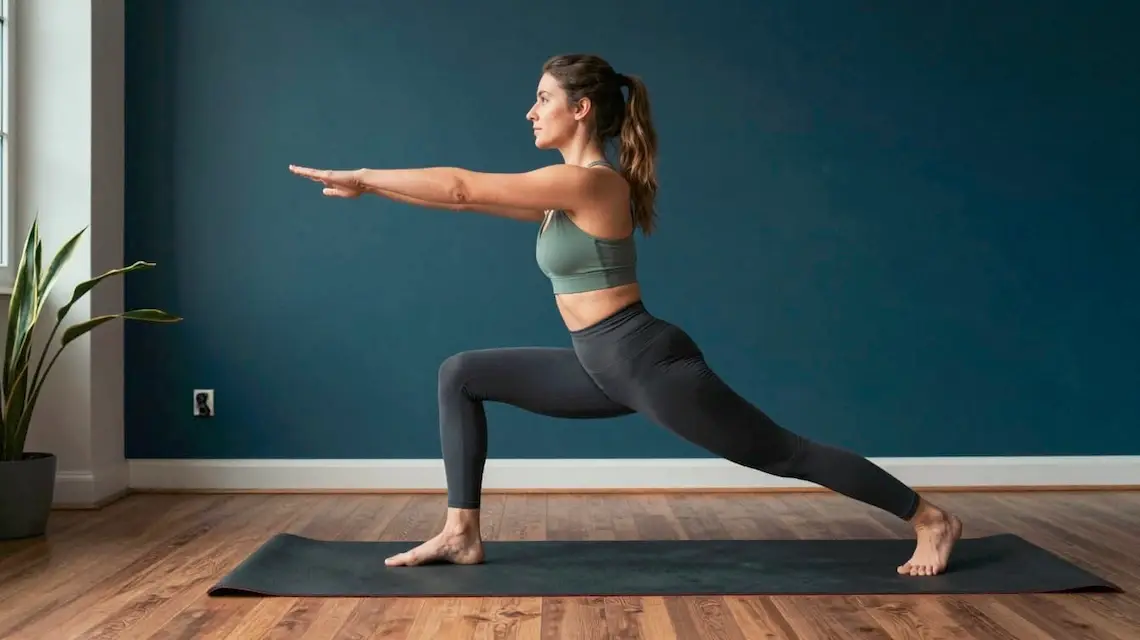
Want better health, weight loss, and more energy without stepping into a gym? Cardio is any exercise that raises your heart rate, like brisk walking or dancing in your kitchen. It trains your heart, lungs, and muscles so daily life feels easier.
This simple beginner cardio workout at home uses no equipment and very little space. You can do it in your living room, bedroom, or even a hallway. You’ll get a short warm up, a gentle 5-move routine, a cool down, and safety tips so you feel confident and not overwhelmed.
How to Know if a Beginner Cardio Workout at Home Is Right for You
This routine is for you if you’re new to exercise, coming back after a break, or want low-impact moves that are kind to your joints.
It works well if you feel nervous in a gym or prefer privacy at home. You can also pair it with a guided video, like this 10-minute cardio workout at home.
If you have heart problems, strong joint pain, dizziness, or other medical issues, talk with your doctor or nurse before starting any workout.
Quick Warm Up Before Your At Home Cardio Session
Think of your warm up as a slow “on” switch for your body. You’ll move your whole body with easy actions that make your muscles feel ready, not shocked.
3 Minute Warm Up to Get Your Body Ready
Do each move for about 30 to 45 seconds:
- March in place at an easy pace, swing your arms gently.
- Arm circles, small to medium circles forward, then backward.
- Side steps, step side to side, toes pointing forward, soft knees.
- Shoulder rolls, roll shoulders up, back, and down while breathing slowly.
Keep your posture tall, breathe through your nose and mouth, and stop if anything feels sharp or strange.
5 Move Beginner Cardio Workout at Home (No Equipment Needed)
You’ll do 30 seconds of work, then 30 seconds of rest for each move. Start with 1 round of the full circuit. If you feel good, try a second round after a short break.
Move at a pace where you can still talk in short sentences. If you want to see more beginner-friendly options, the NHS 10-minute cardio workout videos are a helpful backup on days you want variety.
Move 1: March in Place to Gently Raise Your Heart Rate
Stand tall, chest up, and lift one knee at a time while swinging your arms naturally. March for about 30 seconds. To make it lighter, slow your steps and keep knees low. To make it a bit harder, lift your knees a little higher and swing your arms with more intent.
Move 2: Step Touch Side to Side for Low Impact Cardio
From a tall stance, step to the right and tap your left foot next to it, then switch sides. Add gentle arm swings in front of your body. Keep your feet light and knees soft to protect sore knees. Stay with a steady 30-second rhythm.
Move 3: Standing Knee Raises for Core and Cardio
Stand tall with hands on hips or reaching toward your knees. Lift one knee toward your chest, then switch legs like a slow march. Pull your belly in slightly to support your core. Use slow, controlled movement for about 30 seconds.
Move 4: Low Impact Jacks without Jumping
Start with feet together and arms by your sides. Step one foot out to the side while raising your arms overhead, then bring your feet back together as your arms lower. Repeat, switching legs, for 30 seconds. It feels like a classic jumping jack, just without the jump, which is easier on joints.
Move 5: Fast Walk in Place to Finish Strong
Speed up your march in place, like a power walk without moving forward. Pump your arms close to your body. Aim for a pace where you can still talk, but your breathing feels heavier. Go for 30 seconds, then rest and repeat the whole circuit if you feel ready.
Cool Down and How Often to Do This Beginner Cardio Workout
A short cool down helps your heart rate come back down in a calm way. It also tells your brain the workout is over, like slowly dimming the lights instead of flipping them off.
2 Minute Cool Down to Help Your Heart Rate Come Down
Move for about 30 to 60 seconds each:
- Slow walk in place, letting your breath settle.
- Gentle shoulder rolls and arm swings across your body.
- Light calf or hamstring stretch while standing, with one foot slightly in front.
Breathe out fully and relax your jaw and hands.
How Often Should You Do This Beginner Cardio Workout at Home
Good effort feels like a light sweat and slightly hard breathing. Stop right away if you feel pain, chest tightness, or strong dizziness.
Conclusion
You don’t need fancy gear or a big space to build a healthy habit. This beginner cardio workout at home gives you a clear, gentle starting point with moves you can adjust to your body. Begin with one round, even if it feels short, and add time only when you feel stronger and more confident.
Your most important win is showing up for yourself, one simple session at a time.
Simple, Helpful FAQs About Beginner Cardio Workouts at Home
How many minutes of cardio should a beginner do at home?
Most beginners do well with 15 to 25 minutes per session, 3 to 5 days a week.
Start at the lower end if you’re very new to exercise or coming back after a long break. Focus on moving at a pace where you can still talk, but not sing.
As it starts to feel easier, you can add 5 minutes at a time or add 1 extra day per week. Your goal over time can be 150 minutes a week of moderate cardio, but you don’t need to hit that number right away.
What are the best beginner-friendly cardio exercises I can do at home with no equipment?
You can get a solid cardio workout at home using only your body weight. Good beginner options include:
- Marching in place (or high knees at a gentle pace)
- Side steps or step touches
- Low-impact jumping jacks (step one foot out at a time instead of jumping)
- Walking lunges (slow, controlled)
- Bodyweight squats with a steady rhythm
- Standing knee lifts with arm swings
- Stair walking if you have safe stairs
Pick 3 to 5 moves, do each for 30 to 45 seconds, then rest for 20 to 30 seconds. Rotate through them for your workout time.
How do I know if my cardio workout is “intense enough” as a beginner?
Use the talk test. During beginner cardio, you should:
- Be breathing faster
- Feel warmer or slightly sweaty
- Still be able to say a full sentence
If you can chat easily, you can speed up a bit or add more arm movement. If you can’t speak more than a few words, you’re pushing too hard for a beginner. Slow down until your breathing feels challenged but steady.
You can also think in simple effort levels. On a scale from 1 to 10, aim for a 5 or 6 for most of your beginner sessions.
Is it okay to do cardio every day as a beginner?
You can move every day, but you probably should not push hard every day at first.
A good approach:
- 3 to 4 days of focused cardio workouts
- 2 to 3 days of light movement, like walking, stretching, or mobility work
If your legs feel heavy, your sleep gets worse, or you feel worn out, take a lighter day. Recovery days actually help your body get fitter and keep you consistent.
Should I warm up before a beginner cardio workout at home?
Yes, a short warm-up makes a big difference. It helps your heart rate rise gradually and makes your joints feel better.
Try a 3 to 5 minute warm-up like this:
- Easy marching in place
- Gentle arm circles
- Side steps with shoulder rolls
- A few light squats or hip hinges
You should feel a bit warmer and looser before you move into stronger cardio.
What if I have bad knees or joint pain, can I still do cardio at home?
You can, but you’ll want low-impact options and good form. Avoid a lot of jumping or deep bending at first.
Better choices include:
- Marching in place instead of running
- Step jacks instead of jumping jacks
- Gentle stair walking, not running
- Chair-assisted squats, using a chair for support
- Seated marching or seated punches if standing hurts
If pain is sharp, sudden, or worsens as you go, stop that move. It helps to talk with a doctor or physical therapist if joint pain is a regular issue.
Can I lose weight with beginner cardio at home only?
Cardio helps burn calories, improve health, and boost energy, which all support weight loss. However, nutrition still drives most of the change on the scale.
You’ll get the best results if you:
- Do regular cardio workouts you can stick with
- Add basic strength work 2 to 3 times a week (like squats, wall push-ups, glute bridges)
- Eat in a slight calorie deficit with enough protein and fiber
Cardio at home can absolutely be enough for good progress, especially when paired with smart eating habits.
Is walking in place at home real cardio or is it too easy?
Walking in place counts as cardio if your heart rate goes up and you keep it up for long enough.
To make it more effective:
- Swing your arms
- Lift your knees a little higher
- Add brief bursts where you move faster for 20 to 30 seconds
If you break a light sweat and feel a bit winded, you’re doing cardio, even if you never leave your living room.
How should I breathe during a beginner cardio workout?
Keep your breathing steady and rhythmic. Try to breathe in through your nose and out through your mouth when you can.
Match your breath to your movement. For example, during marching in place, you might breathe in for 3 to 4 steps, then out for 3 to 4 steps. Avoid holding your breath, especially when moves get harder.
If you feel dizzy or very short of breath, slow down and walk in place until your breathing settles.
What’s a simple beginner cardio routine I can follow at home?
Here’s an easy 20-minute beginner routine you can try:
Warm-up (4 minutes)
- 1 minute marching in place
- 1 minute side steps
- 1 minute gentle squats to comfortable depth
- 1 minute marching with arm swings
Main workout (12 minutes)
Do each move for 40 seconds, rest for 20 seconds, and repeat the circuit 3 times:
- Marching in place or light high knees
- Step jacks or low-impact jumping jacks
- Bodyweight squats at a steady pace
- Standing knee lifts with arm reaches
Cooldown (4 minutes)
- Slow walk or march in place, 2 minutes
- Light stretching for legs and hips, 2 minutes
If 40 seconds feels too long, start with 20 to 30 seconds of work and build from there.
How long will it take to see results from beginner cardio at home?
Most people feel a difference in energy and mood within 1 to 2 weeks when they stay consistent.
You may notice:
- Less huffing and puffing on stairs
- Better sleep
- Slight changes in how your clothes fit after 3 to 4 weeks
Changes in weight or body shape often show up after 4 to 8 weeks, depending on your diet, starting point, and how often you work out. Focus on building a routine first; results tend to follow when you keep showing up.

Gas S. is a health writer who covers metabolic health, longevity science, and functional physiology. He breaks down research into clear, usable takeaways for long-term health and recovery. His work focuses on how the body works, progress tracking, and changes you can stick with. Every article is reviewed independently for accuracy and readability.
- Medical Disclaimer: This content is for education only. It doesn’t diagnose, treat, or replace medical care from a licensed professional. Read our full Medical Disclaimer here.