

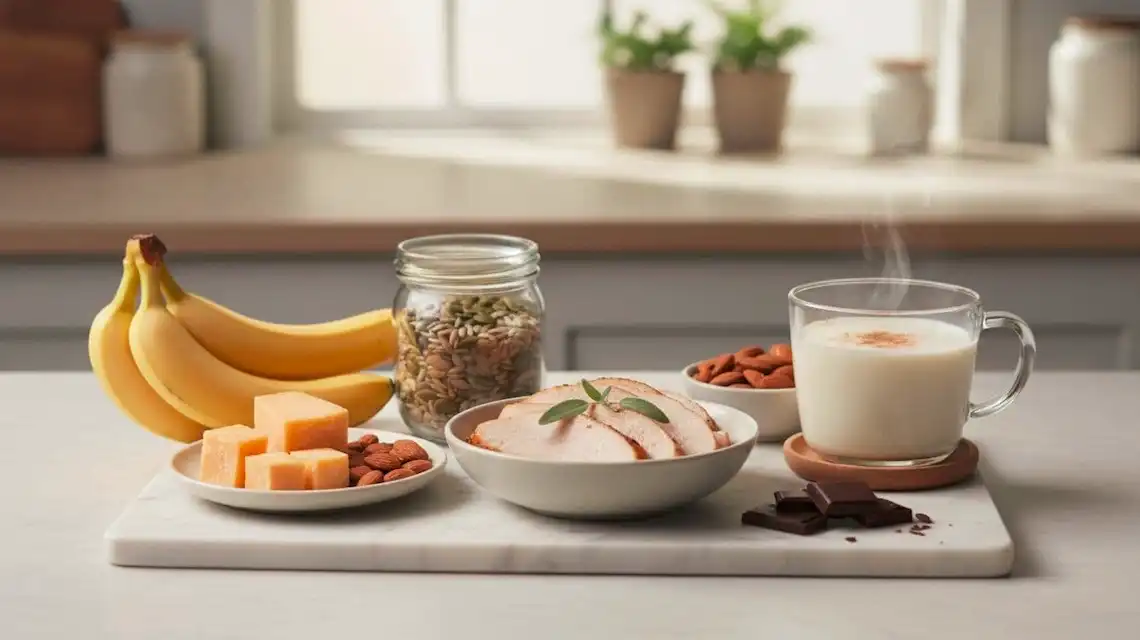
Good sleep, stable mood, and fewer late-night cravings. That is the trifecta most people want from intermittent fasting. The right snacks inside your eating window can help you get there. The star nutrient is tryptophan, an amino acid your body uses to make serotonin and melatonin. In simple terms, serotonin helps you feel calm and content, and melatonin signals your body that it is time to sleep.
When you pair tryptophan foods with smart carbs and key vitamins, you can support deeper sleep, steadier hunger, and better weight results. This is not about snacking during the fast. Snacks belong inside the eating window only. The goal is simple, use targeted snacks at the right times to make fasting easier and more effective.
This guide covers the quick science, the best snack ideas, timing for 16:8 or 14:10, portions that fit your goals, and mistakes to avoid. If you want a clear plan for tryptophan snacks intermittent fasting diet, you are in the right place.
How tryptophan supports sleep, mood, and appetite on IF
Serotonin and melatonin 101, in plain English
Tryptophan is an essential amino acid, which means you get it from food. Your body converts it into serotonin, which supports mood and appetite control. Serotonin then helps your brain make melatonin, which signals sleep. Better sleep often leads to better hunger control the next day. Ghrelin and leptin, your hunger hormones, work more smoothly when you sleep well, so cravings feel easier to manage.
Here are rough tryptophan estimates in common foods. These numbers are ballparks, since amounts vary by brand and cooking method.
| Food | Portion | Approx. Tryptophan |
|---|---|---|
| Turkey or chicken | 2 oz | 150–200 mg |
| Cottage cheese | 1 cup | 200–300 mg |
| Pumpkin seeds | 1 oz | 120–170 mg |
| Eggs | 1 large | 70–90 mg |
You do not need to memorize numbers. Just keep a few high-tryptophan foods in your rotation and pair them well.
Do carbs and vitamins make tryptophan work better?
Yes. A small serving of carbs can help tryptophan cross into the brain. Think of carbs as a shuttle bus. They nudge other amino acids into muscles, which clears the path for tryptophan to reach the brain.
Some nutrients also support this pathway. Vitamin B6 helps enzyme steps. Magnesium and zinc assist as cofactors.
Easy pairings that fit this idea:
- Turkey + whole grain crackers, B6 in poultry and steady carbs from grains
- Greek yogurt + kiwi or banana, B6 and vitamin C with light carbs
- Tofu + brown rice, plant protein plus fiber-rich carbs
Tip, choose fiber-rich carbs, not sugary treats. You will avoid energy crashes and keep your appetite stable.
How much tryptophan do you need from food?
A simple guideline is about 4 mg per kilogram of body weight per day. For a 70 kg person that is around 280 mg. Most balanced diets hit this without effort, since protein foods naturally carry tryptophan.
Food-first is the best approach. Supplements like L-tryptophan or 5-HTP can interact with medicines, including some for mood. If you are considering supplements, talk with a healthcare professional. Focus on smart combinations, timing, and portions rather than chasing exact milligrams. Your routine will be easier to stick to, and you will still get the benefits.
Best tryptophan snacks for your intermittent fasting diet
You want snacks that land around 150 to 250 calories and include protein, light carbs, and a bit of fat. That balance supports steady energy and better sleep. Here are ideas that fit a tryptophan snacks intermittent fasting diet without blowing your window.

Pre-fast evening snacks for better sleep
Eat these 60 to 120 minutes before your fast starts. Aim for 15 to 25 grams of protein plus gentle carbs.
- Turkey roll-ups, 2 oz turkey in 1 small whole grain tortilla
- Cottage cheese, 3/4 cup with pineapple or berries
- Greek yogurt, 3/4 cup with 1 tbsp pumpkin seeds and kiwi
- Edamame, 1 cup with a few rice crackers
- Egg and oatmeal bowl, 1 egg stirred into 1/2 cup cooked oats
Add a source of magnesium or B6 when possible, like pumpkin seeds, bananas, or poultry. Your sleep routine might feel smoother within a week.
Best first meal to break the fast
Start with protein, then add fiber-rich carbs to steady blood sugar.
- Tofu scramble with sweet potato hash
- Greek yogurt parfait with oats, chia, and blueberries
- Tuna or turkey on whole grain toast with tomato and spinach
- Cottage cheese bowl with sliced banana and cinnamon
- Lentil soup with a side of whole grain crackers
Keep added sugar low. If you trained fasted, add a pinch of salt to your meal to replenish sodium.
Afternoon window snacks that curb cravings
Portable choices help you stay consistent.
- Roasted chickpeas or edamame packs
- String cheese with an apple
- Turkey or salmon jerky, low sugar, with a few whole grain crackers
- Hummus cup with baby carrots
- Protein yogurt cup with kiwi
Aim for 10 to 20 grams of protein per snack, plus fiber for fullness.
Plant-based and dairy-free swaps
Try these higher-tryptophan plant options:
- Pumpkin seeds, sesame seeds, sunflower seeds
- Soy foods, tofu, tempeh, edamame
- Oats, quinoa, buckwheat
Easy combos:
- Tempeh strips with brown rice sushi
- Oatmeal with soy milk and chia
- Hummus with whole grain pita and cucumber
Add vitamin C fruits or herbs, like lemon, parsley, or kiwi, for flavor without extra sugar.
Timing, portions, and macros that fit 16:8 or 14:10
A little planning turns good ideas into reliable habits. Use this layout to support sleep and keep cravings in check.
When to place tryptophan snacks inside your window
For a 16:8 schedule, example 12 pm to 8 pm:
- 12:00 pm, Break-fast meal with protein and fiber-rich carbs
- 3:30 pm, Protein-rich snack
- 6:30 to 7:00 pm, Pre-fast tryptophan snack for sleep
For a 14:10 schedule, example 10 am to 8 pm, use the same rhythm, just shift times earlier.
Keep three feedings most days. On training days, you might add another small snack inside the window or shift protein toward the workout.
Portion sizes and macro targets that keep you full
- Snack sweet spot, 150 to 250 calories, 10 to 25 g protein, 10 to 25 g carbs, 5 to 12 g fat
- For fat loss, keep total daily protein high, about 0.7 to 1.0 g per pound of goal body weight
- Add fiber from fruit, vegetables, and whole grains to reduce cravings
Use a hand-based guide if you hate measuring. A palm of protein, a cupped hand of carbs, a thumb of fats, and a fist of veggies.
Label reading and grab-and-go choices
- Choose snacks with at least 10 g protein and less than 8 g added sugar
- Watch sodium in jerky and soups if you have high blood pressure
- Good convenience picks, single-serve Greek yogurt, edamame cups, low-sugar jerky, cottage cheese cups, roasted chickpea packs
Check ingredient lists. Short and familiar usually means you are in better shape.
Hydration and caffeine that will not break a fast
- During the fast, water, plain sparkling water, black coffee, plain tea, electrolytes without sugar or amino acids
- During the window, add milk or protein as you like
- BCAAs, collagen, and creamers break a strict fast, save them for the window
Sip fluids across the day. Mild dehydration can feel like hunger, which makes fasting harder than it needs to be.
Common mistakes, FAQs, and safety tips
Foods and drinks that break a fast
- Even small amounts of calories can break a strict fast, milk or creamers, bone broth, collagen, BCAAs, juice, alcohol, MCT oil
- Usually fine while fasting, water, black coffee, unsweetened tea, electrolytes without sugar or amino acids
- If you fast for blood sugar control, test and adjust with your clinician
If you choose a more flexible fast, you may allow up to 30 to 50 calories. For a strict fast, keep it at zero.
Tryptophan supplements or 5-HTP vs food
- Food-first approach is safest and offers other nutrients
- Supplements can interact with SSRIs, MAOIs, or other mood medicines, do not combine without medical advice
- If you choose a supplement, start low and take it inside the eating window to reduce stomach upset
Focus on sleep routine, light exposure in the morning, and meal timing. These basics often outperform pills.
Who should be careful with IF and tryptophan-heavy snacks
- Check with a professional if you are pregnant, breastfeeding, under 18, have an eating disorder history, uncontrolled diabetes, kidney or liver disease, or take mood medicines
- Plant-based athletes and older adults may need more protein planning to hit targets
If you feel dizzy, overly hungry, or moody, shorten the fast or add calories to your window. Your plan should serve you, not drain you.
Quick answers, coffee, sweeteners, night shifts, and keto
- Coffee, black coffee is fine during the fast, add milk in the window only
- Sweeteners, stevia and sucralose have little or no calories, but some people feel hungrier, test your response
- Night shifts, anchor your eating window to your wake cycle, still use a pre-sleep snack
- Keto, choose lower-carb tryptophan snacks like eggs, turkey, tuna, tofu, and non-starchy vegetables
Small tweaks to fit your lifestyle keep your plan durable.
Conclusion
Use the right tryptophan snacks inside your eating window to support sleep, mood, and cravings. Time them well, pick balanced portions, and add small carb pairings so tryptophan can do its job. You will likely notice steadier energy and easier appetite control within days. To get started, choose two pre-fast snack ideas and two break-fast options to try this week. Keep the plan simple, then adjust based on how you feel.
If you want a quick win with tryptophan snacks intermittent fasting diet, plan tomorrow’s window and make a short grocery list today. Your next good night of sleep might start with tonight’s snack.
Related post:
Tryptophan Snacks for Intermittent Fasting: FAQs
What is tryptophan and why does it matter for sleep?
Tryptophan is an amino acid your body uses to make serotonin and melatonin. These support mood and sleep. Food sources are safe and helpful, but results vary by person.
Can I eat tryptophan snacks during a fast?
No. Any calories break a fast. Save tryptophan snacks for your eating window.
What actually breaks a fast?
Calories do. That includes snacks, protein shakes, BCAAs, collagen, milk, and creamers. Water, black coffee, plain tea, and electrolytes without calories do not break a strict fast.
Do artificial sweeteners break a fast?
They have little to no calories. Some people use them while fasting. A few sweeteners may trigger insulin or hunger in some people. Test your response and keep it minimal if you use them.
When should I eat tryptophan-rich foods for better sleep?
Eat them in your last meal, 1 to 3 hours before bed, within your eating window. Add a small amount of carbs to help tryptophan reach the brain.
Which foods are high in tryptophan?
- Poultry, turkey and chicken
- Eggs and dairy, cheese and yogurt
- Soy foods, tofu and tempeh
- Seeds, pumpkin, sesame, sunflower
- Nuts, peanuts, almonds, cashews
- Whole grains, oats, quinoa
Do I need carbs with tryptophan?
A small carb serving can help tryptophan cross into the brain. Pair protein with fruit, oats, or whole grains in your eating window. Carbs break a fast, so time them accordingly.
What are easy tryptophan snack ideas for my eating window?
- Greek yogurt with banana and pumpkin seeds
- Turkey roll-ups with cheese and apple slices
- Oatmeal with peanut butter and chia
- Tofu cubes with edamame and rice
- Cottage cheese with kiwi and honey
- Whole grain toast with egg and avocado
How much protein should I aim for while fasting?
Most people do well with 20 to 40 grams of protein per meal, depending on size and activity. Spread intake across meals in your window to support satiety and muscle.
Will intermittent fasting lower my serotonin or melatonin?
Not if you meet your nutrient needs during your eating window. Get enough protein, vitamin B6, iron, folate, and magnesium. Poor intake can affect sleep quality.
Does a nighttime tryptophan snack help everyone sleep better?
No. Some people notice better sleep, others do not. Caffeine timing, light exposure, stress, and alcohol often matter more.
Are supplements better than food for tryptophan?
Food is the safer first choice. Supplemental L-tryptophan or 5-HTP can interact with antidepressants and other drugs. Talk to your clinician before using them.
Is turkey the only good source?
No. Eggs, dairy, soy, seeds, nuts, and whole grains are solid sources. Mixed meals work best.
I follow 16:8. How do I fit tryptophan snacks in?
Use a late eating window if sleep is your focus. Place a balanced, tryptophan-rich meal near bedtime, but leave 1 to 3 hours before lights out to avoid reflux.
What if I want to stay strict but still curb hunger at night?
Use calorie-free options, water, sparkling water, black coffee, or plain tea earlier in the fast. Add salt or zero-calorie electrolytes if you feel lightheaded.
Any risks with tryptophan foods?
Food sources are safe for most people. If you take SSRIs, MAOIs, or other serotonergic drugs, avoid tryptophan or 5-HTP supplements unless your doctor approves.
Quick combos that support tryptophan use
Pair protein, a small carb, and B6 or magnesium-rich foods:
- Eggs, whole grain toast, and spinach
- Yogurt, oats, and pumpkin seeds
- Tofu stir-fry with brown rice and veggies
Bottom line for timing and results
- Fast with zero calories for clean hormone and gut rest.
- In your window, eat protein-rich, tryptophan foods.
- Add a small carb serving in the last meal for sleep support.
- Track how you sleep and adjust timing or portions as needed.

Gas S. is a health writer who covers metabolic health, longevity science, and functional physiology. He breaks down research into clear, usable takeaways for long-term health and recovery. His work focuses on how the body works, progress tracking, and changes you can stick with. Every article is reviewed independently for accuracy and readability.
- Medical Disclaimer: This content is for education only. It doesn’t diagnose, treat, or replace medical care from a licensed professional. Read our full Medical Disclaimer here.