
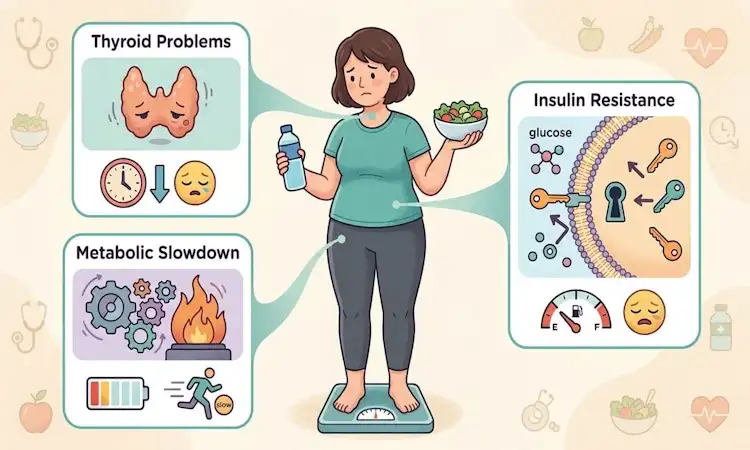
If you’re eating differently, moving more, and trying to stay consistent, it’s frustrating when nothing changes. It can feel like pushing a shopping cart with one stuck wheel. You can still move, but every step takes extra effort.
That’s where medical causes of weight loss resistance come in. In plain terms, “weight loss resistance” means your body isn’t responding the way you’d expect, even when your habits really have changed. This isn’t about blame. It’s about patterns that are worth checking.
A short plateau is normal. Water shifts, stress, and a lower body weight can all slow results. Still, when progress stalls for weeks, it can point to hormones, metabolism, sleep problems, medications, or other health issues that hide in the background.
Weight Loss Programs

Diet & Weight Loss

Diet & Weight Loss

Diet & Weight Loss

Diet & Weight Loss
By the end, you’ll know the most common medical causes, what symptoms to watch for, and what to ask your clinician so you can stop guessing and get clearer answers.
How to tell a normal weight loss plateau from true weight loss resistance
Most people hit a plateau at some point. A typical plateau often happens after early losses. At first, you may drop water weight. Then your body adapts. As you weigh less, you burn fewer calories doing the same things. Your appetite can rise too, even if you don’t notice it right away.
Also, stress can blur the picture. High stress can affect sleep, cravings, and water retention. In addition, people often underestimate intake over time. Portions creep up. Restaurant meals return. Weekend “extras” become routine. None of that means you failed. It’s just human.
“Resistance” looks different. Think of it as repeated lack of progress despite consistent changes for several weeks. The scale doesn’t move, measurements don’t change, and photos look the same, even though you’ve truly tightened up your routine. You might also feel “off” in ways that don’t match your effort.
Here are quick clues that suggest a medical checkup is smart:
| Clue that suggests a checkup | Why it matters |
|---|---|
| New fatigue or low stamina | Can signal thyroid issues, anemia, sleep apnea, or depression |
| Hair thinning or dry skin | Often shows up with thyroid problems or nutrient deficiencies |
| Irregular or heavy periods | Can point to PCOS, thyroid issues, or perimenopause |
| Strong hunger swings and energy crashes | Common with insulin resistance and blood sugar swings |
| Loud snoring or waking up gasping | Classic sleep apnea pattern |
| Swelling, puffiness, or fast gain | Can be fluid shifts, hormones, or medication effects |
If you have chest pain, severe shortness of breath, fainting, black stools, or unplanned rapid weight loss, seek urgent care sooner rather than waiting for a routine visit.
If you want a deeper clinical overview of “secondary causes” that can affect weight, see secondary causes of obesity and diagnostic evaluation.
The basics that can mimic resistance (and how to rule them out fast)
Before assuming something is medically wrong, it helps to run a quick, non-judgy check. Small gaps add up, especially after the “easy” early phase.
- Protein and fiber: Low protein and low fiber can leave you hungrier later.
- Liquid calories: Coffee add-ins, alcohol, smoothies, and juices can erase a deficit.
- Weekend creep: Two higher-calorie days can cancel five careful days.
- Sleep debt: Less sleep often raises hunger and lowers follow-through.
- Step drop: When calories drop, many people move less without noticing.
- Strength training gap: No resistance work can make body composition changes slower.
- Constipation and timing: Less frequent bowel movements can mask fat loss on the scale.
If these basics look solid for a few weeks and you’re still stuck, it’s reasonable to ask, “Could this be one of the medical causes?”
Hormones and metabolism issues that can block fat loss
When people talk about hormones, they often mean “something is wrong.” Sometimes it is. Other times it’s a subtle shift that changes hunger, energy, or where your body prefers to store fat.
The big players are the thyroid (metabolism and energy), insulin (storage and blood sugar), and reproductive hormones (ovulation and androgens). You don’t need to master biology to take smart next steps. What you do need is a short list of signs to watch for and a sense of which labs might come up in a visit.
This is also why two people can eat similar meals and see different results. One body may be “quietly fighting back” through stronger hunger signals, fatigue that lowers daily movement, or higher insulin levels that make insulin resistance fat loss harder than it should be.
Thyroid problems: when a hypothyroidism weight loss plateau is more than a plateau
A thyroid that runs slow can create a perfect storm for a hypothyroidism weight loss plateau. Not because fat loss becomes impossible, but because your daily “engine speed” can drop. Energy often falls. Digestion slows. You might fidget less, take fewer steps, or skip workouts because you feel wiped out.
Common hypothyroid-style symptoms include cold intolerance, constipation, dry skin, fatigue, brain fog, and heavier periods. Some people also notice hoarseness or puffiness.
In clinic visits, providers often discuss thyroid labs for weight loss, especially if symptoms fit. The usual starting point is TSH and free T4. Depending on the story, they may add free T3 or thyroid antibodies (to look for autoimmune thyroid disease). “Normal” ranges still need context, because lab cutoffs don’t capture how you feel, your history, and trends over time.
For a practical explanation of why plateaus can happen with hypothyroidism, see Dealing With Weight Loss Plateaus in Hypothyroidism.
One important caution: don’t self-medicate thyroid hormone. Too much can trigger heart rhythm problems, bone loss, and anxiety.
Insulin resistance and metabolic syndrome: why your body may store more and burn less
Insulin helps move sugar from your blood into cells. It also signals storage. When you have insulin resistance, your body often needs more insulin to do the same job. As a result, you may feel intense cravings, get shaky between meals, or crash hard in the afternoon. That pattern can make food feel “louder” and willpower feel smaller.
This is where people often say, “I’m doing everything right, but I’m still hungry.” They’re not imagining it.
Clinicians often screen with fasting glucose and A1C. Many will also check a lipid panel. Some discuss fasting insulin, although it’s not used in every practice. If your waist size is rising and your labs drift the wrong way, your clinician may talk about metabolic syndrome weight issues, which is a cluster of risk factors that travel together.
Metabolic syndrome is usually based on a mix of waist size, blood pressure, blood sugar, triglycerides, and HDL cholesterol. Mayo Clinic’s summary of metabolic syndrome symptoms and causes is a helpful reference if you want the big picture.
Lifestyle changes still matter here, but the “best bang for your buck” tends to be strength training, higher protein, more fiber, and steadier sleep. Those moves often reduce cravings and improve energy, which then makes consistency easier.
PCOS weight loss resistance: the period and androgen connection
PCOS weight loss resistance is real for many people, and it’s not just about calories. PCOS (polycystic ovary syndrome) is usually tied to irregular ovulation and higher androgen levels. Insulin resistance is also common, which can stack the deck against you.
Signs that fit the PCOS pattern include irregular periods, acne, facial hair growth, scalp hair thinning, and trouble getting pregnant. Weight gain around the abdomen is also common, although PCOS can occur at any body size.
Diagnosis isn’t one single test. It’s a pattern based on symptoms, labs, and sometimes ultrasound findings. Your clinician may check hormones like total or free testosterone and may also screen glucose and A1C because of the insulin resistance link.
Treatment depends on your goals. A clinician might discuss nutrition changes, activity, sleep, and stress support. They may also discuss medications such as metformin or hormonal contraception when appropriate. The point isn’t to “try harder.” It’s to treat the drivers that keep pushing weight upward.
Medical conditions and medications that quietly lead to weight gain
Some barriers don’t look like barriers at first. You might think, “I’m just tired lately,” or “My knees hurt,” or “My meds are finally helping.” Meanwhile, weight rises or won’t budge.
This section focuses on common, high-impact issues that can make progress feel unfair. If you recognize yourself here, the goal is simple: bring better information to your next appointment.
Sleep apnea and poor sleep: the appetite and stress hormone trap
Poor sleep changes appetite. When you’re short on sleep, hunger tends to go up and fullness tends to go down. On top of that, fatigue lowers daily movement. Even if you keep exercising, your “all day” activity often drops without you noticing.
Sleep apnea adds another layer. With apnea, breathing pauses can fragment sleep all night. Many people wake up unrefreshed and foggy. They may snack more, rely on caffeine, and feel too tired to cook.
Common signs include loud snoring, gasping or choking at night, morning headaches, dry mouth, and daytime sleepiness. Some people also notice higher blood pressure.
If this fits, ask about an evaluation. A sleep study (at home or in a lab) can confirm it. Treatment (often CPAP, sometimes oral devices or other approaches) doesn’t “cause” weight loss, but it can remove a major roadblock. When energy returns, good habits become easier to repeat.
Medications that can cause weight gain, and safer questions to ask
Some prescriptions change appetite, fluid balance, or how your body uses energy. Others make you sleepy, which reduces movement. In many cases, the medication is still worth it. The key is to plan for the side effect rather than being blindsided.
Here are common categories clinicians often connect with medications that cause weight gain: some antidepressants, antipsychotics, steroids like prednisone, some diabetes medications, some beta blockers, some seizure medications, and some hormonal medications.
For a consumer-friendly overview, see 8 medications that can cause weight gain.
Don’t stop or change a medication on your own. Instead, bring the concern to the prescriber who knows your history.
A short script you can use:
- “Is weight gain a known side effect for this medication?”
- “Are there weight-neutral options for my condition?”
- “Could we adjust the dose or timing?”
- “What should we monitor, and how often?”
Also remember, the condition being treated can affect weight too. For example, depression can change appetite, and steroids are often used when inflammation is severe.
Other health issues that can look like resistance
A few other problems can make weight change harder, even with strong effort.
Cushing syndrome is rare, but it has a classic pattern: easy bruising, purple stretch marks, new face rounding, and muscle weakness. If those signs show up together, it’s worth asking about.
Depression and anxiety can shift appetite and sleep. They can also change motivation and routines. That’s medical, not moral.
Chronic pain or arthritis may limit movement. Even if you love exercise, pain can shrink your day. Gut issues and constipation can also mask progress on the scale for days at a time.
Finally, perimenopause and menopause can shift body composition. Many people lose some muscle and gain more abdominal fat unless they adjust training, protein, sleep, and sometimes medical support.
What to do next: a simple plan for talking with your clinician
If you suspect medical causes, go into your appointment with a short record, not a vague feeling. Tracking for two weeks is usually enough to show patterns without making you obsess.
Track a few basics: your weight trend (not just one weigh-in), waist measurement, sleep hours, steps, strength training sessions, hunger levels, bowel habits, menstrual cycle notes, and all medications or supplements (with doses). If you can, write down when the stall started and what changed around that time.
Bring that to a primary care visit first. They can screen common issues and decide if you should also see endocrinology. If irregular cycles or androgen symptoms stand out, an OB-GYN visit makes sense too.
Labs depend on symptoms and history, but clinicians often consider thyroid labs (TSH, free T4), A1C, lipids, liver enzymes, CBC, iron studies, B12, and vitamin D when appropriate. The goal is shared decision-making. You’re not requesting “every test.” You’re asking for a plan that matches your symptoms.
A quick symptom-to-test discussion guide (not a diagnosis)
Use this as a conversation starter:
- Fatigue, constipation, cold intolerance: ask about TSH and free T4, plus iron and CBC if heavy periods exist.
- Irregular periods, acne, facial hair: ask about a PCOS workup (history, androgen labs, and sometimes ultrasound).
- Snoring, morning headaches, daytime sleepiness: ask about a sleep study.
- Abdominal weight gain, cravings, energy crashes: ask about A1C, fasting glucose, and lipids, then discuss insulin resistance risk.
Tests are tools. Your story and exam decide which tools fit.
Conclusion
When you keep showing up but results don’t match your effort, it’s reasonable to ask about medical causes of weight loss resistance. The most common ones include thyroid problems (including a hypothyroidism weight loss plateau), insulin resistance and metabolic syndrome weight issues, PCOS weight loss resistance, sleep apnea, and medications that cause weight gain. A few less common conditions can play a role too.
Start with the basic checklist, then share a 2-week snapshot with your clinician, especially if you’re losing weight. Clear notes beat guesswork. Once the real barrier is identified, the plan gets simpler, and progress often becomes possible again.

The content provided on tokeepyoufit.com is intended for general informational and educational purposes only. All materials on this site, including articles, recipes, tips, guides, opinions, and product recommendations, are not a substitute for professional advice from a qualified medical, nutrition, or fitness expert. Users should consult a licensed professional before making any decisions related to health, diet, or exercise. Please read our full Medical Disclaimer here.
Dietary Supplements

Dietary Supplements
Nagano Tonic – Daily Support for Energy, Vitality, and Balance

Dietary Supplements
GlucoBerry – Daily Support for Healthy Blood Sugar and Energy

Dietary Supplements

Dietary Supplements
NeuroQuiet – Daily Support for Brain Health, Hearing, and Tinnitus Relief