
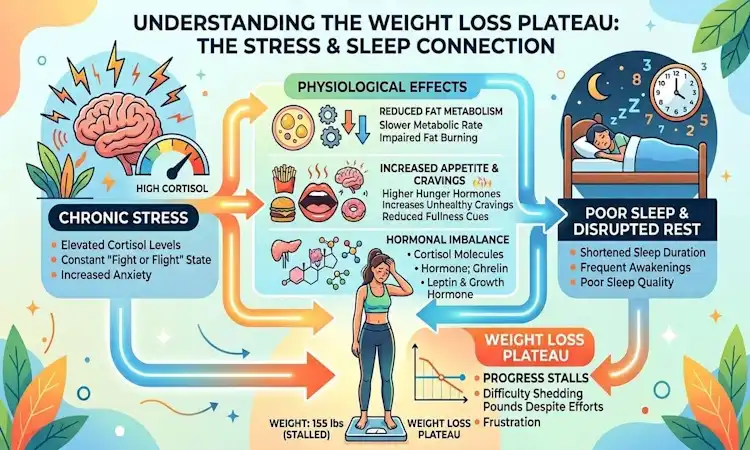
You’re tracking calories, hitting workouts, and getting your steps. Yet the scale won’t move. If that sounds familiar, you might be dealing with a stress and sleep weight loss problem, not a “you need more willpower” problem.
Stress and short sleep can change hunger, cravings, and how your body holds water. They also affect recovery, training performance, and daily energy, which can quietly nudge you out of the deficit you think you’re in. Sometimes the stall is real. Other times it’s a “false plateau” where fat loss is happening, but the scale can’t show it yet.
The good news is you don’t need an extreme diet reset. You need a clear way to spot what’s driving the plateau, then a simple plan to fix recovery first and tighten the basics second.
Why stress and poor sleep can stall weight loss even with a good diet
Weight Loss Programs
Diet & Weight Loss
The Underground Fat Loss Manual – Hidden Strategies for Weight Management
Diet & Weight Loss

Cooking

Diet & Weight Loss
A plateau usually means one of two things:
- You stopped losing fat, often because your calorie intake drifted up, your movement drifted down, or your body adapted to a smaller intake.
- You’re losing fat, but the scale is masked by water retention, inflammation, and digestion changes.
Stress and poor sleep push on both sides of that equation. When you’re stressed, your body ramps up stress hormones like cortisol. That can affect appetite, blood sugar control, and water balance. If you’re also training hard, your muscles hold water as they recover. Add a couple salty meals and a few short nights, and the scale can look “stuck” for a week or more.
Sleep loss is a double hit. First, it makes hunger louder and cravings stronger. Second, it reduces the odds you’ll stick to your plan. People tend to snack more, choose more comfort foods, and pour larger portions when tired. There’s also the “I earned this” voice that shows up after a long day.
A big reason this feels unfair is that your routine still looks disciplined on paper. You’re still logging food. You’re still going to the gym. Yet the body is not a calculator. Recovery matters because it shapes how you eat, how you move, and how your body responds to training.
Researchers also see links between sleep and adherence during long programs. In other words, sleep doesn’t just affect biology, it affects follow-through. If you want context on that long-term pattern, see this paper on sleep and adherence during a behavioral weight loss program.
Cortisol, water weight, and the “false plateau” that tricks you
Cortisol gets painted as the villain, but it’s normal and useful. The problem is when stress stays high and sleep stays low. That combo can increase water retention and keep the scale elevated.
Here’s what often creates a cortisol weight loss plateau that isn’t really about fat:
- A tough training block (especially high volume leg days)
- Poor sleep for several nights
- High sodium meals (restaurant food, packaged snacks)
- Work deadlines or family stress
- Higher inflammation from soreness or illness
A simple timeline example: you eat on plan all week, but you sleep 5 to 6 hours while finishing a project. You add extra workouts to “make up for it.” By Friday, you’re sore, puffy, and up two pounds. It feels like failure. In reality, that can be mostly water.
That’s why weekly trends beat daily weigh-ins. Daily weights are weather. Weekly averages are climate.
If your habits stayed steady, a flat scale for 7 to 10 days can be water masking fat loss, not proof that nothing worked.
For a deeper explanation of how cortisol and stress relate to weight changes, read Cortisol, Stress, and Weight Gain: How to Manage It.
Sleep deprivation changes hunger hormones and makes cravings louder
Short sleep changes how hungry you feel, even if you ate enough. Two hormones get mentioned a lot: ghrelin (tends to rise and increases hunger) and leptin (helps signal fullness). When sleep is cut, that balance can shift in a way that makes “normal portions” feel unsatisfying.
The bigger issue is practical. When you’re tired:
- Snacks feel more urgent.
- Highly palatable foods sound “worth it.”
- You chase quick energy, like sweets and chips.
- You drink more caffeine, then sleep even worse.
This is why a poor sleep fat loss stall is so common. You might still log food, but you end up grazing, upgrading portions, or grabbing “just one thing” more often. Over a week, that can erase the deficit.
If you want the research view on sleep deprivation hunger hormones, this systematic review is a helpful starting point: meta-analysis on hunger-related hormones and sleep loss.
How to tell if your plateau is from stress, sleep, or something else
Before you change your calories or add more cardio, run a short check-in. Give it two weeks. That window is long enough to spot patterns, but short enough to stay focused.
Also, don’t change everything at once. If you cut calories, add workouts, and start a new supplement on the same day, you won’t know what helped. Worse, you may increase stress and make the plateau harder to read.
The goal here is simple: figure out whether you’re dealing with (1) scale noise from recovery issues, (2) a true fat-loss stall, or (3) a mix of both.
Quick self-check: signs your recovery is the real problem
If several of these fit, stress and sleep may be the main cause of your stall:
- You wake up tired, even after a full night in bed
- Midday crashes or strong late-afternoon snack urges
- Higher resting heart rate than normal
- Constant soreness, joint aches, or heavy legs
- Irritability, low patience, or “thin skin”
- Strong cravings, especially at night
- Workouts feel harder at the same weights or paces
- More caffeine than usual (or caffeine later in the day)
- Trouble falling asleep, or waking around 3 a.m.
- Heavier period symptoms or more cycle-related cravings
Pay attention to behavior too. Burnout and diet adherence often show up as “good all day, then unravel at night,” or “tight during the week, rebound on weekends.” That swing can keep your weekly calories at maintenance, even if weekdays look perfect.
For more on the anxiety and stress side of plateaus, this patient-focused perspective can help you feel less alone: signs a weight loss plateau is anxiety-related.
Confirm it with simple tracking that does not take over your life
You don’t need a new app for everything. Keep it light and consistent for 14 days:
- Sleep: hours slept, plus a quality score from 1 to 5
- Stress: a daily score from 1 to 5
- Steps: approximate daily steps
- Scale: daily weight, then calculate a 7-day average
- Optional: waist measurement once per week, same day and time
Then look for patterns, not perfection. Common ones include:
- Weight stalls during weeks with 5 to 6 hours of sleep
- Scale jumps after a training spike or hard HIIT sessions
- Cravings and snacking increase on high-stress days
- Weekend sleep-ins plus late meals lead to higher Monday weights
If you suspect your training load is part of it, it may help to review common signs of overreaching. WebMD’s overview is a clear baseline: signs and symptoms of overtraining.
A practical 14-day reset plan to break a stress and sleep weight loss plateau
Think of this as a reset for recovery and consistency. For two weeks, you’re not trying to “win” weight loss. You’re trying to remove the friction that keeps stalling it.
The main guardrails:
- Don’t slash calories.
- Don’t add extra intense workouts.
- Don’t aim for perfect days, aim for repeatable days.
When recovery improves, appetite gets easier to manage, training feels better, and the scale often starts moving again. Even when it doesn’t, waist and averages usually tell the truth.
Make sleep the main goal, start with a simple bedtime routine
For 14 days, treat sleep like your top fat-loss habit. Start with these basics:
- Set a consistent wake time, even on weekends (within 60 minutes).
- Aim for 7 to 9 hours in bed, because most adults need that range.
- Dim lights about 60 minutes before bed.
- Keep your room cool and dark (blackout curtains help).
- Set a caffeine cutoff, often 8 to 10 hours before bedtime.
- Limit alcohol late, since it can fragment sleep.
- Pick one wind-down habit: shower, light stretching, or reading.
Screens are a common snag. You don’t have to be perfect. Still, reducing scroll time helps. If you must use your phone, use night mode and keep brightness low.
If you wake in the night, keep lights low and avoid checking social feeds. Try slow breathing, a short body scan, or reading a few pages. The goal is to stay bored, not stimulated.
Lower stress during the day so your body can actually recover
You can’t “bedtime routine” your way out of a chaotic day. Stress management sounds big, but it’s usually a few small choices repeated often:
A 10-minute walk after meals helps in two ways: it lowers stress and supports blood sugar control. A few rounds of slow breathing also works because it shifts your body out of fight-or-flight. Before bed, a quick brain dump list can stop the mental spinning.
Also, reduce decision fatigue. Repeat two breakfasts and two lunches this week. Keep dinner simple. Ask for help where you can. During high-stress weeks, set workout expectations lower on purpose.
One of the fastest wins is scheduling one real break daily. Even 15 minutes counts if it’s protected.
Adjust training to avoid overtraining and support fat loss
When sleep is poor, more intensity often backfires. Hard training creates stress on purpose. That’s fine when you can recover. When you can’t, overtraining and fat loss don’t mix well.
For the next 1 to 2 weeks:
- Keep strength training, but reduce volume (fewer sets) or reduce load slightly.
- Swap HIIT for easy cardio at a talk-test pace.
- Add at least one more rest day than usual.
- Keep steps steady, because they support energy balance without beating you up.
Here’s a simple example week:
- 2 to 3 strength days (full-body or upper-lower)
- 2 easy cardio days (20 to 40 minutes)
- 1 to 2 rest days
- Daily steps goal you can hit without stress
This supports recovery and metabolism because you’re still training, but you’re no longer piling on fatigue. If you want a deeper look at how overtraining can affect hormones and recovery, this review provides background: hormonal aspects of overtraining syndrome.
Keep nutrition steady, focus on protein, fiber, and a small deficit
A common mistake during a plateau is cutting calories harder. That often worsens sleep and cravings, which leads to rebound eating. Instead, keep your deficit small and your structure strong.
For these 14 days:
- Get protein at each meal (it improves fullness).
- Include fiber-rich carbs (fruit, beans, oats, potatoes, whole grains).
- Add healthy fats, but measure them (they add up fast).
- Eat at consistent times, especially if night snacking is an issue.
- Plan a high-protein afternoon snack, so evenings don’t turn into grazing.
- Hydrate, and watch liquid calories (sweet coffee drinks, alcohol).
- Keep sodium consistent day to day, so the scale is easier to interpret.
The “plate method” keeps it simple: half the plate non-starchy veggies, a quarter lean protein, a quarter carbs, plus a thumb of fat if needed. When sleep is short, structure beats willpower.
If you’re exhausted, don’t negotiate with hunger at 9 p.m. Plan earlier, so tired-you has fewer decisions.
Conclusion
If your progress stalled while you’re “doing everything right,” don’t assume you need harsher rules. Stress and sleep can create a weight loss plateau through louder hunger, stronger cravings, poorer training recovery, and extra water retention that hides fat loss. In other words, recovery can be the missing piece.
Run the 14-day reset, then reassess with 7-day averages and a weekly waist check. If the average drops, you’re back on track, even if daily weights bounce. If nothing changes after two weeks of better sleep and lower stress, then it’s time to review calories, steps, and portions with a fresh eye.
If your sleep issues feel serious, like loud snoring, choking, ongoing insomnia, depression, or anxiety, talk with a healthcare professional. Better recovery isn’t “soft”; it often helps you get back to steady results faster, especially when you’re losing weight.

The content provided on tokeepyoufit.com is intended for general informational and educational purposes only. All materials on this site, including articles, recipes, tips, guides, opinions, and product recommendations, are not a substitute for professional advice from a qualified medical, nutrition, or fitness expert. Users should consult a licensed professional before making any decisions related to health, diet, or exercise. Please read our full Medical Disclaimer here.
Dietary Supplements

Dietary Supplements
Nagano Tonic – Daily Support for Energy, Vitality, and Balance
Dietary Supplements
GlucoBerry – Daily Support for Healthy Blood Sugar and Energy
Dietary Supplements
Dietary Supplements
NeuroQuiet – Daily Support for Brain Health, Hearing, and Tinnitus Relief