
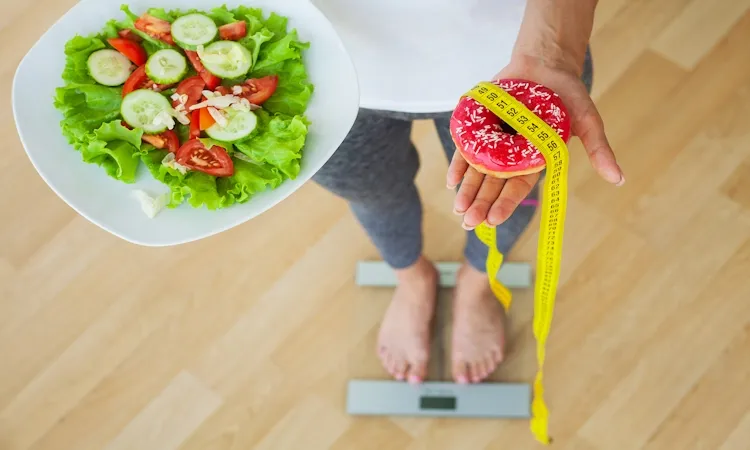
The first couple weeks of a diet can feel almost effortless. The scale drops, your clothes fit better, and you think, “Finally, this is working.” Then, even though you’re still eating less, progress slows down, or stops, and it feels personal.
That slowdown often comes from metabolic adaptation and weight loss colliding. In plain terms, when your body senses a calorie shortage, it starts using less energy to protect itself, which is also called adaptive thermogenesis. As a result, the same plan that worked at the start may produce smaller changes later.
Still, metabolic adaptation is real, but it doesn’t mean you’ve “broken” your metabolism. It’s your body defending its usual weight range (sometimes called a set point), and it can be managed.
Weight Loss Programs
Diet & Weight Loss
The Underground Fat Loss Manual – Hidden Strategies for Weight Management

Diet & Weight Loss

Cooking

Diet & Weight Loss
In this post, you’ll learn what’s happening inside your body during a metabolic slowdown during dieting, how to tell normal friction from a true metabolic adaptation vs weight loss plateau, and practical steps that protect fat loss without burning out. If you’ve been wondering why weight loss stalls with metabolic adaptation, you’ll leave with a clear plan and realistic expectations.
Metabolic adaptation explained in plain English
Metabolic adaptation is your body getting “thrifty” when it senses a long enough calorie shortage. At first, weight loss can look like simple math. Eat less than you burn, and you lose. Over time, though, your body quietly changes how many calories it spends and how strongly it pushes you to eat.
Think of it like your phone switching into low-power mode. Nothing is “broken.” Your body is just trying to keep you alive, even if your goal is fat loss. This is why metabolic adaptation and weight loss can clash, especially after weeks of consistent dieting.
What changes when you diet: your resting burn, your movement, and your hunger signals
When weight loss slows, most people blame willpower. In reality, three big shifts often happen in the background, and they can stack on top of each other.
First, your resting energy use can fall. A smaller body needs fewer calories, but dieting can also make your body run a little more efficiently than expected. You may feel colder, more tired, or “flat” in workouts. Some of that is normal physics, and some is the body trying to conserve.
Second, NEAT often drops. NEAT stands for non-exercise activity thermogenesis, which is a fancy way of saying all the movement you do that is not formal exercise. It includes pacing, fidgeting, taking stairs, doing chores, and even how much you shift in your chair. During a diet, many people unconsciously move less. That can mean fewer steps without noticing, shorter errands, or choosing the easier parking spot. Over a week, that change can erase a big chunk of your planned calorie deficit. For a deeper look at NEAT’s role in energy balance, see Endotext’s NEAT overview.
Third, hunger signals can ramp up. Your brain is not impressed by your meal plan. As body fat drops and dieting continues, signals tied to appetite and metabolism can change. You do not need a hormone deep dive, but here’s the simple version:
- Leptin (a “fed and stored energy” signal) tends to fall, which can increase hunger and reduce energy output.
- Ghrelin (a hunger signal) can rise, making food feel more urgent and rewarding.
- Thyroid-related signals can shift, which may slightly lower how much energy you burn at rest.
Sleep and stress can make all of this louder. Poor sleep often increases cravings and makes it harder to feel satisfied. High stress can also push appetite up and reduce your drive to move. In other words, the diet is not happening in a vacuum.
If you feel hungrier and lazier during a cut, you are not weak. Your body is reacting exactly as it was designed to react.
Adaptive thermogenesis vs normal weight-loss math (what is expected and what is extra)
Some slowdown is expected because a smaller body costs less to run. Carrying less weight takes less energy at rest and during movement. That is just normal “weight-loss math.”
Adaptive thermogenesis is the “extra” slowdown beyond what body size alone would predict, often called a metabolic slowdown during dieting. In plain English, it’s when your calorie burn dips a bit more than expected, even after accounting for your new weight.
A simple example makes this easier:
Let’s say you start at a maintenance intake of 2,400 calories/day (your weight stays stable here). You diet and lose weight.
- Expected change (normal math): After losing weight, your new maintenance might drop to 2,200 calories/day because you are smaller and you move a lighter body around.
- Extra change (adaptive thermogenesis): On top of that, adaptation might lower true maintenance to 2,050 to 2,150 calories/day for a while because your body is conserving energy, you are moving less, and hunger is rising.
So you keep eating 1,900 calories/day, thinking you still have a 500-calorie deficit. But your real deficit might now be closer to 150 to 250 calories, or even less if NEAT fell.
This is where people confuse metabolic adaptation vs a weight loss plateau caused by tracking drift. Both can happen at the same time. Portions creep up, bites and tastes add up, and step count slips down. Meanwhile, your body is also doing its part to close the gap.
If you want a straightforward explanation of adaptive thermogenesis (without getting lost in jargon), see this overview of adaptive thermogenesis.
The key idea: adaptive thermogenesis and fat loss are not enemies forever, but adaptation can shrink the deficit you thought you had. That is why progress often slows even when you feel consistent.
Set point and “settling point”: how the body defends a familiar weight
People often say, “My body wants to stay at this weight.” That idea is tied to set point theory, but it helps to think in ranges, not a single number.
A useful way to frame it:
- Set point: A biologically influenced range your body tends to defend. When you dip below it, hunger increases and energy output can drop.
- Settling point: Where your weight tends to land based on biology plus daily habits and environment (food availability, stress, sleep, job activity, family routines, and the way you eat).
In real life, your weight is usually a settling point. When your routine changes, your weight “settles” somewhere new. That is why people often gain during a stressful season, then lose when life calms down and routines improve. Biology is part of it, but your environment matters more than most people want to admit.
Still, set point style “pushback” can feel very real during dieting. As you lose weight, your body may respond with:
- More food noise, cravings, and urgency around eating
- Less spontaneous movement and lower daily energy
- Stronger pull toward old portions and old patterns
This does not mean weight loss is impossible. It means the body defends a familiar range, and it may defend it harder the longer and more aggressive the diet is. That is often why weight loss stalls with metabolic adaptation, even when you are trying to do everything right.
If you want a clear explanation of the set point idea (and why it is not a permanent sentence), MD Anderson has a helpful breakdown in this set point weight explainer.
The practical takeaway is simple: your body can adapt, and your habits can adapt too. When those two move in the same direction, the “defended” range can shift over time, and maintaining a lower weight starts to feel more normal.
Why weight loss stalls: the most common ways metabolic adaptation shows up
When progress slows, it usually isn’t one single thing. More often, it’s a stack of small changes, some from your body conserving energy, and some from daily life getting in the way. This is the messy middle of metabolic adaptation and weight loss.
The good news is that most “stalls” are explainable and fixable. First, you want to figure out whether you’re seeing a true slowdown, or just normal scale noise. Then you can look at the quiet calorie leaks and movement changes that shrink your deficit over time.
The “plateau” is sometimes water, not fat (and how to tell)
The scale measures total body weight, not body fat. So even when you’re losing fat, water retention can hide it for days or even weeks. That’s why “nothing is happening” can be an illusion, especially when you change training or routines.
Common reasons the scale holds steady (or jumps up) include:
- Harder workouts or new lifting: Your muscles store more glycogen and water, plus inflammation rises while you recover.
- More carbs than usual: Glycogen storage pulls water with it, so weight can rise quickly even if calories stayed on plan.
- More sodium: Restaurant meals, deli foods, and packaged snacks can all spike water retention.
- PMS or cycle changes: Many people see predictable water shifts around their cycle. (If this is you, it helps to compare the same week each month.)
- Stress and poor sleep: Both can increase water retention and hunger, which makes stalls feel worse.
- Travel: Long car rides, flights, dehydration, disrupted sleep, and different foods can all swing scale weight.
If you want a quick breakdown of why water weight spikes, this overview of common water-weight causes is a helpful reference.
Instead of reacting to one weigh-in, use a trend:
- Weigh daily (or most days), under similar conditions.
- Track a weekly average (add the week’s weigh-ins, divide by the number of days).
- Take waist measurements once per week (same time of day, same spot, same tape tension).
Here’s the simple rule that keeps you sane: if your weekly averages or waist measurements trend down over 3 to 4 weeks, fat loss is likely still happening, even if the scale looks stuck on random mornings.
A “plateau” that breaks overnight is usually water letting go, not fat suddenly melting off.
You may be burning fewer calories than you think (NEAT drop is sneaky)
One of the most common ways metabolic adaptation shows up is a drop in NEAT, your non-exercise movement. You don’t choose it on purpose. It just happens when your body senses a calorie shortage and starts saving energy where it can.
NEAT drops can look boring, which is why they’re so easy to miss:
- You sit down sooner after work.
- You take the elevator instead of the stairs.
- You park closer, “just this once.”
- Chores get delayed, errands get combined, and you stop pacing on phone calls.
- Even fidgeting and posture shifts can decrease.
None of this means you’re lazy. It means your body is efficient, and it’s trying to close the gap between what you eat and what you burn. If you’ve ever felt a subtle “heaviness” during a diet, this is part of it. This is also why why weight loss stalls with metabolic adaptation can feel confusing. Your workouts might be consistent, yet your daily movement quietly slides.
A practical fix is to stop relying on motivation and instead set activity anchors, small non-negotiables that keep your baseline movement steady. For example:
- A step target you can hit most days (even if it’s modest).
- A 10-minute walk after lunch, or after dinner.
- A “park far” rule for the grocery store.
- A standing phone call habit.
If you want a simple explanation of exercise compensation and movement drop during diets, see metabolic adaptation and exercise compensation.
The goal isn’t to punish yourself with more cardio. It’s to protect the movement you already used to do before the diet made you slightly more still.
Small tracking gaps add up (and they feel invisible)
When people say, “I’m eating the same, but it stopped working,” they often are eating almost the same. The problem is that “almost” can erase a deficit fast. This is one of the biggest drivers of metabolic adaptation vs weight loss plateau confusion, because the scale doesn’t tell you whether the cause is biology, tracking drift, or both.
The most common calorie creep tends to come from a few repeat offenders:
- Cooking oils and butter: A quick pour can be a lot more than you think.
- Bites, tastes, and extras: A few chips, the kid’s leftovers, “just a spoon” of peanut butter.
- Weekend meals: Not bad choices, just bigger portions and more add-ons.
- Drinks: Alcohol, lattes, juice, smoothies, and even “healthy” coffee add-ins.
- Healthy snacks: Nuts, granola, trail mix, and protein bars can be dense.
- Portion creep over time: Your “normal bowl” slowly turns into a larger serving.
If you want a checklist-style reminder of the usual slip-ups, common calorie counting mistakes can jog your memory without turning it into a perfection contest.
Simple fixes that work without making you obsessive:
- Measure for one week as a reset (especially oils, nut butters, and snacks).
- Keep a short list of repeat meals you can rotate when life is busy.
- Track weekends like weekdays, even if you do it loosely.
- Include liquid calories in the plan, not as a surprise.
You don’t need “perfect tracking” to lose fat. You just need honest inputs often enough that the math stays real.
More hunger and more cravings are part of the defense system, not a lack of willpower
As dieting continues, hunger often rises and cravings can get louder. That isn’t you failing. It’s part of how the body defends its familiar range (in other words, how the body defends weight set point). When energy stores drop, your brain pays more attention to food, and “normal” portions can stop feeling as satisfying.
This is also where decision fatigue hits. When you’re tired, stressed, or underfed, each choice costs more effort. That’s why cravings feel stronger at night, or after a long day. Your brain wants quick relief, and food is an easy target.
Research also supports the idea that metabolic adaptation and appetite changes can move together. This study on metabolic adaptation and appetite after weight loss describes how a bigger-than-expected drop in energy burn can link with increased appetite signals.
You don’t need a complicated plan to get some relief right away. A few basics help many people feel more in control:
- Protein at most meals tends to improve fullness.
- Fiber-rich foods (beans, berries, veggies, whole grains) help meals “stick.”
- Sleep reduces the intensity of cravings for a lot of people.
The key mindset shift: treat hunger as data, not a character flaw. In the next section, you can turn that data into a strategy that keeps fat loss moving without white-knuckling it.
How big is metabolic adaptation, really? What research suggests and what influencers get wrong
If you spend any time in fitness content, you’ll hear that metabolic adaptation can be huge, permanent, and basically unbeatable. In real life, it’s usually more boring and more manageable. Yes, metabolic adaptation and weight loss do collide, but most of the slowdown people feel is still explained by a simple fact: a smaller body needs fewer calories.
The other important point is that adaptation is not just “your metabolism.” It also shows up as quieter movement, more hunger, and less training pop. That combo can make a reasonable deficit feel like it vanished.
Most of the slowdown is from being lighter, plus a smaller extra drop
When you lose weight, your daily calorie needs drop because you’re not carrying as much body mass around. Your heart, muscles, and even your steps cost less energy. That part is expected, and it happens to everyone.
Then there’s the extra piece, often called adaptive thermogenesis and fat loss pushback. This is where the body gets a bit more efficient than predicted. In addition, NEAT often slides without you noticing. You sit more, fidget less, and choose the easier option more often. This is a big reason why weight loss stalls with metabolic adaptation, even when you feel “consistent.”
A simple example helps separate normal math from the extra drop.
Let’s say someone starts at 200 lb and maintains at 2,400 calories/day. Over time, they lose 25 lb and land at 175 lb.
Here’s what commonly happens:
| Scenario | Estimated maintenance calories |
|---|---|
| Starting maintenance at 200 lb | 2,400/day |
| Expected drop from being 25 lb lighter | 2,200/day |
| Possible extra drop from adaptation (efficiency, lower NEAT) | 2,050 to 2,150/day |
So if they keep eating 1,900/day, the “paper deficit” starts at 500 calories. Later, it might shrink to 150 to 300 calories. That feels like the diet stopped working, but it’s mostly the math catching up.
This is where some influencers go off the rails. They’ll blame a 1,000-calorie-per-day slowdown on “metabolic damage.” For most dieters, research suggests the extra drop exists, but it’s typically smaller than the expected change from being lighter, and it often changes with time and energy balance. If you want a research-focused discussion of magnitude and measurement issues, see adaptive thermogenesis magnitude and methodology.
If your maintenance calories dropped after weight loss, that’s normal. The “extra” adaptation is usually the smaller slice of the pie.
Fast, aggressive diets tend to create stronger pushback
Crash dieting can work on the scale early, but it often creates louder biological and behavioral pushback. Bigger deficits tend to increase hunger and reduce energy. At the same time, your body looks for ways to save fuel, and the easiest place to do that is daily movement.
In other words, you do not just burn fewer calories because you weigh less. You also start moving like someone who is underfed.
Common signs of an aggressive cut include:
- Hunger that feels urgent, not just “ready to eat”
- Fatigue and brain fog, especially later in the day
- Lower NEAT, fewer steps and less spontaneous movement
- Training performance dips, even if motivation is high
There’s another twist that makes fast diets confusing: many people who diet hard also train hard. They add more lifting, more cardio, or both. That can mask fat loss because training stress increases water retention. Muscle soreness, inflammation, and extra glycogen storage can keep scale weight elevated for days. As a result, you think you are “stalled,” so you cut calories harder, which makes the pushback worse.
A slower rate of loss often feels less exciting, but it can be easier to sustain because:
- Hunger stays more reasonable.
- Sleep tends to suffer less.
- Training feels more stable.
- Your step count is less likely to crash.
That’s the part that gets missed online. People argue about whether metabolic adaptation is “real,” while ignoring the obvious. A harsh plan is harder to follow, and your body also fights it harder.
If you want a deeper look at how metabolic adaptation can relate to appetite changes after weight loss, this paper is a useful reference: metabolic adaptation and increased appetite.
Can you “reset” your metabolism? What is realistic
The word “reset” makes it sound like you press a button and your body goes back to pre-diet settings. Real bodies do not work that way. Still, a lot can improve when you stop grinding yourself down.
What often gets better with time, especially when you return to maintenance calories for a bit:
- Energy levels: you feel more normal day to day.
- NEAT: your step count and fidgeting tend to rebound.
- Training performance: workouts feel less like survival mode.
- Appetite signals: hunger usually becomes easier to manage.
Importantly, you do not need to regain all the weight you lost to feel better. You can stay at your new weight and run a maintenance phase (sometimes called a diet break). Think of it like easing off the brake so your body stops slamming the gas pedal in response.
Research on intermittent dieting and break periods is still evolving, but it suggests diet breaks can help with adherence and may reduce some diet-related slowdown for some people. For an overview of the evidence, see this systematic review on intermittent dieting and metabolic adaptation.
Strength training also matters here, not because it “speeds up” fat loss, but because it helps you keep muscle while dieting. Muscle is not a magic calorie furnace, but losing a lot of it can lower resting energy needs more than you want. So if you’re trying to protect your resting metabolism during weight loss, the boring basics win:
- Lift weights consistently (even 2 to 4 days per week helps).
- Eat enough protein to support recovery.
- Avoid letting the deficit get so harsh that training falls apart.
The most realistic goal is not a “metabolism reset.” It’s getting back to a place where your body is not constantly trying to conserve energy. That’s when metabolic slowdown during dieting explained starts to feel less scary, because you can actually work with it instead of fighting it every day.
How to work with your body so fat loss keeps going
When metabolic adaptation and weight loss collide, the answer usually is not more grit. It is better strategy. Your body is trying to close the gap between calories in and calories out, so your job is to keep the plan sustainable enough that you can stay consistent.
Think of fat loss like steering a boat in a current. You do not fight the water with wild turns. You make small, steady corrections, then check if you are back on course. The sections below are those corrections.
Use a smarter deficit: adjust calories, not motivation
A moderate calorie deficit works because it is survivable. You can train, sleep, and show up to life without feeling like you are dragging a sandbag. In contrast, very low calories often backfire because they raise hunger, hurt training, and push your daily movement down. That is metabolic slowdown during dieting explained in real life: you end up burning less and thinking you need even less food, which turns the whole process into a grind.
Instead of starting aggressive, aim for a deficit you can repeat most days. Practical signs you went too hard include constant food thoughts, poor workouts, irritability, and a step count that keeps falling.
When should you adjust intake? Not after one weird week. Water retention, stress, and routine changes can hide fat loss. A simple rule keeps you from overreacting:
- Track scale trend and waist for 3 to 4 weeks.
- If the trend is flat, make one small change.
- Reassess for another 2 to 3 weeks before changing again.
That one change can be either:
- Slightly less food (for example, trimming 100 to 200 calories per day by reducing calorie-dense extras like oils, nuts, and desserts), or
- Slightly more movement (often the easier option, like adding 1,000 to 2,000 steps).
Diet breaks and maintenance weeks can also help, especially when adherence is slipping. They are not a reward, they are a tool to reduce burnout and make the next phase productive. If you want a clear, practical explanation of how maintenance phases fit into fat loss, see this diet breaks and maintenance guide.
The goal is not the biggest deficit you can tolerate for one week. It is the biggest deficit you can repeat for months.
Prioritize protein, high-volume foods, and a routine you can repeat
If hunger is the main reason progress stalls, food choices matter as much as calories. Protein helps because it supports muscle retention while dieting and tends to keep you fuller between meals. That matters because adaptive thermogenesis and fat loss pushback is not only about calories burned, it is also about appetite getting louder.
Fiber-rich foods help for the same reason. They add bulk, slow digestion, and make meals feel more satisfying. Most people do better when they build meals around a few anchors instead of trying to reinvent the wheel daily.
High-volume choices make a deficit feel larger than it is, in a good way. Here are reliable options that add a lot of food without blowing up calories:
- Vegetables: big salads, roasted veggies, stir-fries (watch added oils)
- Fruits: berries, apples, oranges, melon
- Soups: broth-based soups and chili with lean protein
- Lean proteins: chicken breast, turkey, white fish, shrimp, egg whites, low-fat Greek yogurt
- Legumes and whole grains (portion-aware): beans, lentils, oats, quinoa
You do not need perfect macro math to benefit. A simple plate pattern works: protein first, then produce, then your carb or fat add-ons.
To cut decision fatigue, set up 2 to 3 go-to breakfasts and 2 to 3 go-to lunches you genuinely like. Repeat them on busy days. Save variety for dinners or weekends when you have more time.
If you want meal ideas that fit this “big plate, reasonable calories” approach, this roundup of high-volume, low-calorie foods can spark ideas without turning your diet into bland food.
Strength training and steps: the combo that protects your “calories out”
If your plan only focuses on eating less, your body often responds by moving less. That is why people get stuck in the loop of metabolic adaptation vs weight loss plateau confusion. You think the deficit is there, but your “calories out” quietly shrank.
Strength training helps protect you from that in two ways. First, it supports muscle retention, which keeps your body performing well while you diet. Second, it gives you a reason to recover well, eat enough protein, and avoid extreme cuts that wreck consistency.
Meanwhile, steps protect your baseline activity. Walking is simple, repeatable, and it adds up without beating you up.
Beginner-friendly targets that work for most people:
- Lift 2 to 4 days per week, focusing on basic movements (squat pattern, hinge pattern, push, pull, carry).
- Keep workouts “easy to start.” Even 45 minutes is plenty.
- If progress stalls, add 1,000 to 2,000 steps per day before you slash more food.
Short walks after meals are a great option because they are easy to attach to an existing habit. A 10-minute walk after lunch and dinner can raise steps fast without feeling like “extra exercise.”
For a simple explanation of why everyday movement matters so much, this piece on walking and NEAT for fat loss connects the dots well.
Consistency beats intensity here. Two solid lifting days and steady steps will outperform a perfect plan you cannot keep doing.
Sleep, stress, and recovery: the underrated plateau breakers
If you are sleeping poorly, your appetite controls get worse. Cravings hit harder, and “normal” portions stop feeling like enough. On top of that, low sleep often reduces daily movement. You might still do your workout, but you sit more the rest of the day, which feeds right into why weight loss stalls with metabolic adaptation.
Stress plays a role too. In simple terms, chronic stress can raise cortisol, which can increase appetite in some people and also affect water retention. That water retention can mask fat loss, making you think nothing is working. The scale stalls, you panic, and you try to fix it by training harder, which adds even more stress.
There is real research connecting stress, cortisol, and appetite-related hormones with cravings and weight change over time. If you want a deeper look, see stress, cortisol, and appetite hormones.
A few habits do more than people expect:
- Set a consistent bedtime and wake time most days.
- Use a caffeine cutoff that protects sleep (many people do best stopping 8 hours before bed).
- Build a short wind-down routine (dim lights, shower, reading, stretching).
- Take at least 1 to 2 easier days each week, especially if training feels flat.
- When you stall, do not assume the answer is more grind. Sometimes the answer is recovery.
If fat loss feels like it is hanging by a thread, treat sleep and stress like part of the plan, not “nice extras.” They often decide whether your deficit holds or disappears.
Conclusion
Metabolic adaptation and weight loss often clash because your body treats a calorie shortfall like a threat, not a goal. As a result, your burn can dip, your daily movement can slide, and hunger can rise, which is the real metabolic slowdown during dieting explained. Still, many stalls come from normal weight-loss math, water shifts, and small tracking gaps, so metabolic adaptation vs weight loss plateau is not always a clear line.
The good news is that adaptive thermogenesis and fat loss pushback is usually manageable. You can keep losing without extreme cuts by protecting routines, keeping your deficit reasonable, and making small changes only when the data says you need them. Over time, this also helps with how the body defends weight set point, because your new habits start to feel normal.
Action plan: pick one method to track progress (weekly scale averages or waist), set a step baseline you can repeat, keep protein steady, then adjust slowly after 3 to 4 weeks of trend data.
If you have thyroid disease, a history of eating disorders, are pregnant, or take meds that affect weight, get medical guidance before changing calories. Consistency beats urgency, every time.

The content provided on tokeepyoufit.com is intended for general informational and educational purposes only. All materials on this site, including articles, recipes, tips, guides, opinions, and product recommendations, are not a substitute for professional advice from a qualified medical, nutrition, or fitness expert. Users should consult a licensed professional before making any decisions related to health, diet, or exercise. Please read our full Medical Disclaimer here.
Dietary Supplements
Dietary Supplements

Dietary Supplements

Dietary Supplements
Dietary Supplements
Neuro-Thrive – Daily Brain Support for Focus and Cognitive Clarity