

Many people don’t understand how common hair loss is in women. Millions of women of all ages and classes experience it. For guys, going bald is usually accepted or even expected. But for women, losing their hair can cause a lot of mental issues. A full, healthy head of hair is often a sign of youth and beauty. When hair starts to fall out, it can affect more than just the skin. It can also affect your confidence and mental health.
Understanding Hair Loss In Women
Hair loss in women can be caused by many things, from changes inside the body to worry from the outside world. The most typical is Female Pattern Hair Loss (FPHL), which is a genetic hair loss that mostly affects the crown and part line. But temporary hair loss (telogen effluvium), autoimmune diseases like alopecia areata, and underlying problems like PCOS or thyroid disease can also be to blame.
Symptoms include more hair loss and spots that can be seen on the head. Dermatologists often look at the head, do hormone panels, and sometimes take biopsies to find the exact reason. Finding the cause as soon as possible is very important because treatment often depends on acting quickly.
Medical Treatments
Several highly proven treatments are available today for women who are losing their hair:
- Minoxidil: This is the only external treatment for women that the FDA has approved. It can be bought over-the-counter in 2% and 5% strengths. It works by getting more blood to the head and making hair cells bigger. After 3 to 6 months of regular use, results generally start to show.
- Spironolactone: This pill has anti-androgen and diuretic effects. It is often given to women with PCOS or hormonal problem to lower their androgen levels, which can cause their hair to thin.
- Oral Finasteride and Dutasteride: Some doctors give these to women after menopause, even though they aren’t FDA-approved for that purpose, because they can stop the DHT hormone that causes the ovaries to shrink.
- Platelet-Rich Plasma (PRP) Therapy: Injecting your platelets into the scalp stimulates dormant follicles. It’s becoming more popular and there are good scientific results to back it up, but it takes more than one lesson and can be pricey.
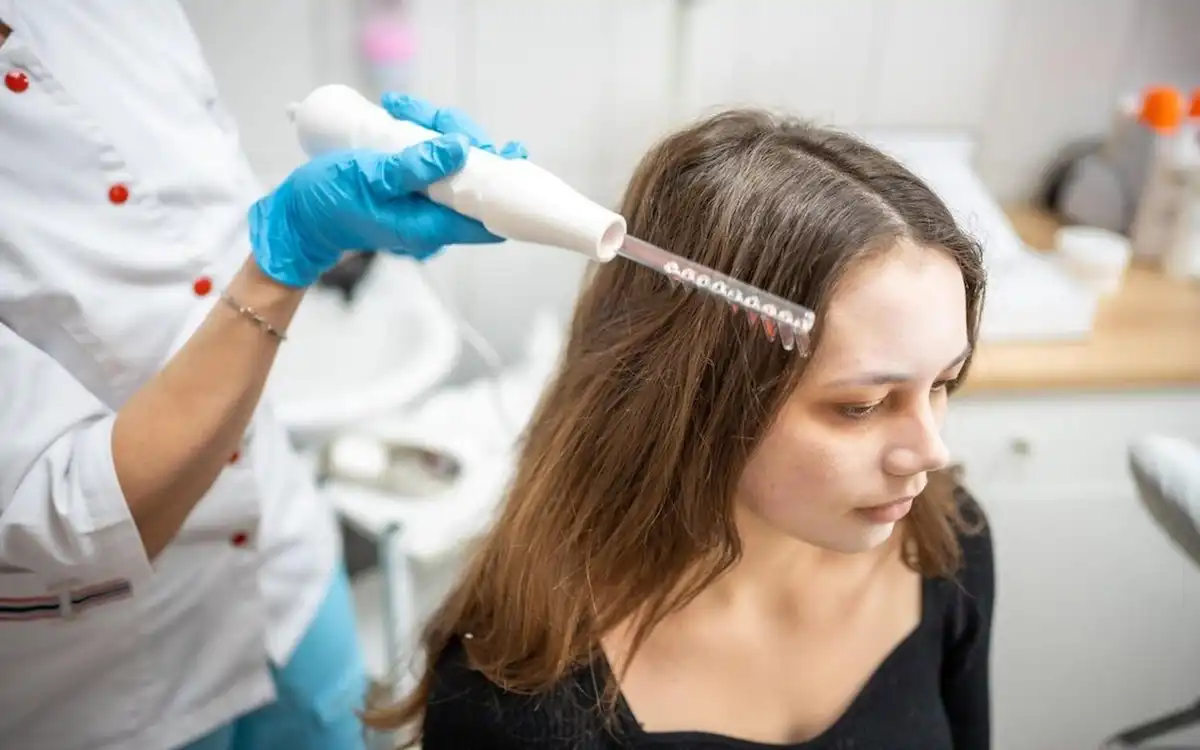
- Low-Level Laser Therapy (LLLT): Red light from laser combs, helmets, and caps makes cells work better in the head. Even though they’re not a magic fix, they don’t hurt and have worked well in the past when used regularly.
Natural And Holistic Approaches
A lot of women would rather use softer, natural ways, either by themselves or along with medical treatments:
- Help with nutrition: Biotin, iron, zinc, vitamin D, and vitamin D are all important for hair growth. Hair growth can be seriously slowed down by not getting enough iron or vitamin D. Blood tests can find gaps and help with nutrition.
- Herbal Remedies: Some substances, like saw palmetto, pumpkin seed oil, and green tea extract, may stop the production of DHT. Though there is mixed proof, a lot of women find them helpful, especially when their hair is just starting to thin.
- Scalp Massage & Essential Oils: Regularly massaging your head can improve blood flow and bring nutrients to your skin. In small tests, oils like rosemary, peppermint, and lavender have been shown to help hair grow back and can also make hair thicker and smoother.
Lifestyle Modifications
Your way of life has a big impact on whether your hair stays healthy or not.
- Food and water: Follicles work best when they are fed whole foods that are high in protein, omega-3s, and vitamins. Processed foods and inflammation, on the other hand, can slow growth.
- Stress Reduction: The main thing that causes telogen effluvium is long-term worry. Yoga, awareness, and good sleep habits are all techniques that can help keep cortisol levels in check and encourage growth.
- Avoid Damaging Practices: Hair strands can be damaged by using too much heat, chemicals, or tight hairstyles like bands or ponytails. If you switch to gentle hair care habits, you can stop more hair loss.
Cosmetic Solutions And Alternatives
While you wait for treatments to work or while recovery is slow, cosmetic options can boost your confidence right away:
- Product Thickening: Hair fibres, shampoos and sprays that add volume give the impression that hair is fuller.
- Wigs and Hair Toppers: Synthetic and real hair pieces made today are light and look natural. Best for women whose heads or part lines are getting thinner.
- Scalp Micropigmentation (SMP): This tattoo-like process adds colour to the head to make hair look thicker. It works especially well for women who have scars or parts that are easy to see.
Advanced And Surgical Options
For some women, especially those whose hair loss doesn’t change, surgery and regrowth treatments may be worth looking into:
- Hair Transplant Surgery: Women don’t get grafts as often as men do, but when they are done right, they can be very effective. People who are losing in one area and have enough donated hair are the best options.
- Stem Cell and Exosome Therapy: These treatments are still in the testing phase, but they aim to rebuild hair cells at the cellular level. Even though it was expensive and an experiment, the first results look good.
Preventive Measures And Long-term Maintenance
- Scalp hygiene: Gentle washing and scrubbing done regularly help keep the scalp healthy for the hair cells.
- Early Intervention: It’s better to treat hair loss as soon as it’s noticed than to try to stop it after it’s already happened.
- Consistency: Most treatments, especially herbal and cosmetic ones, take time and effort. Giving up too soon can set back growth.
Conclusion
Not only can women treat hair loss, but they can also deal with it if they know what to do. There is a cure for everyone, whether you are just noticing early thinning or dealing with long-term loss. The most important thing is to get help quickly and wait. You can recover and gain confidence if you get constant care and the right mix of treatments.

Gas S. is a health writer who covers metabolic health, longevity science, and functional physiology. He breaks down research into clear, usable takeaways for long-term health and recovery. His work focuses on how the body works, progress tracking, and changes you can stick with. Every article is reviewed independently for accuracy and readability.
- Medical Disclaimer: This content is for education only. It doesn’t diagnose, treat, or replace medical care from a licensed professional. Read our full Medical Disclaimer here.