

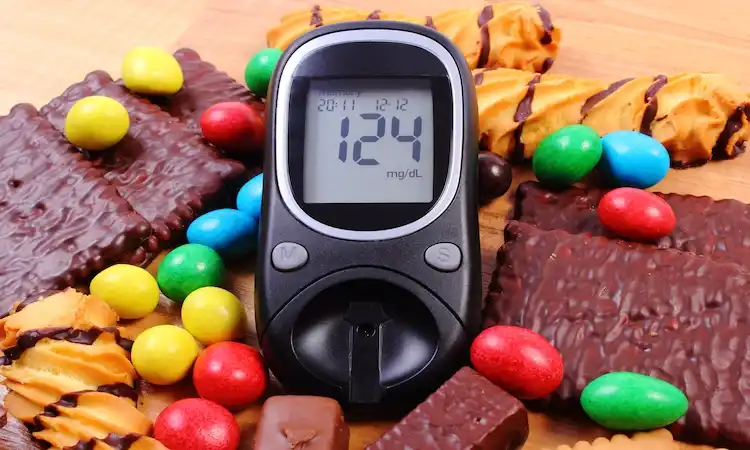
If you’ve ever worn a continuous glucose monitor (CGM) or seen a social post with a scary-looking line graph, it’s easy to think every post-meal rise is a problem. A lot of advice online treats a bump in glucose like a failure, or a sign your metabolism is “broken.”
That fear sells, but it fuels the glucose spike myth: the idea that healthy people should stay flat after meals. In real life, most bodies are built to handle food by letting glucose rise, then bringing it back down.
This article keeps it calm and practical. You’ll learn what a normal post-meal glucose spike can look like, why the same meal can produce different numbers, whether 140 mg/dL is actually “bad,” and what to do if your patterns seem higher than they should.
What actually happens to blood sugar after you eat (and why a rise is normal)
When you eat carbs, your body breaks them into smaller sugars, including glucose. That glucose moves from your gut into your bloodstream. Your blood is basically the delivery highway, so the number on a meter or CGM is showing how much “fuel” is currently cruising around.
Then insulin enters the story. Insulin is a hormone made by your pancreas. Think of it like a key that helps glucose move from the blood into your cells, where it can be used for energy. Your muscles can burn it, your liver can store some as glycogen, and the rest gets managed based on what your body needs right then.
A post-meal glucose rise isn’t a glitch. It’s the expected result of eating, especially if the meal contains carbs. The real question isn’t “Did it rise?” It’s “Did it come back down in a reasonable time?”
That’s why it helps to think in terms of a glucose curve normal for you, not a single scary peak. A screenshot can look dramatic, but it’s only one frame of a longer movie.
For a look at how glucose behaves in everyday life for people without diabetes, this research summary on continuous glucose profiles in healthy subjects shows that ups and downs are part of normal physiology, even outside a lab.
The “glucose curve” in plain English: peak, timing, and coming back down
A typical curve looks like a gentle hill. Glucose rises after the meal, reaches a peak, then trends back toward baseline.
For many people, the peak often happens around 45 to 90 minutes after eating. Then it gradually falls over the next 1 to 3 hours. The exact timing depends on the food and on you. A bowl of cereal hits faster than lentils. A smoothie can hit faster than chewing the same ingredients.
What matters most is the “return trip.” A brief peak that comes down is usually less concerning than a moderate rise that stays high for a long time. In other words, a speed bump is different from getting stuck in traffic.
If you’re using a CGM, remember it measures glucose in interstitial fluid (the fluid between cells), not directly in blood. That can create a time lag, especially when glucose is changing fast. So your curve can look “late” compared with a fingerstick, even if your body is doing fine.
Why the same meal can look different on different days
Ever eaten the same breakfast two days in a row and gotten two different CGM charts? That’s normal too. Your glucose response is not just about food. It’s also about your state.
Common drivers of day-to-day glucose variability include:
- Poor sleep (even one short night can shift insulin response)
- Stress, anxiety, or a rushed meal
- Illness and inflammation, even a mild cold
- Menstrual cycle changes for many women
- Alcohol the night before (and not just sugary drinks)
- Dehydration
- Exercise earlier that day, or several days of inactivity
- Meal order (fiber and protein first can slow absorption)
- Speed of eating (fast meals can spike faster)
This is why “perfect flat lines” are a strange goal. Glucose variability is information, but it needs context. If you want a deeper, science-based explanation of what variability means and how it’s measured, see this overview on glycemic variability and why it matters.
So what’s “normal” after eating, and is 140 mg/dL bad?
Here’s the truth most posts skip: “normal” depends on who you are.
Someone without diabetes, someone with prediabetes, someone who is pregnant, and someone taking glucose-lowering meds can have very different targets and risks. Your clinician may also give you individualized goals based on your history.
Still, there are some widely used reference points that help you sense-check a post-meal glucose spike. One common clinical benchmark you’ll see mentioned is the 2-hour value after eating. Many sources use “under about 140 mg/dL at 2 hours” as a general reference for people without diabetes, but that does not mean a brief touch above 140 automatically equals disease.
So, is 140 mg/dL bad? Not by itself.
A single number can’t diagnose anything. Frequency, duration, your fasting levels, and your overall pattern matter more. Symptoms matter too. A CGM screenshot is not a medical workup.
If you want to understand the glucose values used in formal diagnosis (fasting glucose, A1C, oral glucose tolerance testing), this table on diagnostic tests and glucose values is a helpful reference.
Healthy glucose excursions: what many people see, and when it matters
For many people without diabetes, a normal day includes mild to moderate rises after meals, then a return toward baseline. The “best” number is not the lowest peak you can force with food rules. It’s the curve your body can handle without staying elevated.
A few practical points that tend to hold up in real life:
- Fast carbs (juice, candy, white bread, many cereals) often create higher, faster peaks.
- Mixed meals (carbs plus protein, fat, and fiber) often blunt the rise.
- Portion size matters, even for “healthy” carbs.
If you want a simple consumer-friendly overview of typical ranges people talk about, this explainer on normal blood sugar levels in adults can add context, especially if you’re new to the topic.
One more reality check: CGMs and fingersticks can disagree. CGMs can read a bit higher or lower depending on sensor accuracy, hydration, compression (lying on the sensor), and the natural lag during quick changes. If you’re making decisions based on numbers, it’s worth knowing that not every wobble is “real.”
Here’s a simple way to judge a post-meal curve without obsessing over one peak:
| What to look at | Often a reassuring sign | Often worth a second look |
|---|---|---|
| Peak height | A modest rise that matches the meal | Peaks much higher than your usual, even with similar meals |
| Time to peak | Gradual rise | Sharp jump very quickly, especially with mixed meals |
| Return toward baseline | Trending down within a couple hours | Staying elevated past about 2 to 3 hours |
| How you feel | Normal energy, no major symptoms | Excess thirst, frequent urination, blurry vision, shakiness |
This is not a diagnosis tool. It’s a way to stay grounded when the app graph tries to spook you.
Red flags worth paying attention to (even if you feel fine)
If you’re worried about a post-meal glucose spike, the most useful question is, “Is this a repeat pattern?”
Patterns that deserve attention include frequent high peaks well above your personal baseline, plus glucose that stays elevated for a long stretch. Another concern is when fasting glucose is often high and meals push you up even more.
Also watch for symptoms that don’t match your normal life, especially if they’re new:
- Extreme thirst or frequent urination
- Unintended weight loss
- Blurry vision
- Feeling shaky, sweaty, or weak after meals
- Fatigue that feels out of proportion
If any of that is happening, don’t try to “eat your way out of it” using internet hacks. Talk with a clinician. Tests like A1C, fasting glucose, and an oral glucose tolerance test can tell you far more than one CGM day.
If you’re using a CGM for learning, use it like a flashlight, not a verdict. The goal is understanding your body, not policing every bite.
How to stop chasing perfect flat lines and build a better post-meal pattern
The cleanest way to bust the glucose spike myth is to replace it with a better goal: fewer long, high spikes, not zero spikes.
This is where the idea of metabolic flexibility is useful. In plain terms, metabolic flexibility means your body can handle carbs without a big, prolonged rise, and it can return toward baseline without drama. That’s not about never eating carbs. It’s about how well your system responds, most of the time.
Think “training,” not “testing.” If your only goal is to keep the line flat, you may end up skipping foods you enjoy, under-eating, or stacking your day with tiny rules that don’t stick. A better approach is to run small experiments for a week, then reassess.
Simple meal tweaks that usually lower the peak and shorten the high
You don’t need a complicated meal plan to improve a post-meal glucose spike. You need a few moves that slow absorption and reduce the glucose load.
Start with the basics:
Add protein and fiber to carb-heavy meals. If breakfast is oatmeal, add Greek yogurt or eggs on the side. If lunch is a sandwich, add turkey, tofu, or tuna, plus a pile of crunchy vegetables.
Choose slower carbs more often. Beans, lentils, intact grains, and starchy veggies tend to behave differently than refined flour and sugar drinks.
Watch liquid sugar on an empty stomach. Juice, sweet coffee drinks, and many smoothies can hit fast because there’s less chewing and less delay.
Try dessert after a meal, not alone. Eating something sweet right after a mixed meal often looks gentler on a CGM than eating it by itself at 3 p.m.
A few easy swaps that still feel like real life:
- White rice alone becomes rice plus beans, or rice plus chicken and sautéed veggies.
- Flavored yogurt becomes plain or lightly sweetened yogurt plus berries and nuts.
- A bare bagel becomes a smaller portion with eggs, or peanut butter, plus fruit.
If you want a quick reference for “what do people call normal right after eating,” this article on normal blood sugar immediately after eating lines up with the idea that some rise is expected, and that context matters.
Movement and timing: the easiest way to improve your glucose curve
Food changes help, but movement is the underrated tool. Muscles can soak up glucose during and after activity, which often lowers the peak and speeds up the return toward baseline.
A simple habit that works for many people is a 10 to 20 minute walk after meals. It doesn’t need to be intense. Think “comfortable pace while you can still talk.” If you can’t do it after every meal, pick the meal that tends to spike you the most.
Research keeps backing this up. For example, this study on the impact of a 10-minute walk after glucose intake found meaningful improvements in post-meal glucose exposure in a small trial.
Over time, regular activity also improves insulin sensitivity. Strength training helps here too, because more muscle means more storage space for glucose.
If your schedule is messy (shift work, late dinners, long commutes), you can still stack the odds in your favor:
- Keep late meals a bit lighter on fast carbs.
- Move earlier in the day when you can, even if dinner is late.
- Protect sleep as much as possible, since poor sleep can raise next-day glucose.
You’re not trying to win a graph. You’re trying to build a body that handles normal life well.
Conclusion
A post-meal glucose rise is not a moral failing, it’s normal biology. The glucose spike myth makes people fear a process that’s supposed to happen after eating. What matters more than a single peak is your full curve, your context, and how reliably you return toward baseline.
And no, 140 mg/dL is not automatically “bad.” Look for repeat patterns, long time spent high, and symptoms that suggest something bigger is going on.
If you want a practical next step, keep it simple for one week: choose one meal tweak (more protein or fiber at your most spiky meal) and one movement habit (a 10-minute walk after that meal). Then reassess your glucose curve with a calmer eye. If you’re seeing red flags or you have known risk factors, bring your data to a clinician and ask about the right testing for you.

Gas S. is a health writer who covers metabolic health, longevity science, and functional physiology. He breaks down research into clear, usable takeaways for long-term health and recovery. His work focuses on how the body works, progress tracking, and changes you can stick with. Every article is reviewed independently for accuracy and readability.
- Medical Disclaimer: This content is for education only. It doesn’t diagnose, treat, or replace medical care from a licensed professional. Read our full Medical Disclaimer here.