

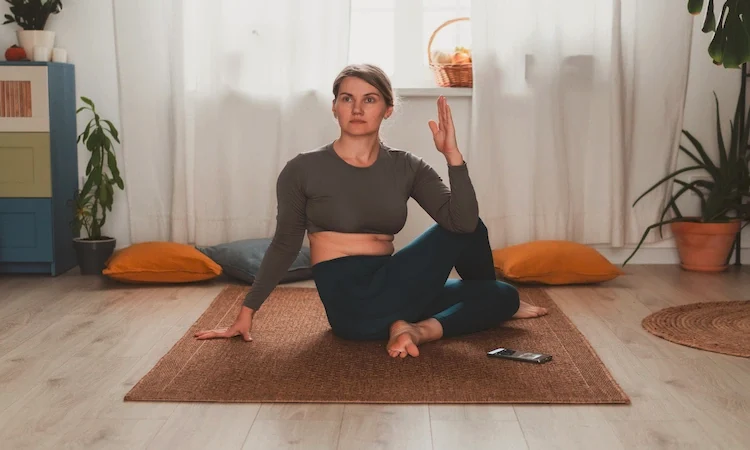
Anxiety doesn’t only live in your thoughts. It shows up in your body as tight shoulders, a clenched jaw, shallow breathing, a fluttery stomach, or that restless need to keep moving. When the body feels like it’s on alert, “think positive” advice can bounce right off.
Somatic flow for anxiety is a simple way to meet anxiety where it actually is. It’s gentle, guided movement combined with breath and attention. The goal isn’t to force calm. It’s to help your nervous system settle, one small signal at a time, by giving your body a safe way to release tension and re-orient to the present.
This guide keeps things practical: what somatic flow means, how to set yourself up, a 10-minute routine you can repeat, and how to adjust it for different bodies and energy levels. Early results can be subtle, like a slightly slower breath, warmer hands, less jaw tension, or a softer belly. Those “small” shifts are often the first signs your system is changing gears.
What “somatic flow for anxiety” means, and why it can work when your mind is racing
When anxiety hits, your body acts like there’s a real threat. That’s the stress response: fight, flight, or freeze. Your heart rate bumps up, your muscles brace, your breath gets quick, and your attention narrows. Even if the trigger is an email, a memory, or social pressure, your nervous system can react like you need to survive something right now.
Somatic flow works because it speaks the body’s language: sensation, movement, rhythm, and breath. Instead of arguing with anxious thoughts, you give your body a structured way to move through the stress response without getting pulled into it.
A helpful idea here is that stress energy needs an outlet. Animals often shake, run, or discharge energy after a threat passes. Humans tend to “hold it together” at a desk, in a car, or in public, and the body doesn’t always get the memo that it’s safe again. Gentle stress relief movement can help complete that cycle in a safe, contained way. If you want more context on body-based approaches to stress and trauma responses, Somatic Experiencing International’s SE 101 explains the basic model in plain terms.
You’ll also hear people talk about parasympathetic activation, which is just a technical way of saying your body shifts into “calm and digest.” In that mode, breathing steadies, digestion returns, and muscles stop bracing as hard. Somatic flow supports that shift by pairing slow movement with longer exhales and steady attention, without pushing you past your comfort zone.
The key is range. Somatic work isn’t about powering through discomfort. It’s about noticing sensation and staying inside a zone that feels manageable. When you stay in that window, your body learns, “I can feel this, and I’m still okay.”
Somatic flow vs yoga, stretching, and “just breathe” advice
Somatic flow can look a bit like yoga or stretching, but the focus is different. It’s less about form and flexibility, more about choice-based movement and tracking signals from inside.
- Yoga often aims for specific shapes or holds. Somatic flow stays simple and adaptable.
- Stretching can accidentally turn into “push harder.” Somatic flow favors small, slow ranges.
- “Just breathe” can feel impossible when you’re panicking. Somatic flow gives your breath something to ride along with, like a gentle rocking motion.
It’s also not about dancing perfectly, performing, or forcing yourself to “be calm.” And while it can support therapy, it’s not a replacement for mental health care.
A tiny example of a micro flow: roll your shoulders once, exhale a little longer than you inhale, then press your feet into the floor and notice the contact for two breaths. That’s it. You’re already doing breath + movement plus attention.
For more examples of body-based tools that match this approach, somatic exercises for anxiety offers a helpful menu you can borrow from.
Signs your nervous system is shifting in real time
During somatic regulation, look for small “green lights” that your system is settling. You might notice:
- Spontaneous sighing, deeper breaths, or an easy yawn
- Swallowing, salivation, or a softer tongue
- Warmth in hands or feet, tingling, or a gentle wave of heat
- A less tight jaw, shoulders dropping, or your belly loosening
- Fewer fidgets, slower thoughts, clearer vision, or less scanning of the room
You might also feel mild shakiness, emotion, or a sudden tiredness. That can be normal if it’s brief and not overwhelming. The rule of thumb is simple: mild and short-lived is okay, intense and escalating means you slow down or stop.
Before you start: set yourself up for a safe, calming session
Somatic flow works best when you remove avoidable friction. If you start in a rush, in an awkward spot, or while judging yourself, your nervous system may stay on guard. A calmer setup doesn’t need to be perfect, it just needs to support choice and comfort.
Start with a quick self-check. Rate your anxiety right now from 0 to 10.
- If you’re at a 0 to 6, try the 10-minute flow below.
- If you’re at a 7 to 10, begin with grounding only (eyes open, slower movements, more contact with solid surfaces), or take a short walk first. You can come back to the flow once the intensity drops.
Pick a position that matches your body today. Standing is great for discharge and grounding. Seated works well if you’re tired, dizzy, or in a shared space. Lying down can help, but it can also make some people feel more “floaty,” so stay curious about what’s best for you.
If you want a broader view of body-based well-being practices used in health settings, Johns Hopkins’ somatic self-care page is a solid reference.
A simple safety check, especially for panic, trauma history, or dizziness
Keep this gentle and non-dramatic, it’s just good pacing.
Stop and switch strategies if you feel faint, numb, sharply dizzy, or emotionally flooded. Keep your eyes open if closing them increases anxiety. Practice near a wall or chair if balance is an issue. Skip breath holds and avoid forcing big inhales, strained breathing can backfire.
If you have frequent panic attacks, trauma memories that get activated, or symptoms that disrupt sleep and daily life, consider practicing with support from a licensed clinician. A body-first approach can be powerful, and it’s even safer when you’re not doing it alone.
Create a “grounded space” in under one minute
Put your feet on the floor (or your whole back supported if seated). Let your shoulders drop one notch.
Turn your phone on silent. Take one sip of water if you want it nearby. Pick a point to look at that feels neutral, like a corner of the room.
Choose an anchor you’ll return to when your mind spins: the soles of your feet, the weight of your hands, or the feeling of the chair holding you. If you like touch-based grounding techniques, press your palms together for five seconds, then release and notice the change.
If you want more ideas for quick grounding cues, grounding techniques to calm your nervous system has additional options you can test and keep.
A 10-minute somatic flow you can use when anxiety spikes
This routine is intentionally simple. Move like you’re in water, slow and with a small range. Keep breathing easy. If any step ramps anxiety up, make the movement smaller, return to grounding, or pause completely.
A common mistake is trying to “do it right.” Your job is to listen, not perform.
Minute 0 to 2: orient and ground (help your body notice you are safe)
Keep your eyes open. Slowly look around the room like you’re taking in a new place.
Name three neutral objects silently (lamp, door, mug). Then feel your feet. If you’re seated, feel your sit bones and thighs supported by the chair.
Add a gentle head turn side to side, like you’re saying a slow “no.” Stay in a comfortable range.
Now bring in a longer exhale than inhale without strain. One simple pattern is inhale for 3, exhale for 5. If counting feels stressful, just think “small inhale, longer exhale.”
Option: hold a pillow against your chest, or place one hand on your chest and one on your belly. Feel your hands rise and fall, even if it’s subtle.
Minute 2 to 6: slow wave movements to release held tension
Start with shoulder rolls, slow circles backward, then forward. Keep your arms heavy. Let your breath move naturally.
Shift to a rib cage sway: gently move your ribs a little to the right, then to the left. Imagine your ribs floating over your pelvis. If you’re standing, keep knees soft. If you’re seated, feel the chair under you the whole time.
Add slow hip circles, standing or seated. Make them smaller than you think you should. Your body isn’t trying to “open up,” it’s trying to feel safe while moving.
Next, do a small spinal wave. If seated, place hands on thighs and gently round your spine on an exhale, then return to neutral on the inhale. If standing, you can do a tiny cat-cow through the upper back, without dropping the head far.
Finish this section with jaw and hand release. Unclench your tongue from the roof of your mouth. Open and close your hands slowly, then shake your fingers out like you’re flicking off water.
If symptoms rise, shrink the movement. Go slower. Return to feeling your feet.
Minute 6 to 9: shake, press, and lengthen the exhale (somatic regulation tools)
Now you’ll discharge energy, then find steadiness.
Start with light shaking for 20 to 30 seconds. You can shake your hands and forearms, or bounce your knees gently. Keep your face soft. If shaking feels too intense or vulnerable, switch to tapping your thighs with open palms.
Then do a grounding press for 15 to 20 seconds: press feet into the floor as if you’re trying to leave footprints. If seated, press your feet down and your thighs into the chair. Add palms pressing into thighs, or hands gripping the sides of the chair.
Now take 3 to 5 slow breaths with relaxed sighing exhales. Don’t force a dramatic sigh, let it be quiet and natural. Longer exhales cue the “calm and digest” side of your nervous system.
Quiet version for public spaces: skip shaking and do micro-movements, like toe presses inside your shoes, a small shoulder roll, and a soft, slow exhale through the nose.
Minute 9 to 10: close the loop so you feel finished, not cut off
Stop moving. Notice three body sensations that feel okay or neutral. Neutral counts, like “my feet feel steady” or “my hands feel warm.”
Re-rate your anxiety from 0 to 10. Even a one-point shift matters. This is how you teach your body to track change.
Choose one next step that supports your nervous system: drink water, step outside for two minutes, wash your hands in warm water, or text a friend something simple. Ending on purpose matters. It helps your system store the practice as “complete,” not “I stopped because I got yanked away.”
If you want more background on why anxiety shows up so physically, this overview of somatic experiencing for anxiety explains the body side of the cycle in everyday language.
Make somatic flow a habit, and know when to get extra support
Somatic flow is most helpful when it becomes familiar. Anxiety often says, “This is urgent, you must fix it now.” A steady practice teaches your body a different message: “We have tools, we’ve done this before.”
Treat it like brushing your teeth. Small, regular sessions usually beat occasional long ones.
How often to practice, and how to use it in real life moments
A realistic schedule is 5 to 10 minutes, 3 to 5 days a week. Then add 30 to 60-second mini flows during real life: before a meeting, after caffeine, in the car before you walk inside, or when you get into bed.
Pair it with something you already do, like after lunch or while your coffee brews. Repetition builds trust faster than intensity.
In triggering moments, keep it tiny: press your feet, roll your shoulders once, and take one longer exhale. That’s still somatic flow for anxiety, just in a smaller container.
Troubleshooting: if your anxiety gets louder during the flow
Sometimes turning toward the body makes sensations feel bigger at first. That doesn’t mean you failed. It means you need a gentler dial.
Try one change at a time: slow down, open your eyes wider, reduce range, or switch to grounding only. If swaying feels unsteady, walk slowly instead. Humming on the exhale can steady your breath without forcing it. Holding something cool can also help, like a cold drink against your palm. If your thoughts spiral, name five colors you can see and return to your feet.
Use a clear stop rule: if anxiety keeps rising for more than a minute or you feel spaced out, numb, or flooded, stop the flow and choose a safer support (grounding, a walk, calling someone, or professional help).
Talk to a professional if you have panic attacks, dissociation, trauma activation, persistent insomnia, or anxiety that regularly blocks work, relationships, or basic care. Getting support is a strength move, not a last resort.
Conclusion
Somatic flow for anxiety works because it doesn’t argue with your mind. It works with your body and nervous system, using breath + movement, grounding techniques, and gentle stress relief movement to help your system settle.
Start with the 10-minute routine once, then track one tiny sign that something shifted, warmer hands, a slower breath, a softer jaw, or fewer fidgets. Keep the pace comfortable and give yourself choices. That’s where the safety comes from.
Try it today, then do it again each day for a week. Pay attention to what shifts as your body learns, step by step, through somatic flow, that it can move with anxiety without letting it take over.

Gas S. is a health writer who covers metabolic health, longevity science, and functional physiology. He breaks down research into clear, usable takeaways for long-term health and recovery. His work focuses on how the body works, progress tracking, and changes you can stick with. Every article is reviewed independently for accuracy and readability.
- Medical Disclaimer: This content is for education only. It doesn’t diagnose, treat, or replace medical care from a licensed professional. Read our full Medical Disclaimer here.