

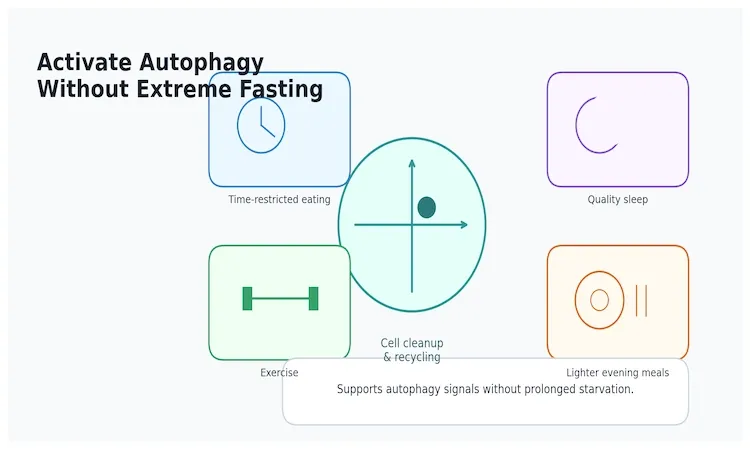
If you’ve heard autophagy described as the body’s “cleanup crew,” that’s a pretty good start. Autophagy is a natural process where cells break down worn-out parts and reuse the raw materials. Think of it like a recycling bin inside your cells, it helps keep things running smoothly.
Fasting gets a lot of attention because it can push the body into conditions that nudge this cleanup system along. But long fasts aren’t realistic for many people. Maybe you’re a busy parent who’s up early making lunches, a shift worker with odd meal times, or an athlete who needs fuel to train and recover.
The good news is you can support autophagy with smart habits that don’t require days without food. Results vary based on sleep, stress, training load, age, and health status, so keep expectations grounded. This isn’t medical advice. If you’re pregnant, under 18, have a history of eating disorders, have diabetes (especially if you use insulin or glucose-lowering meds), or have other major conditions, talk with a clinician before changing eating or exercise routines.
Autophagy basics, what it is, what it is not, and why extremes are not required
Autophagy (pronounced awe-TAW-fuh-jee) is your body’s built-in maintenance system. Cells constantly take on damage from normal living, like making energy, fighting infections, and dealing with daily wear and tear. Autophagy helps by breaking down old, damaged, or extra cell parts and reusing them.
Why do people connect it to fasting? When you go without calories for a while, your body senses a dip in easy energy. That gentle “energy pinch” can signal cells to shift into repair and recycling mode. Autophagy also ties into metabolism and quality control, especially in how cells handle energy and stress (you can read a more technical overview in autophagy in metabolism and quality control).
A few myths are worth clearing up:
Autophagy is not a magic “detox.” Your liver, kidneys, lungs, and gut handle most detox work. Autophagy is more like housekeeping at the cell level.
It’s not all or nothing. People sometimes talk like autophagy is either “on” or “off.” In reality, it shifts based on signals from food intake, activity, sleep, and stress.
More is not always better. Too much stress on the body, whether from extreme fasting, overtraining, or chronic sleep loss, can backfire. Autophagy is part of balance, not a contest.
The big levers that influence autophagy are simple to understand:
- Lower insulin periods (time between meals and overnight)
- Energy stress (short, manageable dips, not starvation)
- Exercise signals (muscles and cells respond to movement)
- Sleep and recovery (your body repairs while you rest)
If you want deeper scientific background, this comprehensive review of autophagy roles explains how broad the topic really is, and why simple claims don’t tell the full story.
What can increase autophagy naturally, the big triggers in plain English
Autophagy responds to small doses of stress, the kind your body can handle and bounce back from. Picture it like strength training for your cells. You stress the system a bit, then you recover stronger.
You don’t need to starve yourself to create that signal. Three everyday triggers matter most: timing meals so you’re not grazing all day, moving your body in ways that feel challenging but safe, and sleeping enough to recover.
It also helps to keep your expectations realistic. A lot of clear autophagy research comes from animals, where conditions are tightly controlled. Human data is growing, and there are ongoing studies tracking fasting-related autophagy in people, like Time Course for Fasting-induced Autophagy in Humans. That’s a good reminder to treat bold promises with caution.
Autophagy benefits and risks, when pushing harder can backfire
People care about autophagy because it connects to topics like metabolic health, cellular maintenance, and healthy aging research. It’s also tied to how the body adapts to exercise and handles nutrient ups and downs. These are real areas of study, but they’re not a guarantee of a specific outcome.
The risk shows up when someone thinks, “If some is good, more must be better.” Extreme fasting can bring problems that outweigh any upside, especially if you’re working long shifts, training hard, or prone to anxiety around food. Common downsides include fatigue, headaches, sleep disruption, irritability, rebound overeating, and stalled workout recovery. Some people also notice hormone-related issues like irregular cycles when under-fueling for too long.
A scientific discussion of tradeoffs is covered in beneficial and adverse effects of autophagy with restriction and fasting, but you don’t need to read it to follow one key idea: stress plus recovery is helpful, stress without recovery is trouble.
Practical red flags to stop and reassess include:
- Dizziness or fainting
- Obsessive thoughts about food or “earning” meals
- Binge eating after restriction
- Worsening sleep, mood, or training performance
If those show up, ease off. Health habits should make life steadier, not smaller.
Daily eating patterns that activate autophagy without fasting for days
If you want to activate autophagy without fasting, start by removing the most common barrier: constant eating. Many people aren’t eating “too much” at meals, they’re just never giving the body a break. A handful of crackers here, a sweet coffee there, a late-night snack while scrolling, and suddenly there’s no real downtime.
You don’t need perfection. You need a pattern you can repeat.
A good approach is to choose an eating schedule that creates longer gaps between calories, while still meeting nutrition needs. For most people, that means:
- Eating 2 to 3 solid meals
- Keeping snacks planned, not random
- Building meals that keep you full so you aren’t hunting for quick bites every two hours
Appetite control matters here, and it’s not about willpower. When meals have enough protein, fiber, and healthy fats, hunger tends to calm down. That makes it easier to stop late-night grazing and stretch the overnight window.
Also, remember the big picture: total nutrition still counts. Autophagy is not a free pass to under-eat, skip vegetables, or ignore protein. If your energy tanks and your workouts suffer, the “signal” you’re creating might be stress without recovery.
Try a simple overnight fasting window that still feels normal
A 12 to 14 hour overnight break from calories is a great starting point because it fits real life. You’re basically combining dinner-to-bed time with sleep.
A simple example: finish dinner by 7 pm, then eat breakfast between 7 and 9 am. Water is fine, and unsweetened tea usually is too. If you use coffee, keep it plain to avoid turning it into a liquid snack.
Tips that make this easier:
Eat dinner a bit earlier, even by 30 minutes.
Plan breakfast so it’s ready quickly (Greek yogurt with berries, eggs and toast, oatmeal with nuts).
Use herbal tea after dinner if “I want something” is more habit than hunger.
Intermittent fasting vs autophagy can get confusing. Here’s the clean way to think about it: longer fasting windows may create a stronger autophagy signal, but shorter windows can still help when paired with movement, solid sleep, and fewer snacks.
Foods that support autophagy, build meals that keep insulin steady
There isn’t a single “autophagy diet,” and anyone selling one is oversimplifying. A better goal is to eat in a way that avoids constant blood sugar spikes and crashes, which often lead to more cravings and more snacking.
Focus on patterns like these:
Build half your plate from high-fiber plants, especially colorful vegetables.
Use beans and lentils often, they’re filling and steady.
Choose fats that satisfy, like nuts, seeds, avocado, and extra-virgin olive oil.
Eat omega-3 rich fish if you like it (salmon, sardines, trout).
Use spices like turmeric, and drink green tea or coffee if you tolerate them.
Polyphenol-rich foods (plant compounds found in berries, cocoa, and extra-virgin olive oil) get attention in aging research. You don’t need supplements to benefit. You just need regular whole foods.
What to limit, if you want an easier time with appetite and timing:
Sugary drinks and sweetened coffees
Ultra-processed snack foods that are easy to overeat
“Constant grazing,” even if it’s small amounts
If you’re hungry between meals, that’s a signal to upgrade the meal, not to blame yourself.
Smart protein, enough to maintain muscle while still getting the benefits
Some people hear “autophagy” and assume they should cut protein very low. That can be a mistake, especially for older adults, active people, and anyone trying to protect lean mass during fat loss.
A simple approach is to include a palm-sized portion of protein at meals. For many people, that looks like 20 to 40 grams per meal, depending on body size and activity. You don’t have to count grams if you don’t want to. Use your hand, plus common sense.
Spreading protein across the day also helps with cravings. When protein is only at dinner, people often feel snacky late afternoon and late night.
Occasional lower-protein meals can fit if you enjoy them (like a bean-heavy salad or veggie soup with bread). They’re optional, not required, and they shouldn’t leave you under-fueled for days.
Lifestyle habits that boost autophagy signals, no calorie counting required
Food timing helps, but it’s only one piece. Your body also responds to movement, sleep, and stress load. These shape the same “repair vs grind” balance you’re trying to improve.
If you’re time-crunched, go for the minimum effective dose. Small workouts done often beat big workouts done rarely. A short walk after dinner can support blood sugar control and make it easier to stop snacking later. Strength training tells your body, “Keep this muscle,” which matters as you age.
Recovery is part of the plan too. If you train hard, sleep poorly, and restrict food, you’re stacking stress. That’s when people hit a wall and assume the plan “isn’t working,” when the real issue is too much pressure.
Start with one habit you can repeat on your worst week, not your best week. That’s the routine that sticks.
Exercise and autophagy, why movement is one of the strongest tools
Exercise creates a clear signal to your cells that they need to adapt. You don’t need to know the pathways to use it well. You just need a plan that matches your life.
Brisk walking is underrated. It’s low injury risk, supports recovery, and fits busy schedules. Strength training matters too because muscle is a metabolic asset, it helps with glucose handling and daily function.
Two simple weekly templates:
Beginner template:
- Walk 30 minutes most days (even 10 minutes, three times a day counts)
- Do 2 short strength sessions (15 to 25 minutes, full-body basics)
Intermediate template:
- Add 1 to 2 interval sessions (like 8 to 12 rounds of 30 seconds hard, 90 seconds easy)
- Do 2 to 3 strength sessions (keep reps controlled, focus on form)
Recovery still rules. Too much training plus not enough food often leads to poor sleep, nagging aches, and constant hunger. That’s not a “discipline problem,” it’s your body asking for balance.
Sleep and stress, the quiet factors that can make or break progress
Poor sleep makes autophagy-friendly habits harder. When you’re tired, cravings go up, late-night snacking looks appealing, and the overnight break shrinks without you noticing.
These steps are simple, but they work when you repeat them:
- Keep a consistent wake time, even on weekends when you can.
- Get morning light for 5 to 10 minutes soon after waking.
- Set a caffeine cutoff (many people do best stopping 8 to 10 hours before bed).
- Make the room cool and dark, and keep the phone off the pillow.
- Use a short wind-down, like a shower, light stretching, or reading.
Stress matters too, because stress often drives “treat eating,” which turns into grazing. If food is your main coping tool, add one non-food option: two minutes of slow breathing, a short walk, a journal note, or a quick call to a friend. These aren’t fancy, but they break the loop.
A safe 2-week plan to get started and know if it is working
Two weeks is enough time to feel early signals without making life miserable. You’re not trying to prove anything. You’re running a simple experiment and watching what changes.
What “working” can look like:
More steady energy between meals
Less urge to snack late at night
Better appetite control (not constant hunger)
Improved sleep routine
More consistent training
If you feel worse, that’s data too. Adjust rather than force it. If you’re waking at 3 am hungry, your dinner may be too small, too low in protein, or too light on carbs for your activity level.
Track only what helps. A few easy options: note your eating window, rate hunger from 1 to 10 before bed, and write one line about sleep quality. You’ll spot patterns fast.
Week 1, set the foundation with an easier schedule
Keep week 1 simple and boring on purpose.
Focus habits:
- A 12 to 13 hour overnight window (no calories, water is fine).
- Protein plus fiber at meals (protein food plus vegetables, beans, fruit, or whole grains).
- 20 to 30 minutes of walking daily, ideally after one meal.
If you slip, don’t “make up for it” by skipping the next day’s meals. Just restart at the next meal. Consistency beats punishment.
Week 2, add one extra lever without making life miserable
Pick one upgrade, only one:
Extend to a 14 hour window 2 to 3 days per week.
Add one interval session, short and controlled.
Swap one ultra-processed snack for a whole-food option (fruit with nuts, yogurt, popcorn, a sandwich).
Set a consistent bedtime three nights per week.
If you feel headachy when you stop late-night snacking, check hydration first. Some people also do better with electrolytes, especially if they sweat a lot or drink lots of plain water. Keep it simple and avoid turning this into a supplement project.
Quick end-of-two-weeks checklist:
- Is your eating schedule easier to follow?
- Are you less snacky at night?
- Is your energy steadier?
- Is sleep improving, even a little?
Conclusion: Autophagy support that fits real life
You don’t have to disappear into multi-day fasts to support autophagy. A reasonable overnight break from calories, fewer snacks, satisfying whole-food meals, regular movement, and better sleep can work together like a steady tune-up.
The safest approach is also the most sustainable: keep the stress dose small, then recover well. If you have a medical condition, take glucose or blood pressure meds, or have a history of disordered eating, talk with a clinician before changing eating windows or training.
Next, keep it simple, choose one habit and stick with it for seven days, then check your progress. Those repeatable small wins build momentum fast, and they support bio longevity over time.

Gas S. is a health writer who covers metabolic health, longevity science, and functional physiology. He breaks down research into clear, usable takeaways for long-term health and recovery. His work focuses on how the body works, progress tracking, and changes you can stick with. Every article is reviewed independently for accuracy and readability.
- Medical Disclaimer: This content is for education only. It doesn’t diagnose, treat, or replace medical care from a licensed professional. Read our full Medical Disclaimer here.