

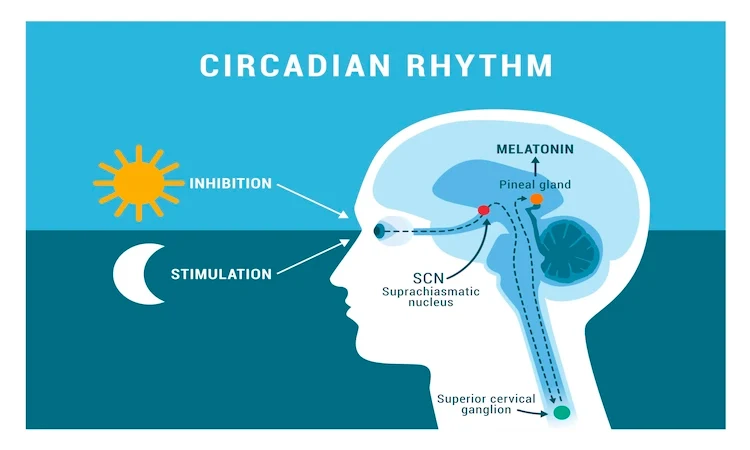
If your mornings feel like wading through mud, but your brain flips on at 10 p.m., your cortisol timing may be off. Cortisol isn’t “bad.” It’s supposed to rise after waking to help you feel alert, then fall at night so you can relax and sleep.
The problem is that modern life can scramble those cues. Indoor days, bright screens at night, irregular meals, late workouts, stress scrolling, and weekend sleep-ins can teach your body the wrong schedule. Over time, you can end up tired when you want energy, and wired when you want rest.
That’s where Circadian Entrainment comes in. It simply means syncing your body to time signals, especially light, food, movement, and daily routines. When those signals get stronger and more consistent, cortisol often settles into a healthier rhythm, which can mean calmer evenings, fewer crashes, and better sleep.
How circadian entrainment controls cortisol, and why the timing matters more than you think
Think of cortisol like your body’s daily “day shift manager.” It helps you wake up, mobilize fuel, and stay on task. But it’s not just the amount that matters. The timing matters most.
A healthy cortisol pattern usually looks like this:
- Higher in the morning, peaking after you wake
- Gradually lower across the day
- Lowest at night, when your brain and body need to power down
When that rhythm shifts later, mornings can feel flat and foggy. When it stays too high at night, your body can act like bedtime is an emergency meeting. That can change appetite signals, increase late-night snacking, and make sleep lighter. It can also affect mood, since your stress system is tied closely to how safe and settled you feel.
Cortisol timing also connects to your “peripheral clocks,” the timekeepers in organs like the liver and fat tissue. Those clocks respond to daily signals (light, meals, activity) and help coordinate energy use. Research has even explored how cortisol itself can act as a timing cue for these body clocks, as discussed in entrainment of peripheral clock genes by cortisol. The big takeaway for real life is simple: when your days are predictable and bright, and your nights are quiet and dark, your hormones tend to keep better time.
Meet your master clock, the suprachiasmatic nucleus (SCN)
Your body has one main timekeeper in the brain: the suprachiasmatic nucleus (SCN). It’s small, but it runs a big operation.
The SCN reads light signals coming in from your eyes and uses that info to set timing for the whole system. It helps coordinate sleep wake cycle regulation, daily body temperature shifts, and hormone patterns, including cortisol. If your mornings are dim and your nights are bright, the SCN gets mixed messages. That’s one reason people can feel sleepy at the wrong times, even if they “should” be tired.
If you want a deeper look at how the SCN runs circadian timing, this mini review in Frontiers is a helpful reference: circadian rhythm mechanism in the suprachiasmatic nucleus.
The cortisol awakening response, what a normal morning spike does for you
Within the first hour after waking, cortisol typically rises. This is called the cortisol awakening response. It’s not your body “being stressed.” It’s your body switching from sleep mode to get-things-done mode.
A well-timed morning rise can support:
- Alertness and focus, especially in the first half of the day
- Steadier blood sugar, so you’re not running on fumes
- Blood pressure readiness, so you don’t feel as lightheaded
- Motivation, the “let’s start” signal many people notice
More cortisol isn’t the goal. The goal is the right rise at the right time, then a smooth decline. For a clinical overview, see the Endocrine Society’s review on the cortisol awakening response.
Signs your cortisol rhythm is out of sync (and what tends to cause it)
You don’t need a lab test to notice when your daily rhythm feels off. Many people can spot it in everyday patterns: how they wake, when they crash, and what happens at bedtime.
A quick self-check: do you feel tired in the morning even after enough hours in bed, then find yourself chasing energy all day, only to feel alert when it’s finally time to sleep? That’s a common “delayed” pattern. Others feel keyed up all day, then wake too early, like the body hit the start button before sunrise.
A few common triggers show up again and again:
- Late-night light exposure, especially bright screens close to bed
- Inconsistent sleep timing, including weekend schedule swings
- Too much caffeine, or caffeine too late
- Hard workouts late evening
- Stress scrolling, work email, and intense news at night
- Shift work and travel, which force the clock to re-learn time cues
None of this means something is “wrong” with you. It usually means your biology is responding to the schedule it’s been taught.
Common patterns: tired mornings, afternoon crash, “second wind” at night
Here are easy-to-recognize signs that often go with a mis-timed cortisol rhythm:
- Groggy wakeups that last more than 30 to 60 minutes
- Needing caffeine to function, not just to enjoy your day
- A strong afternoon crash, often between 2 and 5 p.m.
- Sugar or carb cravings late afternoon or after dinner
- Feeling alert at bedtime, even when you’re tired
- Racing thoughts at night, especially after you lie down
- Waking at 3 a.m. and struggling to fall back asleep
- More anxiety in the evening, when you want calm
- Restless sleep with lots of tossing and turning
Talk with a clinician if sleep is severely disrupted, mood is low, you suspect sleep apnea, you have thyroid symptoms, or you use steroid medications. These can change cortisol and sleep in ways that need medical care, not just lifestyle changes.
Why modern life derails entrainment: bright nights, dim days, and irregular routines
Your circadian system expects bright days and dark nights. Many people get the opposite. Days are spent indoors under low light, then nights are filled with bright LEDs and phone screens inches from the face.
This “dim days, bright nights” pattern weakens the morning signal and strengthens the night signal. Add meals at odd hours, late snacks, and weekend sleep-ins, and your clock starts drifting. That weekend drift is sometimes called social jet lag, and it can feel like a mini time-zone shift every Monday.
Blue light blocking at night can help, but timing and habits come first. There’s also research on short-wavelength light reduction and sleep outcomes, summarized in a systematic review on reducing blue light at night.
A simple 7 day reset plan to retrain your cortisol clock
This isn’t a perfection plan. It’s a “teach your body the schedule again” plan. The goal is to strengthen daytime cues, calm nighttime cues, and keep timing consistent enough that regulating cortisol naturally becomes easier.
Pick a wake time you can hold for seven days (including the weekend). Then follow the same anchors daily: morning light, regular meals, smart caffeine timing, and a calmer evening.
Here’s a simple structure you can follow:
| Day | Morning (first hour) | Midday | Evening (last 90 minutes) |
|---|---|---|---|
| 1 | Go outside for light, short walk | Set caffeine cutoff | Dim lights, reduce screens |
| 2 | Repeat light, add 5-minute mobility | Regular lunch time | Warm shower, earlier wind-down |
| 3 | Light plus a longer walk | Protein at breakfast or lunch | No stressful content after 8 p.m. |
| 4 | Same wake time, same light | Short outdoor break | Lower home lighting, cooler room |
| 5 | Light, move, hydrate | Keep meals on schedule | Read or stretch, phone out of bed |
| 6 | Light even if cloudy | 20-minute nap cap if needed | Same bedtime routine |
| 7 | Keep wake time steady | Review what reduced crashes | Plan next week’s anchors |
Morning anchor: light, movement, and a predictable first hour
Within 30 to 60 minutes of waking, get outside for 5 to 15 minutes. If it’s cloudy, stay out longer. Keep sunglasses off if it’s safe for your eyes, and look toward the bright sky, not at the sun.
This is one of the most reliable ways of resetting biological clock signals because it tells your SCN, “It’s daytime.” Over time, that stronger morning signal can support a more normal cortisol rise after waking and an easier drop at night.
Pair light with simple movement. A walk is great. If you’re tight in the morning, do gentle mobility for five minutes, then walk. The goal is to wake your system up without spiking stress.
If you want the science behind morning sunlight benefits and sleep timing, this paper is a solid starting point: role of sunlight in sleep regulation.
Midday support: eat and caffeinate in a way that helps your rhythm
Food is a clock cue, too. Try to keep meals at regular times for a week. Many people do better when they “front-load” more calories earlier in the day instead of saving a big hit for late night.
If you tend to crash, aim for protein and fiber at breakfast or lunch. That can mean eggs and fruit, Greek yogurt and berries, beans and rice with vegetables, or a chicken salad with olive oil. The exact menu matters less than giving your body steady fuel.
Caffeine is powerful, but timing is everything:
- If possible, wait 60 to 90 minutes after waking before your first coffee. This helps your body build its own alertness first.
- Stop caffeine by 1 to 2 p.m. (earlier if you’re sensitive).
- If you need a boost later, try water, a short walk outside, or bright indoor light.
If you work nights, use the same rules, but apply them to your “day.” Start light exposure and caffeine early in your shift, then taper both toward your planned sleep time.
Evening protection: dim lights, reduce blue light, and lower the stress signal
Your evening job is to make nighttime feel obvious. Start 60 to 90 minutes before bed.
Dim home lighting. Reduce screen brightness. Turn on night mode. If you use blue light blocking at night (glasses or settings), treat it as backup, not the main plan.
Then lower stimulation. A good wind-down is boring in the best way:
- Warm shower or bath
- Light stretching or easy yoga
- Reading on paper or an e-reader set to warm light
- Simple breath work, like slow exhales
Keep the bedroom cool, dark, and quiet. If your phone pulls you into late scrolling, charge it outside the room. Your cortisol clock learns from what you repeat.
Keep your rhythm steady in real life: weekends, travel, and high stress days
Most people feel some shift within a week, often as easier mornings or fewer late-night “second winds.” For deeper sleep changes, give it two to four weeks. Your body likes patterns, and it takes repetition for those patterns to stick.
The goal isn’t to live like a robot. It’s to protect a few anchors so your system doesn’t drift every few days. When things go off track, use light and timing to get back on.
Quick fixes when you slip: social jet lag, late nights, and time zone jumps
If you stay up late, keep your wake time within 60 minutes of normal. Then use morning light to pull your clock back earlier. Sleeping in for three hours often backfires because it shifts your whole day later.
Avoid long naps. If you need one, cap it at 20 minutes and take it earlier in the afternoon.
For travel, light and meals are your steering wheel:
- Traveling east: shift light and meals earlier across a couple days if you can.
- Traveling west: shift light and meals later.
Outdoor light is still the strongest tool for resetting your clock, even when everything else is messy.
When stress is the main issue, lower the load so entrainment can work
Sometimes you can do “all the right things” with light and sleep, but stress keeps your body on alert. That’s not a personal failure. It’s biology.
Keep it simple and repeatable:
- Take two short walks a day, even 5 to 10 minutes
- Write a realistic to-do list with only three priorities
- Set a boundary on late work messages (or silence notifications)
- Do a 3-minute calm-down practice before bed, same time each night
If anxiety or insomnia is persistent, professional support can make the reset much easier.
Conclusion
Circadian Entrainment works because your body responds to clear signals. Bright mornings, regular days, and quiet nights teach cortisol when to rise and when to fall. You don’t need a perfect routine, you need a consistent one.
Start with three actions: get morning light soon after waking, keep a steady wake time, and protect darker, calmer evenings. Then run the 7-day reset like an experiment.
Keep an eye on two easy signs, your morning energy (rate it 1 to 10) and the time you first feel truly sleepy. When both start moving the right way, your cortisol clock is getting back on track, like a daily reset at a cortisol lab.

Gas S. is a health writer who covers metabolic health, longevity science, and functional physiology. He breaks down research into clear, usable takeaways for long-term health and recovery. His work focuses on how the body works, progress tracking, and changes you can stick with. Every article is reviewed independently for accuracy and readability.
- Medical Disclaimer: This content is for education only. It doesn’t diagnose, treat, or replace medical care from a licensed professional. Read our full Medical Disclaimer here.