

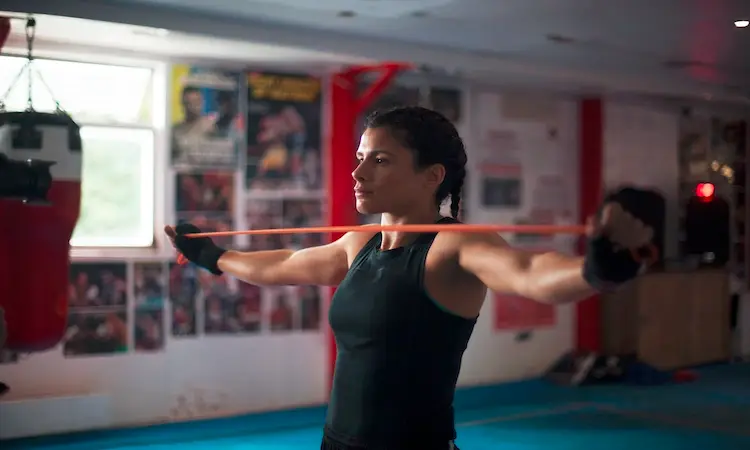
You know the feeling: shoulders creeping up before a heavy lift, “heavy legs” late in a game, or that one mistake that hijacks your focus for the next three plays. Nothing in your program changed, but your body suddenly feels like it’s running a different operating system.
That’s the mind-body connection for athletic performance in plain terms. Your thoughts, emotions, breathing, and attention change how you move, how much energy you waste, and how well you make decisions under pressure. It’s not mystical. It’s your nervous system doing what it always does, responding to what your brain thinks is happening.
The good news is you can train it the same way you train strength or conditioning: with small, repeatable reps that show up when it matters.
Try this today: a 2-breath reset. Inhale through your nose, exhale a little longer than the inhale. Do it twice, then soften your jaw and drop your shoulders. It’s simple, but it can shift your whole set, serve, or possession.
How the mind-body connection actually works during sport
Every movement starts as a signal. Your brain picks a goal (jump, cut, strike, brace), then sends instructions through nerves to your muscles. At the same time, your body sends feedback back up: joint position, muscle tension, balance, breath, heartbeat, and even gut sensations.
When you’re calm and locked in, the system runs clean. You feel timing, you notice small errors early, and your body uses the right amount of effort. When you’re stressed, the same system gets noisy. You recruit extra tension “just in case,” your breathing gets shallow, and your attention narrows to the wrong things.
That’s why the mind-body connection shows up in such practical ways:
- Strength feels “off” even with the same load.
- Speed drops because you’re tight, not because you’re weak.
- Accuracy fades when your eyes and breath stop working together.
- Decision-making slows because your brain is busy managing threat.
If you want evidence that psychological training can help performance, you’ll find it in research summaries like this systematic review on psychological interventions in sport. The big theme is consistent: skills that regulate attention and arousal can improve outcomes, especially when practiced like training, not saved for game day.
Stress, breathing, and the “tight body” problem
Stress isn’t always bad. A little arousal can sharpen reactions. The issue is when stress becomes a full-body clamp. Heart rate spikes, neck and forearms tighten, vision narrows, and your timing gets rushed. You start “trying hard” instead of executing well.
You can feel this in real time. The bar path gets wobbly. Your footwork gets loud. Your hands grip too early. Your shoulders rise like you’re bracing for impact.
Breathing is the fastest way to change the signal because it works both directions: your brain changes your breath, and your breath changes your brain. Two simple options cover most sport moments:
- Nasal breathing (when possible): Great for warmups, easy aerobic work, and between sets. It encourages a steadier rhythm and can reduce frantic breathing.
- Longer exhale breathing: Inhale normally, then exhale a beat longer. Use it before a serve, free throw, pitch, or heavy single. The longer exhale tends to downshift the “amped up” feeling.
If you want a clear set of athlete-friendly drills, this breathing exercises resource for athletes lays out a few easy options you can teach or use in your own routine.
The key is timing. Don’t wait until you’re overwhelmed. Use one breath pattern as a between-rep ritual, so it’s there automatically under pressure.
Proprioception and performance, your built-in body map
Proprioception is your body’s position sense. It’s how you can touch your nose with your eyes closed, feel your knee cave in slightly on a squat, or sense the bar drifting away from your midfoot in a deadlift.
When proprioception is sharp, technique feels “obvious.” You correct faster, waste less motion, and stay balanced when contact or fatigue tries to knock you off your pattern. That’s why proprioception and performance are linked, not just for injury prevention, but for cleaner movement.
You can train the signal without fancy gear:
- Warmups with intent: slow lunges, controlled skips, light jumps with quiet landings.
- Tempo work: a 3-second lowering phase can expose where you lose position.
- Balance and stability drills: single-leg hinges, offset carries, and simple eyes-forward balance holds.
A useful overview of what the research says is in this systematic review on proprioceptive training and sports performance. You don’t need to memorize it. Just take the message: small doses, repeated often, tend to beat random “balance stuff” once in a while.
Build cognitive fitness for athletes, the mental skills that show up on the scoreboard
If strength is your ability to produce force, cognitive fitness for athletes is your ability to aim your mind on purpose. It’s attention control, self-talk, confidence, and the capacity to stay useful when the moment gets loud.
Most athletes already “do mental training,” just not in a planned way. They replay mistakes, worry about outcomes, or try to hype themselves up with shaky confidence. That’s still training, it’s just training the wrong pattern.
A better approach is to treat mental skills like technique work: simple, repeatable, and tied to real tasks.
Here are the core pieces to practice:
- Attention control: Choose what matters right now, then return to it when your mind wanders.
- Self-talk: Short phrases that cue action, not opinions about yourself.
- Confidence: Built from proof. One well-executed rep is better than ten pep talks.
- Psychological endurance: Staying steady through discomfort without spiraling.
Mindfulness gets talked about a lot because it trains “notice and return,” which is basically the skill of sport focus. For a sports-medicine view of how it’s used with athletes, see Mindfulness in Athletes.
Mental cues for strength training that make reps cleaner and safer
A mental cue is a short instruction that tells your brain where to put effort. The best cues reduce “mental clutter” and clean up movement. You’ll hear coaches talk about external cues (what to push or move) versus internal cues (what body part to feel). Many athletes do well with external cues because they focus on the task, not on micromanaging body parts.
If you want a deeper look at cueing and attention strategies in lifting, this review of attentional focus in weightlifting is a solid reference.
Try these mental cues for strength training, one at a time:
- Squat: “Spread the floor,” or “sit between your heels.”
- Deadlift: “Push the ground away,” or “keep the bar glued to you.”
- Bench press: “Bend the bar,” or “drive your back into the bench.”
- Pull-up: “Put elbows in your back pockets,” or “pull your chest to the bar.”
- Overhead press: “Punch the ceiling,” or “ribs down, press tall.”
- Sprint start: “Push back, not up,” or “violent first two steps.”
How do you know a cue is working? Look for faster bar speed, a smoother rep, and less strain in the wrong places (like neck tension on a press or low-back grip on a squat). If you need three cues at once, your cue is too complicated. Pick one job and let the rep teach you.
Psychological endurance in sports, staying effective when it hurts
Late in a game or late in a race, the hard part isn’t pain. It’s the story your brain tells about the pain. Fatigue is normal. Panic is optional. Psychological endurance in sports is the skill of separating sensation from meaning.
A quick mental reset script for those moments:
- Label it: “This is fatigue,” or “I’m anxious.” Naming it reduces the swirl.
- Choose one job: “Win this rebound,” “hit this split,” “smooth exhale.”
- Commit to 10 seconds: Not the whole game, just the next slice of time.
This isn’t about ignoring your body. Stop when you feel sharp pain, dizziness, new joint instability, numbness, or anything that feels like a fresh injury. Toughness is staying effective, not staying reckless.
Train your brain like you train your body, a weekly routine that sticks
The biggest mistake with mind-body training is treating it like an emergency tool. If you only breathe, visualize, or refocus when you’re already spiraling, it’ll feel unreliable.
A simple weekly plan works better. Most athletes can handle 5 to 10 minutes a day, especially if it’s attached to something they already do (warmup, cooldown, shower, bedtime). Think of it as brushing your teeth for your nervous system.
Here’s a sample week you can repeat. Keep it boring on purpose, boring is what becomes automatic.
| Day | 5 to 10-minute mind-body routine | Where it fits |
|---|---|---|
| Mon | 2-breath reset between warmup sets, then 1-minute body scan | In the gym |
| Tue | 3-minute visualization of one key moment, then 2 slow exhales | Before bed |
| Wed | One cue word for main lift (example: “push”), brief post-session reflection | After training |
| Thu | Easy nasal breathing for 5 minutes during a walk or bike | Low-intensity work |
| Fri | Pressure practice: simulate a “must-make” rep, then 2-breath reset | End of practice |
| Sat | 3-minute guided imagery, then write a 1 to 5 focus score | After practice |
| Sun | Recovery check-in: scan body tension, relax jaw, long exhales | Evening |
Two rules make this work: keep the reps small, and track something simple so you can notice progress. Better focus often shows up as fewer “wasted reps,” faster corrections, and calmer decision-making.
Visualization techniques for athletes that improve timing and confidence
Visualization techniques for athletes work best when they include senses, not just pictures. You’re teaching your brain a pattern: here’s the situation, here’s the feel, here’s the response.
Use this short how-to:
- Get comfortable, breathe slowly for 20 seconds.
- See the environment (lighting, sounds, the court or platform).
- Feel the movement (foot pressure, grip, rhythm of breath).
- Rehearse one key moment (the cut, the start, the sticking point).
- End with a clean, successful rep, then open your eyes and move on.
When to use it: the night before competition, pre-practice, and during rehab when you can’t train hard but still want to keep the skill “fresh.”
One team sport example: a point guard rehearses bringing the ball up after a turnover, hearing the crowd, feeling the breath settle, then making the simple pass. One strength example: a lifter rehearses unracking a heavy squat, bracing, hitting depth, and standing up with steady speed.
For context on guided imagery and performance outcomes, this review on benefits of guided imagery in sport is a useful read.
Neuroplasticity and exercise, why small reps of focus add up
Neuroplasticity and exercise are connected through repetition. Your brain rewires with practice, just like muscles adapt to training stress. The more often you run a focus pattern, the easier it becomes to access under pressure.
You don’t need hour-long sessions. You need “micro reps” that happen often:
- 1-minute body scan after warmup: notice jaw, shoulders, hands, and breath.
- 3 mindful breaths before heavy sets: same rhythm every time.
- 60-second reflection after training: what cue worked, what distracted you.
Tracking can be basic: after each session, rate your focus from 1 to 5. A 1 is scattered, a 5 is locked in. If your score stays low for a week, adjust one variable, not ten. Shorten the routine, pick a simpler cue, or practice the breathing earlier in the session.
If you want a science overview of how exercise can change brain networks, this narrative review on neuroplasticity through exercise gives a broader perspective.
Conclusion
Better performance isn’t only about stronger muscles or better conditioning. It’s also about training the mind-body connection for athletic performance so your movement stays clean and your decisions stay simple when pressure hits.
Try a 30-day challenge built on three simple habits. First, do a quick 2-breath reset once a day. Next, add one performance cue during your main lift, drill, or skill work. Last, spend 3 minutes on visualization before bed, three nights a week. Keep it easy, and repeat it until it feels like part of your routine.
Track progress using signs you can feel in training, not just numbers. Look for cleaner form, quicker recovery between hard efforts, and calmer confidence after errors. Start small, stay steady, and let mind-body performance show up in your results.

Gas S. is a health writer who covers metabolic health, longevity science, and functional physiology. He breaks down research into clear, usable takeaways for long-term health and recovery. His work focuses on how the body works, progress tracking, and changes you can stick with. Every article is reviewed independently for accuracy and readability.
- Medical Disclaimer: This content is for education only. It doesn’t diagnose, treat, or replace medical care from a licensed professional. Read our full Medical Disclaimer here.