

You’ve been snacking all day, but you’re still hungry an hour later. Night cravings hit hard, and your workouts feel heavier than they used to. Even when you’re trying to eat “lighter,” your energy drops, and you can’t figure out why.
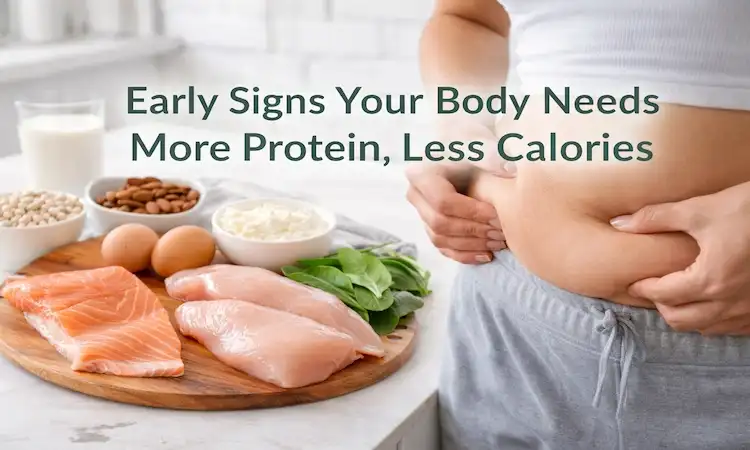
Often, the issue isn’t willpower, it’s balance. The early signs your body needs more protein less calories can show up as stubborn hunger, slow recovery, or feeling wiped out between meals. Protein helps you stay full longer, supports muscle repair after training, and can keep your energy steadier, especially when you’re cutting back on overall intake.
This post is a practical guide, not medical advice. Some signs can overlap with stress, poor sleep, or simply not eating enough food, so context matters. You’ll learn what to watch for, plus easy next steps like simple protein swaps that fit your routine without blowing up your calorie budget.
The common pattern, you are under fueled on protein but not truly low on food
A lot of people hit a frustrating spot when trying to “eat less.” The plate looks smaller, calories look reasonable, but hunger keeps showing up like a notification you can’t swipe away. In many cases, you’re not truly low on food, you’re low on protein, and your meals are built in a way that doesn’t keep you satisfied. That mismatch is one of the early signs your body needs more protein less calories, because you can be in a deficit while still feeling like it’s impossible to stick to.
Why low protein makes a calorie cut feel harder than it should
Protein tends to be the slow-burn fuel of a meal. It digests more slowly than many carb-heavy foods, and it helps your appetite feel steadier. When your meals are light on protein, you can end up hungry soon after eating, even if the calorie total “should” be enough.
Think of the difference between:
- Pastry + coffee: quick energy, then a crash, then you’re hunting snacks.
- Eggs + yogurt: more staying power, fewer urgent cravings.
When protein is missing, a calorie cut can feel miserable for a few common reasons:
- More hunger between meals: you finish eating, but you don’t feel “done.”
- More snacking: you grab a little something, then another little something.
- Late-night cravings: dinner didn’t hold you, so the pantry starts calling your name.
This isn’t about perfect macros. It’s about making sure each meal has an anchor. Research has also found that inadequate protein intake can increase hunger and desire to eat, which helps explain why willpower alone often fails when protein is too low (study on protein and hunger).
There’s also the muscle side of this. During weight loss, your body needs enough protein to help maintain muscle, not just drop scale weight. If protein is low, you may feel weaker in workouts and less “solid” day to day, which makes the whole cut feel harder.
A quick reality check, are you skipping protein at breakfast and lunch
Most “protein problems” are really breakfast and lunch problems. Dinner often has a clear protein (chicken, fish, beef, tofu), but earlier meals can be mostly carbs and fats.
Do a quick self-audit. Ask yourself:
- What did I eat this morning?
- What did I eat at midday?
- Where was the protein, specifically?
Common protein gaps look like this:
- Cereal, toast, bagel, muffin (easy calories, not much protein)
- Smoothies that are mostly fruit (tasty, but not filling for long)
- Salads without a clear protein (greens plus toppings, but no “main”)
- Snack plates that are mostly carbs (crackers, pretzels, fruit gummies)
A simple fix is to add a “protein anchor” to each earlier meal, like eggs, Greek yogurt, cottage cheese, tuna, chicken, tofu, tempeh, or a protein-forward smoothie (for example, milk plus Greek yogurt). Even adding more protein at breakfast has been linked with better hunger control (Harvard on protein at breakfast).
When it is not protein, and why you should still pay attention
Sometimes hunger and cravings come from more than protein. Poor sleep, high stress, dehydration, low fiber, or an overly aggressive calorie cut can all create the same “I’m never satisfied” feeling.
Before blaming willpower, run this quick checklist:
- Did I include a clear protein at breakfast and lunch?
- Did I drink enough water today?
- Did I get decent sleep last night?
- Did I include fiber-rich foods (beans, berries, veggies, whole grains)?
- Am I cutting calories so hard that I feel constantly depleted?
If symptoms are sudden, severe, or paired with unexpected weight changes, fatigue, or appetite shifts, talk with a clinician. It’s smart to look at the full picture, even when protein is the most common missing piece.
Early signs your body needs more protein and fewer empty calories
“Empty calories” usually show up as foods that go down easy but don’t do much for fullness, recovery, or steady energy (think pastries, chips, sugary coffee drinks). When those foods take up a lot of your day, protein often gets squeezed out. That’s when the early signs your body needs more protein less calories start to feel obvious: you’re eating, but you don’t feel fueled.
The goal is not to eat a mountain of protein or fear carbs. It’s to give each meal a solid protein “anchor” so you stay satisfied and your body has what it needs.
You get hungry again soon after meals, especially after carb heavy meals
The “two hour hunger” pattern is classic. You eat a meal that looks filling, but by mid-morning or mid-afternoon you’re prowling the kitchen again. It’s not a character flaw. It’s often a meal that was heavy on fast-digesting carbs and light on protein.
Real-life examples:
- Bagel breakfast: a bagel with cream cheese and coffee, then hunger hits by 10:00 a.m.
- Pasta lunch: a big bowl of pasta (maybe with a little sauce), then you’re hunting for snacks by 3:00 p.m.
A simple fix is to add protein without changing the whole meal. Think of protein like a log on the fire, it helps the meal burn longer.
Easy upgrades that usually don’t add a huge calorie jump:
- Add 2 eggs or egg whites alongside the bagel, or swap some cream cheese for cottage cheese.
- Stir chicken, tuna, shrimp, tofu, or lentils into pasta, then slightly reduce the pasta portion.
- Choose a higher-protein bread or wrap, then add turkey, Greek yogurt-based spread, or tempeh.
You still get the carbs you enjoy, you just stop relying on carbs alone to keep you full.
You crave sweets at night or feel snacky all afternoon
Night sweets cravings and “snacky” afternoons often trace back to earlier meals that were too light on protein. If breakfast was toast and lunch was a salad with no real protein, your body tends to push you toward quick energy later.
In plain terms, this is the blood sugar roller coaster: a carb-heavy meal can raise blood sugar fast, then it drops, and your brain starts asking for something sweet or crunchy to feel better. Protein and fiber slow that ride down.
A good first step is to check for protein gaps before 2:00 p.m. That one change can make evenings feel calmer.
High-protein snack ideas that stay reasonable on calories:
- Plain Greek yogurt with berries and cinnamon (sweet, filling, easy to portion)
- Cottage cheese with pineapple, sliced tomato, or everything bagel seasoning
- Turkey or tuna packets with an apple or baby carrots
If you want more options, this list of portable high-protein snack ideas can help you build a rotation that fits your schedule.
Workouts feel harder, recovery is slow, or you keep feeling sore
If your usual workouts suddenly feel heavier, or you stay sore longer than normal, your body may be short on building blocks. Training breaks muscle down. Protein helps rebuild it.
Common signs you might notice:
- Strength is sliding (you used to hit 10 reps, now 7 feels brutal)
- Soreness lingers for days after a normal session
- You feel drained after workouts that used to feel “fine”
- You’re hungrier on training days, but you reach for snack foods that don’t satisfy
Protein does not replace good programming, but it supports repair. If you’re training regularly, pay attention to whether your meals after workouts include a real protein source, not just a granola bar.
One more reminder: recovery also needs sleep and enough total food. If you’re cutting calories too hard, even high protein won’t fully fix that run-down feeling.
You are losing weight but also losing strength or looking “smaller” in a bad way
Weight loss can include fat loss and muscle loss. When protein is low, and you’re in a calorie deficit, the odds of losing muscle go up. That’s when people describe looking “smaller” in a way they don’t like, flatter shape, less firmness, less strength.
This is not about judgment. It’s about making the weight you lose match your goal.
Two practical ways to monitor this (without obsessing over the scale):
- Track strength in a few key lifts or movements (even bodyweight reps count).
- Notice how clothes fit (waist loosening is a better sign than everything getting looser).
For a helpful overview on why muscle matters during weight loss, see Harvard’s guide to avoiding muscle loss.
If the scale is dropping but your performance is falling fast, that’s a strong hint you need more protein, and possibly a less aggressive deficit.
Hair, nails, and skin seem off, and you feel run down
Brittle nails, more hair shedding than usual, dry skin, and that general “blah” feeling can have a lot of causes. Stress, low iron, thyroid issues, low overall calories, and not enough sleep can all play a role. Still, chronically low protein and low nutrient intake can contribute, especially if most of your calories come from ultra-processed snack foods.
Think of it like this: your body will prioritize what keeps you alive first. If nutrients are limited, things like hair and nails may get less support.
A few signs that may show up together:
- Nails that peel or break easily
- Dry, dull skin
- Feeling run down even when life is not extra busy
If you’re concerned, a clinician can help you check common issues like iron and thyroid. For a balanced, non-alarmist overview, see Cleveland Clinic’s protein deficiency symptoms.
How much protein do you actually need, and how to estimate it in 2 minutes
If you’re seeing the early signs your body needs more protein less calories, the fix usually isn’t eating “less food.” It’s eating more protein inside the calories you already have. You don’t need perfect tracking to do that, you just need a realistic target and a fast way to estimate portions.
A simple, safe starting point for most adults aiming to lose fat is 0.6 to 0.8 grams of protein per pound of goal body weight per day. If you strength train, are very active, or you’re older and trying to keep muscle, you’ll often feel and perform better closer to the higher end. Needs vary, and if you have kidney disease or other medical conditions, get personal guidance from a clinician (protein targets can change).
For a deeper breakdown of ranges used for weight loss, see NASM’s protein for weight loss guide.
Simple daily ranges that work for most people trying to lose fat
Use goal body weight, not your current weight, if you have a decent amount of fat to lose. It keeps the math honest and the target doable.
Here’s the quick math:
- Protein grams per day =
goal weight (lb) x 0.6 to 0.8
Examples (rounded to keep it easy):
| Goal body weight | 0.6 g/lb (lower end) | 0.8 g/lb (higher end) |
|---|---|---|
| 150 lb | 90 g/day | 120 g/day |
| 180 lb | 110 g/day | 145 g/day |
| 220 lb | 130 g/day | 175 g/day |
How to choose your range:
- Lower end (0.6 g/lb): You’re mostly walking, doing light training, or you’re easing in.
- Higher end (0.8 g/lb): You lift weights, you’re dieting hard, you’re often hungry, or you’re 40+ and want to hang on to muscle.
You don’t need to hit the exact number daily. Aim for a range, and try to get close most days.
The hand portion method for people who do not want to track grams
If tracking grams makes you want to quit, use your hand. Your palm is your built-in measuring tool.
A solid baseline for fat loss is:
- Women: 1 to 2 palms of protein per meal, 3 meals per day
- Men: 2 palms of protein per meal, 3 meals per day
(One “palm” is the size and thickness of your palm, not your fingers.)
What counts as a palm?
- Chicken or turkey: a palm-sized piece (think deck-of-cards vibe)
- Fish: a palm-sized fillet
- Tofu or tempeh: a palm-sized block slice
- Beans or lentils: about 1 cupped hand is often roughly “one palm’s worth” of protein for many people, so you may use a bit more if it’s your main protein
- Greek yogurt: a single-serve cup is often close to 1 palm
- Cottage cheese: a bowl-sized serving that fits in your palm “zone” when eyeballing
This hand approach is widely used in coaching because it’s simple and scales to your body size. If you want a visual guide, see IDEA Fitness hand portioning basics.
Protein powders can help, especially when you’re rushed, but they’re optional, not magic. Real food works.
Signs you might be overshooting calories while trying to raise protein
Raising protein should make fat loss easier, not stall it. The problem is that some “protein adds” come with a quiet calorie surge.
Common calorie traps:
- Nuts, nut butter, oils: easy to drizzle, easy to overdo.
- Cheese upgrades: a “little extra” can turn into a lot fast.
- Big “healthy” smoothies: fruit, oats, nut butter, plus yogurt can add up.
- Oversized protein bars: some are basically candy bars with protein added.
If your protein is up but fat loss slowed and hunger is still there, check these first. Healthline lists several of these issues in their overview of common protein mistakes for weight loss.
Quick fixes that keep calories steady:
- Swap, don’t stack: add chicken or Greek yogurt, then slightly reduce pasta, rice, granola, or added fats.
- Choose leaner proteins more often: chicken breast, fish, shrimp, extra-lean ground meats, nonfat Greek yogurt, low-fat cottage cheese.
- Cap smoothies at one “fat add-in”: pick either nut butter or oats, not both, and keep the cup size reasonable.
You’ll get the protein bump without accidentally turning “healthy” into “high-calorie.”
High protein, lower calorie swaps that still taste good
If the early signs your body needs more protein less calories are showing up (constant hunger, snack attacks, low energy), you don’t need a total diet makeover. You need smarter swaps that keep flavor high and calories in check. A simple template helps: protein + a fiber-rich carb + colorful produce + a small fat. Think of protein as the anchor, fiber as the “slow-release” fuel, produce as volume and nutrients, and fat as the flavor dial.
Breakfast upgrades that curb cravings without adding a lot of calories
Most breakfast “problems” come from starting the day with quick carbs and not much protein (cereal, pastries, sweet coffee drinks). These upgrades keep the comfort-food vibe, but they actually hold you over.
- Greek yogurt bowl that tastes like dessert Swap out sugary cereal or a muffin for plain nonfat Greek yogurt. Add berries or sliced banana, then crunch with a measured sprinkle of high-fiber cereal, oats, or chopped apple. Add flavor with cinnamon, vanilla extract, or a teaspoon of honey. Keep nut butter to 1 teaspoon if calories are tight.
- Egg plus egg-white scramble with veggies Swap a bagel-and-cream-cheese breakfast for 1 to 2 whole eggs plus egg whites, cooked with spinach, peppers, mushrooms, and onions. You get the taste and richness from whole eggs, and extra protein volume from whites. Pair with fruit or one slice of higher-protein toast.
- Cottage cheese toast that’s actually filling Swap buttered toast or a pastry for cottage cheese on toast. Go savory (tomato, cucumber, everything bagel seasoning) or sweet (berries, cinnamon). If you like more texture, add sliced radish or arugula instead of extra cheese or oil.
- Protein oatmeal done right Swap a big bowl of oatmeal loaded with sugar and nut butter for a portion you can repeat: cook oats, then stir in egg whites (they disappear when stirred well) or mix in Greek yogurt after cooking. Keep toppings simple: berries, grated zucchini (yes, it works), and a measured tablespoon of chopped nuts.
- High-protein smoothie with measured add-ins Swap a juice-bar smoothie for a “tight” smoothie: unsweetened almond milk or skim milk + Greek yogurt or protein powder + frozen fruit + spinach. Pick one calorie add-in (oats or nut butter or chia), not all three. For more ideas, see these dietitian-approved high-protein breakfast ideas.
Lunch and dinner formulas you can repeat all week
Repetition makes it easy to stay consistent without feeling bored. Build meals with the same structure, then rotate flavors.
- Big salad plus lean protein Start with a giant base of greens and crunchy veg, then add one palm of protein: chicken breast, turkey, shrimp, white fish, extra-lean ground beef, tofu, tempeh, or edamame. Add a fiber carb: chickpeas, lentils, quinoa, or a small baked potato. Finish with a measured fat: 1 tablespoon dressing, feta, or avocado. If you want inspiration, browse these high-protein, high-fiber dinner ideas.
- Bowl meal: protein + veg + smart carb Use a bowl as your “container rule.” Half the bowl is roasted or sautéed veggies, then add a lean protein. Finish with a smaller scoop of rice, potatoes, or beans. Examples: turkey taco bowl with peppers and salsa, shrimp stir-fry bowl with broccoli, tofu bowl with cabbage and carrots.
- Sheet-pan meal you can portion fast Roast protein and veg together: chicken breast plus zucchini and onions, shrimp plus asparagus, tofu plus broccoli. Add a side carb if needed (microwaved potatoes, frozen rice portion). The key swap is simple: reduce oil, cheese, and creamy sauces, then season hard with spices, citrus, garlic, mustard, and vinegar.
Quick grocery list for repeatable meals: nonfat Greek yogurt, cottage cheese, eggs/egg whites, chicken breast or turkey, frozen shrimp, tofu/tempeh, canned tuna, edamame, lentils/beans, bagged salad, frozen veg, salsa, berries, oats, higher-protein bread or wraps, light dressings.
Smart snacks when you need something between meals
When snacks are protein-forward, they stop the “I ate, but I’m still hungry” loop.
- Jerky: portable, high protein, check sodium if you’re sensitive.
- Tuna packets: lean and filling, add pickles or hot sauce for flavor (budget-friendly).
- Cottage cheese cup: high protein for the calories, add fruit or pepper.
- Plain Greek yogurt: sweeten with berries and cinnamon instead of syrup.
- Hard-boiled eggs: simple and satisfying, pair with baby carrots.
- Edamame (frozen steamer bags): fiber plus protein, great with salt and chili flakes (budget-friendly).
- Protein pudding made with yogurt: mix yogurt with cocoa powder and a little sweetener, it scratches the dessert itch.
- Air-fried chickpeas: crunchy swap for chips, season with smoked paprika and garlic.
For more portable options, this roundup of high-protein, low-calorie snacks can help you build a rotation.
If you are plant based, how to hit protein without blowing up calories
Plant-based protein works best when you choose options that are protein-dense, then keep portions honest. Some plant proteins come with more carbs (beans, lentils, split peas), so if calories are tight, the swap is not “more food,” it’s more structure.
- Tofu: high protein, easy to crisp in a pan or air fryer, pair with stir-fry veggies and a measured sauce.
- Tempeh: firmer, nutty flavor, great in thin slices with cabbage slaw.
- Seitan (if tolerated): very high protein, lower carb, works like chicken in fajitas or bowls.
- Lentils and split peas: excellent for soups and stews, keep the bowl half veg (spinach, carrots, zucchini) to control calories.
- Edamame: snackable and easy to add to salads and bowls.
- Higher-protein pasta: use chickpea, lentil, or edamame pasta, then load the sauce with veggies and add tofu crumbles or seitan strips.
A helpful overview of plant-based options is here: plant-based high-protein foods for weight loss. The big win is combining legumes with low-calorie vegetables, then measuring calorie-dense sauces (peanut sauce, tahini, oils) so your protein goes up without your calories quietly climbing.
Conclusion
The early signs your body needs more protein less calories usually show up in everyday ways: you get hungry soon after meals, cravings creep in at night, energy dips between meals, and workouts feel harder with slower recovery. When most of your intake comes from low-protein, higher-calorie foods, you can eat plenty and still feel under-fueled.
Here’s a simple 3-step plan you can start today. First, pick a realistic protein target range (a common starting point is 0.6 to 0.8 grams per pound of goal body weight). Second, fix breakfast and lunch first by adding a clear protein serving to each meal, this is where most gaps happen. Third, swap one daily snack for a higher-protein option (Greek yogurt, cottage cheese, tuna, eggs, edamame), and keep it portioned so calories stay in check.
Give it one week, and track how you feel, not just what you weigh. Watch hunger, cravings, workouts, and sleep. If symptoms feel severe, sudden, or come with other health changes, talk with a healthcare professional for personal guidance. Ongoing signs of low protein intake can slow muscle repair, disrupt metabolic signaling, and reduce satiety, all key systems that support functional wellness.

Gas S. is a health writer who covers metabolic health, longevity science, and functional physiology. He breaks down research into clear, usable takeaways for long-term health and recovery. His work focuses on how the body works, progress tracking, and changes you can stick with. Every article is reviewed independently for accuracy and readability.
- Medical Disclaimer: This content is for education only. It doesn’t diagnose, treat, or replace medical care from a licensed professional. Read our full Medical Disclaimer here.