

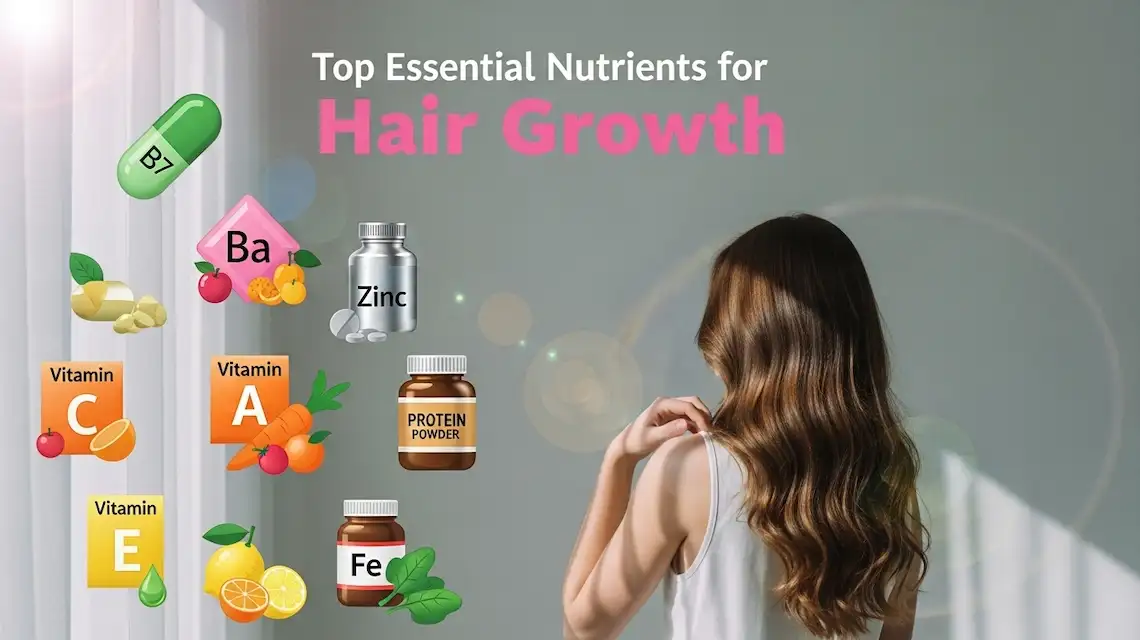
Want stronger, fuller hair without complicated routines? Your hair grows about half an inch per month, and nutrition helps the growth phase last longer. Here is the plan: focus on food first, use simple habits, then add smart supplements if needed. You will start building better strands from the inside out.
This guide covers 5 essential vitamins to include in your diet for faster hair growth. Expect steady changes, not overnight miracles. Most people need 8 to 12 weeks to notice less shedding and better thickness. If you prefer a quick overview with practical tips, you are in the right place.
For basics on hair growth speed and daily care, see this easy explainer from the Cleveland Clinic: how to make your hair grow faster.
5 essential vitamins to include in your diet for faster hair growth
Vitamins support hair follicle strength and a healthy scalp.
Biotin (Vitamin B7): supports keratin and thicker strands
Biotin helps your body make keratin, the protein that gives hair its structure. Low intake can show up as brittle nails or more shedding. Top foods include cooked eggs (avoid raw egg whites, they bind biotin), salmon, tuna, almonds, walnuts, sunflower seeds, and sweet potatoes. A simple habit: eat a hard-boiled egg and a small handful of nuts most days. The RDA is about 30 mcg for adults. High-dose biotin can skew some lab tests, including thyroid and troponin, so talk to a doctor before using large supplements. Evidence supports treating true deficiency, not megadoses for everyone.
For a science review on nutrients and hair, see the NIH’s archive: the role of vitamins and minerals in hair loss.
Vitamin D: helps wake up resting hair follicles
Vitamin D supports the hair cycle, and low levels can link to more shedding. Get short mid-morning sun exposure as your skin type allows, eat fatty fish like salmon or sardines, choose fortified milk or plant milks, and add UV-exposed mushrooms. If shedding continues, ask your clinician about testing 25(OH)D. Typical daily needs are 600 to 800 IU for many adults. Do not exceed 4,000 IU per day without medical guidance.
Vitamin E: antioxidant support for scalp and shine
Vitamin E helps protect hair follicles from oxidative stress and supports natural scalp oils. Good choices include almonds, sunflower seeds, hazelnuts, avocado, olive oil, and spinach. Swap in a tablespoon of nuts or seeds daily or use olive oil on salads. The RDA is 15 mg for adults. Very high supplemental doses may raise bleeding risk, especially if you take blood thinners, so stick to food-first unless your doctor advises otherwise.
Vitamin A: nourishes scalp oils, but avoid too much
Vitamin A supports cell growth and sebum, which keeps the scalp hydrated. You need balance since too much can trigger hair loss. Focus on beta-carotene rich foods that your body converts as needed: carrots, sweet potatoes, pumpkin, spinach, and kale. The RDA is about 700 to 900 mcg RAE. Avoid very high-dose supplements, especially during pregnancy. A simple habit: add a cup of colorful veggies at dinner.
Unlock the Secret to Radiant Hair! Try Natural Egyptian Balm That Supports Hair Health
Vitamin C: boosts collagen and iron absorption for stronger hair
Vitamin C helps your body make collagen, a key part of hair structure, and improves iron absorption from plant foods. Reach for oranges, strawberries, kiwi, bell peppers, and broccoli. Pair vitamin C foods with plant iron sources like beans or lentils at meals for a better boost. The RDA is about 75 to 90 mg for adults. Quick tip: add sliced bell peppers to salads or dip them in hummus.
If you want a quick nutrition refresher on skin and hair, Harvard Health has a helpful overview: skin and hair.
How to add these vitamins to your diet safely for visible results
Start with food, then supplement if there are gaps. Build a simple day of meals that covers all five vitamins. Add lab checks if shedding continues, especially for vitamin D or iron status. Expect small wins in the first month, then clearer changes by two to three months. Keep your routine steady and your plate colorful.
1-day sample menu that hits all 5 vitamins
- Breakfast: spinach and tomato omelet with whole grain toast, orange slices.
- Lunch: salmon salad with mixed greens, bell peppers, avocado, and olive oil vinaigrette.
- Snack: Greek yogurt with strawberries and a small handful of almonds or sunflower seeds.
- Dinner: chicken or tofu with roasted sweet potatoes and broccoli.
Vegan swaps: use fortified soy or almond milk, canned chickpeas or lentils for protein, and add UV-exposed mushrooms for vitamin D.
Quick grocery list: eggs, salmon, spinach, tomatoes, oranges, mixed greens, bell peppers, avocado, olive oil, yogurt, strawberries, almonds, sunflower seeds, sweet potatoes, broccoli, whole grain bread.
Supplements, dosages, and safety tips
Supplements can help if you get limited sun, follow a restrictive diet, or have confirmed low levels. General daily targets: Biotin 30 mcg, Vitamin D 600 to 800 IU (test to personalize), Vitamin E 15 mg, Vitamin A 700 to 900 mcg RAE from food, Vitamin C 75 to 90 mg. Avoid high-dose vitamin A and E unless prescribed, and remember that biotin can affect some lab tests. Choose third-party tested brands with USP, NSF, or Informed Choice seals. Take vitamins with meals and keep doses consistent rather than sporadic megadoses.
For a practical overview of how nutrients affect shedding, you can also explore this summary from a public health source: natural solutions for hair growth.
Who should talk to a doctor first
Get personalized advice if you are pregnant or breastfeeding, have thyroid issues, take acne treatments like isotretinoin, use blood thinners, or have liver or kidney disease. If shedding is ongoing, ask about these labs: 25(OH)D for vitamin D, a complete blood count, ferritin for iron stores, and a thyroid panel. Simple language, clear steps, and a plan you can follow make the process easier.
Timeline and habits for faster growth
You may see less shedding in 4 to 6 weeks, with fuller growth in 8 to 12 weeks if you stay consistent. Pair your vitamins with protein, about 0.8 to 1 gram per kilogram of body weight daily. Drink water, use gentle hair care, sleep on a regular schedule, and manage stress. Try a 5 minute scalp massage most days. Take monthly photos in the same lighting to track progress.
Conclusion
Hair grows best when your daily routine supports it. Focus on biotin, vitamin D, vitamin E, vitamin A, and vitamin C, with a food-first plan, smart supplements, and steady habits. The big idea is simple, build a healthy plate, stay consistent, and give your scalp time to respond. If heavy shedding continues, check in with a healthcare pro and discuss labs. Ready to take action? Plan three hair-healthy meals this week and commit to your routine. That is how you use 5 essential vitamins to include in your diet for faster hair growth without stress.
Related post:
- Heal Dry Damaged Hair: A Simple Plan That Works
- Dietary Supplement for Hair Growth
- How to Remove Unwanted Hair Permanently
5 Essential Vitamins to Include In Your Diet for Faster Hair Growth FAQs:
Which vitamins matter most for faster hair growth?
Biotin (B7), vitamin D, vitamin A, vitamin C, and vitamin E. They support follicle function, scalp health, collagen, and antioxidant protection. Results depend on your baseline diet and any deficiencies.
Does biotin really help hair grow?
Only if you’re low in biotin. Deficiency is rare but can cause thinning and brittle hair. Aim for 30 mcg per day from food or supplements. Eggs, salmon, and nuts are solid sources.
How does vitamin D affect hair?
Low vitamin D is linked to hair shedding and slower growth. It supports follicle cycling. Most adults need 600 to 800 IU daily. The upper limit is 4,000 IU unless your doctor directs otherwise.
Is vitamin A good for hair or can it cause hair loss?
Both. You need vitamin A for cell growth and scalp oil balance. Too much can trigger shedding. Adults need 700 to 900 mcg RAE daily. Do not exceed 3,000 mcg RAE per day.
Why is vitamin C on the list?
It helps make collagen, which supports hair structure. It also boosts iron absorption. Citrus, berries, peppers, and broccoli are easy wins. Target 75 to 90 mg daily.
What does vitamin E do for hair?
It acts as an antioxidant and supports scalp health. Some people see less breakage. The daily goal is 15 mg alpha-tocopherol. Do not exceed 1,000 mg without medical advice.
Should I take all five as supplements?
Start with food first. Add supplements if your diet falls short or labs show a gap. Pick single-ingredient products so you can control dose. Avoid mega-doses.
What foods cover these vitamins well?
- Biotin: eggs, salmon, almonds, sweet potatoes
- Vitamin D: fatty fish, fortified milk, egg yolks, sunlight
- Vitamin A: liver, dairy, eggs, carrots, spinach
- Vitamin C: citrus, strawberries, kiwi, bell peppers
- Vitamin E: sunflower seeds, almonds, hazelnuts, avocado
How long until I notice a difference?
Hair grows about half an inch per month. If a deficiency is the issue, expect 8 to 12 weeks before changes show. Photos and part-width checks help track progress.
Can I overdo it?
Yes. Vitamin A and vitamin E have clear upper limits. Too much vitamin A can cause hair loss, headaches, and dry skin. High vitamin E may raise bleeding risk. Stick to recommended doses.
Any interactions or safety concerns?
- Vitamin E may increase bleeding with blood thinners.
- Vitamin D can raise calcium when combined with thiazide diuretics.
- Biotin can skew lab tests, including thyroid and heart markers. Stop biotin 48 to 72 hours before labs, or ask your provider.
- Avoid high-dose vitamin A if pregnant, unless your doctor approves.
Do these vitamins fix all types of hair loss?
No. They help if a deficiency plays a role. Pattern hair loss often needs topical minoxidil, oral finasteride for men, or other treatments. Sudden shedding, patchy loss, or scalp pain deserve a medical visit.
Are gummies as good as pills?
They can work, but many gummies are low dose and high in sugar. Check labels for actual amounts and third-party testing.
Is a “hair, skin, nails” multivitamin enough?
Sometimes. Many blends use small doses or add ingredients you don’t need. Compare the label to daily targets, then fill gaps with food or a focused supplement.
Any quick daily habits that support these vitamins?
Eat protein with every meal, add a colorful fruit or veg, include healthy fats for A, D, and E absorption, and get safe sun exposure. Stay consistent for best results.

Gas S. is a health writer who covers metabolic health, longevity science, and functional physiology. He breaks down research into clear, usable takeaways for long-term health and recovery. His work focuses on how the body works, progress tracking, and changes you can stick with. Every article is reviewed independently for accuracy and readability.
- Medical Disclaimer: This content is for education only. It doesn’t diagnose, treat, or replace medical care from a licensed professional. Read our full Medical Disclaimer here.